Research Peptides USA: 2026 Lab Procurement & Purity Guide
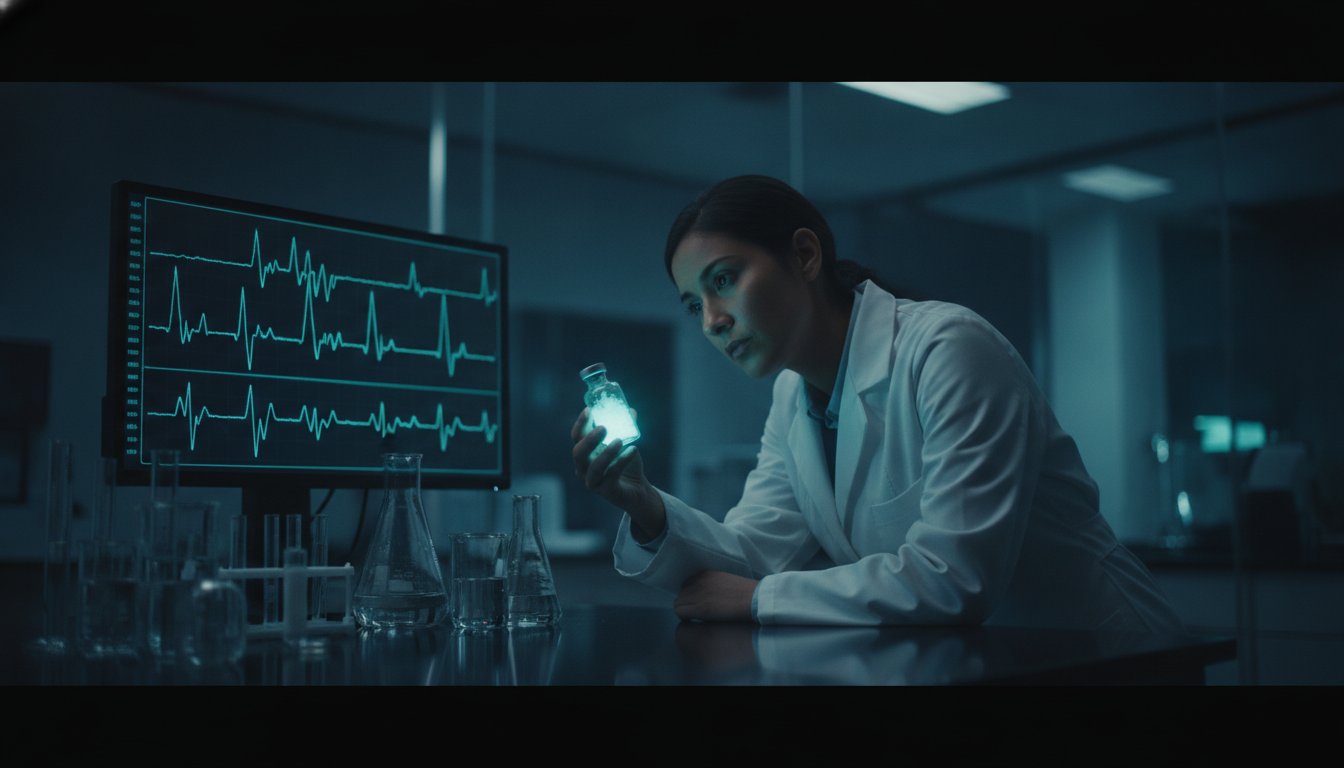
In 2026, a Certificate of Analysis is no longer a static document of trust; it's a transient data point that requires real-time, batch-specific verification. For the disciplined researcher, the margin for error has narrowed to zero as the market becomes saturated with questionable documentation and inconsistent chemical integrity. Sourcing reliable research peptides for sale USA has become a complex navigation through a sea of forged reports and volatile international lead times. You've likely encountered the frustration of purity claims that fail to hold up under independent mass-spectrometry analysis, jeopardizing the validity of your laboratory results.
Security and precision are the foundations of your work. This guide provides the technical framework to master laboratory procurement, ensuring you identify compounds with ≥99% HPLC-verified purity for rigorous study. We'll examine the protocols for analyzing batch-specific HPLC/MS reports and the logistical advantages of domestic, US-based fulfillment. By prioritizing transparency and analytical verification, you can secure the high-purity compounds necessary for precise experimentation. This is the definitive standard for modern laboratory procurement and chemical validation.
Key Takeaways
- Evaluate high-resolution analytical data to verify ≥99% chemical purity and molecular weight accuracy for every compound.
- Secure reliable research peptides for sale USA by prioritizing domestic inventory and transparent analytical verification protocols.
- Differentiate between static marketing claims and verifiable, batch-specific documentation to protect the integrity of your laboratory data.
- Implement standardized storage protocols to preserve the physical stability of lyophilized compounds within controlled deep-freeze environments.
- Optimize procurement workflows through disciplined logistics and high-velocity fulfillment from established US-based hubs.
Navigating the 2026 Research Peptide Landscape in the USA
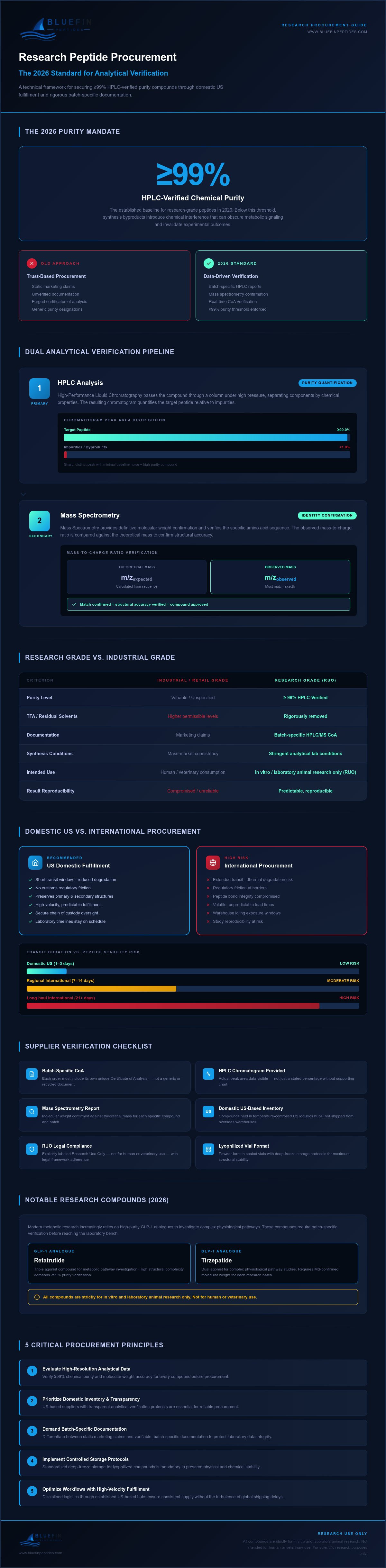
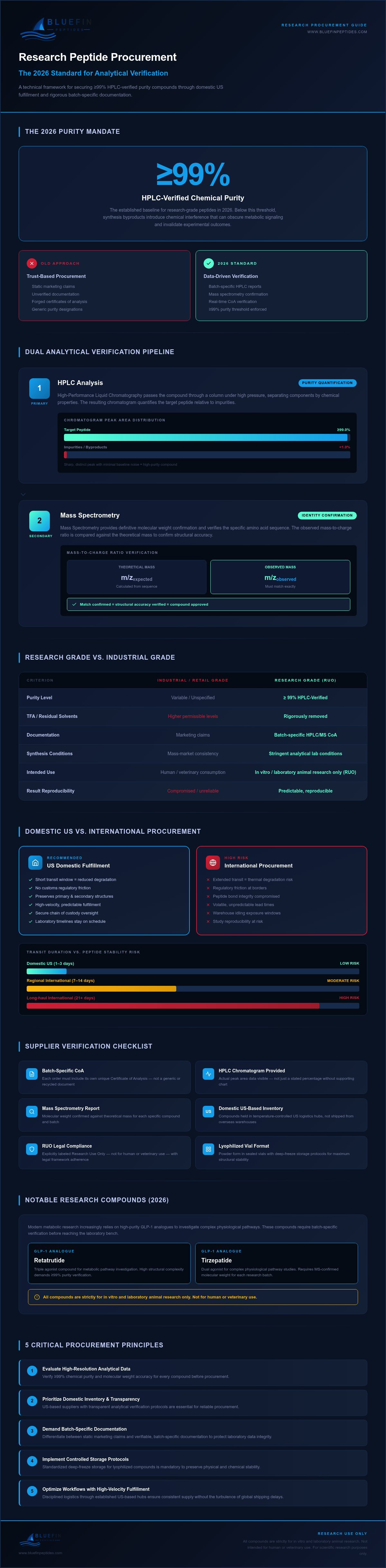
The synthesis standards of 2026 demand a higher resolution of data than previous decades. "Research Grade" is no longer a generic designation; it's a technical threshold requiring exhaustive validation. Modern metabolic studies increasingly rely on high-purity GLP-1 analogues, such as Retatrutide and Tirzepatide, to investigate complex physiological pathways. Procuring these compounds requires a focus on chemical identity and structural stability. International procurement introduces variables that compromise study integrity. Regulatory friction at borders and extended transit times often lead to thermal degradation of delicate peptide bonds. A disciplined approach to procurement is the only way to ensure that laboratory results remain reproducible and scientifically sound. Accuracy begins with the raw material.
The Criticality of Domestic US Procurement
Speed is a function of stability. Peptides are inherently sensitive to environmental fluctuations during transit. Utilizing domestic inventory reduces the window of exposure, preserving the primary and secondary structures of the lyophilized powder. When sourcing research peptides for sale USA, domestic fulfillment eliminates the unpredictability of international customs. This logistical precision ensures that laboratory timelines remain on schedule. A secure chain of custody from a US-based logistics hub provides the oversight necessary for high-stakes research. It's about maintaining a steady current of supply without the turbulence of global shipping delays. Short-range transport is the best defense against the subtle degradation that occurs during long-haul flights or warehouse idling.
Distinguishing Laboratory Compounds from Retail Supplements
The Research Use Only (RUO) designation is a critical legal and biochemical boundary. It's not a mere disclaimer. It signifies that the compound was synthesized under stringent laboratory conditions designed for analytical consistency rather than mass-market consumption. Industrial-grade synthesis often permits higher levels of trifluoroacetic acid (TFA) or residual solvents that are unacceptable in rigorous study environments. Research-grade synthesis prioritizes the removal of these impurities to ensure a purity level of ≥99%. In the USA, legal frameworks strictly govern these chemicals. They're exclusively for in vitro or laboratory animal research. They're not for human or veterinary use. This distinction is vital for maintaining the legal standing of your institution and the chemical purity of your assays. High-performance research requires compounds that are anchored in data, not marketing fluff. Every batch must be verified through HPLC and mass spectrometry to confirm its chemical identity before it ever reaches your laboratory bench.
Essential Purity Standards: HPLC and Mass Spectrometry Verification
Analytical rigor is the anchor of modern biochemistry. For investigators evaluating research peptides for sale USA, the 2026 standard dictates a shift from trust-based procurement to data-driven verification. A purity level of ≥99% is the established baseline for ensuring that experimental outcomes aren't compromised by synthesis errors. Synthesis byproducts, including truncated sequences or deletion peptides, can introduce chemical interference that obscures metabolic signaling. Only through rigorous testing can a researcher ensure the compound's behavior remains predictable within the laboratory environment.
Interpreting HPLC Purity Reports
High-Performance Liquid Chromatography (HPLC) functions by passing the compound through a column under high pressure to separate components based on their chemical properties. The resulting chromatogram displays the peak area percentage, which quantifies the concentration of the target peptide relative to its impurities. A sharp, distinct peak with minimal baseline noise indicates a stable, high-purity compound. HPLC stands as the primary method for quantifying peptide purity in 2026. This methodology ensures that the chemical current remains pure and free from the turbulence of industrial-grade contaminants.
Mass Spectrometry and Molecular Weight Confirmation
Mass Spectrometry (MS) provides the definitive confirmation of molecular weight and identity. It serves as the secondary checkpoint to verify the specific amino acid sequence. By comparing the observed mass-to-charge ratio against the theoretical mass, researchers can confirm the compound's structural accuracy. For those requiring research peptides for sale USA for high-resolution studies, batch-specific Certificates of Analysis (COAs) are essential for peer-reviewed publication. These documents provide the empirical evidence necessary to validate the chemical integrity of the study. Integrating HPLC-verified research compounds into your workflow ensures that your data remains beyond reproach.
The presence of residual solvents, such as acetonitrile or trifluoroacetic acid (TFA), can significantly alter the biochemical environment of an assay. Even minor fluctuations in the impurity profile can lead to unintended cellular interactions or pH shifts that invalidate a series of experiments. In 2026, the focus has moved beyond simple purity to a comprehensive understanding of the chemical landscape within each vial. Precision synthesis minimizes these risks, providing a clean baseline for metabolic and physiological research.
Identifying Reliable US-Based Peptide Suppliers
Reliability in the research chemical sector is anchored in absolute transparency. When evaluating research peptides for sale USA, a supplier's willingness to provide granular, verifiable data is the primary indicator of chemical integrity. Many vendors rely on outdated or "representative" certificates of analysis, which are static documents used to mask batch-to-batch variability. This lack of transparency introduces significant risk into laboratory models. A disciplined supplier treats every batch as a unique data set. They provide mass-spectrometry confirmation and HPLC results that correspond exactly to the lot number on the vial. This level of documentation ensures that the chemical current remains consistent across long-term studies.
Customs delays are more than logistical hurdles. They represent a failure in the chain of custody. International procurement often results in compounds idling in non-climate-controlled environments, leading to subtle but damaging structural degradation. US-based fulfillment operations mitigate this risk by providing a direct, high-velocity path from the storage hub to the laboratory. This logistical speed preserves the physical state of the lyophilized powder, ensuring that the researcher receives a compound that hasn't been compromised by thermal turbulence. Precision in shipping is as vital as precision in synthesis.
Supplier Verification Checklist
A rigorous vetting process is the only defense against inconsistent batch quality. Use the following criteria to evaluate potential partners:
- Verification of HPLC/MS data for every individual batch: Do not accept generic reports or "typical" results.
- Transparency of synthesis origin and storage protocols: Suppliers must confirm how compounds are handled post-synthesis.
- Adherence to strict laboratory-only sales policies: Professional vendors do not market to the retail public.
- Academic-level technical support: Communication should reflect a deep understanding of molecular weight and sequence accuracy.
The Role of Third-Party Testing
Independent verification serves as a critical trust-building mechanism in 2026. It removes the conflict of interest inherent in self-reported data. Researchers should cross-reference batch numbers on analytical reports with the physical labels on their inventory to ensure total alignment. This verification process is a core component of Analytical Quality Standards for Research Peptides. By demanding third-party validation, you protect the reproducibility of your findings and the credibility of your academic publications. Security in research is never an accident; it's the result of a methodical approach to verification. Every data point must be anchored in empirical evidence.
Storage, Handling, and Reconstitution for Laboratory Study
The structural integrity of a peptide is anchored in its physical state. Lyophilization, or freeze-drying, serves as the primary method for stabilizing these compounds by removing moisture that would otherwise facilitate hydrolytic degradation. When evaluating research peptides for sale USA, the purchaser must account for the physics of the lyophilized matrix. At room temperature, most lyophilized peptides remain stable for short periods, typically during the high-velocity fulfillment window. However, long-term laboratory viability requires a disciplined approach to thermal management. Sub-zero environments are essential for preserving the primary amino acid sequence against kinetic energy that leads to structural unfolding.
Chemical compatibility is a critical consideration for multi-peptide blends, such as the combination of TB-500 and BPC-157. In their lyophilized form, these sequences remain inert and don't interact, maintaining their individual biochemical profiles. This stability allows for precise metabolic study without the risk of cross-sequence interference. Maintaining this equilibrium requires a commitment to strict storage protocols that prevent the ingress of ambient moisture or UV exposure. For researchers utilizing complex formulations, the GHK-Cu BPC-157 TB-500 Research Blend Analytical Guide provides deeper insight into the stability of multi-sequence compounds.
Optimal Storage Environments
Moisture is the most significant threat to peptide longevity. Even trace amounts of humidity can cause the powder to clump, signaling the onset of degradation. Laboratory freezers maintained between -20°C and -80°C provide the necessary thermal barrier. Light sensitivity is another variable; UV radiation can catalyze the cleavage of peptide bonds. Storing vials in darkened containers or utilizing amber glass ensures the chemical identity remains intact. Under these conditions, un-reconstituted compounds typically maintain their specified purity for 24 to 36 months. Secure your project's future by choosing high-stability research peptides from a verified domestic source.
Advanced Reconstitution Techniques
The transition from a lyophilized solid to an aqueous solution is a high-stakes phase of laboratory preparation. Solvent selection dictates the longevity of the peptide once it's in solution. Bacteriostatic water, containing 0.9% benzyl alcohol, is the preferred choice for research models to prevent microbial proliferation. Mechanical stress must be avoided at all costs. Aggressive agitation or shaking can cause foaming and the shearing of delicate peptide chains. A gentle, circular swirling motion allows the solvent to naturally integrate with the powder. This methodical approach ensures that the bioactivity of the compound is preserved for the duration of the study. Precision in handling is the final step in ensuring that research peptides for sale USA deliver the high-resolution data your laboratory demands.
Bluefin Peptides: Precision Compounds for Advanced Research
Bluefin Peptides operates as a high-performance laboratory partner. We provide the tools for verification. Our US-based logistics hub is the anchor of our operation, ensuring direct-to-researcher fulfillment with maritime-grade reliability. When sourcing research peptides for sale USA, the primary objective is to eliminate the variables of international transit. We maintain a disciplined inventory of ≥99% HPLC-verified compounds, stocked domestically to ensure rapid deployment to your facility. This infrastructure supports the US scientific community by providing a secure, verifiable source for advanced metabolic and physiological study. Accuracy is our constant. Reliability is our commitment.
Featured Research Catalog
Our catalog is defined by analytical depth. Every compound is a data point in a larger research project. We provide comprehensive technical specifications for Retatrutide research peptide, detailing its purity and molecular weight confirmation. Similarly, the analytical profile of Tirzepatide research peptide offers researchers the transparency required for rigorous experimentation. For those investigating synergistic pathways, our Ipamorelin CJC-1295 research blend provides a standardized formulation with confirmed sequence accuracy. These offerings are strictly for laboratory research. They aren't for human use. They aren't for veterinary use.
The Bluefin Commitment to Academic Rigor
Trust is earned through documentation. We provide batch-specific COAs with every procurement. This is a "show, don't tell" philosophy. Every vial of research peptides for sale USA is linked to a specific HPLC/MS report, allowing you to cross-reference the chemical identity before beginning your assays. This rigorous oversight ensures that your data remains beyond reproach. Our fulfillment process is a study in urgent precision. We move from order confirmation to laboratory arrival with a seamless flow that minimizes environmental exposure. By maintaining strict adherence to "Research Use Only" protocols, we protect the legal and scientific standing of our partners. Reliability is our baseline. Precision is our deliverable. We provide the chemical foundations for your next breakthrough. Your research demands it. Our standards deliver it.
Advancing Laboratory Standards through Analytical Precision
The 2026 research landscape demands a departure from speculative procurement toward a methodology of absolute verification. Successful metabolic and physiological studies are anchored in the chemical integrity of your starting materials. By prioritizing ≥99% HPLC-verified purity and batch-specific mass-spectrometry data, you eliminate the turbulence of inconsistent results. Sourcing high-quality research peptides for sale USA is now a matter of logistical precision and analytical transparency. You've navigated the technical requirements of storage, handling, and verification; the final step is selecting a partner that mirrors your commitment to rigor. Accuracy is a choice.
Bluefin Peptides serves as a disciplined partner in this mission. We provide the high-resolution tools necessary for advanced discovery. Our commitment to academic standards includes domestic US shipping and comprehensive, batch-specific COAs with every order. This ensures a seamless transition from procurement to laboratory analysis without compromising sequence accuracy. It's about maintaining a steady current of data through unwavering quality control. Procure HPLC-Verified Research Peptides and secure the foundations of your next breakthrough. Your data deserves the security of maritime-grade reliability. We look forward to supporting your next phase of scientific inquiry.
Frequently Asked Questions
Are research peptides legal to purchase in the USA?
Research peptides are legal to purchase in the USA exclusively for laboratory research and in vitro study. These compounds are classified as Research Use Only (RUO) and aren't intended for human or veterinary applications. Compliance with federal regulations requires that the purchaser utilizes these chemicals within a controlled laboratory environment. When sourcing research peptides for sale USA, it's essential to verify that the supplier maintains strict adherence to these legal and chemical standards.
What is the difference between HPLC and Mass Spectrometry for peptide testing?
HPLC and Mass Spectrometry serve different analytical functions in quality validation. High-Performance Liquid Chromatography (HPLC) quantifies the purity level by separating the target peptide from synthesis byproducts and impurities. In contrast, Mass Spectrometry (MS) confirms the chemical identity by measuring the molecular weight of the compound. A comprehensive Certificate of Analysis must include both data sets to ensure the compound is both pure and structurally accurate according to its theoretical mass.
Why is ≥99% purity important for laboratory research?
Achieving a purity threshold of ≥99% is critical for maintaining experimental integrity and ensuring the reproducibility of laboratory data. Lower purity levels indicate the presence of synthesis byproducts, such as truncated sequences or residual solvents, which can interfere with cellular signaling and metabolic pathways. In high-resolution studies, even minor impurities can invalidate results by introducing uncontrolled biochemical variables. This standard ensures that the physiological responses observed are attributable solely to the target peptide.
How should lyophilized peptides be stored upon arrival?
Lyophilized peptides should be stored in a temperature-controlled laboratory freezer immediately upon arrival. For long-term stability, temperatures between -20°C and -80°C are recommended to prevent structural degradation. Vials must be kept in a dry, dark environment to avoid moisture ingress and UV-induced bond cleavage. Proper storage preserves the primary amino acid sequence and ensures that the compound remains viable for the duration of your research project, typically up to 36 months.
Can research peptides be used for human consumption?
No, research peptides are strictly prohibited from human consumption, medical use, or veterinary application. These compounds are synthesized and validated exclusively for laboratory experimentation and in vitro study. Bluefin Peptides does not provide medical advice or consultations. Utilizing these chemicals outside of a professional laboratory setting violates safety protocols and legal designations. The Research Use Only label is a critical boundary that ensures these materials are handled with the necessary technical oversight.
What is the typical shipping time for US-stocked peptides?
Shipping times for US-stocked compounds are significantly reduced compared to international procurement. Most orders are dispatched from our domestic logistics hub with high-velocity fulfillment. This logistical speed is vital for preserving the structural integrity of the lyophilized powder by minimizing environmental exposure during transit. When evaluating research peptides for sale USA, domestic shipping ensures arrival within a narrow window, typically three to five business days. This allows for precise project scheduling and inventory management.
How do I interpret a Certificate of Analysis (COA)?
Interpreting a COA requires a detailed review of the HPLC chromatogram and the Mass Spectrometry data. You should first verify that the lot number on the report matches the physical vial in your inventory. On the HPLC plot, look for a sharp primary peak and a purity percentage of ≥99%. The MS section should show an observed mass that aligns with the theoretical molecular weight of the peptide. This empirical evidence confirms the chemical identity and concentration.
What solvents are recommended for peptide reconstitution in a lab setting?
Solvent selection depends on the specific requirements of your laboratory model. Bacteriostatic water, which contains 0.9% benzyl alcohol, is the standard choice for preventing microbial growth in solution. Alternatively, sterile saline may be used for studies where alcohol interference must be avoided. It's essential to use a gentle swirling motion during reconstitution to prevent mechanical stress. Avoid aggressive agitation, as it can cause foaming and the shearing of delicate peptide chains.
For laboratory research use only. Not for human or veterinary use. This content is educational and does not constitute medical, dosing, or usage guidance.
Browse the BLUEFIN catalog