GHK-Cu BPC-157 TB-500 Research Blend: Analytical Guide 2026
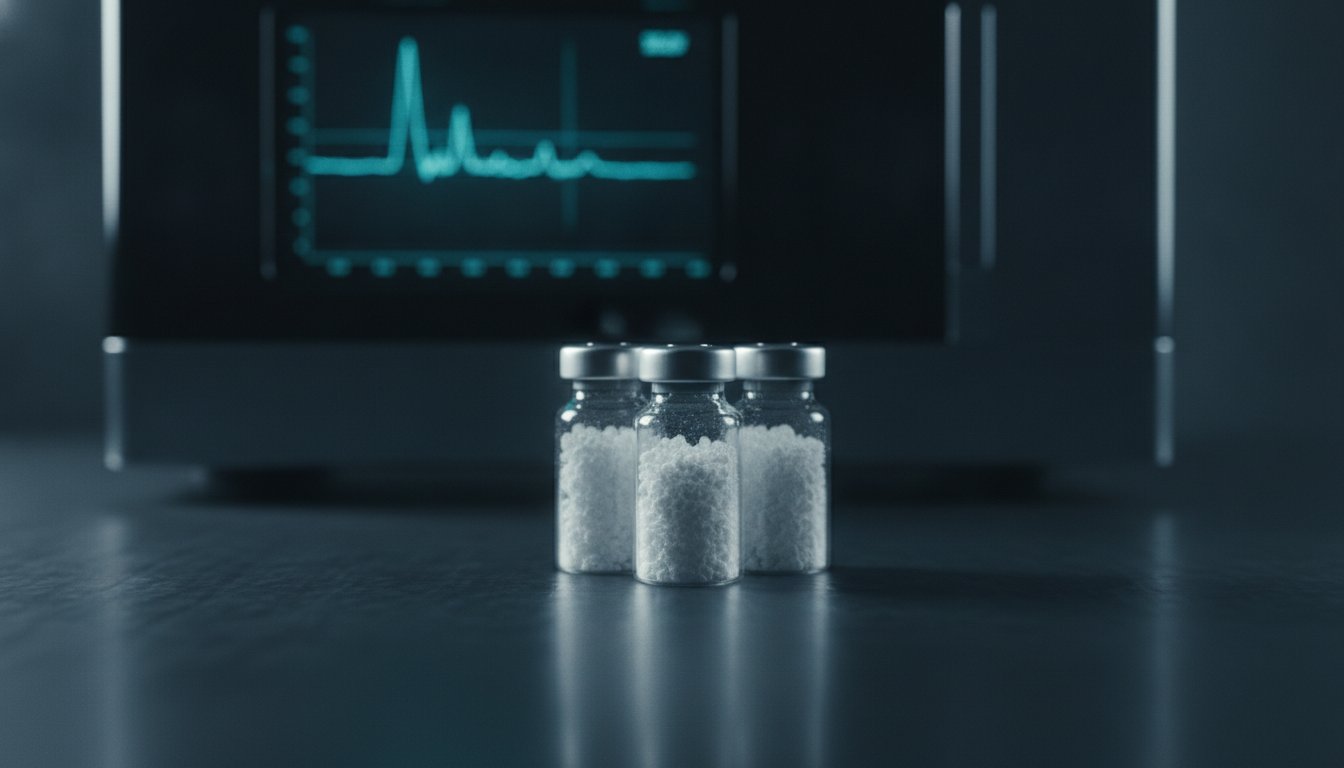
The efficacy of a multi-peptide stack is defined not by the sum of its parts, but by the precision of its molecular synergy. In the sophisticated research environment of 2026, the GHK-Cu BPC-157 TB-500 blend has emerged as a vital tool for investigating multi-pathway tissue regeneration and copper-dependent cellular repair. You likely recognize that experimental integrity hinges on absolute chemical transparency, yet the research market is often flooded with materials that lack batch-specific documentation. This creates a significant risk for time-sensitive studies where purity isn't just a preference; it's a requirement for reproducible results.
This analytical guide provides a comprehensive laboratory reference for the tri-peptide stack, ensuring you have the data necessary to maintain clinical precision. We'll examine the specific actin-regulating and angiogenic mechanisms that drive these molecules, alongside the HPLC standards required for verification. By the end of this guide, you'll understand the biochemical pathways of the blend and the logistical protocols needed for reliable, US-based procurement. We provide the technical depth needed to navigate these complex molecular waters with the confidence of verified data and fluid logistical speed.
Key Takeaways
- Analyze the synergistic molecular mechanisms of the GHK-Cu BPC-157 TB-500 blend and its influence on VEGF signaling pathways.
- Establish rigorous analytical benchmarks for verifying ≥99% purity through batch-specific HPLC and mass spectrometry documentation.
- Implement standardized laboratory protocols for the reconstitution of lyophilized tri-peptide mixtures using bacteriostatic water or sterile saline.
- Streamline research timelines by leveraging US-based inventory and rapid fulfillment channels for time-sensitive experimental cycles.
- Review the 2026 regulatory landscape regarding FDA advisory committee recommendations and WADA compliance for non-clinical research.
The Biochemistry of the GHK-Cu, BPC-157, and TB-500 Tri-Peptide Blend
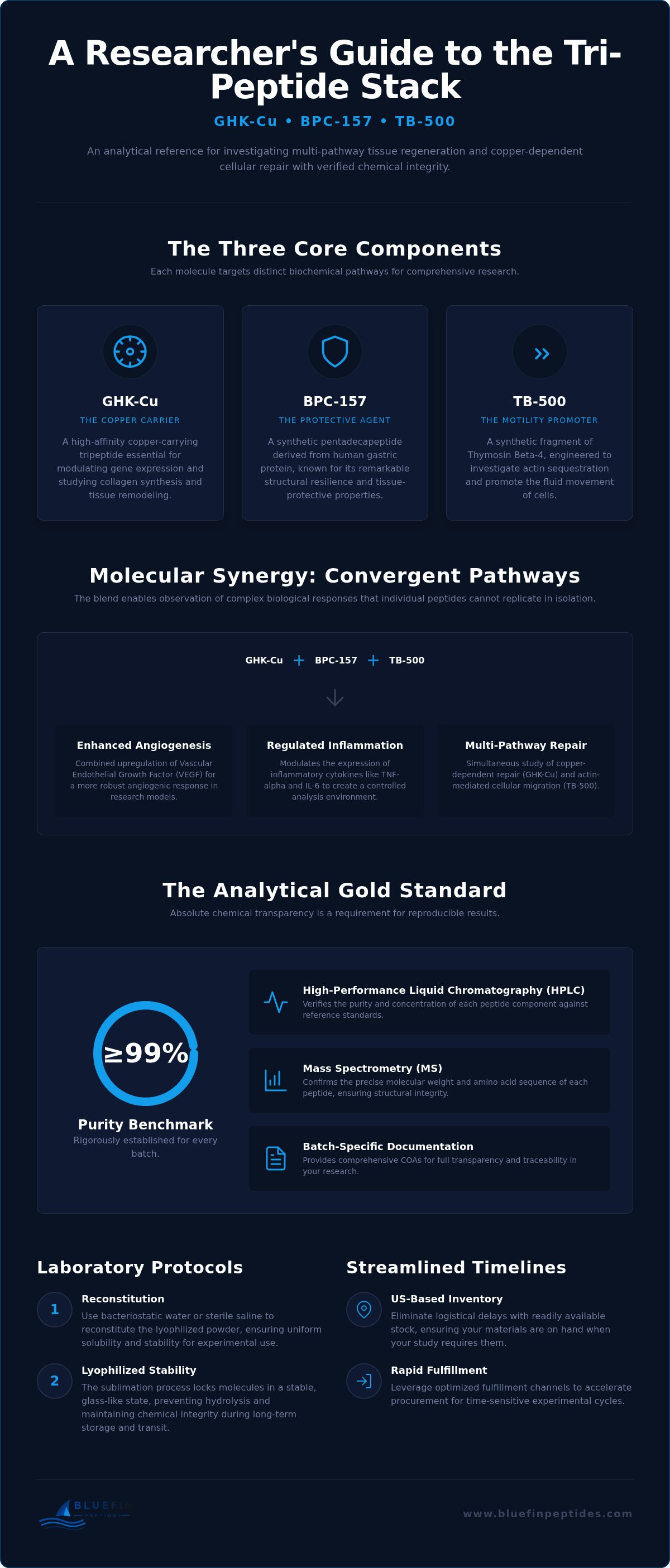
The molecular architecture of the GHK-Cu BPC-157 TB-500 blend represents a sophisticated integration of three distinct signaling molecules into a single research-grade lyophilized vial. This formulation targets the extracellular matrix (ECM) through complementary biochemical pathways. GHK-Cu, a tripeptide composed of Glycyl-L-histidyl-L-lysine, functions as a high-affinity copper carrier essential for tissue remodeling studies. BPC-157 is a synthetic pentadecapeptide originally derived from human gastric protein fragments, known for its stability in diverse experimental conditions. TB-500 acts as a synthetic fragment of Thymosin Beta-4, specifically engineered to investigate actin sequestration and cell migration. Combining these molecules into a unified stack allows researchers to observe multi-pathway interactions that individual peptides cannot replicate in isolation.
Molecular Profiles and Chemical Structures
The chemical integrity of this tri-peptide stack depends on the precise amino acid sequences of its constituents. GHK-Cu utilizes its tripeptide structure to sequester copper ions, forming a stable complex that modulates gene expression related to collagen synthesis. The BPC-157 peptide sequence (Gly-Glu-Pro-Pro-Pro-Gly-Lys-Pro-Ala-Asp-Asp-Ala-Gly-Leu-Val) provides remarkable structural resilience. TB-500 complements this with its specific amino acid chain that promotes the fluid movement of cells across experimental membranes. To maintain this precision, the laboratory employs a rigorous lyophilization process. This sublimation technique removes moisture under a vacuum, locking the molecules in a stable, glass-like state. This prevents hydrolysis and ensures that the chemical nature of the offering remains unchanged during transit and long-term storage.
Historical Context in Peptide Research
Current 2026 standards for multi-peptide formulations are built upon decades of isolated discovery. BPC-157 was first identified during intensive studies of the gastric mucosa, where researchers isolated its unique tissue-protective properties. TB-500 research evolved from broader investigations into full-length Thymosin Beta-4, eventually isolating the specific fragments responsible for cellular motility. GHK-Cu has remained a cornerstone of biochemical research since its discovery in human plasma in the 1970s. Modern protocols now favor the tri-peptide configuration for several reasons:
- Molecular Weight Alignment: The blend balances distinct molecular weights to ensure uniform reconstitution.
- Solubility Synergy: Each component is selected for its ability to remain stable in a shared aqueous environment.
- Pathway Convergence: The combination allows for the simultaneous study of copper-dependent repair and actin-mediated migration.
This historical lineage informs the "show, don't tell" philosophy of modern procurement. It isn't enough to provide the molecules; a high-performance laboratory partner must provide the batch-level data that confirms these historical benchmarks are met in every vial. By aligning these three peptides, researchers can navigate complex cellular currents with an anchored foundation of chemical certainty.
Molecular Synergy: Experimental Mechanisms in Research Models
The experimental utility of the GHK-Cu BPC-157 TB-500 blend arises from the convergence of distinct biochemical signaling pathways. It's a multi-modal tool. While individual peptides offer specific data points, this combination creates a broader experimental scope for observing complex biological responses. BPC-157 provides the foundation for tissue protection mechanisms. TB-500 drives the momentum of cellular movement through actin polymerization. Together, they modulate the expression of inflammatory cytokines like TNF-alpha and IL-6 in vitro. This creates a regulated environment for analyzing tissue repair without the noise of uncontrolled inflammation. This synergy allows researchers to map the fluid movement of cellular repair across multiple biological fronts simultaneously.
Angiogenesis and Vascular Endothelial Growth Factor (VEGF)
BPC-157 and TB-500 independently trigger the upregulation of VEGF. Their combined presence in a research model often results in a more robust angiogenic response than when used in isolation. VEGF signaling is the primary driver of endothelial cell proliferation and the formation of new capillary networks in peptide-induced tissue research. In ischemic models, the GHK-Cu BPC-157 TB-500 blend demonstrates its value by restoring blood flow through complementary signaling. TB-500 facilitates the migration of endothelial cells across the cellular landscape. BPC-157 enhances the survival of these cells under hypoxic stress. The result is a more comprehensive map of vascular development and deep-sea precision in vascular research.
Extracellular Matrix (ECM) Remodeling
GHK-Cu introduces a unique dimension to this stack by modulating matrix metalloproteinases (MMPs) and their inhibitors. This regulation is vital for the orderly degradation and synthesis of the ECM. Research into GHK-Cu's regenerative and protective actions confirms that copper ions are essential for the activity of lysyl oxidase. This enzyme governs the cross-linking of collagen and elastin, ensuring structural integrity in experimental models. By analyzing the molecular mechanisms of the GHK-Cu, BPC-157, and TB-500 research blend, laboratories can observe the precise balance of collagen type I and III synthesis. To ensure your study utilizes these pathways effectively, sourcing from a high-performance laboratory partner is essential for batch-specific verification. This anchored foundation of data ensures that every observation is backed by chemical certainty.
Analytical Quality Standards: HPLC and Mass Spectrometry
Precision in a laboratory environment is the boundary between valid data and experimental failure. For the GHK-Cu BPC-157 TB-500 blend, the industry standard for research-grade material is established at ≥99% purity. Achieving this benchmark requires more than just a statement of intent; it demands rigorous verification through High-Performance Liquid Chromatography (HPLC) and Mass Spectrometry. These analytical methods serve as the definitive tools for identifying the chemical nature of the offering. Without these protocols, impurities such as truncated sequences or residual synthesis reagents can compromise the integrity of your study. We prioritize transparency over marketing fluff, providing the analytical tools necessary for researchers to verify their own results.
Interpreting HPLC Reports for Multi-Peptide Blends
HPLC is the primary methodology for detecting impurities within a multi-peptide mixture. When reviewing the analytical profile of GHK-Cu BPC-157 TB-500 blends, a researcher must look for distinct peak resolutions for each constituent peptide. A high-performance chromatogram should show three clearly defined peaks with minimal baseline noise. This process also detects the presence of residual solvents and counter-ions like Trifluoroacetic acid (TFA). While TFA is a common byproduct of solid-phase peptide synthesis, its levels must be strictly controlled to prevent interference with in vitro cellular models. Stoic reliability in testing ensures that these contaminants are identified and quantified before the material ever reaches your laboratory.
The Importance of Mass-Spec Confirmation
While HPLC confirms purity, Mass Spectrometry (Mass-Spec) confirms identity. It verifies that the synthesis matches the intended amino acid sequence by measuring the molecular weight of the molecules. For GHK-Cu, spectral analysis must account for the specific mass of the copper-peptide complex. This is a critical step because a simple tripeptide without the copper ion will not yield the same experimental results. These analytical quality standards for research peptides are the floor of our operational protocols. Every batch-level report acts as a secure anchor for your data, ensuring that the GHK-Cu BPC-157 TB-500 blend you procure is exactly what the synthesis intended.
Academic transparency requires batch-specific Certificates of Analysis (COAs). A "representative" COA is insufficient for high-stakes research. We provide documentation for every vial, reflecting a "show, don't tell" philosophy that treats you as a peer in the scientific field. This disciplined approach to documentation ensures that your focus remains on the "how" of your research, while we handle the "what" of the chemical quality. It's about security, trust, and the unwavering commitment to analytical excellence.
Laboratory Protocols: Reconstitution and Storage
The transition from analytical verification to experimental application requires strict adherence to handling protocols. Reconstituting a lyophilized GHK-Cu BPC-157 TB-500 blend is a delicate procedure where precision prevents the degradation of fragile peptide bonds. Every vial is vacuum-sealed to preserve chemical stability. This vacuum must be managed carefully. Introducing the diluent too rapidly can cause shear stress, potentially compromising the molecular integrity of the TB-500 fragments. Researchers must allow the diluent to flow down the side of the glass, utilizing the vial's natural vacuum pull without creating turbulence. This methodical approach ensures the chemical nature of the offering remains intact for the duration of the study.
Reconstitution Best Practices
Proper dissolution is a passive process. Once the diluent is introduced, the vial should be swirled gently rather than shaken; agitation is the primary cause of peptide denaturation in a laboratory setting. GHK-Cu presents unique solubility challenges within a multi-peptide formulation due to its high hydrophilicity and the presence of the copper complex. Ensuring a clear, particulate-free solution is essential before proceeding with any in vitro analysis. Optimal concentration for experimental consistency is typically achieved at 5mg/mL to 10mg/mL depending on the specific research model requirements. If the solution appears cloudy, it indicates incomplete dissolution or potential contamination, requiring immediate investigation of the batch-level data.
Stability and Storage Requirements
Maintaining the cold chain is the anchor of research integrity. In its lyophilized state, the GHK-Cu BPC-157 TB-500 blend remains stable at -20°C for up to 24 months. However, once reconstituted, the molecular clock accelerates significantly. Reconstituted peptides should be stored at 2°C to 8°C and utilized within a specific window to avoid the accumulation of degradation products. TB-500 is particularly sensitive to light and thermal fluctuations. Light-protected vials and consistent temperature monitoring are non-negotiable requirements for preserving the actin-regulating properties of the molecule.
Researchers must also consider the choice of diluent based on the intended experimental timeline. Bacteriostatic water is the standard for multi-use research vials due to its ability to inhibit bacterial growth. Sterile saline is often preferred for specific assays where pH balance and osmotic pressure are critical variables. To secure the highest quality materials for your study, you can procure HPLC-verified research blends that are shipped with the same logistical speed and precision required for your experimental success. This disciplined approach to storage and handling ensures that the "how" of your process never compromises the "what" of your results.
Procuring Research Peptides: The Bluefin Peptides Standard
Efficiency in procurement is the final logistical hurdle in the experimental cycle. Bluefin Peptides operates as a high-performance laboratory partner, prioritizing the "how" of our processes to ensure the "what" of your results. We specialize in the distribution of the GHK-Cu BPC-157 TB-500 blend, maintaining an inventory that adheres to the highest biochemical standards. Every offering is strictly designated for Research Use Only (RUO), ensuring full legal compliance and alignment with laboratory requirements. We don't ask for blind trust; we provide the tools for verification. Our "show, don't tell" philosophy regarding quality is anchored in the belief that researchers deserve absolute chemical transparency.
US-Based Stock and National Fulfillment
Domestic inventory is a critical safeguard against transit-related degradation. By maintaining a US-based stock, we reduce the time sensitive biochemicals spend in fluctuating environments. This logistical speed is essential for maintaining the cold chain protocols discussed in previous sections. Our fulfillment operations are characterized by maritime-inspired precision, navigating the complexities of national shipping with fluid movement and reliability. Every GHK-Cu BPC-157 TB-500 blend order is housed in professional-grade, secure packaging designed to withstand the rigors of transit. This ensures that the physical state and chemical nature of the molecules remain undisturbed from our laboratory to yours. Speed isn't a substitute for security; it's a component of it.
Commitment to Academic Transparency
We treat every researcher as a peer in a professional field. This means providing the documentation necessary for academic transparency without the need for additional requests. Batch-specific HPLC and Mass-Spec reports are available for every customer, reflecting our unwavering commitment to clinical precision. This disciplined approach extends to our customer support, which is managed by specialists who understand the technical register of peptide research. We don't provide medical consultations or retail supplements; we provide the high-purity tools required for scientific discovery. You can secure HPLC-verified GHK-Cu BPC-157 TB-500 Research Blends for your laboratory and ensure your data is backed by the industry's most rigorous testing protocols. Reliability is our standard. Precision is our promise.
Advancing Experimental Integrity in Peptide Research
The integration of GHK-Cu, BPC-157, and TB-500 into a single research tool provides a multi-pathway approach to investigating tissue repair and cellular migration. As established, the synergy of these molecules relies on absolute chemical identity and stringent laboratory handling. Maintaining the cold chain and following precise reconstitution protocols are the final steps in securing valid experimental data. For researchers navigating high-stakes environments, the GHK-Cu BPC-157 TB-500 blend must be anchored in verifiable purity to prevent synthesis byproducts from compromising results.
Bluefin Peptides operates as a disciplined logistics specialist, providing the transparency required for academic success. We provide ≥99% HPLC-verified purity and batch-specific COAs to ensure every vial meets your rigorous standards. Our US-stocked inventory enables rapid national shipping; this allows your study to maintain its momentum without the risks of international transit delays. Secure the foundation of your next project with a partner focused on analytical excellence and fluid logistical speed. We provide the data, you drive the discovery.
Procure HPLC-Verified GHK-Cu BPC-157 TB-500 Research Blends and advance your research with confidence.
Frequently Asked Questions
What is the purity standard for the GHK-Cu BPC-157 TB-500 research blend?
The established benchmark for this research material is ≥99% purity as verified by High-Performance Liquid Chromatography (HPLC). This rigorous standard ensures that experimental noise remains minimal by quantifying and limiting residual synthesis reagents or truncated sequences. Such precision is necessary for maintaining the integrity of high-stakes laboratory observations and ensuring reproducible results across different study cycles.
How is the molecular identity of the peptides in the blend verified?
Molecular identity is confirmed through Mass Spectrometry (Mass-Spec), which measures the exact molecular weight of each constituent peptide. This process verifies that the synthesized amino acid sequences match the intended chemical profiles for GHK-Cu, BPC-157, and TB-500. Identity verification acts as a critical safeguard against sequence errors that standard purity testing alone might fail to detect.
Can this peptide blend be stored at room temperature during shipping?
Lyophilized peptide blends maintain structural stability at room temperature for short durations, typically up to four weeks. While the molecules are resilient in their glass-like state, we utilize US-stocked inventory and rapid fulfillment to minimize environmental exposure during transit. Long-term laboratory integrity is best preserved by returning the material to a temperature-controlled environment immediately upon arrival.
What is the recommended reconstitution solution for laboratory research?
Bacteriostatic water is the standard diluent for multi-use research vials because its 0.9% benzyl alcohol content inhibits bacterial growth. For specific in vitro assays where pH sensitivity or osmotic pressure are critical variables, sterile saline may be the preferred choice. The selection of a diluent must align with the specific requirements of the experimental model and the intended timeline for analysis.
Why is GHK-Cu combined with BPC-157 and TB-500 in a single vial?
The GHK-Cu BPC-157 TB-500 blend is formulated to investigate the convergent pathways of angiogenesis, extracellular matrix remodeling, and actin-mediated cell migration. Researchers utilize this combination to observe multi-modal cellular responses that isolated peptides cannot replicate in isolation. This synergy allows for a more comprehensive analysis of complex tissue regeneration mechanisms within diverse research models.
Does Bluefin Peptides provide batch-specific HPLC reports?
Yes, we provide batch-specific Certificates of Analysis (COAs) for every research compound in our inventory. Our "show, don't tell" philosophy ensures that you receive the actual HPLC and Mass-Spec data for the specific vial in your laboratory. We prioritize academic transparency by providing the tools for verification rather than asking for blind trust in representative reports.
What is the shelf life of the lyophilized tri-peptide blend in a research setting?
The lyophilized tri-peptide mixture remains stable for up to 24 months when stored in a deep-freeze environment at -20°C. For studies with shorter durations, refrigeration at 2°C to 8°C provides stability for approximately 12 months. Maintaining these temperature anchors is essential for preventing the hydrolysis of peptide bonds and ensuring the chemical nature of the offering remains unchanged.
Is the GHK-Cu BPC-157 TB-500 blend intended for human consumption?
No, this material is strictly designated for Research Use Only (RUO). It isn't approved by the FDA for human or veterinary use, nor is it intended for diagnostic or therapeutic applications. All chemical procurement must adhere to these legal boundaries; the material should be handled only by qualified researchers within a controlled laboratory environment.
For laboratory research use only. Not for human or veterinary use. This content is educational and does not constitute medical, dosing, or usage guidance.
Browse the BLUEFIN catalog