Analytical Profile: GHK-Cu BPC-157 TB-500 Blend Research and Molecular Mechanisms
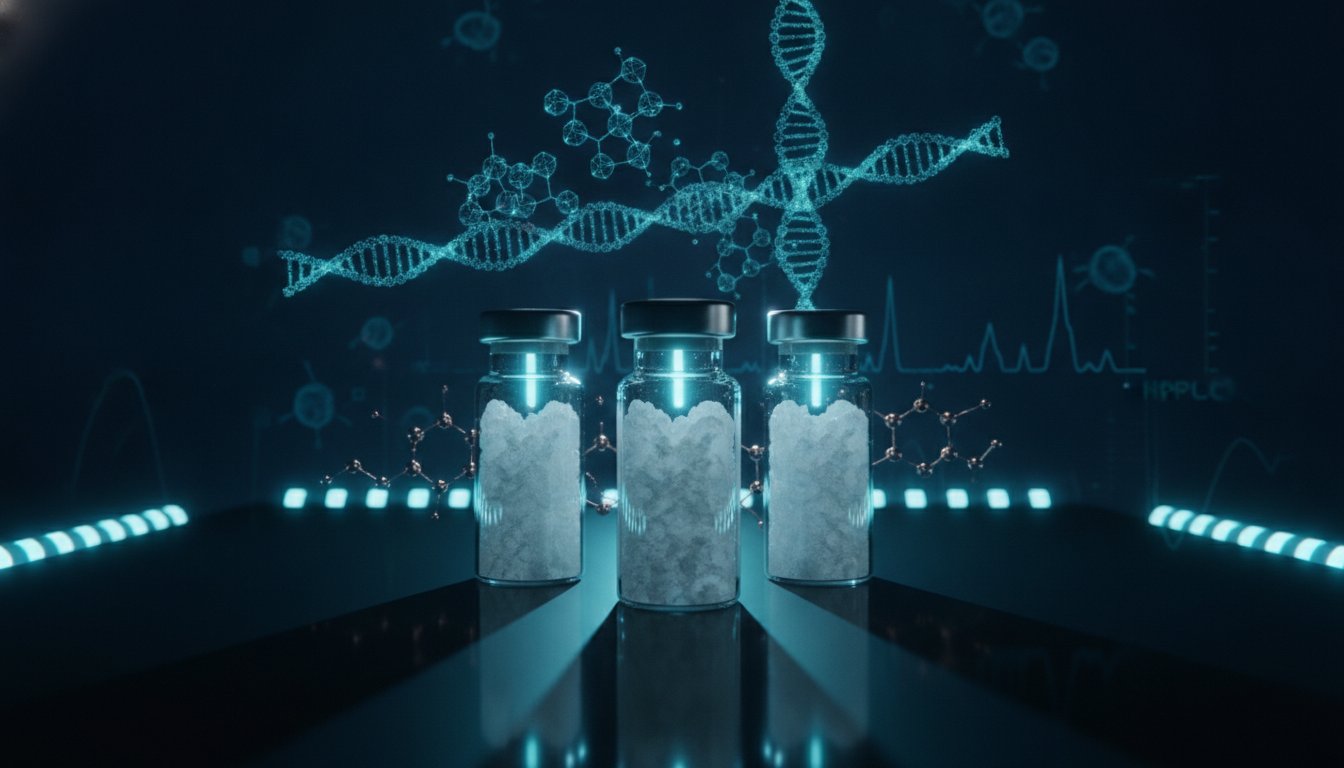
The assumption that combining GHK-Cu, BPC-157, and TB-500 simply layers their individual effects ignores the complex, non-linear interactions occurring at the cellular level. Precision. Verification. Reliability. Most researchers recognize that while these compounds are potent in isolation, their confluence creates a unique metabolic environment that demands rigorous analytical scrutiny. Navigating the data gaps in GHK-Cu BPC-157 TB-500 blend research requires moving beyond surface-level observations toward a deep-sea precision in molecular mapping.
You've likely encountered the frustration of conflicting data regarding synergistic versus redundant pathways, especially when chemical stability is at stake. This profile provides a technical exploration of how distinct angiogenic and actin-binding mechanisms converge to drive cellular signaling. We'll examine the HPLC-verified purity standards essential for laboratory reliability and identify the specific storage protocols required to preserve molecular integrity. This analysis ensures the methodology behind the triad's synergistic potential remains clear, objective, and verifiable.
Key Takeaways
- Examine the synergistic molecular pathways where GHK-Cu, BPC-157, and TB-500 converge to influence extracellular matrix remodeling and cellular migration.
- Analyze the specific biochemistry of GHK-Cu and its high affinity for Copper (II) as a primary driver of gene expression modulation in laboratory settings.
- Master the interpretation of HPLC and mass spectrometry reports to verify the ≥99% purity standards essential for GHK-Cu BPC-157 TB-500 blend research.
- Differentiate between the nitric oxide modulation of BPC-157 and the actin-sequestration mechanisms of TB-500 to predict non-linear research outcomes.
- Prioritize US-based fulfillment and batch-specific COAs to maintain experimental momentum and ensure chemical stability in multi-peptide formulations.
Contextualizing the GHK-Cu, BPC-157, and TB-500 Research Triad
The transition from single-target molecular analysis to integrated multi-pathway models marks a significant shift in contemporary biochemistry. Isolated studies often fail to capture the complex signaling cascades inherent in biological systems. This reality has driven the emergence of multi-peptide blends as a standard in laboratory environments. The GHK-Cu BPC-157 TB-500 blend research framework represents a sophisticated approach to experimental tissue regeneration modeling. By co-analyzing these three distinct compounds, researchers can observe how diverse mechanisms, such as gene modulation, nitric oxide signaling, and actin sequestration, interact within a controlled environment. Integrated. Multi-modal. Verifiable.
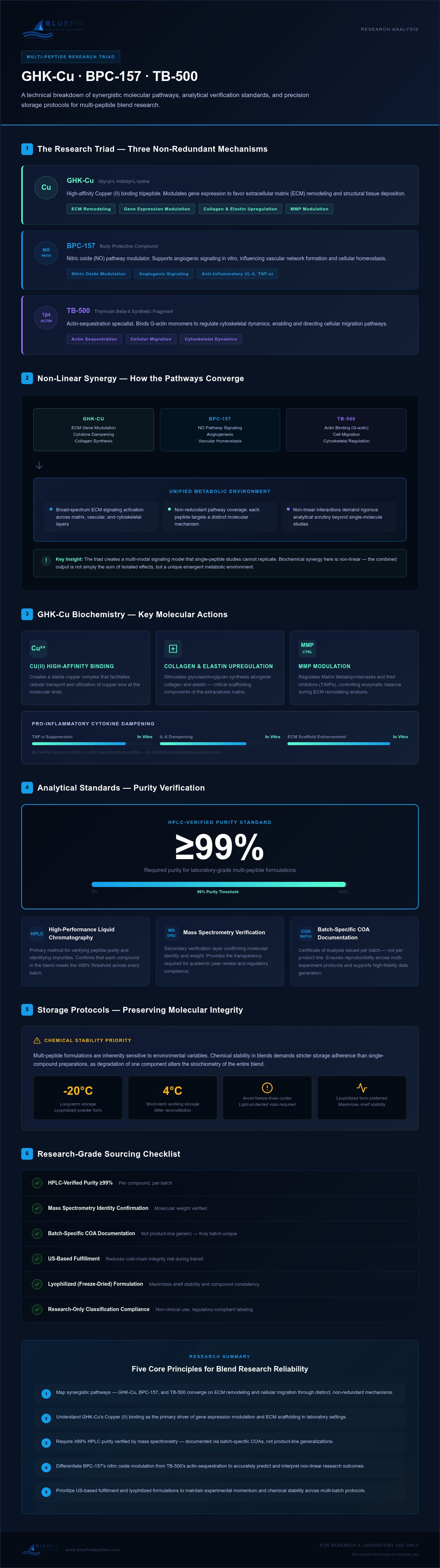
The rationale for co-analyzing GHK-Cu, BPC-157, and TB-500 lies in their non-redundant pathways. While BPC-157 is frequently studied for its influence on the nitric oxide pathway, TB-500 is recognized for its role in cellular migration through actin binding. GHK-Cu adds a layer of complexity by modulating gene expression related to the extracellular matrix. This triad provides a unified analytical profile that moves beyond surface-level observations. It allows for the mapping of synergistic effects that single-molecule studies simply cannot replicate. Navigating this research landscape requires a commitment to deep-sea precision and a focus on the "how" of molecular interaction.
The Rationale for Multi-Peptide Blends
Biochemical synergy is rarely a linear equation. Multi-peptide blends address both redundant and complementary biological pathways simultaneously, creating a more robust signaling model. This approach may enhance observed bioactivity by providing a broader spectrum of molecular triggers within a single experimental setup. Utilizing standardized, lyophilized blends also minimizes experimental variables. It ensures that the ratio of compounds remains consistent across multiple test groups, which is essential for generating reproducible, high-fidelity data in high-stakes laboratory settings.
Bluefin Standards: Research-Only Classification
Precision is the bedrock of scientific discovery. All compounds discussed in this analytical profile are strictly classified for research purposes only. This distinction is vital for maintaining regulatory compliance and ensuring laboratory reliability. Laboratory-grade chemicals must meet rigorous analytical standards, including ≥99% HPLC-verified purity. Verification through mass spectrometry provides the transparency required for academic peer review. Procuring these materials necessitates a commitment to non-clinical environments. We prioritize a "show, don't tell" philosophy, where batch-specific COAs and US-based fulfillment ensure experimental momentum remains uninterrupted. Reliability isn't assumed; it's documented.
The Biochemistry of GHK-Cu Peptide in Molecular Research
GHK-Cu, or Glycyl-L-histidyl-L-lysine, stands as a cornerstone in the study of copper-dependent signaling pathways. Its molecular structure possesses a specific, high affinity for Copper (II) ions. This binding isn't incidental; it creates a stable complex that facilitates the transport and utilization of copper at the cellular level. In the context of GHK-Cu BPC-157 TB-500 blend research, understanding this tripeptide's role in extracellular matrix (ECM) remodeling is essential. It acts by modulating gene expression, shifting the balance of protein synthesis to favor structural integrity and organized tissue deposition.
Research indicates that GHK-Cu serves as a potent modulator of inflammatory cytokine expression in vitro. By dampening the production of pro-inflammatory markers like TNF-alpha and IL-6, it creates a biochemical environment conducive to stable cellular analysis. Beyond cytokine modulation, the complex stimulates the synthesis of glycosaminoglycans and collagen. These components are vital for maintaining the scaffolding of the extracellular environment. For laboratories conducting high-fidelity analysis, utilizing HPLC-verified research blends ensures that the stoichiometry of these interactions remains consistent across every batch.
- High binding affinity for Cu2+ ions.
- Modulation of MMPs (Matrix Metalloproteinases) and their inhibitors.
- Upregulation of collagen and elastin synthesis.
Copper-Peptide Interactions and DNA Repair
The influence of GHK-Cu extends into the nucleus. Evidence suggests the complex can influence the expression of numerous genes involved in DNA repair. This capability makes it a primary subject in studies concerning cellular senescence and longevity. Its antioxidant properties are equally significant. By increasing the activity of antioxidant enzymes like superoxide dismutase, GHK-Cu helps neutralize reactive oxygen species. This protection is critical in research environments where oxidative stress might otherwise compromise cellular viability or experimental data.
GHK-Cu in Angiogenic Research
Angiogenesis represents a critical frontier in molecular biology. GHK-Cu demonstrates a clear synergy with Vascular Endothelial Growth Factor (VEGF) pathways. It enhances microcirculation models by promoting the proliferation of endothelial cells through copper-mediated signaling. This mechanism is distinct from the nitric oxide pathways utilized by other peptides in the triad. GHK-Cu is a tripeptide that binds copper to modulate tissue remodeling. By providing a copper-dependent pathway, it adds a layer of multi-modal complexity to the broader analytical profile of the research blend.
Mechanistic Synergy: Angiogenesis and Actin-Binding Pathways
Synergy is not redundancy. While superficial analyses often conflate the functions of BPC-157 and TB-500, GHK-Cu BPC-157 TB-500 blend research reveals a sophisticated division of labor at the molecular level. BPC-157, a gastric pentadecapeptide, functions primarily as a signaling organizer through the nitric oxide pathway. In contrast, TB-500, a synthetic fragment of Thymosin Beta-4, operates as a structural catalyst through actin sequestration. One organizes; the other mobilizes. This convergence creates a potent environment for studying angiogenic signaling where distinct molecular currents meet with deep-sea precision.
The interaction between these compounds becomes evident in the modulation of the Vascular Endothelial Growth Factor (VEGF) system. While BPC-157 influences the VEGFR2 signaling pathway to promote vascular organization, TB-500 facilitates the physical migration of endothelial cells required to form new vessels. GHK-Cu complements this duo by providing the necessary extracellular matrix (ECM) remodeling signals discussed in previous sections. This triad ensures that the research model accounts for both the biochemical instruction and the physical infrastructure of cellular repair. It's a multi-modal approach that demands HPLC-verified high-purity compounds for accurate quantification.
Cellular Migration and Cytoskeletal Remodeling
TB-500 acts as a critical regulator of cell motility in experimental wound models. By binding to G-actin, it prevents premature polymerization, maintaining a pool of available monomers for rapid cytoskeletal reorganization. This migratory influence is distinct from the organizational influence of BPC-157, which focuses on the stability of the nitric oxide system. In studies involving myofibroblast differentiation, this actin-binding mechanism is essential for observing how cells transition from a stationary to a migratory state. The result is a more dynamic and accurate representation of cellular movement in vitro.
Nitric Oxide and Vascular Organization
BPC-157 demonstrates remarkable molecular stability across various pH environments, making it a resilient subject for diverse laboratory protocols. Its primary mechanism involves the upregulation of the VEGFR2 signaling pathway, which is central to vascular integrity and organization. For a comprehensive look at these interactions, researchers should consult the Molecular Mechanisms of the GHK-Cu, BPC-157, and TB-500 Research Blend. This stability, paired with ≥99% HPLC verification, allows for high-fidelity data collection in complex signaling models. Reliable results require reliable inputs. Precision. Consistency. Verification.
Analytical Standards: Verifying Purity in Multi-Peptide Formulations
Verification is the final checkpoint in any rigorous experimental protocol. In GHK-Cu BPC-157 TB-500 blend research, the analytical complexity increases exponentially compared to single-molecule studies. When multiple peptides are synthesized and lyophilized in a single vial, the risk of co-elution and impurity overlap becomes a significant hurdle for data integrity. Achieving ≥99% purity isn't just a benchmark; it's a requirement for ensuring that observed cellular responses are the result of the intended peptides rather than synthesis byproducts or residual solvents. Precision. Transparency. Verification.
Interpreting analytical reports for complex blends requires a disciplined eye. While a single-compound HPLC report might show a clear, isolated peak, a triad blend demands a more sophisticated chromatographic profile to ensure each component maintains its stoichiometric ratio. Mass Spectrometry (MS) serves as the necessary partner to HPLC, confirming the precise molecular weight and sequence identity of GHK-Cu, BPC-157, and TB-500. This two-tier verification process ensures that the compound's chemical signature matches its theoretical profile before it ever reaches the laboratory. Review our HPLC-verified research blends to ensure your experimental inputs meet these uncompromising standards.
HPLC and Mass-Spec: The Gold Standards
Identifying impurities like truncated sequences or deamidated peptides is critical for maintaining experimental momentum. Single-compound testing is insufficient for multi-peptide blends because it fails to account for the potential interactions or degradation products unique to the combined state. HPLC is the primary method for quantifying peptide purity through chromatography. By utilizing high-resolution mass spectrometry, researchers can confirm that each peak on the chromatogram corresponds to the correct peptide sequence, effectively eliminating the "blind spots" found in lower-tier testing protocols.
- Confirming batch-specific molecular weights via ESI-MS.
- Quantifying peptide content through UV absorbance at 214nm.
- Detecting trace trifluoroacetic acid (TFA) levels.
Chemical Stability and Storage Protocols
The role of lyophilization is central to preserving chemical stability during transit and long-term storage. This freeze-drying process removes moisture that could otherwise lead to peptide hydrolysis. For optimal results, lyophilized vials should be stored at -20°C or -80°C to minimize thermal degradation. Once reconstituted, variables like solvent choice and pH significantly impact peptide integrity. For a deeper dive into maintaining these standards, consult our Analytical Quality Standards for Research Peptides: A Laboratory Guide. Stoic reliability in storage ensures that the "what" of your results remains as precise as the "how" of your methodology.
Sourcing Verified Research Blends for Laboratory Use
The transition from theoretical molecular mapping to practical laboratory application hinges on the reliability of the supply chain. In the context of GHK-Cu BPC-157 TB-500 blend research, domestic procurement in the United States offers a strategic advantage. International logistics often introduce variables such as thermal instability during transit or inconsistent regulatory oversight. By prioritizing US-stocked research supplies, laboratories maintain experimental momentum and ensure that the chemical integrity of the triad remains uncompromised. Momentum. Reliability. Security.
Bluefin Peptides operates as a high-performance laboratory partner, providing the tools for verification rather than asking for blind trust. Every batch undergoes rigorous analytical testing to confirm that the stoichiometric ratios of GHK-Cu, BPC-157, and TB-500 remain precise. This commitment to transparency allows researchers to finalize their protocols with confidence, knowing that the physical state of the offering matches the documented data. Navigating the complexities of multi-peptide sourcing requires a steady hand and a focus on batch-level details. We ensure that the anchor of your research—the chemical input—is as stable as the methodology itself.
The Bluefin Logistics Advantage
Urgent precision defines our fulfillment process. Rapid turnaround is essential for time-sensitive research, and our US-based logistics network eliminates the delays associated with cross-border shipping. Every shipment utilizes secure, temperature-stable packaging designed to preserve peptide integrity against environmental fluctuations. Researchers gain immediate access to batch-specific Certificates of Analysis (COAs), providing the HPLC and mass spectrometry data necessary for internal verification. Transparency isn't a promise; it's a protocol.
- Same-day or next-day fulfillment for US-based laboratories.
- Tamper-evident, climate-controlled shipping containers.
- Direct access to raw analytical data for every batch.
Implementing the Blend in Molecular Models
Successful integration of the blend into molecular models requires standardized reconstitution. Utilizing bacteriostatic water or sterile saline, depending on the specific experimental requirements, ensures that the peptide sequences remain stable for the duration of the study. Documentation best practices are equally vital. For peer-reviewed research, recording the batch number and verifying the purity profile against the COA is a non-negotiable step for generating reproducible results. This disciplined approach to laboratory management ensures that the "how" of your process leads to the "what" of your discoveries. To maintain this level of precision in your laboratory, you may Procure HPLC-Verified GHK-Cu BPC-157 TB-500 Blends directly from our verified inventory.
Advancing Experimental Precision in Molecular Signaling
The convergence of GHK-Cu, BPC-157, and TB-500 provides a sophisticated framework for observing integrated cellular responses in laboratory environments. This profile has mapped the distinct molecular mechanisms that drive GHK-Cu BPC-157 TB-500 blend research, from nitric oxide modulation to actin sequestration and gene expression. Success in these high-stakes settings depends entirely on the analytical integrity of the compounds utilized. High-purity inputs aren't a luxury; they're the bedrock of reproducible data and peer-reviewed credibility. Stoic reliability in the "how" of your process ensures the "what" of your results.
Maintaining experimental momentum requires a partner focused on documentation and transparency. We provide ≥99% HPLC-verified purity and mass-spec confirmation for every batch to ensure your molecular models remain accurate and verifiable. With domestic US fulfillment, the transition from procurement to analysis is seamless, secure, and rapid. Urgent precision is our standard. Every data point matters, and every batch is documented to meet your rigorous requirements.
Explore the GHK-Cu BPC-157 TB-500 Research Blend Portfolio to secure verified compounds for your next project. We look forward to supporting your laboratory's commitment to scientific excellence and methodological rigor.
Frequently Asked Questions
What is the primary mechanism of action for GHK-Cu in research?
GHK-Cu functions primarily through its high affinity for Copper (II) ions to form a stable tripeptide-copper complex. This complex modulates gene expression specifically within the extracellular matrix to influence protein synthesis and structural organization. It acts as a signaling molecule that directs cellular responses toward organized tissue deposition. In laboratory settings, this mechanism is essential for studying gene-driven remodeling and cytokine modulation in controlled environments.
How does BPC-157 differ from TB-500 in angiogenic studies?
BPC-157 and TB-500 serve distinct, non-redundant roles in angiogenic signaling models. BPC-157 acts as a signaling organizer by upregulating the VEGFR2 pathway through nitric oxide modulation. In contrast, TB-500 facilitates physical movement by binding to G-actin to maintain a monomer pool for cytoskeletal remodeling. One provides the biochemical instruction; the other provides the physical mobility. This division of labor is a central focus of multi-peptide analysis.
Is the GHK-Cu BPC-157 TB-500 blend stable at room temperature?
Lyophilized GHK-Cu BPC-157 TB-500 blend research materials are stable at room temperature during short-term transit. However, long-term chemical stability requires storage at -20°C or -80°C to prevent thermal degradation. Once reconstituted, the peptides are significantly more labile and should be utilized immediately or stored under strict refrigeration. Maintaining these temperature protocols is vital for preserving the molecular integrity of the lyophilized powder before experimental use.
Why is HPLC verification critical for multi-peptide blends?
HPLC verification is critical for multi-peptide blends because it allows for the precise separation and quantification of each individual component. In a complex mixture, single-compound tests don't detect co-eluting impurities or verify that the stoichiometric ratios of GHK-Cu, BPC-157, and TB-500 remain accurate. High-resolution chromatography ensures that synthesis byproducts are identified and excluded. This level of verification is the only way to ensure laboratory-grade reliability.
What solvents are recommended for reconstituting this research blend?
Bacteriostatic water or sterile saline are the primary solvents recommended for reconstituting these research blends. The choice depends on the specific requirements of the experimental model and the desired pH stability of the resulting solution. Researchers must ensure gentle agitation during reconstitution to avoid mechanical shear, which can compromise the secondary structure of the peptides. Proper solvent selection ensures that the compounds remain stable throughout the duration of the analysis.
Can GHK-Cu influence gene expression in laboratory models?
GHK-Cu demonstrates a significant capacity to modulate gene expression in various laboratory models. Research indicates it can influence the expression of genes involved in DNA repair and the production of antioxidant enzymes like superoxide dismutase. This makes it a valuable subject for studying cellular senescence and the molecular mechanisms of longevity in vitro. By observing these changes, researchers can map the complex signaling cascades that govern cellular health and repair.
What is the purity standard for Bluefin Peptides research blends?
The purity standard for all Bluefin Peptides research blends is ≥99% as verified by High-Performance Liquid Chromatography (HPLC). Every batch undergoes mass spectrometry to confirm the precise molecular weight and sequence identity of each peptide. This "show, don't tell" approach to quality ensures that researchers receive materials that meet the highest analytical standards. Verification through batch-specific COAs provides the transparency required for high-stakes laboratory environments and peer-reviewed studies.
Are these peptides intended for human consumption or medical use?
These peptides are strictly intended for laboratory research and in vitro analysis only. They are not human-grade pharmaceuticals, medical consultations, or retail supplements. All compounds are classified as research chemicals and must not be used for human consumption, veterinary medications, or any clinical applications. Adherence to these boundaries is essential for maintaining regulatory compliance and ensuring that materials are used only within their designated scientific scope.
For laboratory research use only. Not for human or veterinary use. This content is educational and does not constitute medical, dosing, or usage guidance.
Browse the BLUEFIN catalog