Tirzepatide Research Peptide: Analytical Specifications and Purity Standards
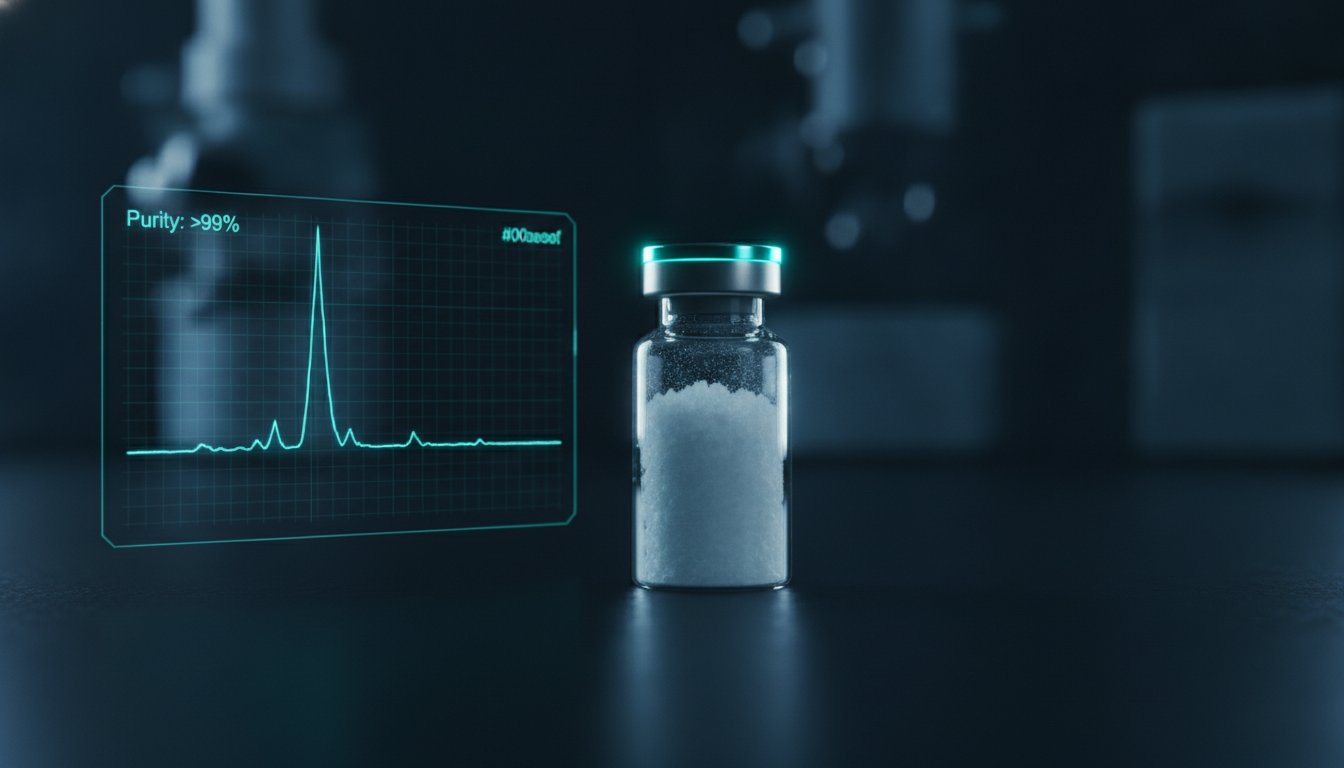
A single molecular impurity in a complex dual agonist can destabilize an entire experimental sequence. In the deep-water precision of modern laboratory environments, settling for the common 98% purity threshold is a calculated risk that most investigators can't afford. You require absolute transparency and verifiable data to ensure your tirzepatide research peptide meets the rigid specifications of your protocol. We recognize that inconsistent batch quality and the absence of clear documentation act as volatile currents that threaten the integrity of your data.
This article serves as a comprehensive technical reference for the chemical properties, purity verification, and handling of high-fidelity tirzepatide. We'll detail the necessity of batch-specific HPLC and Mass-Spec documentation to confirm the 4,813 Dalton molecular weight and ensure a ≥99% purity profile. Precision. Verification. Security. You'll gain a clear understanding of the analytical standards required for procurement and the logistical framework that supports rapid, US-based fulfillment for time-sensitive research. Every data point is a commitment to the "Research Use Only" standard, ensuring your laboratory operates within strict analytical and legal boundaries.
Key Takeaways
- Identify the unique dual-agonist mechanism of tirzepatide as a 39-amino acid modified peptide targeting both GIP and GLP-1 receptors.
- Understand why ≥99% HPLC verification is the mandatory benchmark for credible laboratory results and how to interpret batch-specific chromatograms.
- Contrast the molecular profiles of a tirzepatide research peptide against single-agonist analogues like semaglutide and triple-agonist compounds like retatrutide.
- Master precise reconstitution protocols and storage requirements to prevent peptide shear and maintain structural integrity during experimental sequences.
- Recognize the logistical necessity of US-based inventory and mass-spectrometry confirmation to ensure rapid, secure fulfillment for time-sensitive research.
Tirzepatide as a Dual Agonist Research Compound
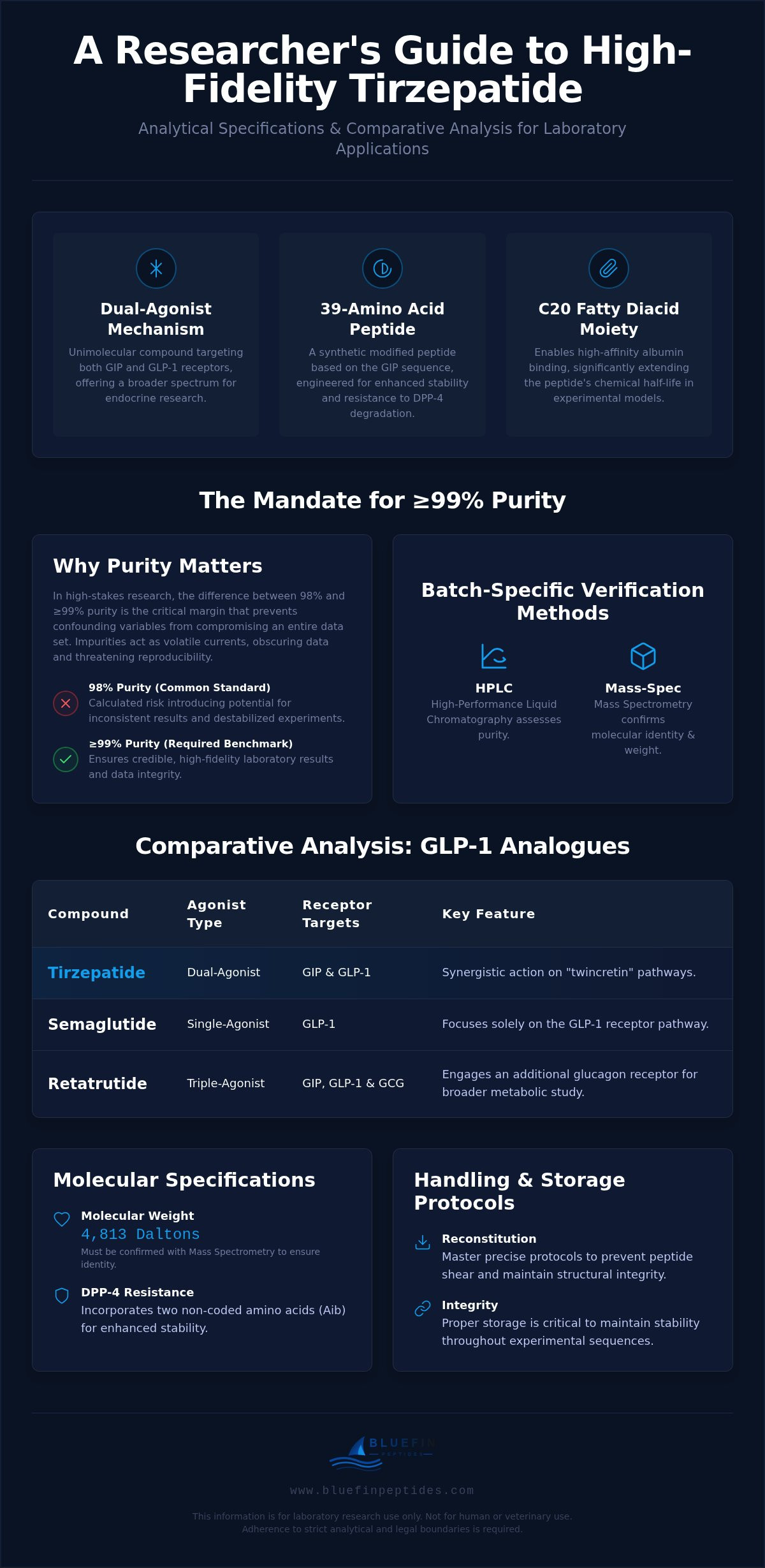
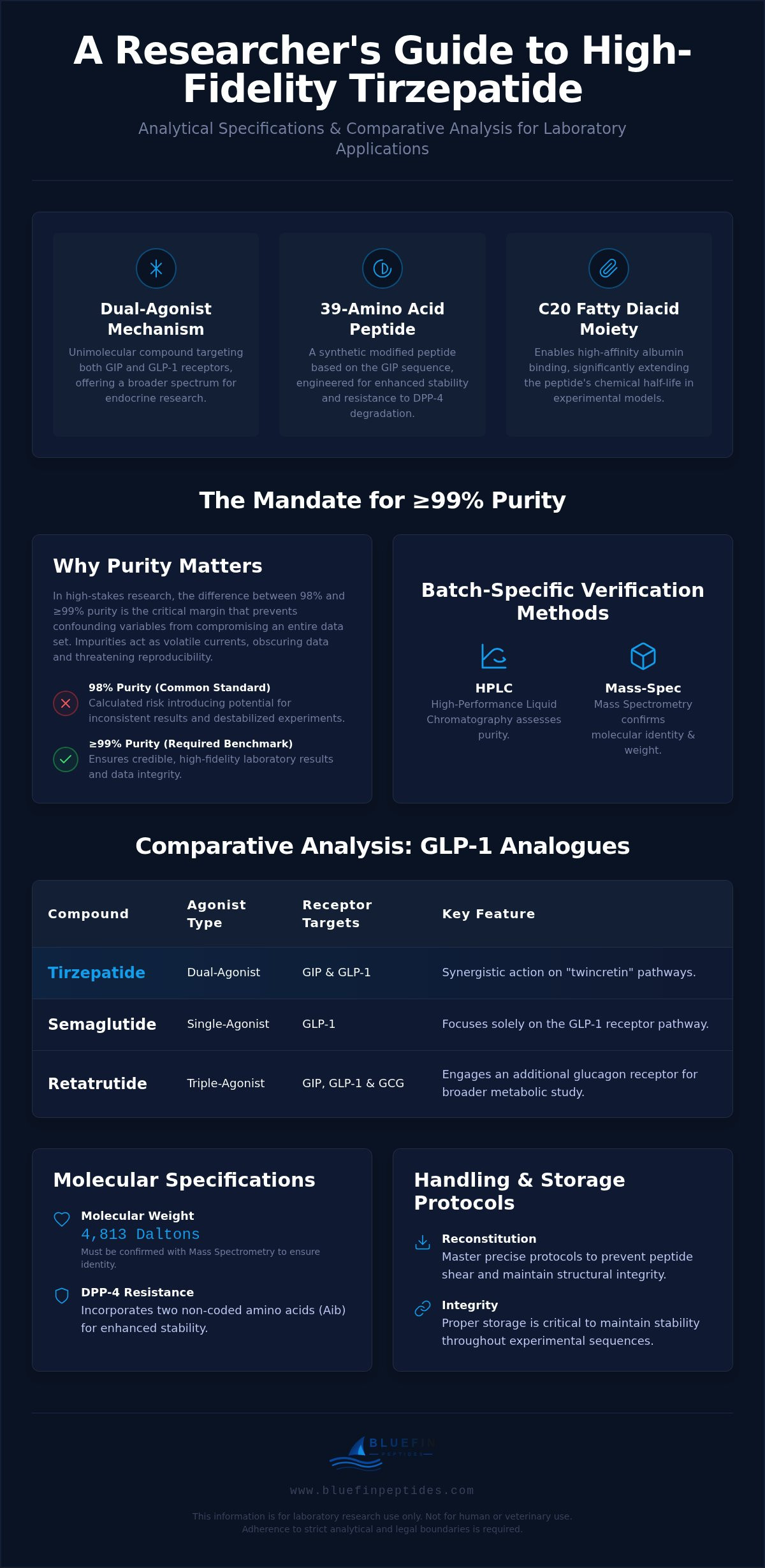
Tirzepatide represents a significant departure from the linear progression of single-receptor analogues. It is a synthetic 39-amino acid modified peptide. It operates as a unimolecular dual agonist. This compound facilitates Tirzepatide as a dual GIP and GLP-1 receptor agonist, targeting both the glucose-dependent insulinotropic polypeptide (GIP) and glucagon-like peptide-1 (GLP-1) receptors. In rigorous laboratory environments, the tirzepatide research peptide serves as a high-fidelity tool for exploring complex metabolic pathways. It is often classified as a "twincretin." This dual-action profile distinguishes it from the single-agonist architecture of earlier GLP-1 analogues, providing a broader spectrum for endocrine research. Precision. Verification. Integrity. These are the pillars of its application.
A defining technical feature of this compound is the C20 fatty diacid moiety attached via a linker to the Lys20 residue. This modification is not incidental. It enables high-affinity albumin binding, which significantly extends the peptide's chemical half-life within in vitro and in vivo models. While human-grade pharmaceuticals are designed for clinical intervention under medical supervision, these research-grade chemicals are optimized for analytical precision. They are strictly for in vitro laboratory research. Any application beyond these boundaries is a deviation from the intended scientific purpose.
Molecular Structure and Synthesis
The amino acid sequence of this compound is primarily based on the endogenous GIP sequence. It incorporates two non-coded amino acids (Aib) at positions 2 and 13. These substitutions provide essential resistance to dipeptidyl peptidase-4 (DPP-4) degradation. Synthesis typically involves advanced solid-phase peptide synthesis (SPPS) protocols to ensure the 4,813 Dalton molecular weight is achieved with exactitude. The resulting peptide backbone maintains high stability during standard laboratory manipulation, provided the researcher adheres to established handling protocols. Stability is the bedrock of reproducible data.
Dual Agonism in Experimental Models
GIP receptor activity complements GLP-1 signaling, creating a synergistic effect in cellular assays. In metabolic research, this synergy allows for the study of complex endocrine interactions that single agonists cannot replicate. Using a high-purity tirzepatide research peptide is essential for maintaining the clarity of these observations. Impurities act as volatile currents that can introduce confounding variables, obscuring data and compromising the reproducibility of the study. Every batch must be verified against its theoretical mass to ensure the experimental vessel remains on a steady course toward discovery.
Analytical Specifications: HPLC and Mass Spectrometry Verification
Maintaining the integrity of a tirzepatide research peptide requires more than a label claim; it demands rigorous analytical transparency. In high-stakes laboratory environments, the difference between 98% and ≥99% purity is not merely statistical. It's the margin of error that prevents confounding variables from compromising an entire data set. While data from the SURMOUNT-1 clinical trial highlights the compound's metabolic potency, replicating such high-fidelity results in a laboratory setting depends entirely on chemical purity. Verification must be batch-specific. Trusting a static, outdated Certificate of Analysis (COA) is a procedural failure that introduces unnecessary risk into the experimental vessel.
Analytical specifications must confirm both identity and purity. High-Performance Liquid Chromatography (HPLC) serves as the definitive method for assessing peptide purity by separating the target molecule from synthetic byproducts. Simultaneously, Mass Spectrometry (MS) provides the chemical fingerprint necessary to confirm that the substance is, in fact, tirzepatide. For researchers, procuring batch-verified compounds ensures the experimental baseline remains undisturbed by the volatile currents of unregulated manufacturing.
Decoding the HPLC Report
HPLC is the definitive method for assessing peptide purity. When reviewing a chromatogram, investigators must focus on the primary peak, which represents the target peptide. The purity percentage is determined by the Area Under the Curve (AUC) of this main peak relative to the total area of all peaks detected. Impurities often appear as smaller "shoulders" or separate peaks. These may indicate:
- Truncated sequences from incomplete synthesis.
- Deamidated or oxidized variants.
- Residual trifluoroacetic acid (TFA) or other processing solvents.
A clean baseline with minimal noise is the hallmark of a high-purity sample. Degradation markers in older or poorly stored vials typically manifest as a broadening of the primary peak or the emergence of late-eluting peaks, signaling a loss of structural fidelity.
Mass Spec Confirmation Protocols
Identity verification relies on comparing the observed mass against the theoretical molecular weight of 4,813.5 Da. Electrospray Ionization Mass Spectrometry (ESI-MS) is the standard for these complex, 39-amino acid chains. The resulting spectrum should show clear, multi-charged ions that, when deconvoluted, align precisely with the 4,813.5 Da target. This process ensures the absence of cross-contaminants or sequence errors. Furthermore, mass-spec analysis identifies the presence of residual salts and acetates, which can impact the osmotic balance of your cellular assays. Every tirzepatide research peptide batch must undergo this dual-layer verification to ensure the molecular architecture is sound before research commences.
Comparative Analysis: Tirzepatide vs. Other GLP-1 Research Analogues
Selecting the appropriate analogue for metabolic studies requires a granular understanding of receptor binding kinetics and molecular architecture. Semaglutide, a well-established mono-agonist, targets the GLP-1 receptor with high specificity. It's a reliable benchmark for isolated incretin research. However, the tirzepatide research peptide introduces a second analytical vector: the glucose-dependent insulinotropic polypeptide (GIP) receptor. This dual-pathway activation creates a distinct pharmacological profile. Research indicates that GIP signaling may modulate the central nervous system to enhance the metabolic effects of GLP-1 while potentially mitigating specific gastrointestinal variables. It's a more complex experimental model. Precision. Synergy. Divergence.
The choice between single and dual agonists depends on the specific experimental endpoint. While semaglutide provides a clear window into GLP-1 receptor activation, tirzepatide allows for the exploration of incretin synergy. In laboratory models, this dual agonism has demonstrated superior metabolic influence compared to mono-agonist compounds. The analytical integrity of the tirzepatide research peptide is paramount here. Any deviation in purity can skew the observed synergy, leading to unreliable data on receptor cross-talk.
The Shift to Multi-Agonist Peptides
The historical evolution of incretin research has moved from single-receptor targeting to sophisticated multi-agonist models. This transition reflects a growing need to address metabolic dysfunction through multiple pathways simultaneously. For investigators exploring the absolute frontier of this field, the Retatrutide Research Peptide represents the subsequent step in this evolution, incorporating glucagon receptor (GCGR) agonism to create a triple-agonist profile. These multi-agonist compounds require higher analytical standards because each additional receptor interaction increases the potential for confounding variables if impurities are present.
Chemical Potency and Receptor Selectivity
Tirzepatide displays a balanced but biased affinity that is critical for metabolic research. Its binding affinity (Ki) for the GIP receptor is comparable to native GIP, while its affinity for the GLP-1 receptor is approximately 20-fold lower than native GLP-1. This deliberate bias allows for potent GIP activation without over-saturating GLP-1 pathways at standard research concentrations. In cellular assays, this ratio is essential for observing the "twincretin" effect. Maintaining this selectivity ratio depends on the structural integrity of the peptide backbone. High-purity analogues, verified at ≥99%, ensure that the observed Ki values reflect the compound's true chemical nature rather than the influence of synthetic byproducts. Stability in the experimental vessel is not an option; it's a requirement.
Laboratory Protocols: Reconstitution and Storage Integrity
The structural integrity of a tirzepatide research peptide relies on meticulous environmental control during the transition from a lyophilized state to a liquid solution. Precision is mandatory. While the powder form provides a stable molecular anchor, the peptide backbone remains susceptible to mechanical shear and thermal degradation. To maintain fidelity, investigators must adhere to strict Lyophilized Peptide Storage protocols that prioritize environmental consistency and shield the compound from the volatile currents of temperature fluctuation.
Solvent selection is a critical procedural decision. For most in vitro research, bacteriostatic water containing 0.9% benzyl alcohol is the preferred diluent. It inhibits microbial proliferation in vials intended for multiple experimental draws over several days. Sterile saline remains an alternative for specific cellular assays where preservatives might interfere with results, though it lacks long-term antimicrobial protection. Regardless of the medium, the objective is a homogenous solution that preserves the compound's dual-agonist profile. Researchers can order verified tirzepatide research peptides to ensure the starting material meets these rigorous solubility standards.
Reconstitution Best Practices
Avoid direct high-pressure contact between the solvent and the lyophilized cake. Introduce the diluent slowly, allowing it to slide down the interior wall of the glass. This method prevents foaming, which can trap peptide molecules at the air-liquid interface and lead to structural loss. Calculating precise concentrations is essential for micro-dosing in experimental assays; typically, adding 2ml of solvent to a 10mg vial yields a 5mg/ml concentration. Rapid agitation can denature sensitive peptide chains. Instead, gently swirl the vial until the solution is clear and free of particulates.
Maintaining Long-term Stability
For long-term preservation of the lyophilized powder, storage at -20°C or -80°C is required to prevent moisture-induced degradation and maintain the 4,813 Dalton molecular weight. Once reconstituted, the solution should be maintained at 2-8°C and used within a 21 to 28-day window to ensure maximum potency. Avoid repeated freeze-thaw cycles at all costs. These cycles create ice crystals that act as microscopic blades, severing the peptide's 39-amino acid sequence and rendering the data from your experimental vessel unreliable. Stability is the bedrock of reproducible science.
Procuring Research-Grade Tirzepatide: The Bluefin Standard
Reliable procurement is the final link in the chain of experimental integrity. While pharmaceutical entities focus on patient-specific retail fulfillment, our operations are built for the rigorous demands of the laboratory. Procuring a tirzepatide research peptide shouldn't involve navigating the opaque supply chains of unregulated vendors. We maintain a US-based inventory to ensure that every vial arrives with the structural fidelity required for high-impact metabolic research. Precision is our primary metric. We operate with a "show, don't tell" philosophy, providing the analytical tools necessary for you to verify our claims before the first assay begins.
Every batch we release adheres to a strict ≥99% purity standard. This isn't a static benchmark. It's a verified reality for every lot. By maintaining a disciplined logistics framework, we eliminate the volatile delays often associated with international peptide sourcing. This ensures your research timelines remain fluid and predictable. Legal compliance is non-negotiable. These compounds are strictly for laboratory research use only; any deviation from this intended application is a breach of scientific and legal protocols. We function as a high-performance laboratory partner, not a simple retail vendor.
Verification and Transparency
Transparency is achieved through documentation, not marketing. We provide direct access to batch-specific HPLC and Mass-Spec reports on our storefront, allowing investigators to cross-reference observed data with theoretical specifications. Consistency across multiple production lots is managed through standardized synthetic pathways and multi-stage purification cycles. Third-party testing isn't just an option; it's the industry's only defense against batch drift. By subjecting every tirzepatide research peptide lot to independent verification, we ensure that the compound you receive today matches the analytical profile of the compound you received months ago. Reliable data depends on this level of stoic consistency.
Logistical Efficiency for Researchers
Time is a finite resource in any laboratory. Our fast-strike shipping protocols are designed to minimize transit-related degradation by reducing the time a compound spends outside of controlled environments. We utilize secure packaging specifically engineered to protect fragile lyophilized vials from mechanical stress during movement. This deep-sea precision in logistics ensures that your experimental baseline remains undisturbed from our facility to your bench. To maintain the momentum of your metabolic studies, you can Procure HPLC-Verified Tirzepatide for Your Laboratory Research through our secure, US-based portal. We don't just ship chemicals; we provide the foundational stability your data deserves.
Advancing Metabolic Discovery with Analytical Rigor
Securing the integrity of your experimental data requires more than a simple procurement process. It demands a commitment to analytical rigor and unwavering transparency. High-fidelity results in metabolic research depend on the structural stability of the tirzepatide research peptide, where even a 1% deviation in purity can introduce volatile currents into your data set. We've established that success in the laboratory is built on three pillars: precise dual-agonist verification, strict adherence to reconstitution protocols, and the elimination of logistical uncertainty through US-based fulfillment.
Precision. Verification. Reliability. These aren't just standards; they're the coordinates that guide a successful study. Every batch we provide is ≥99% HPLC verified and Mass-Spec confirmed to ensure your experimental vessel remains on a steady course. Don't leave your findings to chance with unregulated supply chains. You can View Analytical Reports and Procure Tirzepatide Research Peptides to secure the high-purity compounds your laboratory requires. We're ready to support your next breakthrough with the clinical precision your work demands.
Frequently Asked Questions
Is tirzepatide research peptide intended for human consumption?
No, the tirzepatide research peptide is strictly for in vitro laboratory research and is not intended for human or veterinary consumption. Any application outside of controlled experimental environments is a deviation from its intended chemical purpose. These compounds lack FDA approval for therapeutic use; they're labeled for research use only to maintain clear legal and analytical boundaries.
How do I verify the purity of my tirzepatide research batch?
Purity verification requires a batch-specific Certificate of Analysis (COA) featuring High-Performance Liquid Chromatography (HPLC) and Mass Spectrometry (MS) data. Investigators must examine the HPLC chromatogram for a primary peak representing ≥99% purity. Simultaneously, Mass-Spec must confirm the molecular identity by aligning the observed mass with the theoretical target. Documentation is the only substitute for blind trust.
What is the theoretical molecular weight of tirzepatide for mass spectrometry?
The theoretical molecular weight of tirzepatide is 4,813.5 Daltons (Da). In mass spectrometry assays, the deconvoluted spectrum must align with this value to confirm the correct 39-amino acid sequence. Precision in this molecular anchor is non-negotiable for high-fidelity metabolic studies. Any significant deviation indicates the presence of truncated sequences or synthetic errors that could compromise your data.
Can tirzepatide research peptide be stored at room temperature?
No, lyophilized tirzepatide shouldn't be stored at room temperature for extended periods. For long-term preservation of molecular integrity, the powder must be maintained at -20°C or -80°C. Short-term exposure during transit is managed through rapid fulfillment protocols; however, the compound must return to a controlled, sub-zero environment upon arrival to prevent the onset of structural degradation.
What is the difference between research-grade tirzepatide and Zepbound?
Zepbound is an FDA-approved pharmaceutical drug intended for clinical obesity management under medical supervision. Conversely, research-grade tirzepatide is a chemical reagent optimized for analytical precision in laboratory assays. It's a tool for discovery, not a medication for intervention. The research-grade variant is provided as a lyophilized powder, requiring specific reconstitution protocols that aren't applicable to finished pharmaceutical products.
What solvents are recommended for reconstituting tirzepatide in a lab?
Bacteriostatic water containing 0.9% benzyl alcohol is the primary recommendation for reconstituting tirzepatide in a laboratory setting. It provides essential antimicrobial protection for multi-draw vials. Sterile saline serves as an alternative for specific cellular assays where preservatives might interfere with the experimental baseline. Regardless of the choice, the solvent must be introduced gently to avoid mechanical shear of the peptide chains.
How long does reconstituted tirzepatide remain stable in a research setting?
Reconstituted solutions typically remain stable for 21 to 28 days when stored at 2-8°C. Beyond this window, the risk of peptide degradation and structural loss increases significantly. Investigators should avoid repeated freeze-thaw cycles. These mechanical stresses act as microscopic blades, fracturing the peptide backbone and rendering the data from your experimental vessel unreliable. Stability is the bedrock of reproducible science.
Why is HPLC testing critical for research peptides?
HPLC testing is critical because it identifies and quantifies synthetic byproducts that can act as volatile currents in your research. It separates the target molecule from truncated sequences or oxidized variants. The resulting Area Under the Curve (AUC) provides the only verifiable proof that a tirzepatide research peptide meets the required ≥99% purity benchmark. Without this data, your experimental baseline is fundamentally compromised.
For laboratory research use only. Not for human or veterinary use. This content is educational and does not constitute medical, dosing, or usage guidance.
Browse the BLUEFIN catalog