Lyophilized Peptide Storage: Protocols for Maintaining Molecular Integrity
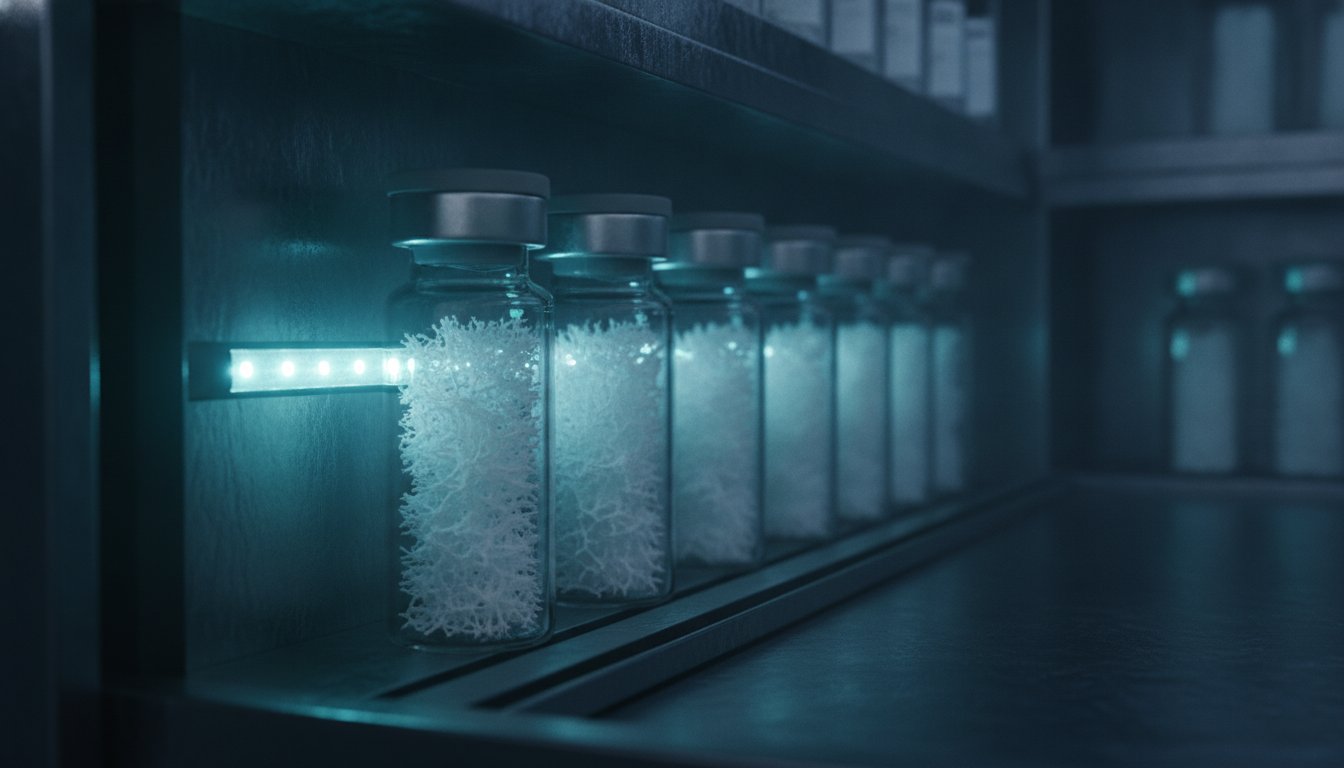
A certificate of analysis is a static record of a single moment, not a shield against future degradation. Even the most precisely synthesized compounds remain vulnerable to the relentless currents of molecular decay if environmental controls are not absolute. You recognize that inconsistent research outcomes often originate from the subtle loss of potency that occurs during the transition between the synthesis lab and your long-term storage vessel. This volatility represents a significant risk to the integrity of your data and the efficiency of your laboratory operations.
We provide the technical protocols necessary to master lyophilized peptide storage and lock in the molecular integrity of your research assets. By following these rigorous standards, you can maintain 99%+ purity over extended durations and eliminate the variables that lead to premature peptide breakdown. This guide details the specific temperature thresholds required for stability, the necessity of desiccation, and the standardized handling procedures for both lyophilized powders and reconstituted solutions. Establishing these precise environmental safeguards ensures that your research compounds remain as potent as the day they were verified, providing the depth of security required for advanced biochemical inquiry.
Key Takeaways
- Understand how the structural integrity of the lyophilized cake prevents peptide bond hydrolysis and maintains long-term molecular stability.
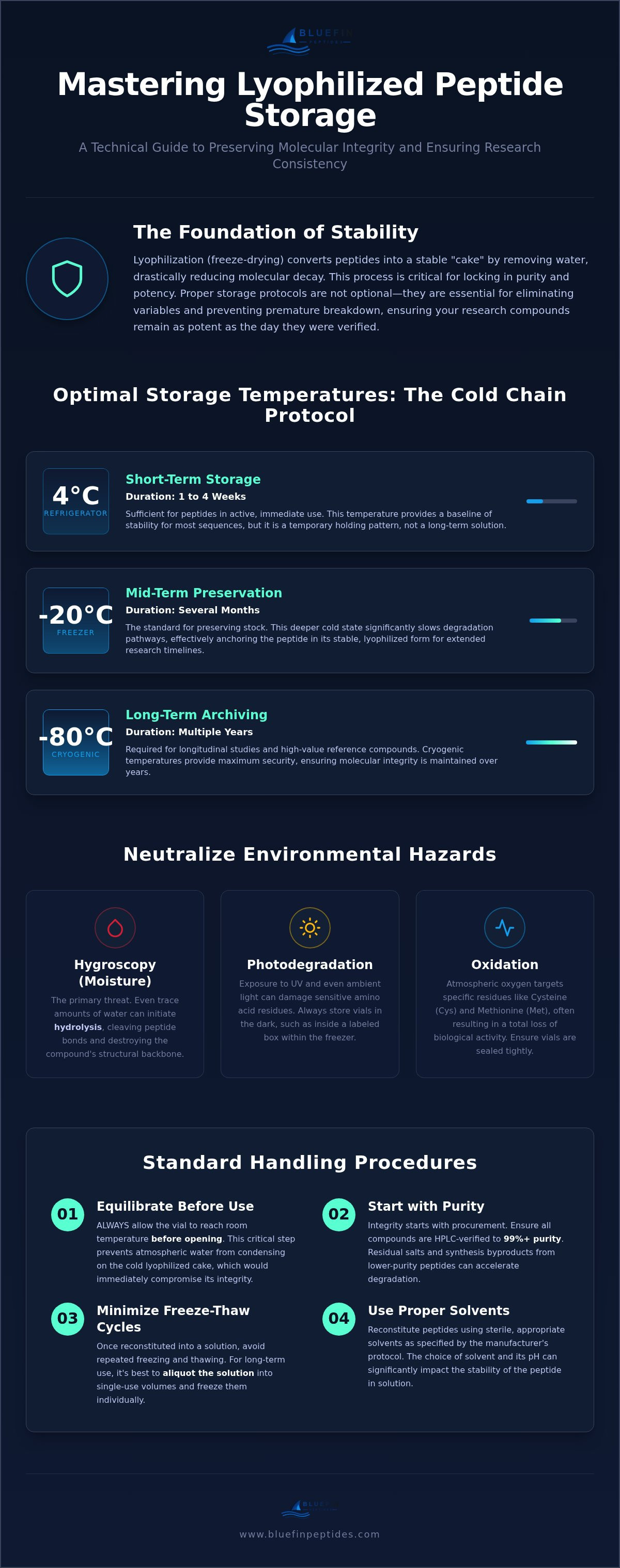
- Implement precise temperature protocols for lyophilized peptide storage, utilizing 4°C for immediate use and -20°C for mid-term preservation.
- Identify and neutralize environmental hazards such as hygroscopy and photodegradation that threaten the potency of research compounds.
- Execute standardized equilibration procedures to prevent atmospheric condensation during the transition from cryogenic storage to the laboratory bench.
- Evaluate how initial 99%+ purity levels and residual salts impact the longitudinal stability of high-performance compounds like Retatrutide and Tirzepatide.
The Science of Lyophilization and Peptide Stability
Lyophilization is the tactical removal of water from heat-sensitive compounds through a multi-stage process of freezing and sublimation. This technique, commonly known as The Science of Lyophilization, converts aqueous peptide solutions into a stable, porous solid known as a "cake." By bypassing the liquid phase entirely, researchers can preserve the delicate primary and secondary structures of complex sequences that would otherwise succumb to rapid degradation in a fluid environment. For high-purity compounds like Retatrutide or Tirzepatide, this solid-state format is the baseline for laboratory procurement. It anchors the molecules in place, drastically reducing the kinetic energy available for unwanted chemical reactions.
The physical structure of the lyophilized cake is a critical barrier against peptide bond hydrolysis. Water acts as a reactive nucleophile; its presence, even in trace amounts, allows for the cleavage of amide bonds that form the peptide backbone. Effective lyophilized peptide storage relies on maintaining this anhydrous state. When moisture content is kept below 3%, the molecular mobility of the peptide is restricted. This lack of movement prevents the peptide from adopting non-native conformations or forming aggregates, ensuring that the secondary structure remains intact for the duration of its shelf life.
Mechanism of Chemical Degradation in Peptides
Chemical instability manifests primarily through hydrolysis, oxidation, and deamidation. Hydrolysis is the most pervasive threat, where water molecules actively break down the amino acid chain. Oxidation specifically targets residues such as Cysteine (Cys), Methionine (Met), and Tryptophan (Trp), often resulting in a total loss of biological activity. Deamidation, the conversion of Asparagine or Glutamine residues into organic acids, is highly dependent on the pH and moisture levels within the vial. Even in a lyophilized state, these pathways remain a threat if the environmental seal is compromised or if the initial synthesis purity was insufficient to remove reactive salts.
Why Research Integrity Depends on Storage Precision
Research integrity is built on the foundation of reagent consistency. The cost of using degraded peptides extends beyond the financial loss of the reagents; it compromises the validity of longitudinal studies and leads to irreproducible data. Subtle molecular shifts, such as the formation of diastereomers or truncated sequences, can alter binding affinities and invalidate experimental conclusions. Standardizing SOPs for lyophilized peptide storage is not merely a logistical preference. It's a fundamental requirement for any high-performance laboratory. Starting with HPLC-verified compounds of 99%+ purity ensures that your baseline is secure, but only precise environmental control can maintain that standard through the final analysis.
Optimal Temperature Ranges for Lyophilized Peptide Storage
Temperature is the definitive regulator of molecular kinetic energy. In the context of lyophilized peptide storage, thermal control dictates the rate at which residual moisture or trace contaminants can catalyze degradation. For short-term laboratory use spanning one to four weeks, refrigeration at 4°C (39°F) provides a sufficient baseline for most stable sequences. However, this is a temporary holding pattern. As the research timeline extends into months, the requirement shifts to standard freezer conditions at -20°C (-4°F). This deeper cold state effectively anchors the peptide in its lyophilized form, significantly slowing the chemical pathways discussed in the previous section.
Long-term preservation, often required for longitudinal studies spanning years, demands ultra-low temperature freezers capable of maintaining -80°C (-112°F). While many GLP-1 analogues, such as Retatrutide and Tirzepatide, exhibit high thermal stability during short laboratory transits, their long-term molecular integrity is best secured at these cryogenic levels. Starting your research with HPLC-verified compounds that have been maintained in a continuous cold chain ensures that your baseline data remains untainted by thermal stress.
Refrigeration vs. Cryogenic Freezing
The selection of a storage tier must align with your projected consumption rate. While 4°C is convenient for daily access, it exposes the peptide to higher humidity risks. Cryogenic storage at -80°C is the gold standard for preserving the primary sequence of sensitive fragments, as it virtually halts all molecular movement. Adhering to established Peptide Handling and Storage Protocols is essential for equipment selection. Lab-grade units must provide precise, verifiable thermal environments, as residential-grade appliances lack the necessary recovery speed and uniformity.
The Danger of Freeze-Thaw Cycles
Temperature fluctuations are the silent killers of peptide potency. Each cycle of warming and cooling induces physical stress on the lyophilized cake, potentially creating micro-fissures that allow moisture ingress. You must avoid frost-free freezers. These units utilize internal heating elements to prevent ice buildup, causing the internal temperature to oscillate significantly. This instability is antithetical to research precision. To mitigate these risks, implement a strict aliquoting strategy. By dividing the bulk powder into single-use research vials, you minimize the number of times a primary stock is exposed to ambient lab temperatures. This disciplined approach ensures that each sample remains in a steady state until the moment of reconstitution.
Environmental Hazards: Light, Humidity, and Atmospheric Exposure
Temperature control is insufficient if the peptide's immediate environment is compromised. Molecular integrity depends on the absolute exclusion of three primary catalysts: moisture, light, and oxygen. While the lyophilized state provides a structural defense, the porous nature of the cake makes it an active participant in its own degradation if the surrounding atmosphere is not strictly regulated. Successful lyophilized peptide storage requires a multi-layered approach to environmental exclusion.
Lyophilized powders are aggressively hygroscopic. They act as molecular sponges. Upon even momentary exposure to ambient air, the porous cake structure begins to sequester atmospheric moisture. This influx of water molecules reinitiates the hydrolytic pathways that the freeze-drying process was designed to halt. To counteract this, high-performance protocols utilize inert gas overlays. Displacing oxygen with high-purity nitrogen or argon before sealing the vial creates an unreactive atmosphere. This displacement shields the compound from oxidative stress and prevents the air-driven degradation of sensitive residues.
Mitigating Photosensitivity in the Lab
Photodegradation is a cumulative process. UV radiation and even high-intensity fluorescent laboratory lighting provide the energy necessary to trigger free radical formation within the peptide sequence. This energy transfer leads to side-chain modifications and backbone cleavage. Tryptophan and Tyrosine residues are particularly vulnerable to these light-induced shifts. To mitigate these risks, researchers should utilize amber glass vials or opaque secondary containers. Handling should occur under dim or filtered light whenever possible. Every minute of light exposure contributes to a measurable reduction in potency over time. Accuracy demands total darkness during storage.
Humidity Control and Secondary Containment
Secondary containment acts as a critical fail-safe. Vials should be stored within vacuum-sealed bags or airtight canisters containing active desiccants. Silica gel is a standard choice, but molecular sieves, typically 3Å or 4Å, offer superior moisture adsorption for ultra-dry environments. These desiccants ensure a zero-humidity micro-environment, even if the primary vial seal has microscopic imperfections. Monitoring these conditions with humidity indicator cards provides a verifiable record of storage stability. This layer of defense is non-negotiable for high-purity reagents like Retatrutide or Tirzepatide. Precision is the only path to data security. Use airtight seals. Monitor religiously.

Standard Operating Procedures for Handling Research Vials
The transition from cryogenic stability to the laboratory bench represents the most vulnerable phase of the research workflow. Precision in lyophilized peptide storage is rendered irrelevant if the equilibration protocol is ignored. When a vial at -20°C is introduced to a 22°C environment, the steep temperature gradient triggers immediate atmospheric condensation. This moisture isn't merely external. It infiltrates the vial the moment the seal is breached, causing irreversible hydrolytic damage to the lyophilized cake. This phase requires absolute discipline to ensure the molecular currents of the compound remain undisturbed.
Meticulous record-keeping is the final anchor for research integrity. Every vial must be logged with its specific lot number, receipt date, and cumulative time spent outside of primary storage. This documentation aligns with the Analytical Quality Standards for Research Peptides required for high-level biochemical validation. Aligning your internal logs with batch-specific COAs allows for the rapid identification of any potency shifts during longitudinal studies. For researchers demanding the highest tier of baseline purity and stability, we maintain a fleet of HPLC-verified research compounds ready for immediate laboratory deployment.
The Equilibration Protocol
Standardize your transition procedures to eliminate the variable of moisture ingress. Follow these three stages with clinical precision:
- Step 1: Transfer the vial from the freezer directly into a desiccator. This provides a dry micro-environment during the warming phase.
- Step 2: Monitor the vial until its surface temperature reaches equilibrium with the ambient lab environment. This typically requires 30 to 60 minutes. Do not accelerate this process with external heat sources.
- Step 3: Conduct weighing or aliquotting with maximum efficiency. Reseal the vial immediately after the required mass is removed to minimize atmospheric exposure.
Resealing and Maintenance
Once a vial has been opened, the primary seal is compromised. You must apply Parafilm or a similar thermoplastic self-sealing film around the cap to create an airtight secondary barrier. This prevents the slow "breathing" of the vial during subsequent cooling cycles. Perform periodic inspections of the lyophilized cake. Any signs of "melting," collapse, or discoloration indicate a breach in the anhydrous environment. If the cake loses its porous, white structure, the peptide's molecular integrity has likely been compromised by moisture. In these instances, the compound should be re-verified via HPLC before continuing any critical research protocols. Secure handling is the only way to ensure that the results you record today are as accurate as those you record a year from now.
Securing High-Purity Compounds for Longitudinal Studies
The success of lyophilized peptide storage is often decided before the vial even enters your facility. While environmental controls are vital, the chemical composition of the initial substrate dictates the baseline rate of molecular decay. High-purity compounds, specifically those verified at 99%+ purity, offer a more stable molecular lattice. In contrast, peptides with lower purity levels often contain residual trifluoroacetic acid (TFA), organic solvents, or inorganic salts. These contaminants aren't inert. They act as internal catalysts, accelerating deamidation and oxidation even in a desiccated state. By starting with ultra-pure reagents, you eliminate the internal variables that lead to inconsistent results in longitudinal studies. Precision synthesis is the only reliable foundation for long-term stability.
Bluefin Peptides provides the technical baseline required for rigorous research models. We recognize that any deviation in purity represents a potential failure point in your data. Our compounds are synthesized and stored under strict laboratory conditions to ensure that the "cake" remains structurally sound and chemically unreactive. This proactive approach to quality control simplifies your lyophilized peptide storage protocols by ensuring the compound isn't fighting internal degradation from the moment of receipt. Reliability is a function of verified purity.
Verification as the Foundation of Stability
Verification is the prerequisite for stability. Every research compound must be accompanied by batch-specific documentation that confirms its identity and purity through HPLC and Mass-spec confirmation. This level of transparency allows researchers to account for baseline purity in complex models. For detailed technical data on high-performance compounds, see our guide on Retatrutide Research Peptide: Analytical Specifications. Our commitment to clinical precision ensures that your starting material is a reliable constant. We provide the tools for verification because we don't ask for blind trust.
Efficient Logistics and Cold-Chain Management
The "thermal window" between synthesis and laboratory arrival is a critical vulnerability. Long transit times from international manufacturers increase the risk of cumulative thermal stress, which can compromise the lyophilized cake before it ever reaches your freezer. We mitigate this risk through disciplined logistics. By maintaining US-stocked inventory of compounds like Tirzepatide and BPC-157, we ensure rapid dispatch and minimal transit duration. This localized fulfillment model protects the molecular integrity of the compound, allowing for immediate laboratory deployment. Reliable procurement is the final component of successful storage expertise. It bridges the gap between synthesis and science, ensuring your research continuity remains undisturbed by logistical failures.
Establishing a Standard for Longitudinal Research Integrity
Meticulous environmental control is the only method for securing the molecular shelf life of your reagents. By implementing standardized temperature tiers and rigorous equilibration protocols, you eliminate the atmospheric variables that often compromise research data. Successful lyophilized peptide storage depends on this unwavering adherence to technical precision; from the exclusion of light to the maintenance of a zero-humidity micro-environment. These safeguards ensure that your compounds remain as stable as the day they were synthesized.
The integrity of your longitudinal studies begins with the analytical specifications of the compound itself. Starting with verified 99%+ purity ensures that residual contaminants don't catalyze internal degradation during storage. We provide the foundation for this stability through batch-specific documentation and rapid logistics. Procure HPLC-Verified Research Peptides from Bluefin Peptides to access reagents with ≥99% HPLC-verified purity and Mass-spec confirmation. Our fast domestic US shipping minimizes transit-related thermal stress, allowing you to maintain absolute control over your laboratory inventory from receipt to reconstitution. Precision in storage is the final step in ensuring the accuracy of your results.
Frequently Asked Questions
How long do lyophilized peptides last in a standard freezer?
Lyophilized peptides typically remain stable for 24 to 36 months when maintained at a constant -20°C (-4°F). If storage requirements extend beyond three years, ultra-low temperature freezers at -80°C are necessary to virtually halt all molecular kinetic energy. Stability over these durations is strictly dependent on the initial purity and the total exclusion of atmospheric moisture.
Do I need to refrigerate lyophilized peptides during shipping?
Refrigeration during transit is generally not required for lyophilized compounds if the shipping duration is limited to a few days. Most research peptides exhibit high thermal stability in their freeze-dried state and can withstand ambient temperatures without measurable loss of potency. We utilize rapid domestic shipping to minimize this thermal window, ensuring the compound reaches your laboratory's lyophilized peptide storage system as quickly as possible.
What are the signs that a lyophilized peptide has degraded?
Physical indicators of degradation include the collapse or "melting" of the porous cake structure and visible discoloration, such as yellowing. However, chemical degradation often occurs without altering the powder's appearance. If your research results show inconsistent potency or unexpected baseline shifts, the molecular integrity may be compromised. HPLC analysis is the only verifiable method to confirm if degradation has occurred.
Can I store different peptides in the same freezer compartment?
Yes, you can store various peptide sequences in the same compartment provided they're housed in airtight secondary containment. Cross-contamination isn't a risk for sealed vials; however, organization is critical for laboratory efficiency. Use color-coded labels or dedicated racks to ensure rapid retrieval, which minimizes the time the freezer door remains open and protects all samples from unnecessary thermal fluctuations.
Is it better to store peptides as a powder or a solution?
Peptides should always be stored as a lyophilized powder for long-term preservation. In a liquid state, peptides are highly vulnerable to hydrolysis, oxidation, and microbial proliferation, which can lead to total degradation within days or weeks. Reconstitution should only occur immediately before the research application to ensure the maximum potency of the compound is utilized.
How does the purity of the peptide affect its shelf life?
High purity levels of 99% or greater significantly extend shelf life by removing reactive synthesis byproducts. Residual salts and trifluoroacetic acid (TFA) found in lower-purity compounds act as internal catalysts for degradation, even in frozen environments. Starting with HPLC-verified reagents ensures that lyophilized peptide storage remains stable, as there are fewer contaminants present to trigger unwanted chemical reactions.
What is the best way to prevent moisture from entering the vial?
The definitive method for moisture prevention is a strict equilibration protocol before the vial is opened. You must allow the vial to reach ambient laboratory temperature within a desiccated environment to prevent atmospheric condensation from forming on the cold powder. Supplementing this with a Parafilm secondary seal and using molecular sieve desiccants in your storage containers provides an absolute barrier against humidity.
Should I use a frost-free freezer for peptide storage?
No, you must avoid frost-free freezers for any critical research reagents. These units utilize internal heating cycles to prevent ice accumulation, which causes the internal temperature to oscillate significantly throughout the day. These repeated thermal shifts induce structural stress on the peptide and accelerate molecular decay. A manual-defrost laboratory freezer is the only equipment capable of maintaining the steady-state environment required for integrity.
For laboratory research use only. Not for human or veterinary use. This content is educational and does not constitute medical, dosing, or usage guidance.
Browse the BLUEFIN catalog