Ipamorelin CJC-1295 Research Blend USA: Analytical Specifications and Laboratory Guide
In high-precision laboratory environments, the difference between experimental success and a failed trial often resides in a single percentage point of chemical purity. You likely understand that inconsistent batch quality from international suppliers isn't just a logistical hurdle; it's a direct threat to the integrity of your data. When sourcing an ipamorelin CJC-1295 research blend USA based, the requirement for transparent, batch-specific documentation remains absolute. You need a supply chain that anchors its operations in clinical precision rather than marketing rhetoric.
This technical reference provides the analytical specifications and stability protocols necessary to ensure your laboratory maintains the highest standards of chemical verification. We'll examine the synergistic properties of this lyophilized peptide blend, the critical role of HPLC and Mass-Spec documentation, and the logistical advantages of domestic procurement. By prioritizing ≥99% purity and rapid fulfillment, we help ensure your research remains on course without the turbulence of quality-control uncertainty. This guide serves as your analytical compass for navigating the procurement and reconstitution of these specific research compounds.
Key Takeaways
- Analyze the biochemical synergy between GHRP and GHRH analogs to define precise experimental parameters within growth hormone secretagogue research.
- Establish the necessity of analytical transparency by sourcing an ipamorelin CJC-1295 research blend USA that carries batch-specific HPLC and Mass-Spec documentation.
- Recognize the stability advantages of domestic lyophilization over international procurement to prevent environmental degradation and customs-related delays.
- Apply rigorous laboratory protocols for reconstitution and storage to maintain molecular integrity and ensure reproducible concentration calculations.
- Leverage batch-level Certificates of Analysis to verify purity thresholds of ≥99% before initiating any research phase.
The Chemistry of Secretagogue Blends: Ipamorelin and CJC-1295 Synergy
Growth hormone secretagogues (GHS) are defined in laboratory settings by their ability to signal the pituitary gland to release endogenous growth hormone. Unlike direct GH administration, these compounds utilize natural endocrine pathways to modulate physiological responses. The most common research model involves pairing two distinct classes: Growth Hormone Releasing Peptides (GHRPs) and Growth Hormone Releasing Hormone (GHRH) analogues. This dual-signaling approach targets different receptors to investigate potential synergistic effects on GH pulsatility. Precision matters. Integrity is non-negotiable.
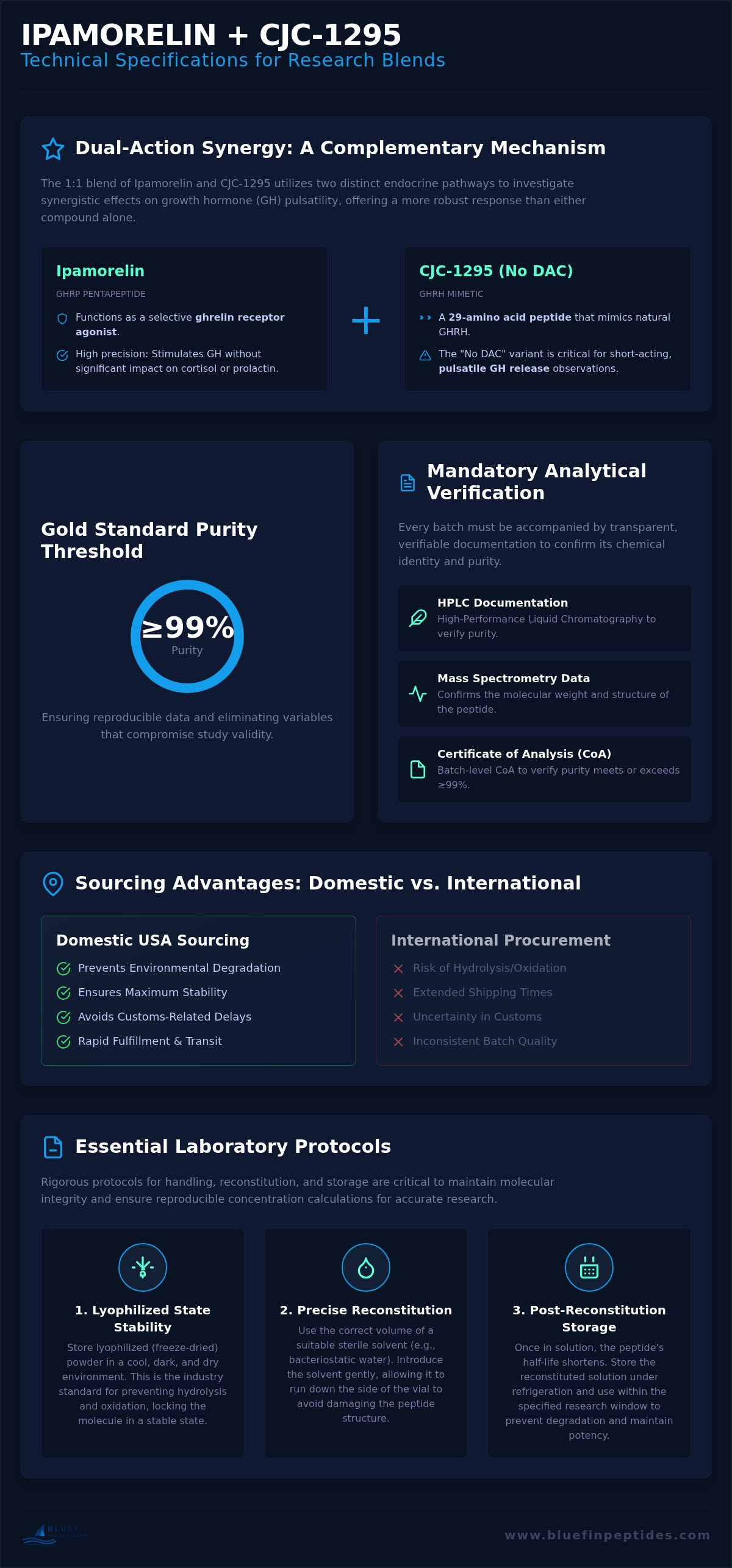
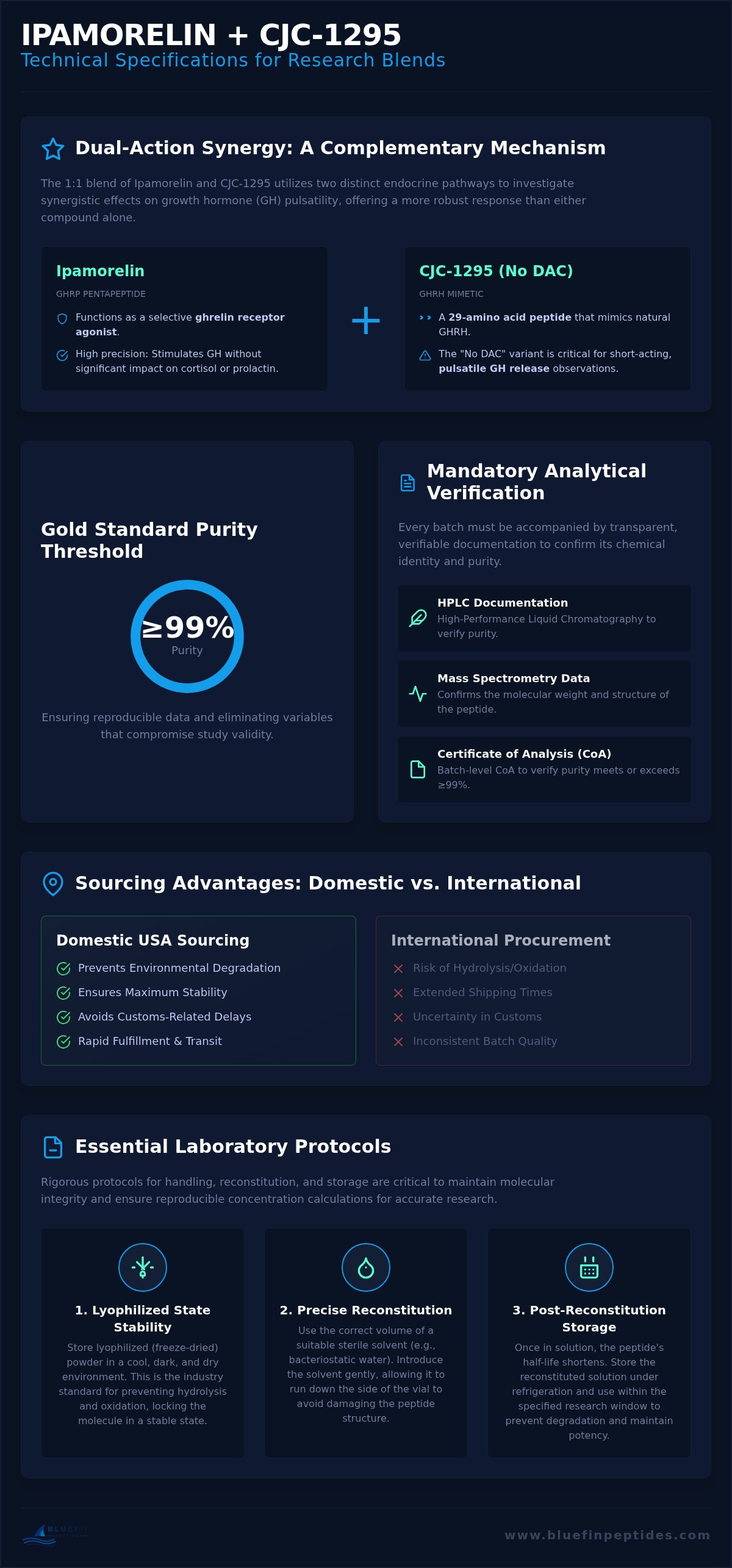
The biochemical synergy between these two compounds is anchored in their distinct yet complementary mechanisms. While CJC-1295 acts as a GHRH mimetic to trigger the production of growth hormone at the pituitary level, Ipamorelin functions as a ghrelin receptor agonist. This dual-pathway signaling creates a robust physiological response that's more significant than the sum of its parts. Researchers utilize the ipamorelin CJC-1295 research blend USA to map these complex interactions in vivo, focusing on the preservation of natural pulsatile rhythms. The 1:1 ratio found in this blend is a standard configuration for investigating these dual pathways, allowing for a balanced observation of receptor activation.
Chemical stability is a primary concern in peptide research. Lyophilization, or freeze-drying, is the industry standard for ensuring that these synthetic chains don't undergo hydrolysis or oxidation. By removing water through sublimation under vacuum, the molecular structure is locked into a stable, solid state. This process is essential for maintaining the integrity of the 1:1 ratio during shipping and storage, preventing the premature degradation that often plagues aqueous solutions. Stability ensures reproducibility.
Ipamorelin: The Selective GHRP Pentapeptide
Ipamorelin is a pentapeptide known for its high selectivity for the ghrelin receptor. Unlike earlier GHRPs, it stimulates growth hormone release without significant impact on cortisol or prolactin levels. This precision makes it an ideal candidate for research focused on isolated GH responses. In experimental models, it facilitates a pulsatile release that mimics natural circadian rhythms. For a deeper dive into its molecular profile, researchers can consult Ipamorelin: A Technical Overview of the Selective GHRP Pentapeptide.
CJC-1295 (No DAC): The GHRH Mimetic
CJC-1295, specifically the "No DAC" version, is a 29-amino acid peptide that mimics the first 29 amino acids of the naturally occurring GHRH. The absence of the Drug Affinity Complex (DAC) is critical; it's the reason researchers choose this variant for short-acting, pulsatile observations rather than prolonged "GH bleed." Understanding CJC-1295 peptide chemistry reveals its role in augmenting the natural GH signal. While it remains stable in a lyophilized state, its half-life in aqueous solution is significantly shorter, requiring precise reconstitution protocols to prevent degradation during the research window.
Analytical Specifications for Ipamorelin CJC-1295 Research Blend USA
Scientific rigor demands an absolute commitment to chemical purity. For an ipamorelin CJC-1295 research blend USA, the standard for reproducible data starts at a ≥99% purity threshold. Anything less introduces variables that can compromise the validity of a longitudinal study. High-grade synthesis requires the meticulous removal of trifluoroacetic acid (TFA), a common byproduct of the solid-phase peptide synthesis process. While TFA is necessary for cleavage, its presence in the final lyophilized powder can shift pH levels and alter peptide stability. Professional laboratories recognize that "spot-checking" intermittent batches is insufficient; every single vial must be an anchor of consistency.
The regulatory landscape also clarifies the potency of these compounds. Because they significantly influence endocrine pathways, they are prohibited for U.S. athletes under current anti-doping regulations. This classification reinforces why these materials are strictly designated for laboratory research. Ensuring your supply chain adheres to these analytical benchmarks is critical for maintaining experimental integrity. You can verify the purity of current laboratory batches through our transparent documentation portal.
Molecular Data and Chemical Identity
Accurate chemical identification relies on the precise mapping of atomic composition. Ipamorelin carries the molecular formula C38H49N9O5, while CJC-1295 (No DAC) is a significantly larger molecule with the formula C152H252N44O42. High-resolution mass spectrometry is the only definitive method to verify that the observed molecular weight aligns with the theoretical mass of these complex peptide sequences. Without this verification, a researcher cannot be certain they are observing the intended biochemical interaction.
Batch-Specific Certificate of Analysis (COA)
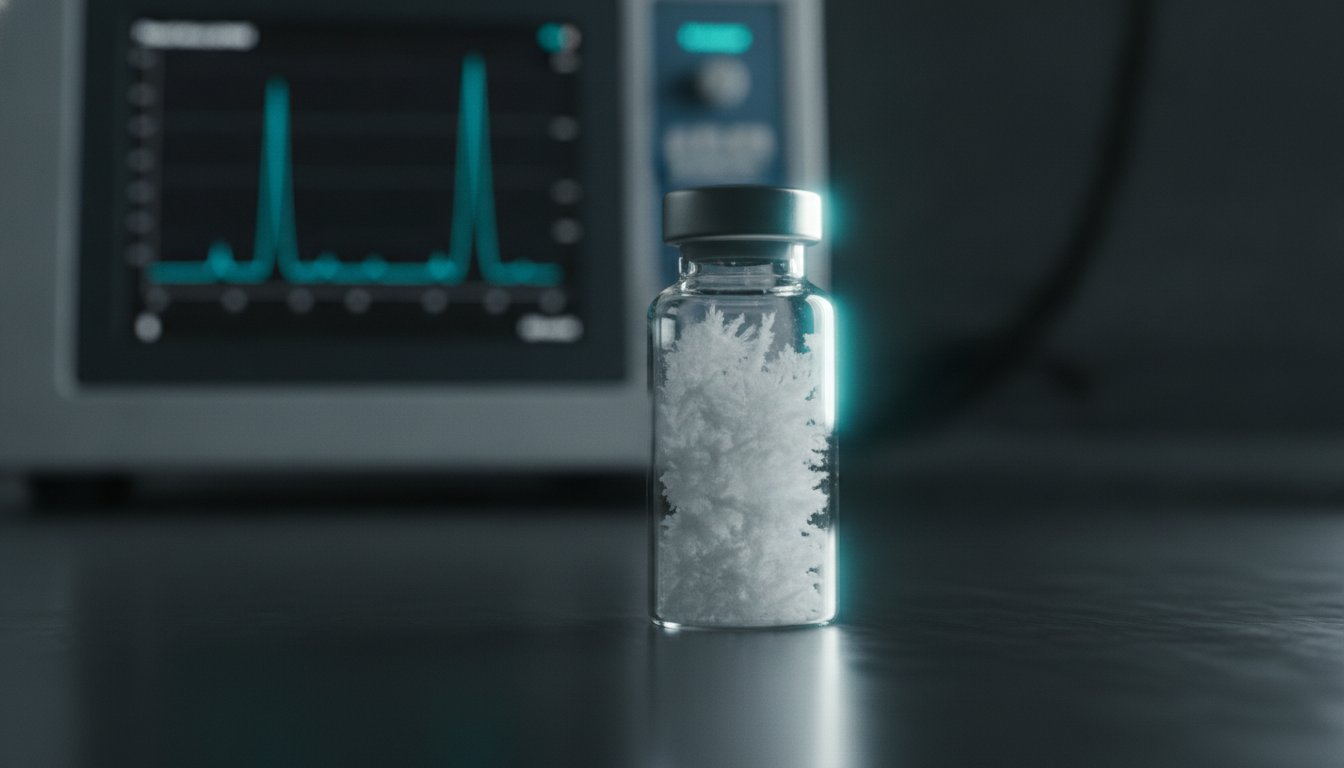
A legitimate Certificate of Analysis is not a static document. It must be batch-specific, providing a direct snapshot of the chemical state of the exact material in your possession. A valid COA includes both an HPLC chromatogram and a Mass-Spec report. When reviewing an HPLC report for this blend, look for two distinct, sharp peaks that represent the individual peptides, with minimal baseline noise indicating a lack of truncated sequences or residual solvents. For a comprehensive breakdown of these metrics, see our Analytical Quality Standards for Research Peptides: A Laboratory Guide. Transparency is the bedrock of trust in the laboratory.
Comparing Research Peptide Suppliers in the USA
Procuring laboratory materials requires more than a simple transaction; it's a strategic logistical decision that directly impacts experimental data. While international markets offer lower price points, they introduce environmental variables that are often beyond a researcher's control. Sourcing an ipamorelin CJC-1295 research blend USA based ensures that the material remains within a strictly regulated domestic supply chain. International transit often involves prolonged exposure to uncontrolled temperatures in customs warehouses. These thermal spikes can denature sensitive peptide chains, leading to degraded samples before they ever reach the bench.
Regulatory scrutiny also adds a layer of risk to international procurement. Both Ipamorelin and CJC-1295 are listed on the WADA Prohibited List under section S2, reflecting their potent biological activity. This classification increases the likelihood of customs seizures for shipments lacking proper laboratory documentation. Domestic suppliers who manage their own lyophilization processes provide an anchor of stability. By lyophilizing the peptides in a controlled USA-based facility, the manufacturer locks the molecular structure into its most stable state, minimizing the risk of hydrolysis during final-mile delivery.
Logistical Integrity and Fulfillment Speed
Time is the enemy of chemical stability. While lyophilized powders are significantly more resilient than aqueous solutions, prolonged transit still poses a threat. Domestic USA shipping is critical for maintaining time-sensitive laboratory schedules. We treat logistics with maritime-level precision; every shipment is a vessel carrying critical data. Rapid dispatch and real-time tracking are not luxuries. They are fundamental requirements for ensuring that your ipamorelin CJC-1295 research blend USA arrives with its chemical integrity intact. Slow shipping times from international vendors don't just delay research; they compromise it.
Verification Protocols for Domestic Suppliers
Not all domestic vendors operate with the same academic rigor. Identifying a reputable partner requires a disciplined evaluation of their transparency protocols. Professional laboratories should avoid suppliers who prioritize marketing fluff over analytical data. Key red flags include a lack of batch-specific numbers, non-specific or "representative" Certificates of Analysis, and the use of consumer-oriented medical claims. A true laboratory partner provides the tools for verification rather than asking for blind trust. For a detailed checklist on evaluating vendor transparency, consult our Researcher’s Guide to Analytical Quality and Logistics. Reliability is built on documentation, not promises.
Laboratory Protocols: Reconstitution and Storage
The transition from a lyophilized state to an aqueous solution represents a critical phase where molecular integrity is most susceptible to environmental stressors. Precise handling of an ipamorelin CJC-1295 research blend USA is mandatory to prevent mechanical degradation. Standard laboratory protocols require the use of bacteriostatic water (0.9% benzyl alcohol) or sterile saline as the primary diluent. While sterile water is an option, it lacks the antimicrobial properties necessary for preventing microbial growth in multi-use vials over extended periods. Stability is the anchor of every successful trial.
Calculating concentrations requires a clear understanding of the blend's mass. In a standard 10mg vial containing a 5mg/5mg ratio, the addition of 2.0 mL of diluent results in a final concentration of 2.5 mg/mL for each constituent peptide. Researchers must calibrate these volumes with clinical precision to ensure that micro-dosages in cellular models remain consistent across all experimental groups. You can secure your laboratory materials from a source that prioritizes this analytical accuracy and provides the documentation to prove it.
Reconstitution Best Practices
Mechanical stress is a primary cause of peptide chain fracture. You should never agitate or shake the vial; instead, allow the diluent to flow gently down the interior glass wall. A slow, rhythmic swirling motion is sufficient to achieve complete dissolution without compromising the delicate sequence. The chemical necessity of using a bacteriostatic agent cannot be overstated, as it preserves the solution's stability by inhibiting proteolytic enzymes and bacterial contamination during repeated sampling cycles.
Long-Term Stability and Storage
Thermal stability is the bedrock of longitudinal research. In their lyophilized state, these peptides should be stored at -20°C to ensure maximum longevity, potentially remaining stable for up to 24 months. Once reconstituted, the solution must be refrigerated between 2°C and 8°C. Light exposure represents another significant risk factor; UV radiation can trigger photo-oxidation and break sensitive peptide bonds. Vials should be kept in a dark environment or opaque containers to maintain their biochemical profile.
Mitigating the risks of freeze-thaw cycles is essential for reconstituted solutions. Repeatedly freezing and thawing a liquid peptide causes significant structural damage through ice crystal formation and internal pH shifts. For optimal results, use the solution within 21 to 28 days of reconstitution to avoid the inevitable decline in potency associated with aqueous storage. Consistency in storage protocols ensures that your ipamorelin CJC-1295 research blend USA yields reliable, reproducible results every time the sample is drawn.
Procuring High-Purity Blends from Bluefin Peptides
Bluefin Peptides operates with a philosophy of clinical transparency. We recognize that for a researcher, a supplier is more than a retail vendor; they're a high-performance laboratory partner. Procuring an ipamorelin CJC-1295 research blend USA requires absolute certainty in chemical composition. We don't ask for blind trust. We provide the tools for verification. Every compound in our inventory is held to a ≥99% purity threshold, verified through rigorous High-Performance Liquid Chromatography (HPLC). This commitment ensures that your experimental variables remain controlled and your data remains reproducible.
Our operational model is built on stoic reliability. We maintain a strict boundary regarding the application of our materials. These peptides are synthesized exclusively for laboratory research and are not intended for human or veterinary use. By adhering to these professional standards, we ensure that our supply chain remains focused on the specific needs of the academic and scientific communities. Precision is our anchor. Integrity is our compass.
The Bluefin Quality Assurance Framework
Synthesis is only the first stage of our quality control process. Every ipamorelin CJC-1295 research blend USA undergoes secondary analytical verification within domestic facilities. We utilize mass spectrometry to confirm the molecular weight and identity of every peptide sequence, ensuring that no truncated chains or residual solvents compromise the vial. This level of scrutiny extends across our entire catalog, including complex formulations like the GHK-Cu BPC-157 TB-500 Research Blend: Analytical Profile. We treat every batch as a critical data point in your research journey.
Streamlined Procurement for Qualified Researchers
Research momentum depends on logistical speed. We maintain a deep domestic inventory to ensure that critical research windows aren't missed due to international shipping delays or customs interference. Our secure e-commerce platform is designed for the professional environment, offering direct access to batch-specific Certificates of Analysis (COAs) for every order. We handle fulfillment with maritime-level precision. Orders are dispatched rapidly with real-time tracking, ensuring a seamless transition from our facility to your laboratory bench. You can explore the Ipamorelin / CJC-1295 Research Blend catalog to secure HPLC-verified materials for your next study phase. Efficiency shouldn't come at the cost of accuracy. We provide both.
Securing Analytical Integrity in Future Research
Experimental reproducibility is the final metric of laboratory success. Ensuring that your research remains anchored in verifiable data requires a commitment to chemical purity and logistical stability. By prioritizing an ipamorelin CJC-1295 research blend USA that carries a ≥99% purity threshold, you eliminate the variables that compromise longitudinal studies. The integration of batch-specific HPLC and Mass-Spec confirmation provides the transparency necessary for academic and professional peer review. Reliability isn't a promise; it's a documented state of being.
Logistical speed and domestic oversight further protect the molecular integrity of your compounds. Rapid fulfillment prevents the environmental degradation often associated with international transit, keeping your research momentum steady. You can now Procure HPLC-Verified Ipamorelin / CJC-1295 Blends at Bluefin Peptides to ensure your lab operates with ≥99% HPLC Purity Guaranteed and Batch-Specific Mass-Spec Confirmation. Our Rapid USA Domestic Shipping ensures your materials arrive with clinical precision. We look forward to supporting the advancement of your next scientific milestone.
Frequently Asked Questions
What is the standard ratio for an Ipamorelin CJC-1295 research blend?
The standard configuration is a 1:1 mass ratio. This translates to 5mg of each peptide in a 10mg vial or 10mg of each in a 20mg vial. This balanced distribution allows for dual-pathway signaling observations without one compound overwhelming the other. Precision in this ratio is critical for maintaining experimental control during longitudinal studies.
Is the CJC-1295 in this blend the DAC or No DAC version?
This research blend utilizes the No DAC version, also known as Mod GRF 1-29. This variant is selected for its short half-life, which is necessary for observing natural growth hormone pulsatility in experimental models. Researchers prioritize the No DAC version because it mimics endogenous GHRH signals more accurately than the long-acting DAC variant.
How should I interpret the HPLC report for a peptide blend?
Interpreting an HPLC report for a peptide blend involves identifying two distinct, sharp peaks with high resolution. The area under these peaks relative to the total area determines the purity percentage. A professional report should show minimal baseline noise or secondary peaks. These secondary signals often indicate truncated sequences or synthesis byproducts that can compromise data integrity.
Does the Ipamorelin CJC-1295 blend require cold-chain shipping?
Lyophilized peptides do not require cold-chain shipping for domestic transit. The solid, freeze-dried state resists thermal degradation at ambient temperatures during the shipping window. Logistics remain efficient without compromising chemical identity. Cold-chain protocols are only necessitated once the peptides are reconstituted into an aqueous solution, at which point refrigeration becomes mandatory for stability.
What is the purity threshold for research-grade secretagogues?
The threshold for research-grade secretagogues is ≥99% purity as verified by HPLC analysis. This level of refinement ensures that experimental results are not skewed by residual solvents or peptide impurities. High-purity standards are the bedrock of reliable laboratory data. Anything below this threshold introduces unacceptable variables that can lead to inconsistent or non-reproducible research findings.
How long does a lyophilized peptide blend remain stable at room temperature?
A lyophilized ipamorelin CJC-1295 research blend USA typically remains stable at room temperature for four to eight weeks. For preservation beyond this timeframe, vials should be stored at -20°C to ensure maximum longevity. Proper long-term storage allows the chemical integrity to remain intact for up to 24 months. Disciplined storage protocols are an anchor for successful longitudinal research.
Can Ipamorelin and CJC-1295 be reconstituted in the same vial?
These peptides are pre-blended during the lyophilization process and must be reconstituted in the same vial. Adding the diluent directly to the solid cake ensures a consistent concentration of both compounds in the resulting solution. This process reduces the risk of contamination during mixing. It also ensures that the 1:1 mass ratio is maintained throughout the sampling cycle.
Where can I find the batch-specific COA for my research peptides?
Batch-specific Certificates of Analysis are accessible through the Bluefin Peptides secure procurement portal. Every order of an ipamorelin CJC-1295 research blend USA includes access to these documents as a standard protocol. They provide the necessary HPLC and Mass-Spec data required to verify the chemical identity and purity of the specific lot in your possession. Transparency is our baseline.
For laboratory research use only. Not for human or veterinary use. This content is educational and does not constitute medical, dosing, or usage guidance.
Browse the BLUEFIN catalog