Ipamorelin: A Technical Overview of the Selective GHRP Pentapeptide
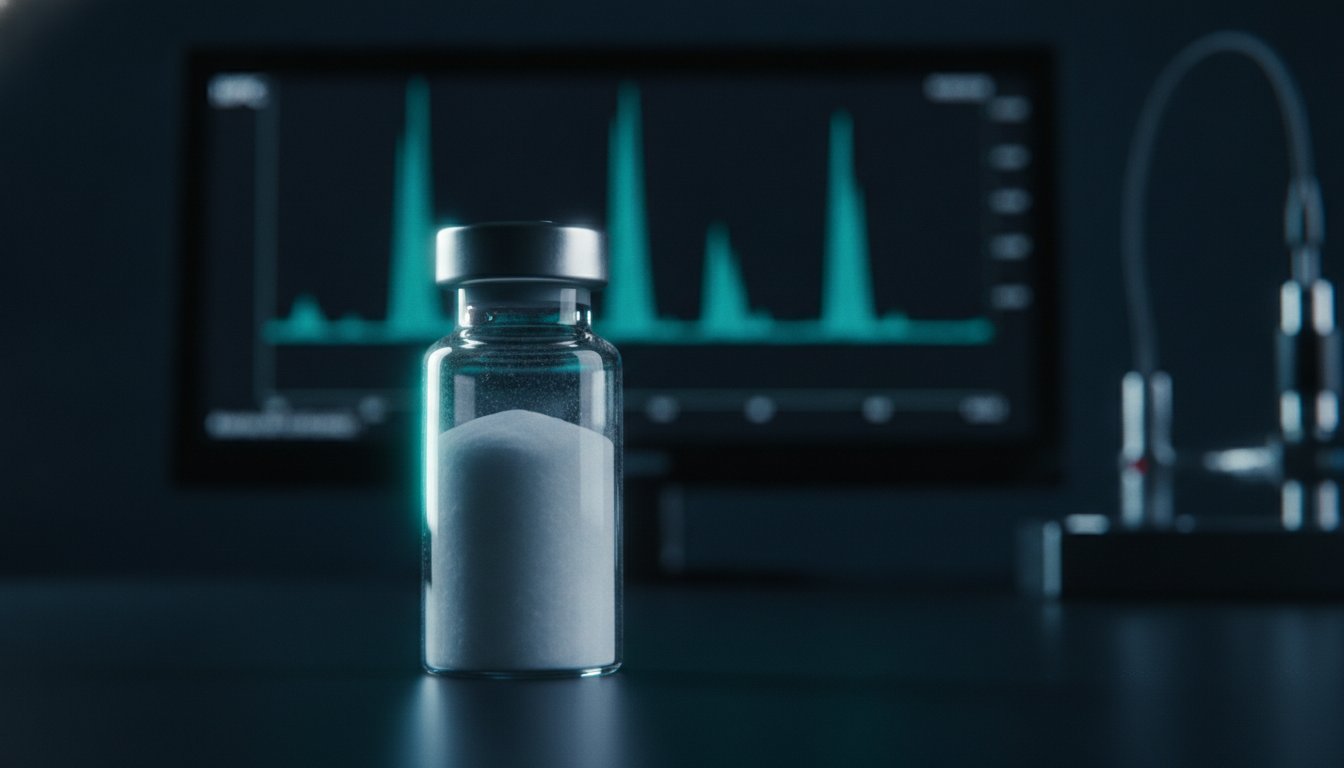
The validity of endocrine research is compromised the moment a non-selective peptide is mistaken for a precision tool. In the high-stakes environment of biochemical synthesis, the margin between a valid data point and a failed experiment often rests on a single percentage of purity. You likely recognize that for ipamorelin to serve its purpose in a controlled setting, it must remain untainted by the systemic interference common in lesser GHRPs. Precision. Verification. Reliability.
This technical overview provides an academic-grade analysis of the biochemical structure and selective mechanism of action that defines this specific pentapeptide. We promise to clarify the analytical markers of high-purity synthesis and the documentation standards required to ensure laboratory results remain beyond reproach. By examining the molecular weight of 711.85 g/mol and the necessity of ≥99% HPLC-verified purity, we provide the tools to navigate the complexities of peptide procurement. We'll move from the fundamental chemical nature of the compound to the batch-specific verification processes that secure your research against the currents of unreliable supply.
Key Takeaways
- Identify the specific pentapeptide sequence and 711.9 g/mol molecular weight that enables high selectivity for the GHS-R1a receptor.
- Analyze how ipamorelin stimulates growth hormone release while maintaining minimal impact on secondary hormonal markers like cortisol and prolactin.
- Evaluate the biochemical synergy of GHRH and GHRP combinations to understand multi-modal secretion pathways in laboratory settings.
- Define the essential analytical markers, including ≥99% HPLC purity and mass-spec confirmation, required to ensure rigorous data integrity.
- Establish a framework for identifying high-stability research compounds through domestic fulfillment and batch-specific verification.
What is Ipamorelin? Chemical Structure and Research Context
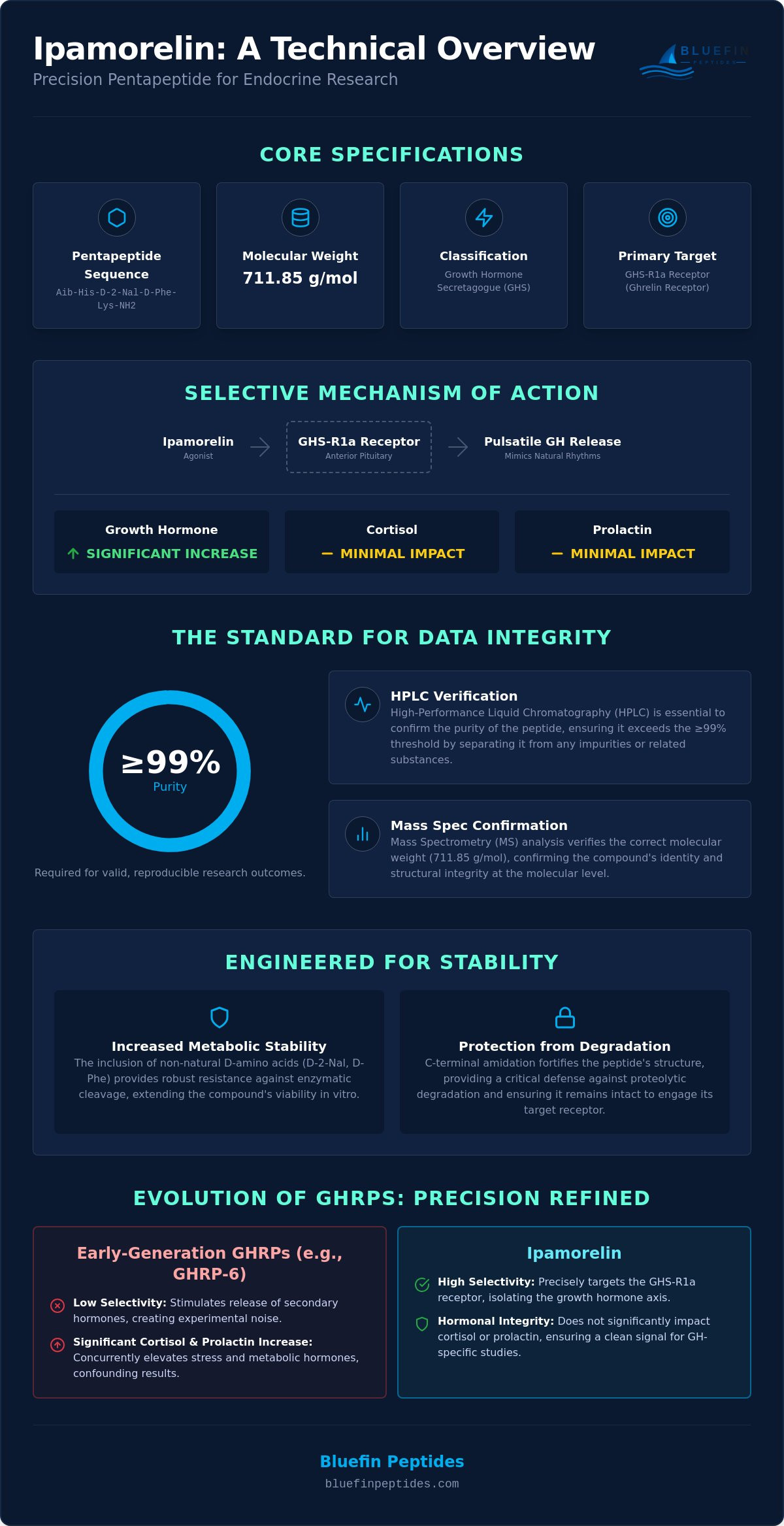
Ipamorelin is a synthetic pentapeptide recognized in laboratory settings for its high degree of receptor selectivity. To answer the fundamental question, What is Ipamorelin?, one must look at its classification as a growth hormone secretagogue (GHS) that targets the ghrelin receptor. With a precise molecular weight of 711.85 g/mol, its synthesis requires rigorous analytical standards to ensure the resulting compound maintains its intended biochemical profile. Verification of this mass via mass spectrometry is a non-negotiable step in laboratory procurement to prevent the use of degraded or incorrectly synthesized material. Unlike first-generation secretagogues, this molecule is engineered to trigger growth hormone release without the concurrent elevation of cortisol, prolactin, or ACTH. This specificity makes it an essential tool for investigating growth hormone axis regulation in experimental models where secondary hormonal interference would otherwise invalidate results. It's a precision instrument for the modern researcher who requires high-fidelity data. In the context of long-term studies, this selectivity allows for a clearer understanding of somatotropic signaling without the confounding variables introduced by stress-response hormones.
Understanding the chemical nature of this peptide requires a focus on its synthetic origin and structural integrity. Laboratory researchers prioritize these details because even minor deviations in the amino acid sequence can lead to significant changes in receptor affinity and metabolic half-life. By isolating the growth hormone response, this pentapeptide provides a controlled environment for observing endocrine dynamics. The following sections detail the specific amino acid modifications and the historical progression that led to this level of selectivity.
The Pentapeptide Sequence: Aib-His-D-2-Nal-D-Phe-Lys-NH2
The sequence Aib-His-D-2-Nal-D-Phe-Lys-NH2 defines its functional capabilities. The inclusion of D-amino acids, specifically D-2-Nal and D-Phe, is a deliberate structural choice that increases metabolic stability. In vitro, these non-natural isomers resist enzymatic cleavage, extending the peptide's viability within the assay environment. Additionally, the C-terminal amidation serves as a critical defense against proteolytic degradation. This structural fortification ensures the peptide remains intact to engage the GHS-R1a receptor with high affinity. Without these specific modifications, the molecule would succumb to rapid hydrolysis.
Historical Development of GHRPs
The transition from early compounds like GHRP-6 to ipamorelin represents a significant milestone in endocrinology research. While GHRP-6 was effective at stimulating growth hormone, it lacked the refinement necessary to prevent the stimulation of other pituitary pathways. Researchers sought a more disciplined molecule that could act with surgical accuracy. This compound emerged as the result of this pursuit, offering a refined profile that isolates the growth hormone pulse. It's now considered a gold standard in modern research because it provides a clean signal, allowing for the observation of GH dynamics in isolation. This evolution reflects the move toward highly selective ligands that minimize experimental noise.
Mechanism of Action: Selectivity and the Ghrelin Receptor
Ipamorelin functions as a potent agonist of the Growth Hormone Secretagogue Receptor (GHS-R1a) located in the anterior pituitary and hypothalamus. This interaction initiates a signal transduction pathway that results in the episodic release of endogenous growth hormone. Unlike non-selective agents that cause broad endocrine stimulation, this selective growth hormone secretagogue operates with high fidelity. It effectively mimics the natural pulsatile rhythms of GH secretion. This "pulse" mechanism is vital for maintaining physiological homeostasis in experimental models. By avoiding the prolonged GH elevations associated with GHRH analogs, researchers can observe more natural metabolic responses. Ensuring a clear signal amidst the hormonal tide requires a ligand that doesn't trigger unrelated pathways. Precision. Selectivity. Integrity.
GHS-R1a Binding Affinity
The molecular interaction between ipamorelin and the pituitary ghrelin receptor is characterized by high specificity and rapid kinetics. In competitive binding assays, the compound demonstrates a strong displacement of endogenous ligands. The inhibition constant (Ki) of ipamorelin is approximately 1.3 nM in GHS-R1a binding assays. This value indicates a high affinity for the receptor, ensuring that even low concentrations can elicit a robust physiological response. When compared to endogenous ghrelin, the binding profile suggests a more stable interaction, which is critical for ensuring consistent data across multiple experimental batches. The strength of this bond ensures that the secretagogue signal remains dominant during the intended research window.
Hormonal Selectivity: Avoiding Secondary Secretion
A primary challenge in endocrine research is the "noise" created by secondary hormonal spikes. Many Growth Hormone Releasing Peptides (GHRPs) inadvertently stimulate the release of ACTH, cortisol, and prolactin. Ipamorelin is distinguished by its nearly complete absence of these effects. In various animal models, the administration of this peptide shows no statistically significant increase in plasma ACTH or cortisol levels even at high dosages. This selectivity is crucial for metabolic and musculoskeletal studies where cortisol interference would skew muscle protein synthesis data or glucose metabolism results. Researchers requiring high-purity compounds to maintain this level of experimental clarity often utilize HPLC-verified research peptides to ensure the absence of cross-reactive impurities. By isolating the growth hormone axis, the researcher can attribute physiological changes directly to GH signaling. This precision reduces the number of confounding variables, leading to more reliable and reproducible laboratory outcomes. The discipline required to maintain such selectivity in synthesis is what separates research-grade material from inferior alternatives.
Ipamorelin vs. CJC-1295: Analyzing the Research Blend
The combination of a growth hormone-releasing hormone (GHRH) mimetic and a growth hormone secretagogue (GHS) represents a standard protocol for maximizing somatotropic output in experimental models. While ipamorelin provides a selective signal at the pituitary level, the addition of CJC-1295 expands the capacity of the growth hormone axis. This multi-modal approach targets two distinct pathways. It ensures both the production and the immediate secretion of the target hormone. Researchers often utilize an Ipamorelin / CJC-1295 Research Blend to exploit this additive effect. By stimulating the GHRH receptor and the ghrelin receptor simultaneously, the resulting GH pulse is significantly greater than the sum of its individual components. This synergy is anchored in the foundational work that established Ipamorelin, the first selective growth hormone secretagogue, as a tool for isolated endocrine study. The depth of this interaction allows for more complex investigations into tissue regeneration and metabolic signaling.
GHRH and GHRP Synergy Explained
CJC-1295 acts as a GHRH analog, increasing the population of GH-secreting cells and the total amount of GH stored within the pituitary. In contrast, ipamorelin triggers the immediate release of these stored vesicles. This sequence prevents the "bleeding" effect often seen with GHRH alone. The GHRP component acts as the catalyst, while the GHRH component provides the necessary fuel. Experimental models demonstrate that this dual-pathway agonism produces a robust, sustained pulse without the desensitization common in less selective secretagogues. This interaction is particularly valuable in bone density studies where high-amplitude pulses are required to stimulate osteoblast activity.
CJC-1295 DAC vs. No DAC in Blends
The inclusion of the Drug Affinity Complex (DAC) determines the research timeline. CJC-1295 with DAC possesses a half-life exceeding 6 days, creating a constant signal that doesn't reflect natural physiological rhythms. Most researchers prefer the "No DAC" version, which has a half-life of approximately 30 minutes, to mimic natural pulsatile secretion. This shorter duration aligns with the 2-hour half-life of ipamorelin. Dual-pathway agonism. Immediate secretion. In a single vial, these lyophilized compounds remain chemically stable, provided they're stored at -20°C or below. This stability is essential for muscle tissue regeneration studies, where consistent dosage over several weeks is required to observe measurable changes in cellular architecture. Maintaining this stability prevents the degradation that can skew longitudinal data.

Analytical Standards: HPLC Purity and Mass-Spec Verification
Experimental integrity is anchored in the chemical purity of the reagents. For ipamorelin, maintaining a threshold of ≥99% purity is mandatory to prevent synthesis byproducts from skewing biochemical data. Even trace amounts of truncated sequences or residual solvents can alter the kinetic profile of the peptide. This leads to erratic results in GHS-R1a binding assays. Validating these standards requires a methodical approach to documentation. Researchers must look beyond marketing claims. They must demand batch-specific verification. High-performance liquid chromatography and mass spectrometry are the dual pillars of this process. Without them, the researcher is essentially navigating through the currents of unverified data. To ensure your laboratory protocols remain uncompromised, you can buy HPLC-verified research peptides for consistent experimental outcomes.
The Role of HPLC in Peptide Synthesis
High-Performance Liquid Chromatography (HPLC) is the industry standard for determining the exact purity of a synthesized peptide. This process identifies impurities such as amino acid deletions or chemical isomers. In a purity report, the Area Under the Curve (AUC) represents the relative concentration of the target compound compared to secondary peaks. A single, sharp peak indicates a high-fidelity synthesis. HPLC serves as the primary diagnostic tool for verifying the chemical integrity and absolute purity of ipamorelin before it enters a laboratory environment.
Mass-Spec Confirmation
While HPLC measures purity, mass spectrometry (Mass-Spec) confirms identity. It verifies the exact molecular weight of 711.9 Da. This ensures the correct amino acid sequence was successfully synthesized. Generic manufacturer data is insufficient. Batch-specific reports are required to detect 'phantom' impurities that might share an HPLC retention time but possess a different molecular mass. Correct identity. Precise mass. Absolute certainty. This level of verification prevents the accidental use of structurally similar but functionally distinct analogs.
Stability and Lyophilization
Lyophilization, or freeze-drying, is a critical stabilization process. It removes moisture to preserve the peptide's delicate three-dimensional structure during transit. This state prevents moisture-induced degradation and hydrolysis. Once received, lyophilized vials should be stored at -20°C to maintain long-term viability. Domestic USA shipping is essential for maintaining the 'cold chain' and minimizing the time research supplies spend in uncontrolled thermal environments. Rapid fulfillment ensures the compound reaches the laboratory in its most stable physical state. It's the only way to guarantee that the chemical nature of the offering remains intact.
Procuring Ipamorelin for Laboratory Research in the USA
The transition from theoretical modeling to active laboratory experimentation requires a supply chain that mirrors the rigor of the research itself. Procuring ipamorelin involves more than simple acquisition; it necessitates a deep-sea dive into the analytical documentation that supports the compound's identity. Professional researchers recognize that the integrity of their data is only as strong as the weakest link in their logistics. In the United States, this means navigating a landscape where "Research Use Only" designations are strictly enforced. Adherence to these legal boundaries isn't just a compliance measure. It's a commitment to the scientific method. You can't compromise on the physical state of your reagents without compromising the validity of your results. Precision. Security. Trust.
Verifying Your Supplier's Standards
Evaluating a peptide vendor requires a checklist of verifiable markers that go beyond surface-level marketing. High-Performance Liquid Chromatography (HPLC) is the non-negotiable baseline for professional work. Without a batch-specific Certificate of Analysis (COA), the researcher is essentially navigating through the fog without a compass. International transit introduces unacceptable variables like thermal degradation and customs seizure. These delays don't just stall timelines; they compromise the physical state of the peptide. A reputable supplier must provide transparent access to testing data. This includes:
- Batch-specific HPLC reports showing ≥99% purity levels.
- Mass-spectrometry confirmation to verify the 711.9 Da molecular weight.
- Domestic fulfillment to maintain the stability of the lyophilized powder.
- Clear "Research Use Only" labeling to ensure regulatory compliance.
Bluefin Peptides: Precision Logistics for the Lab
Bluefin Peptides operates as a disciplined logistics specialist for the scientific community. Our commitment to 99% purity is backed by transparent, batch-level data that treats the researcher as a peer. We understand that experimental momentum depends on "urgent precision" in fulfillment. By maintaining domestic stock within the USA, we eliminate the volatility of international shipping. This ensures that the compound arrives in its optimal lyophilized state, ready for immediate reconstitution. It's a process designed to keep your research moving forward without the friction of unreliable supply lines. Researchers can explore our HPLC verified research peptides to secure the high-fidelity tools required for their next study. We don't ask for trust. We provide the data that earns it. Reliability. Speed. Verification. Our focus remains on the "how" of our processes to ensure the "what" of your results.
Advancing Endocrine Research with Analytical Precision
The utility of ipamorelin in experimental models is inextricably linked to its selectivity and chemical integrity. By isolating the growth hormone axis, researchers eliminate the confounding variables of cortisol and prolactin stimulation. This precision requires more than a synthetic sequence; it demands a rigorous verification protocol. High-performance liquid chromatography and mass spectrometry are the baseline for ensuring that data reflects the compound's true biochemical potential. Analytical rigor. Data integrity. Momentum.
Securing a reliable supply chain is the final step in maintaining experimental timelines. Stability is preserved through expert lyophilization and rapid domestic fulfillment. Bluefin Peptides functions as your disciplined logistics partner, providing the documentation required to move research from theory to verifiable results. Every batch includes ≥99% Purity Guaranteed along with Batch-Specific HPLC & Mass-Spec Reports. We prioritize Fast Domestic USA Shipping to ensure your compounds arrive in their most stable physical state.
Secure HPLC-Verified Ipamorelin for Your Research
We provide the tools. You provide the discovery. We're ready to support the integrity of your next laboratory finding.
Frequently Asked Questions
Is Ipamorelin the same as HGH?
Ipamorelin is not human growth hormone; it is a selective growth hormone secretagogue that triggers the endogenous release of GH via the GHS-R1a receptor. While HGH is the exogenous hormone itself, this pentapeptide stimulates the pituitary gland to produce its own pulsatile secretion. This distinction is critical for researchers studying natural endocrine feedback loops without introducing exogenous hormones that might suppress natural production.
What is the molecular weight of Ipamorelin?
The molecular weight of this pentapeptide is exactly 711.85 g/mol. This specific mass must be verified through mass spectrometry to confirm that the amino acid sequence Aib-His-D-2-Nal-D-Phe-Lys-NH2 has been synthesized correctly. Any deviation from this value indicates the presence of structural defects, incorrect isomers, or residual synthesis byproducts that could compromise experimental integrity.
Does Ipamorelin affect cortisol or prolactin levels in research models?
Ipamorelin demonstrates a highly selective profile with no statistically significant impact on cortisol or prolactin levels in experimental models. Unlike earlier GHRPs, it avoids the stimulation of the adrenal and lactotropic axes. This selectivity ensures that research into growth hormone dynamics remains free from the confounding variables of stress-response hormones, allowing for isolated observation of the GH axis.
How should lyophilized Ipamorelin be stored for long-term stability?
Lyophilized vials should be stored at -20°C for long-term stability to prevent moisture-induced degradation and preserve the peptide's structural integrity. While the freeze-dried state provides a defense against hydrolysis, maintaining a constant sub-zero temperature is essential for preventing peptide cleavage over several months. Once reconstituted, the compound requires refrigeration at 2°C to 8°C and it's best used within a limited window to ensure potency.
What is the difference between Ipamorelin and GHRP-6?
The primary difference lies in receptor selectivity; GHRP-6 is non-selective and triggers the release of ACTH and prolactin alongside growth hormone. Ipamorelin was specifically engineered to isolate the growth hormone pulse without cross-reactivity. This refinement allows for cleaner data in metabolic studies where secondary hormonal spikes would otherwise invalidate the results through unrelated physiological signaling.
Why is HPLC verification important for research peptides?
HPLC verification is the industry standard for determining that a peptide meets the ≥99% purity threshold required for valid research results. This process identifies impurities such as truncated sequences or residual synthesis solvents that could interfere with receptor binding or cause unintended cellular responses. Without batch-specific HPLC data, the chemical integrity of the compound cannot be verified with the precision required for professional laboratories.
Can Ipamorelin be used for human consumption?
No, this compound is strictly for laboratory research and is not approved by the FDA for human consumption. As of July 2026, it remains classified as a research chemical and its sale for use in humans is illegal. All procurement must adhere to "Research Use Only" protocols to maintain legal compliance and ensure that the material is used only in controlled experimental environments.
What are the common impurities found in low-quality Ipamorelin synthesis?
Low-quality synthesis often results in truncated sequences, residual trifluoroacetic acid (TFA), and unremoved solvents from the cleavage process. These impurities can skew the molecular weight and alter the peptide's binding affinity in competitive assays. Utilizing mass-spec confirmation is the only reliable method to identify these synthesis byproducts before they compromise the accuracy of a study's longitudinal data.
For laboratory research use only. Not for human or veterinary use. This content is educational and does not constitute medical, dosing, or usage guidance.
Browse the BLUEFIN catalog