How to Choose a Peptide Supplier: A Framework for Analytical Verification

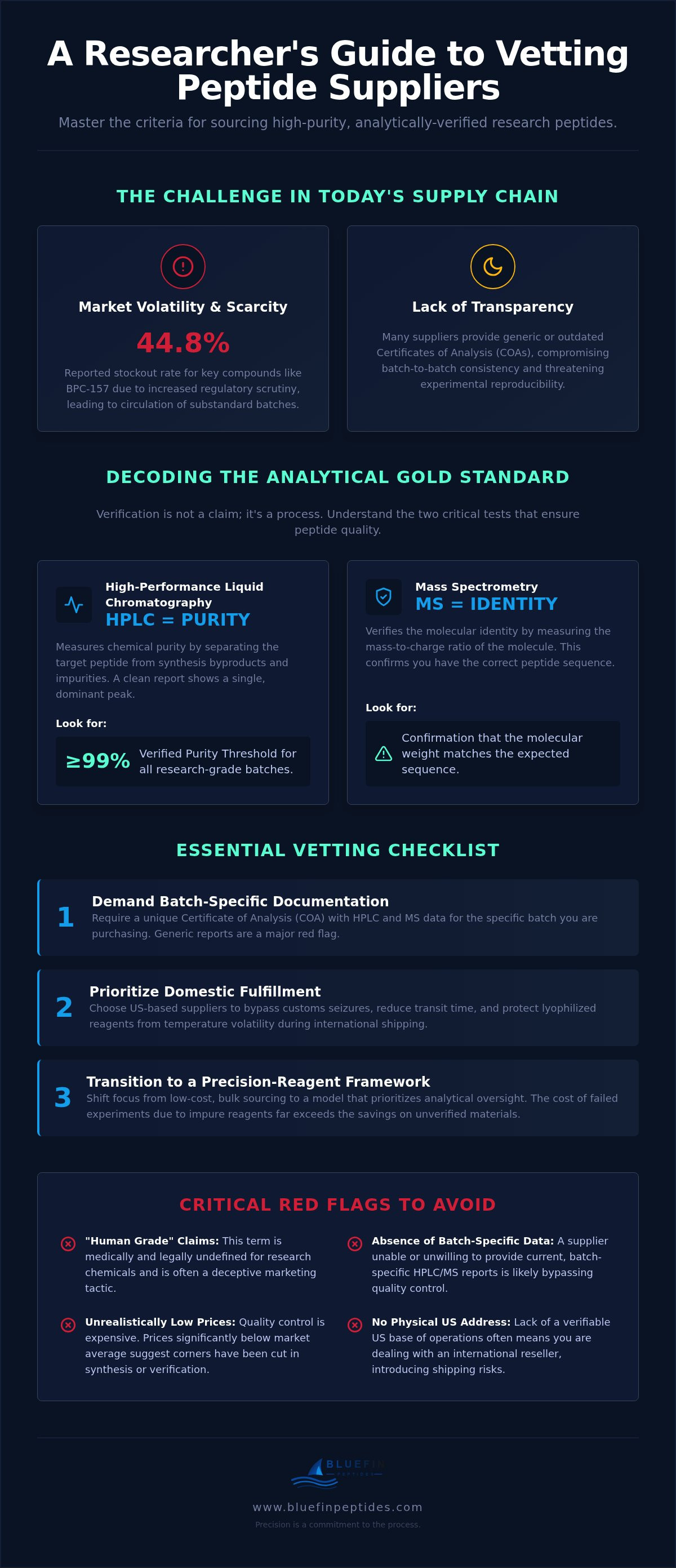
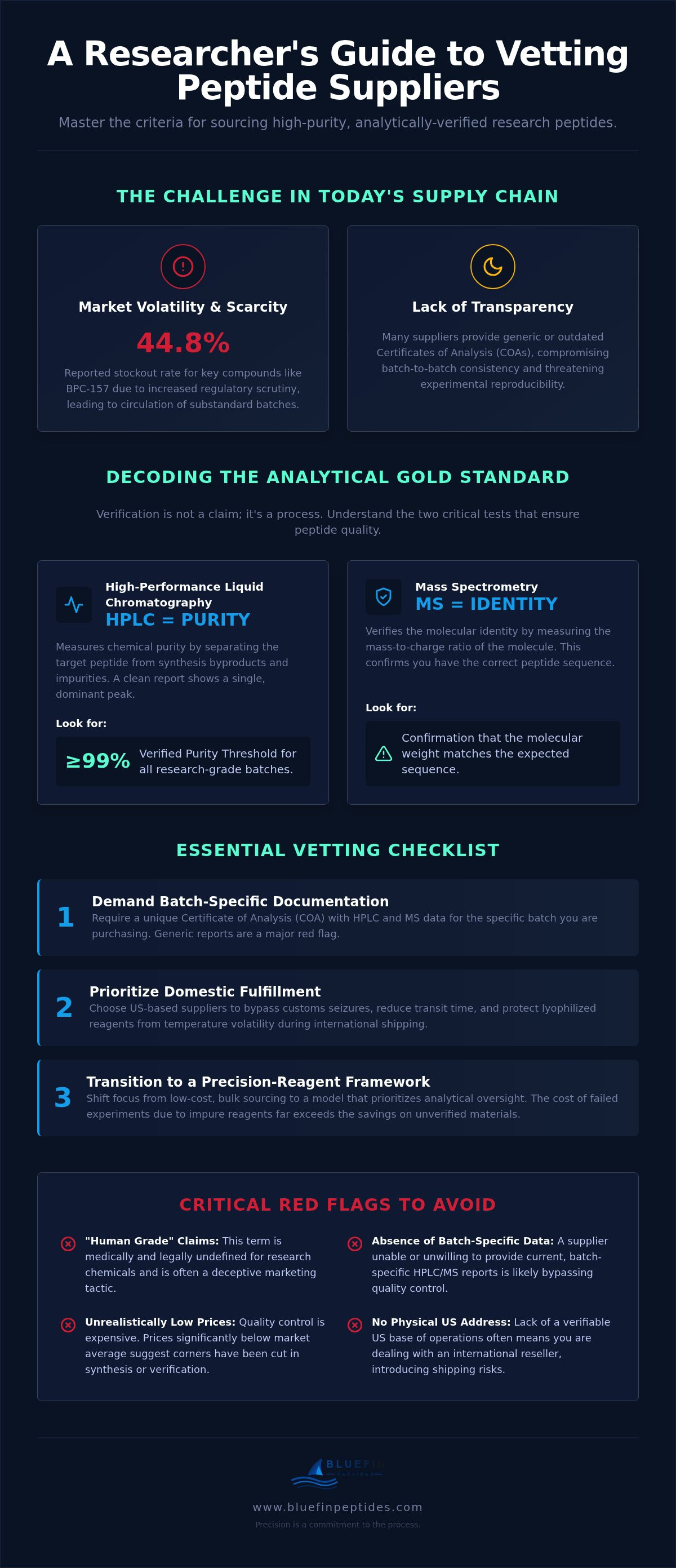
Trust in research procurement is not earned through marketing; it's verified through batch-specific analytical data. In an era where BPC-157 has faced a 44.8% stockout rate and increased regulatory scrutiny, the margin for error in your laboratory has vanished. Understanding how to choose a peptide supplier requires moving beyond surface-level claims and into the granular details of laboratory verification. You're likely exhausted by batch-to-batch inconsistency and the persistent lack of verifiable HPLC/MS-MS documentation that stalls critical projects.
Security in your results begins with the depth of the data provided. This guide provides the technical framework necessary to master the criteria for sourcing ≥99% HPLC-verified peptides. We'll examine the necessity of batch-specific Certificates of Analysis (COAs) and the specific mass-spec confirmation standards required to maintain research integrity. You'll learn how to secure rapid domestic fulfillment to bypass customs seizures and ensure your timelines remain undisturbed. Precision is a commitment to the process.
Key Takeaways
- Understand the distinct roles of High-Performance Liquid Chromatography and Mass Spectrometry in confirming both the purity and the precise molecular identity of research sequences.
- Learn how to choose a peptide supplier by recognizing why "human grade" claims and the absence of batch-specific documentation are critical disqualifiers for professional laboratories.
- Evaluate the logistical impact of domestic fulfillment on peptide stability, ensuring lyophilized reagents are protected from the volatility of international transit.
- Secure high-purity research materials by requiring a minimum threshold of ≥99% HPLC verification for every unique batch in your inventory.
- Transition from bulk-sourcing models to a precision-reagent framework that prioritizes analytical oversight over the risks of low-cost, unverified alternatives.
Navigating the Research Peptide Supply Chain in 2026
The landscape of peptide procurement has transitioned from a commodity-based market to a rigorous, data-driven discipline. In 2026, the global peptide therapeutics market is projected to reach $163.98 billion, a scale that has introduced significant volatility into the supply chain. Determining how to choose a peptide supplier requires a deep understanding of this evolution. You aren't merely purchasing a chemical compound; you're selecting a logistical and scientific partner capable of maintaining reagent integrity amidst shifting regulations.
Analytical oversight is the primary casualty of low-cost sourcing. Advanced Peptide Synthesis Methods require substantial capital investment. High-end UHPLC systems can exceed $150,000, and mass spectrometry detectors add another $50,000 to $500,000 to equipment costs. When a supplier offers the lowest price, it often indicates they've bypassed these essential verification steps. For laboratories, the scope of procurement is focused on high-precision research models where batch-to-batch consistency is paramount, unlike commercial manufacturing where scale often overrides individual vial accuracy.
The Shift Toward Analytical Transparency
Researchers in 2026 demand more than a static, generic Certificate of Analysis (COA). With the FDA reclassifying peptides like BPC-157 and TB-500 into Category 2 bulk drug substances, the market has seen a 44.8% stockout rate for certain compounds. This scarcity often leads to the circulation of sub-standard batches. A verification-first mindset is now mandatory. You must require batch-specific data that proves the identity and purity of the exact sequence you receive. Without this transparency, experimental reproducibility is compromised, wasting months of laboratory labor and funding on unverified materials.
Defining High-Purity Standards
In a laboratory context, ≥99% purity isn't a marketing target; it's a technical requirement for valid data. Technical grade peptides, often used in preliminary screening, frequently contain truncated sequences or residual solvents that interfere with delicate biological assays. Research-grade peptides must meet much higher thresholds to ensure the observed effects are attributable solely to the peptide of interest. For a detailed breakdown of these metrics, consult our guide on research peptide quality standards. At Bluefin Peptides, we treat these benchmarks as the absolute floor for our catalog, ensuring every vial supports the disciplined standards of your laboratory environment.
Decoding the Analytical Gold Standard: HPLC and Mass Spec
Verification is the bedrock of scientific integrity. Determining how to choose a peptide supplier requires a forensic approach to the analytical data provided with every batch. While many vendors claim high purity, the evidence must reside in the raw data of the High-Performance Liquid Chromatography (HPLC) and Mass Spectrometry (MS) reports. These documents are the only definitive proof that the chemical sequence in the vial matches the label on the box. Data is the only currency in a professional laboratory.
Analytical equipment is a significant capital investment. New UHPLC systems often exceed $150,000; mass spectrometry detectors add $50,000 to over $500,000 to the total cost. When a supplier cannot provide batch-specific reports, they're likely bypassing these essential quality gates. Recent FDA guidance on peptide impurities emphasizes the necessity for rigorous structural assessment and impurity thresholds to ensure research consistency. Secure your laboratory’s timeline with analytical-grade research materials from a partner that prioritizes these standards.
Interpreting the HPLC Chromatogram
HPLC serves as the definitive measure of chemical purity by separating the target peptide from synthesis byproducts. Analyze the peak integration and baseline noise with clinical detachment. A single, sharp, high-resolution peak indicates a successful synthesis, while multiple smaller peaks suggest the presence of truncated sequences or residual solvents. These impurities can compromise experimental reproducibility. High-resolution reporting is essential to ensure that your data isn't obscured by fluctuations in the chromatographic tide.
Mass Spectrometry Confirmation
While HPLC measures purity, it doesn't confirm identity. Mass Spectrometry is the tool for verifying chemical identity through mass-to-charge ratios. By measuring the molecular weight of the synthesized compound, MS ensures the sequence matches the target design. This is critical for complex research blends where fragmentation patterns must be carefully mapped. Batch-specific reports are non-negotiable for high-complexity compounds like retatrutide research peptide. If a supplier provides reused or outdated reports, treat it as an immediate disqualifier. Every batch is a new chemical event requiring its own unique verification. Consistency is maintained through unwavering documentation, not marketing promises.
The Logistical Advantage of Domestic US-Based Fulfillment
Logistics is the final gatekeeper of analytical integrity. Procurement for laboratory environments often focuses exclusively on the certificate of analysis, yet the physical journey of the vial determines the final quality of the reagent. When evaluating how to choose a peptide supplier, the geographical origin of the fulfillment center is a primary security metric. Overseas transit introduces maritime volatility. Extreme pressure shifts in unpressurized cargo holds and high-humidity environments at international ports of entry can jeopardize the physical state of the compound before it ever reaches your bench.
Customs seizures represent a significant disruption to research timelines. In 2026, the regulatory landscape has increased the frequency of inspections for international peptide shipments, leading to indefinite delays or total loss of materials. Domestic US-based fulfillment eliminates these variables. By maintaining local inventory, a supplier ensures chain-of-custody integrity from the point of analytical verification to the laboratory receiving dock. This proximity transforms a supplier from a distant vendor into a disciplined logistics partner focused on the security of your supply chain.
Shipping Speed and Research Momentum
Research momentum is a finite resource. Comparing a 2-3 day domestic transit time against a 3-week international wait reveals more than just a difference in speed; it highlights a difference in reliability. At-the-ready inventory allows for reactive procurement, enabling laboratories to pivot their focus based on emerging data without the friction of global shipping currents. Ensuring the peptide remains optimal during the last mile of delivery is essential for maintaining the fidelity of your experimental models. When you understand how to choose a peptide supplier, you prioritize those who can maintain this pace.
Stability of Lyophilized Research Vials
Lyophilized peptides are engineered for stability, but they aren't immune to environmental stressors. Domestic logistics minimize exposure to the extreme temperature fluctuations common in transcontinental air and sea freight. Predictable, trackable domestic shipping carriers offer a level of security that international post cannot match. For sensitive research compounds, maintaining the cold chain is a requirement, not an option. A US-based supplier provides the necessary environmental control to ensure the chemical nature of the offering remains undisturbed. This disciplined approach to fulfillment protects the underlying data of your research.
Identifying Red Flags: Compliance and Regulatory Boundaries
Professionalism in procurement is defined by the rigid observance of regulatory boundaries. When determining how to choose a peptide supplier, the presence of "human grade" or "pharmaceutical" marketing should be treated as an immediate disqualification. These descriptors are incompatible with the "Laboratory Research Use Only" designation required for high-purity reagents. A supplier that blurs these lines is likely compromising on internal QC discipline. Digital storefronts that prioritize marketing aesthetics over technical documentation often signal a "boutique" operation lacking established laboratory standards. Professionalism is a binary state; you're either a scientific partner or a retail vendor.
Analytical integrity is often compromised by vendors who prioritize sales volume over scientific accuracy. High-performance laboratory partners maintain a cold, objective distance from the end use of their products. If a supplier's digital presence feels more like a supplement shop than a technical catalog, it's a sign that their internal protocols may not meet the standards required for reproducible research. Anchoring your procurement in verified compliance is the only way to navigate the regulatory tide safely.
Compliance as a Proxy for Quality
Strict adherence to research-only boundaries reflects a deeper commitment to methodology. Professional partners never offer medical advice or dosage guidelines. Such behavior is a legal liability and a scientific red flag. A clear "Terms of Service" regarding laboratory use is not just a formality; it's a marker of a supplier that understands the physical state and chemical nature of their offerings. This discipline ensures that the reagents remain anchored in their intended purpose, providing a secure foundation for your data.
The Danger of Obfuscated Data
Transparency is the only metric that matters in the deep-sea precision of biochemistry. Suppliers that hide analytical reports behind "request-only" paywalls or use generic, non-batch-specific COAs are likely reselling bulk materials without independent verification. This lack of transparency is a failure in analytical oversight. For example, our documentation for tirzepatide research peptide provides a clear framework for what transparent specifications should look like. Data should be immediately accessible, not negotiated. Secure your laboratory's integrity by sourcing from a partner that prioritizes verified research reagents over marketing fluff.
The Bluefin Standard: Clinical Precision in Peptide Supply
Bluefin Peptides operates as a disciplined extension of your laboratory. We understand that the decision of how to choose a peptide supplier is essentially a decision about the validity of your future data. Our approach is rooted in a traditionalist adherence to strict testing protocols. Transparency isn't a marketing claim; it's a physical state of our offerings. Every catalog item, from metabolic research sequences to complex multi-peptide formulations, undergoes a rigorous verification cycle before reaching our US-based inventory.
Our commitment to ≥99% HPLC verification is absolute. This threshold ensures that the chemical nature of the reagent supports high-stakes experimental models without the interference of synthesis byproducts. Our catalog offers a precise range of research tools, including metabolic analogues and specialized sequences like the GHK-Cu BPC-157 TB-500 research blend. This fluid movement from individual compounds to sophisticated blends allows researchers to navigate complex biochemical pathways with confidence.
Batch-Specific Accountability
We provide the exact analytical data for the specific vial in your hand. Our methodology for mass-spec confirmation and HPLC verification is exhaustive. We don't ask for blind trust; we provide the tools for empirical verification. This batch-specific accountability is the Bluefin promise. It's a commitment to security and clinical precision that ensures your research remains anchored in verifiable facts. By providing high-resolution reporting for every batch, we eliminate the ambiguity that often plagues the research supply chain.
Securing Your Research Supply
Procurement should be a frictionless process. Our professional e-commerce platform is designed for the high-performance laboratory partner. Rapid fulfillment from our domestic US inventory ensures your momentum is never stalled by the friction of international shipping currents. We prioritize logistical speed without sacrificing the underlying data. Understanding how to choose a peptide supplier means selecting a partner that offers both technical depth and operational efficiency. Establishing a long-term partnership with Bluefin Peptides means building a foundation of empirical trust. We focus on the "how" of our processes to ensure the "what" of your results.
Securing Analytical Integrity in Future Research
Mastering how to choose a peptide supplier requires a transition from passive procurement to active analytical verification. Every vial must be anchored by empirical data. High-resolution HPLC chromatograms and mass spectrometry confirmation are the only definitive measures of a compound's physical state. Beyond the laboratory bench, domestic fulfillment remains the primary defense against the environmental stressors and logistical currents inherent in international transit. Professionalism is not a marketing claim; it's a commitment to the Laboratory Research Use Only standard.
Bluefin Peptides operates with a show, don't tell philosophy regarding quality. We provide the tools for verification to ensure the security of your research results. Our inventory remains focused on clinical precision, offering only the highest grade of laboratory reagents. Maintain the momentum of your laboratory with unwavering data and disciplined logistics.
Procure HPLC-Verified Research Peptides from Bluefin Peptides and secure ≥99% HPLC-verified purity backed by batch-specific COAs. Experience the fluid movement of domestic US shipping for all research compounds.
Frequently Asked Questions
How can I verify the purity of a peptide supplier?
Verifying a supplier's purity requires a forensic review of batch-specific HPLC and Mass Spectrometry documentation. You shouldn't rely on static website claims. Instead, cross-reference the batch number on your vial with the raw data in the provided report. A sharp, singular peak on the HPLC chromatogram indicates high chemical purity. Professional suppliers will provide these documents immediately to maintain transparency. This is a critical step in understanding how to choose a peptide supplier for your laboratory.
What is the difference between a research peptide and a pharmaceutical?
The primary distinction lies in the intended application and regulatory oversight. Research peptides are strictly designated for laboratory models and aren't intended for human or veterinary use. Pharmaceuticals have undergone clinical trials and FDA approval for specific therapeutic indications. Research-grade materials prioritize analytical purity for experimental reproducibility rather than clinical safety profiles. Any supplier marketing research products for human consumption is operating outside professional boundaries and should be treated as a significant risk.
Why is US-based shipping important for research peptides?
Domestic US-based shipping eliminates the maritime volatility associated with international transit. Overseas orders often face indefinite customs seizures or exposure to extreme environmental stressors in unpressurized cargo holds. By choosing a domestic partner, you ensure chain-of-custody integrity and rapid fulfillment. This proximity protects the physical state of the compound. It also allows your research to proceed without the friction of global shipping currents or the risk of temperature-induced degradation during long delays.
What should I look for in a Certificate of Analysis (COA)?
A valid Certificate of Analysis must contain batch-specific data, including a clear HPLC chromatogram and a Mass Spectrometry report. Look for the target molecular weight and ensure the mass-to-charge ratio matches the theoretical value for the sequence. The purity percentage should be explicitly stated as ≥99%. Check that the analysis date is recent and corresponds to the current inventory. Obfuscated data or generic reports that lack specific batch identifiers are immediate markers of analytical failure.
Are research peptides stable at room temperature during shipping?
Lyophilized peptides are engineered for stability during short-term transit at ambient temperatures. However, prolonged exposure to extreme heat can jeopardize the chemical nature of the offering. Domestic logistics minimize this risk by reducing the time a package spends in transit. For highly sensitive compounds, maintaining a cold chain is essential. Reliable fulfillment ensures the peptide remains in its optimal physical state, protecting the underlying data of your research from environmental degradation.
How do I interpret an HPLC report for a research peptide?
Interpreting an HPLC report involves analyzing the integration of the primary peak against the total area of the chromatogram. The main peak represents the target peptide, while smaller peaks indicate impurities or truncated sequences. A baseline with minimal noise and a singular, sharp peak indicates a successful synthesis. Professional reports will provide a table of peak areas, allowing you to verify that the purity meets the ≥99% threshold required for high-precision laboratory work.
Why do some suppliers have significantly lower prices than others?
Significantly lower prices often indicate a failure in analytical oversight or the absence of rigorous quality control. High-performance laboratory equipment requires substantial capital investment. Suppliers who bypass independent batch testing or utilize sub-standard synthesis methods can offer lower costs at the expense of research integrity. When determining how to choose a peptide supplier, remember that the lowest price usually reflects a compromise in purity or documentation that can stall your project.
Is it legal to buy research peptides in the United States?
It's legal to procure peptides in the United States provided they're intended exclusively for laboratory research use. These compounds are classified as bulk drug substances and aren't approved for human or veterinary administration. Professional suppliers maintain strict compliance with these boundaries, requiring a Research Use Only designation on all labeling and documentation. Adhering to these legal boundaries is a hallmark of a disciplined laboratory partner and ensures the security of your procurement process.
For laboratory research use only. Not for human or veterinary use. This content is educational and does not constitute medical, dosing, or usage guidance.
Browse the BLUEFIN catalog