Buy Ipamorelin CJC-1295 Blend: Analytical Specifications and Research Standards
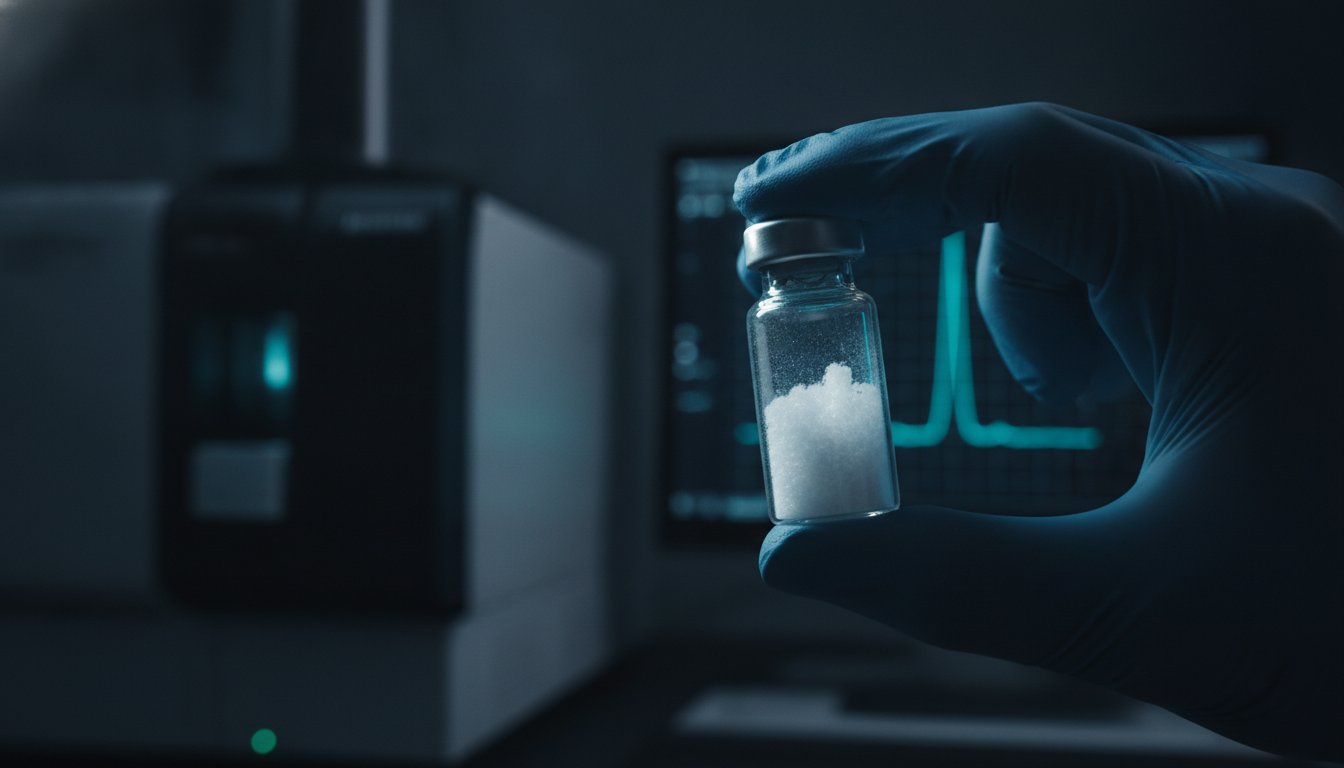
Purity is not a static metric; it's a moving target that requires continuous verification through High-Performance Liquid Chromatography. For the modern researcher, the challenge isn't just finding a source, but securing a partner that prioritizes analytical transparency over marketing rhetoric. You understand that experimental reproducibility depends entirely on the integrity of your reagents. When you choose to buy ipamorelin cjc-1295 blend, you're not just purchasing a chemical. You're investing in the validity of your data.
This technical guide details the molecular synergy of the Ipamorelin and CJC-1295 sequence, focusing on the rigorous standards necessary for research-grade materials. We'll explore the necessity of ≥99% HPLC-verified purity and the importance of mass spectrometry in confirming batch-specific identity. You'll gain a clear understanding of the chemical stability of this specific blend and the logistical requirements for rapid, US-based fulfillment. By the end of this analysis, the protocols for procuring high-fidelity peptides will be anchored in clinical precision and absolute documentation. Every data point is designed to ensure your laboratory operates with subsurface precision and total security.
Key Takeaways
- Analyze the molecular composition of co-lyophilized blends, specifically the interaction between the pentapeptide Ipamorelin and the tetrasubstituted CJC-1295 No DAC.
- Don't settle for ambiguous standards; evaluate the necessity of ≥99% HPLC purity and mass spectrometry verification before you buy ipamorelin cjc-1295 blend.
- Understand the synergistic amplification of growth hormone secretion models achieved through the dual-pathway stimulation of the pituitary and inhibition of somatostatin.
- Ensure logistical integrity by utilizing US-based inventory for rapid fulfillment, maintaining the fluid movement of your laboratory supply chain.
- Implement standardized reconstitution protocols using bacteriostatic water to maintain the chemical stability and shelf-life of vacuum-sealed research vials.
Technical Profile of the Ipamorelin / CJC-1295 (No DAC) Research Blend
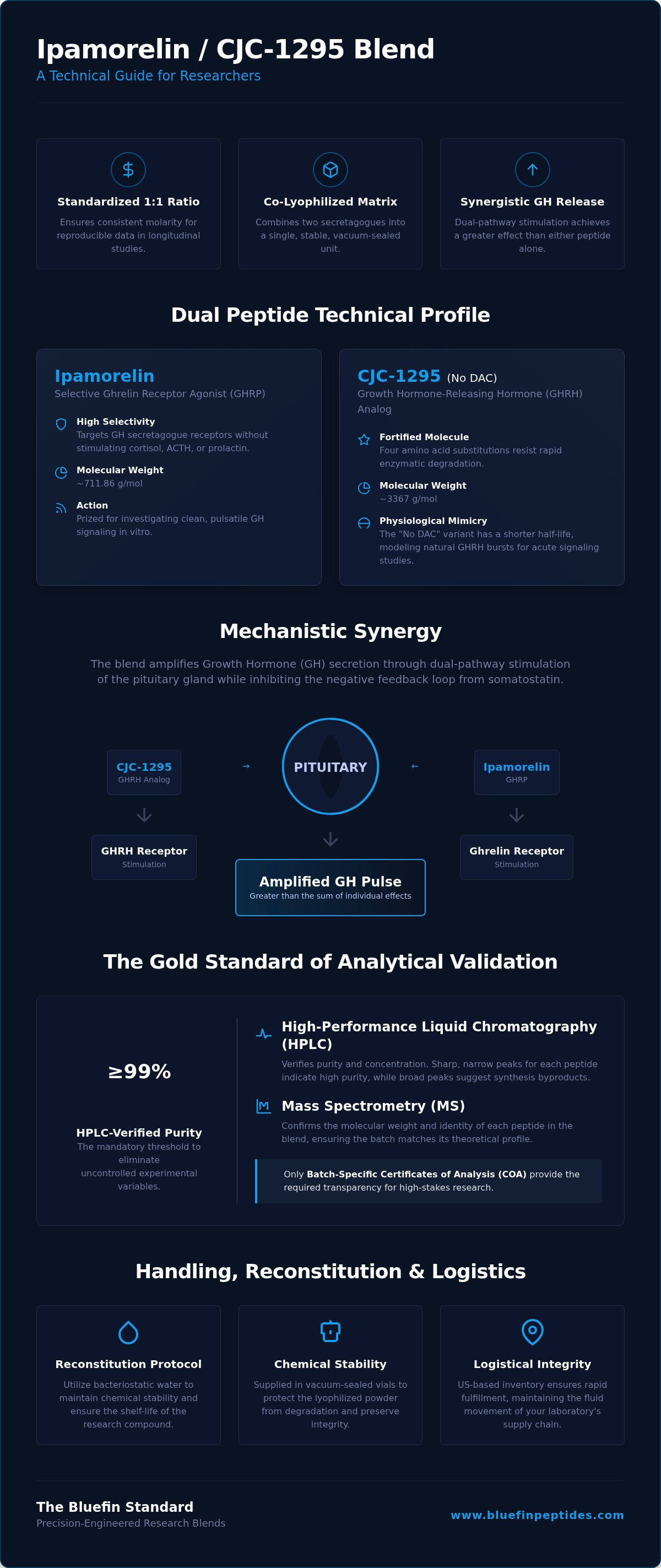
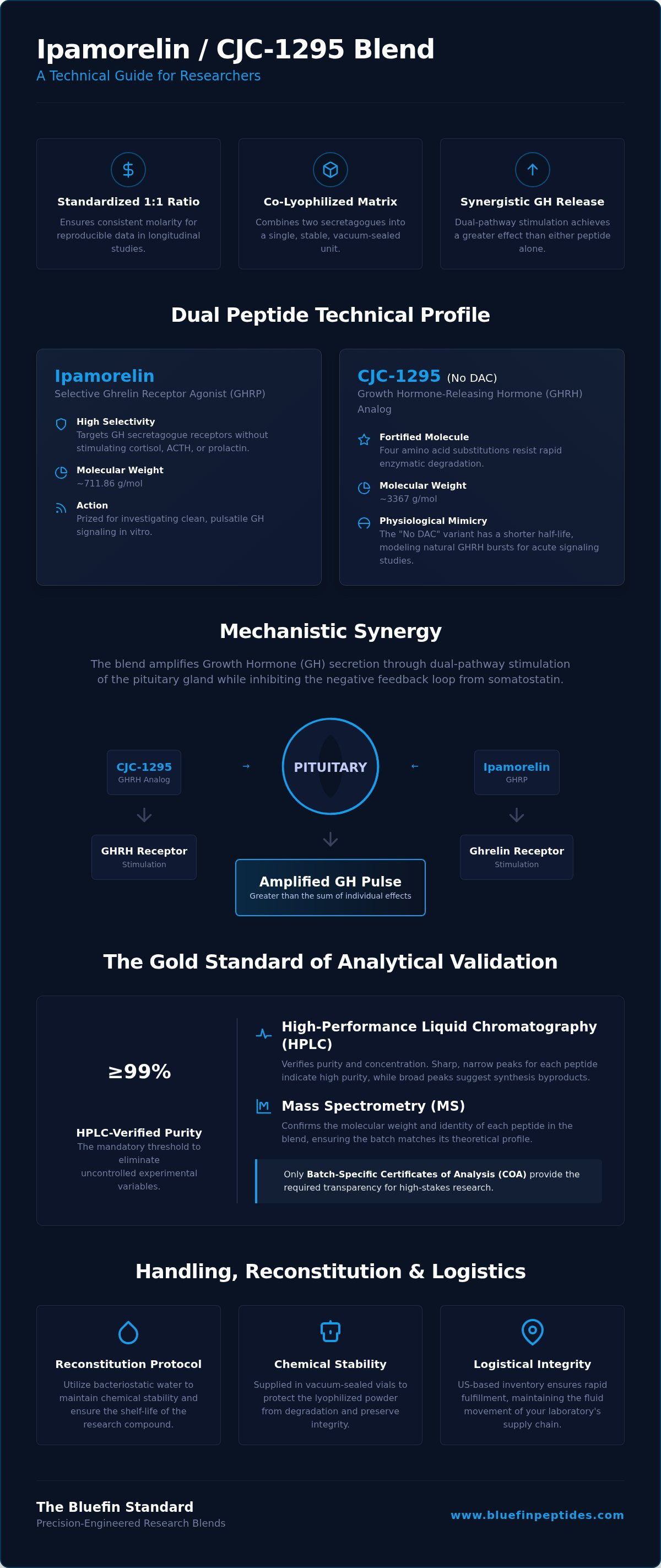
Clinical precision. Unwavering consistency. The co-lyophilized matrix of Ipamorelin and CJC-1295 (No DAC) provides a controlled environment for investigating growth hormone dynamics. This formulation is a precision-engineered tool. It combines two distinct growth hormone secretagogues into a single, vacuum-sealed unit. When investigators choose to buy ipamorelin cjc-1295 blend, they're securing a standardized 1:1 ratio. This specific balance is critical for comparative research models. It ensures that molarity remains consistent across all laboratory trials, allowing for reproducible data in longitudinal studies.
The chemical composition consists of a pentapeptide and a tetrasubstituted analog. Their molecular weights are distinct. CJC-1295 possesses a molecular weight of approximately 3367 g/mol. In contrast, Ipamorelin is a smaller molecule at roughly 711.86 g/mol. These specifications are not mere numbers; they're the benchmarks for mass spectrometry verification. This blend is intended strictly for laboratory research use only. It's designed to navigate the complexities of pituitary signaling without the interference of unintended hormonal spikes.
Ipamorelin: The Selective Ghrelin Receptor Agonist
The sequence for Ipamorelin is defined as Aib-His-D-2-Nal-D-Phe-Lys-NH₂. It's a highly selective ghrelin receptor agonist. In a laboratory setting, this peptide is prized for its disciplined profile. It targets the growth hormone secretagogue receptor with surgical accuracy. Unlike earlier iterations of GHRPs, it doesn't stimulate the release of ACTH, prolactin, or cortisol. This selectivity allows researchers to isolate growth hormone pulses without the noise of collateral endocrine activity. It's the primary tool for investigating pulsatile GH signaling in vitro.
CJC-1295 (Mod GRF 1-29): The GHRH Analog
CJC-1295, specifically the Mod GRF 1-29 variant, serves as a synthetic analog of growth hormone-releasing hormone. It contains four amino acid substitutions that fortify the molecule against enzymatic currents. These modifications allow the peptide to resist rapid degradation by dipeptidyl peptidase-4. The "No DAC" designation is a vital distinction. It lacks the Drug Affinity Complex, resulting in a shorter half-life that more closely mimics physiological GHRH bursts. This version demonstrates high binding affinity for the growth hormone-releasing hormone receptor (GHRHR). When you buy ipamorelin cjc-1295 blend for your facility, the No DAC variant ensures that the experiment remains focused on acute signaling rather than permanent receptor saturation. It provides the subsurface stability required for high-stakes biochemistry research.
Analytical Validation: HPLC and Mass Spectrometry Standards
Precision in the laboratory requires more than a label. It demands verified data. For investigators who intend to buy ipamorelin cjc-1295 blend, the analytical documentation is the only anchor for experimental validity. High-Performance Liquid Chromatography (HPLC) serves as the primary methodology for navigating the purity peaks of a dual-peptide formulation. Unlike single-peptide vials, a blend produces a complex chromatogram that requires expert interpretation to distinguish between the two active sequences and any potential impurities.
The regulatory landscape for these substances remains under intense scrutiny. An FDA Advisory Committee Briefing recently highlighted the critical nature of purity and safety standards in peptide compounding. In a research environment, these standards translate to a mandatory ≥99% purity threshold. Anything less introduces uncontrolled variables that can compromise the integrity of a study. Representative reports are insufficient for high-stakes research. Only batch-specific Certificates of Analysis (COA) provide the transparency required to ensure the physical state of the compound matches its theoretical profile.
Interpreting Chromatography Reports for Blends
Analysis of a blend requires identifying distinct retention times for both Ipamorelin and CJC-1295. A sharp, narrow peak indicates high purity. In contrast, broad peaks or "shoulders" suggest the presence of synthesis byproducts. UV absorbance, typically measured at 214nm, is utilized to determine the precise peptide concentration within the lyophilized matrix. Researchers must look past baseline noise to ensure that impurity thresholds meet 2026 laboratory standards. You should always verify the analytical integrity of your supplies through documentation that matches your specific lot number.
Mass-Spec Confirmation: Molecular Fingerprinting
While HPLC confirms purity, Mass Spectrometry (MS) confirms identity. It's the molecular fingerprint of the compound. By analyzing ion fragmentation, MS verifies the primary structure of both peptides against their known molecular weights. This process ensures the total absence of residual solvents or synthesis intermediates that could skew experimental results. MS-confirmation serves as the final barrier against errors, verifying that the vial contains the exact amino acid sequences specified without the risk of experimental cross-contamination. This level of subsurface precision is what separates high-fidelity research materials from standard retail offerings. Every data point must be verifiable. Every batch must be documented. Trust is built on the "how" of the process, ensuring the "what" of the results remains beyond reproach.
Mechanistic Synergy: GHRH and GHRP Interaction in Research
Synergy is the primary objective in multi-peptide research models. The combination of Ipamorelin and CJC-1295 (No DAC) represents a dual-pathway strategy designed to maximize endogenous signaling within a controlled laboratory environment. While individual components provide measurable results, their co-administration triggers a synergistic amplification. When researchers buy ipamorelin cjc-1295 blend, they're securing a tool that targets different receptor sites on the somatotrophs simultaneously.
This interaction occurs because the two peptides act as a ghrelin mimetic and a GHRH analog, respectively. Ipamorelin acts by inhibiting somatostatin, the hormone responsible for halting GH release. Concurrently, CJC-1295 provides the positive signal to initiate a pulse. This method mimics a natural physiological surge more effectively than a single-agent approach. It allows for the exploration of cellular repair mechanisms, metabolic signaling, and enhanced protein synthesis in various biological models.
The preference for the "No DAC" variant is strategic. By omitting the Drug Affinity Complex, the blend avoids permanent receptor saturation. It facilitates a pulsatile release that mirrors physiological patterns. This is essential for researchers studying acute signaling durability without the confounding variables of long-term plasma binding. When you buy ipamorelin cjc-1295 blend, the No DAC modification ensures the experiment remains focused on discrete signaling events.
Pituitary Response and Signaling Cascades
The interaction between GHRH analogs and ghrelin mimetics initiates a robust signaling cascade. These compounds trigger the release of stored growth hormone from the anterior pituitary. This surge subsequently influences downstream IGF-1 signaling in experimental biology. Researchers utilize this model to assess signaling durability in chronic and acute environments. The subsurface precision of this dual-action mechanism provides a reliable framework for observing endocrine responses.
Experimental Reproducibility and the 1:1 Ratio
Standardization is the bedrock of valid data. Fixed-ratio blends reduce variables in laboratory protocols. By utilizing a pre-formulated 1:1 ratio, investigators maintain consistent molar concentrations across multi-vial studies. This prevents mathematical drift from manual mixing. For deeper analysis, refer to the ipamorelin CJC-1295 research blend USA guide. This logistical integrity ensures every experiment is anchored in verifiable chemistry.
Handling, Reconstitution, and Logistical Integrity
The physical state of a peptide blend is its most vulnerable attribute. Lyophilization, or freeze-drying, stabilizes the molecular structure of Ipamorelin and CJC-1295 by removing moisture under a vacuum. This process creates a porous, stable powder that resists degradation. However, vacuum-sealed vials aren't invincible. Stability is a function of environment. For long-term preservation, these research materials must be maintained in temperature-controlled environments between 2 and 8 °C. Exposure to thermal fluctuations during storage can induce peptide cleavage, rendering the 1:1 ratio analytically void.
Rapid US-based fulfillment is a non-negotiable requirement for research continuity. Delays in transit increase the risk of thermal stress, even for lyophilized products. When you buy ipamorelin cjc-1295 blend, the speed of delivery ensures the compound remains within its optimal stability window. If you buy ipamorelin cjc-1295 blend from a vendor lacking domestic inventory, you risk the structural decay associated with international customs delays. Professional procurement relies on a disciplined logistics chain that treats every shipment with the urgency of a time-sensitive experiment.
Best Practices for Peptide Reconstitution
Reconstitution is a delicate transition from solid to liquid. The role of bacteriostatic water is paramount. It contains 0.9% benzyl alcohol, which inhibits bacterial growth and preserves the integrity of the peptide bonds for extended research durations. Proper handling includes the following protocols:
- Gentle Swirling: Avoid vigorous agitation. Shaking a vial can denature the delicate amino acid chains.
- Solvent Introduction: Allow the bacteriostatic water to run down the inside wall of the vial to minimize impact.
- Dosing Precision: Determine the final concentration (mg/mL) only after the powder is fully dissolved to ensure experimental accuracy.
For a detailed overview of handling safety and laboratory protocols, consult our guide on research peptide quality standards.
Domestic Shipping and Cold-Chain Considerations
Navigating the shipping "thaw" phase requires maritime precision. Domestic fulfillment minimizes the duration the peptides spend in ambient temperatures. Every shipment should be secured with tamper-evident seals to ensure the chain of custody remains unbroken. This logistical security prevents contamination and guarantees that the product arriving at your facility matches the batch-specific COA. A disciplined approach to shipping is the final safeguard for your data. You can procure HPLC-verified research blends with rapid domestic fulfillment to ensure your project stays on course.
The Bluefin Standard: Precision-Engineered Research Blends
Precision is our baseline. At Bluefin Peptides, we operate with the understanding that laboratory reagents are the bedrock of experimental integrity. Every decision to buy ipamorelin cjc-1295 blend from our catalog is supported by a commitment to ≥99% HPLC-verified purity. We don't ask for trust. We provide the data. Our mass-spec confirmation on every batch ensures that the molecular profile you receive matches the theoretical structure exactly. This clinical precision eliminates synthesis artifacts that could otherwise introduce noise into your signaling models. It's a disciplined approach that treats the researcher as a peer in a professional scientific field.
Our identity is rooted in logistical excellence. We function as a high-performance laboratory partner rather than a simple retail vendor. This means maintaining a US-stocked inventory that ensures the fluid movement of supplies to your facility. We understand the high-stakes nature of academic and private research. Delays are not just inconveniences. They're threats to project timelines. By prioritizing domestic fulfillment, we secure the deep-sea precision of your supply chain. We focus on the "how" of our processes to ensure the "what" of your results remains beyond reproach.
Why Researchers Prioritize HPLC-Verified Blends
Synthesis impurities are the primary cause of experimental drift. By utilizing ≥99% pure materials, investigators ensure that cellular responses are the result of the intended peptide sequence rather than residual solvents or truncated chains. This consistency is the key to longitudinal study success. When you buy ipamorelin cjc-1295 blend, you're investing in the durability of your data. For those establishing broader research protocols, our tirzepatide research peptide provides a similar benchmark for purity and analytical documentation. Both products adhere to the same rigorous 2026 testing standards, ensuring your reagents are anchored in verifiable chemistry.
Securing Your Laboratory Supply Chain
Procurement should be as streamlined as the experiments it supports. We provide qualified research entities with batch-matched COAs included with every order of the Ipamorelin / CJC-1295 blend. This allows for immediate verification upon arrival. Our system is designed for professionals who speak the language of the laboratory. We maintain a stoic reliability in our fulfillment protocols, including:
- Batch-specific documentation: Every vial is linked to its unique analytical report.
- Vacuum-sealed integrity: Lyophilized powders are protected against atmospheric moisture.
- Rapid domestic dispatch: Minimizing transit time to preserve chemical stability.
We remain a traditionalist in our adherence to strict testing protocols while innovating in logistical speed. This dual focus ensures your laboratory receives the highest-fidelity materials available. Secure high-purity research blends for your laboratory today.
Advancing Experimental Precision in Peptide Research
Analytical integrity is the anchor of reproducible science. We've detailed how the synergy of GHRH and GHRP analogs depends entirely on the absolute precision of the molecular ratio. By prioritizing ≥99% HPLC-verified purity and mass-spec confirmation, you eliminate the synthesis noise that compromises high-stakes research. The subsurface details found in batch-specific COAs provide the transparency required for academic-grade validation. These aren't just metrics; they're the safeguards for your experimental data.
Logistical speed is equally critical to maintaining the chemical stability of your reagents. US-based inventory ensures the fluid movement of your supply chain, protecting vacuum-sealed vials from the thermal stress of extended transit. When you decide to buy ipamorelin cjc-1295 blend for your facility, you're securing a partnership focused on the rigorous "how" of laboratory standards. We invite you to Procure HPLC-Verified Ipamorelin / CJC-1295 Blends and anchor your next study in absolute chemistry. Your commitment to quality ensures that every pulse of data remains beyond reproach.
Frequently Asked Questions
Is the Ipamorelin CJC-1295 blend stable at room temperature during shipping?
Lyophilized powder maintains structural integrity at room temperature during standard domestic transit windows. The freeze-drying process removes moisture under vacuum, creating a stable matrix that resists immediate thermal degradation. However, prolonged exposure to ambient heat can induce molecular cleavage. Rapid US-based fulfillment is utilized to minimize this risk. Upon arrival at the laboratory, vials should be transitioned to a temperature-controlled environment immediately to preserve the 1:1 molar ratio.
What is the difference between CJC-1295 with DAC and without DAC for research?
The primary distinction lies in the half-life and receptor binding duration. CJC-1295 with DAC includes a Drug Affinity Complex that binds to plasma albumin, extending its presence for several days. The "No DAC" variant, or Mod GRF 1-29, lacks this complex. It provides a shorter, pulsatile signaling window that more closely mimics endogenous GHRH bursts. Researchers who buy ipamorelin cjc-1295 blend typically prefer the No DAC version for studying acute pituitary responses.
How should I interpret the purity peaks on a blend's HPLC report?
A dual-peptide HPLC report should display two distinct, sharp peaks corresponding to the retention times of Ipamorelin and CJC-1295. The area under these peaks determines the purity percentage. Baseline noise or additional "shoulders" indicate synthesis impurities or degradation products. Professional reports will verify that the sum of these primary peaks reaches the ≥99% threshold. Any deviation suggests a compromised batch that could introduce uncontrolled variables into your experimental signaling models.
Can this peptide blend be used for human or veterinary research?
No, these compounds are strictly for in-vitro laboratory research and are not for human, veterinary, or consumer use. They're classified as research chemical reference materials. Utilizing these substances outside of a controlled laboratory environment is a violation of established research protocols. Every vial is intended for professional investigators conducting biochemistry or molecular biology studies. Adherence to these hard constraints is mandatory to maintain the legal and ethical boundaries of scientific inquiry.
What is the recommended storage temperature for lyophilized peptide vials?
Lyophilized peptide vials require a temperature-controlled environment of 2 to 8 °C for short-term preservation. For long-term storage exceeding three months, a temperature of -20 °C or lower is recommended to prevent structural decay. Vials must remain vacuum-sealed and protected from light. Once reconstituted, the stability window narrows significantly. Maintaining these specific thermal benchmarks ensures that the chemical nature of the blend remains anchored in its original analytical state.
How do I calculate the concentration of each peptide after reconstitution?
Concentration is calculated by dividing the mass of the peptide (mg) by the volume of bacteriostatic water (mL) added. In a 10mg blend with a 1:1 ratio, each component represents 5mg of the total mass. Adding 2mL of diluent results in a concentration of 2.5mg/mL for each peptide. Precision in this calculation is vital for ensuring accurate experimental dosing. Always allow the powder to fully dissolve through gentle swirling before initiating any measurement.
Why is a 1:1 ratio commonly used in Ipamorelin and CJC-1295 studies?
The 1:1 ratio is standardized to provide a balanced dual-pathway approach to pituitary stimulation. This specific balance allows researchers to investigate the synergistic amplification of growth hormone pulses without one component saturating the receptor sites prematurely. When you buy ipamorelin cjc-1295 blend for your facility, the 1:1 ratio reduces mathematical drift and manual mixing errors. It ensures that every vial provides consistent molar concentrations, which is the key to achieving reproducible results.
Are Bluefin Peptides products third-party tested for purity?
Every batch of the Ipamorelin / CJC-1295 blend undergoes rigorous third-party validation. We utilize High-Performance Liquid Chromatography to verify purity and Mass Spectrometry to confirm the exact molecular identity of each sequence. These batch-matched reports are provided to researchers to ensure total transparency. We prioritize a "show, don't tell" philosophy, providing the analytical tools necessary for you to validate your own supplies. This commitment anchors our catalog in clinical precision and reliability.
For laboratory research use only. Not for human or veterinary use. This content is educational and does not constitute medical, dosing, or usage guidance.
Browse the BLUEFIN catalog