Sterile Water for Peptide Reconstitution: Technical Guide
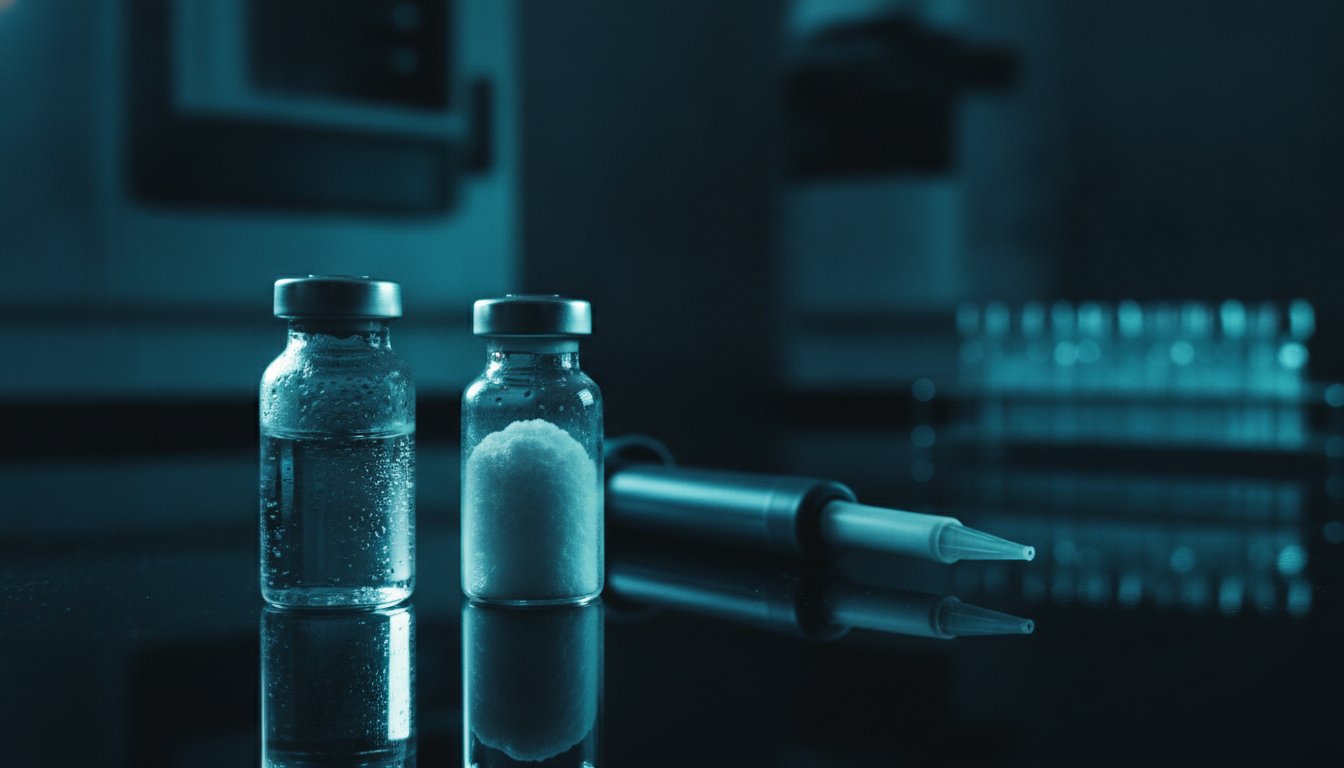
A single-dose vial of sterile water for injection, once punctured in ambient air, becomes a biological liability in exactly sixty minutes. While the focus of laboratory precision often rests on the ≥99% HPLC-verified purity of the peptide itself, the selection of sterile water for peptide reconstitution is the primary determinant of research integrity. It's a mistake to treat the reconstitution medium as a secondary logistical step, as improper solvent choice can degrade expensive compounds and skew analytical results through unexpected chemical interactions.
You understand that high-precision research demands an uncompromising approach to chemical stability and fluid dynamics. This guide provides the technical protocols to master solvent selection, ensuring your laboratory maintains the highest standards of accuracy and contamination prevention. We will examine the specific physicochemical profiles of SWFI versus bacteriostatic water; we'll also detail the interference patterns of preservatives in mass spectrometry and the strict USP <797> standards for beyond-use dating. By the end of this technical brief, you'll have a repeatable, scientifically sound protocol for maintaining the stability and depth of your research compounds.
Key Takeaways
- Differentiate between Bacteriostatic Water and Sterile Water for Injection (SWFI) based on analytical sensitivity and the specific requirements of your experimental model.
- Master the technical selection of sterile water for peptide reconstitution to eliminate spectral interference and ionization suppression in high-resolution chromatography.
- Establish a repeatable, aseptic protocol that minimizes mechanical shear and thermal shock during the transition from lyophilized powder to liquid state.
- Identify the chemical drivers of peptide degradation, such as hydrolysis and deamidation, to accurately predict the stability profile of reconstituted solutions.
- Ensure research integrity by pairing HPLC-verified solvents with high-purity compounds, utilizing batch-specific documentation to verify the absence of pyrogenic contaminants.
Understanding Reconstitution: The Role of Sterile Water in Peptide Research
Reconstitution is the precise chemical restoration of a lyophilized powder into a liquid state suitable for laboratory analysis. In high-stakes research environments, this isn't merely a mixing step; it's a critical phase where the secondary and tertiary structures of the molecule are reintroduced to an aqueous environment. Lyophilization, or freeze-drying, remains the industry standard for stabilizing fragile compounds during transit. By removing moisture through sublimation under a vacuum, manufacturers create a porous, stable "cake" that resists thermal degradation and oxidative stress. Bluefin Peptides utilizes US-based domestic shipping to ensure these lyophilized compounds reach the laboratory with minimal exposure to environmental fluctuations.
High-purity solvents are mandatory to maintain research peptide quality standards. Any deviation in solvent purity introduces exogenous variables that compromise HPLC results. Using pyrogen-free sterile water for peptide reconstitution ensures that bacterial endotoxins don't interfere with cellular assays or lead to peptide aggregation. Selecting high-quality sterile water for peptide reconstitution is the final safeguard in preserving the ≥99% HPLC-verified purity of the research compound.
The Chemistry of Lyophilized Peptides
The lyophilization process involves freezing the peptide solution and reducing the surrounding pressure to allow frozen water to sublimate directly from the solid phase to the gas phase. This method preserves the molecular integrity of the compound. Vacuum sealing the vials prevents atmospheric moisture and oxygen from triggering deamidation or oxidation. While these dry powders exhibit relative stability at room temperature for short durations, they are thermodynamically predisposed to return to a liquid state. Precise storage protocols are essential to prevent the collapse of the lyophilized structure before the intended analysis.
Criteria for Laboratory-Grade Sterile Water
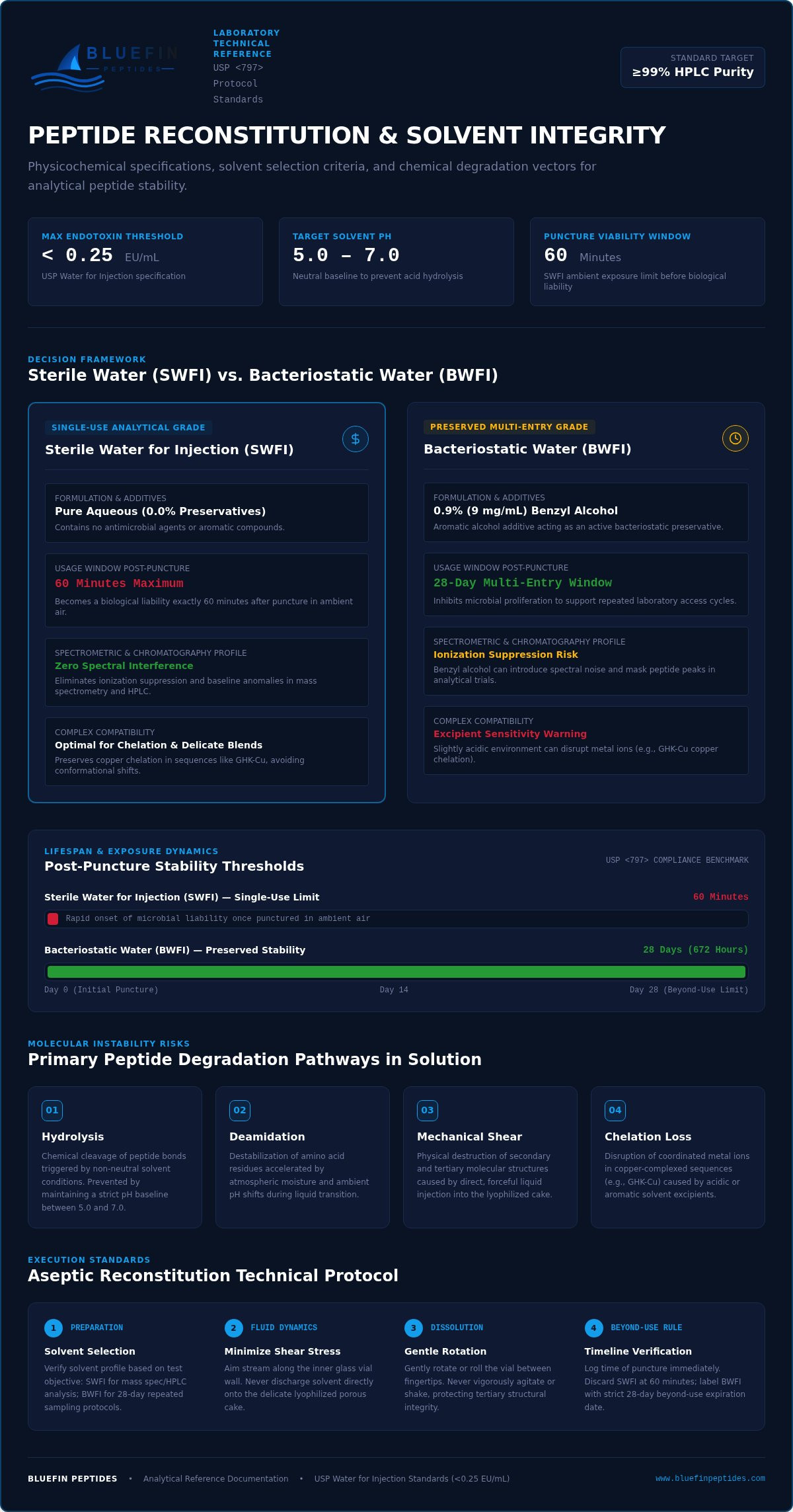
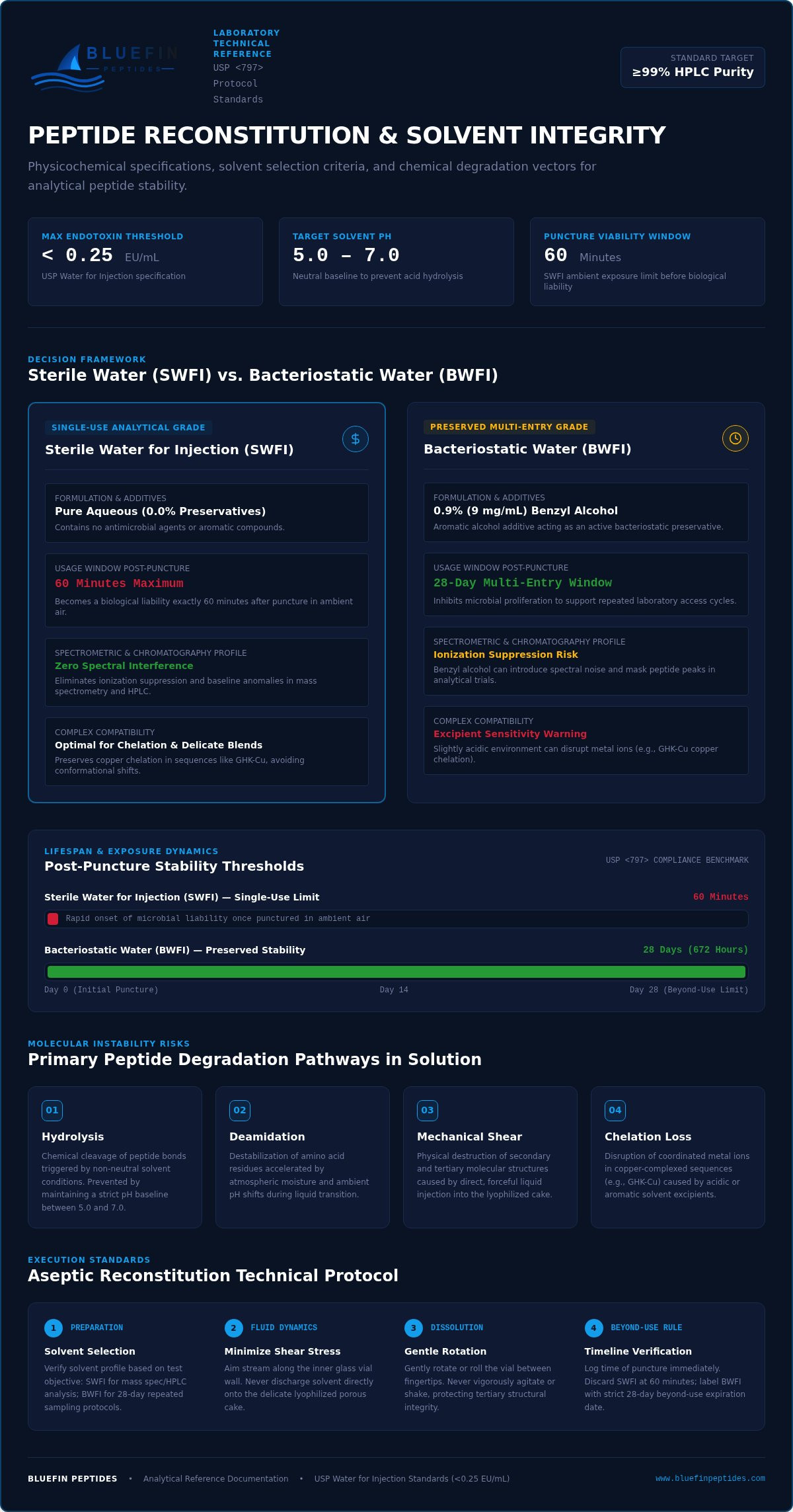
Laboratory-grade sterile water must adhere to strict USP water for injection standards, mandating endotoxin levels below 0.25 EU/mL. For peptide stability, the solvent requires a neutral pH, typically between 5.0 and 7.0, to prevent hydrolysis. Pure sterile water contains no antimicrobial agents. These additives cause spectral interference during spectroscopy, obscuring critical analytical data. Precision is the only acceptable metric. Accuracy is the only goal.
Sterile Water vs. Bacteriostatic Water: Selecting the Correct Research Solvent
Selecting the appropriate solvent is a critical binary choice in laboratory workflows. Bacteriostatic Water for Injection (BWFI) contains 0.9% (9 mg/mL) benzyl alcohol, a preservative designed to inhibit microbial proliferation. While this allows for multi-entry use over a 28-day window, the introduction of an aromatic alcohol creates a chemical environment that isn't always compatible with high-precision analytical trials. For researchers prioritizing spectral clarity, sterile water for peptide reconstitution remains the superior choice despite its logistical limitations. According to FDA guidance on water for pharmaceutical use, these classifications define the permissible endotoxin levels and chemical additives allowed in various water grades. The choice between them dictates the depth and accuracy of the resulting data.
Delicate sequences, such as the GHK-Cu BPC-157 TB-500 research blend, may exhibit altered solubility or conformational shifts when exposed to the slightly acidic nature of preserved water. Copper-peptide complexes are particularly sensitive to excipients that could disrupt the chelation of the copper ion. High-purity solvents require high-purity compounds. Explore the verified catalog at Bluefin Peptides to ensure your base materials match your solvent standards.
Single-Use vs. Multi-Use Protocols
Sterile Water for Injection (SWFI) is the gold standard for immediate assays where analytical purity is the absolute priority. Because it lacks antimicrobial agents, any vial entry introduces a risk of rapid bioburden growth. Under current USP standards, SWFI opened in ambient air must be used within one hour or discarded. This protocol prevents the enzymatic cleavage of peptide bonds by bacterial contaminants. It's a disciplined approach to research integrity. No shortcuts. No reuse. This creates a current of reliability through every experiment.
Potential Interference of Benzyl Alcohol
Benzyl alcohol introduces significant spectral interference, specifically at 254 to 260 nm. This obscures UV absorbance readings for aromatic residues like tyrosine and tryptophan. In liquid chromatography-mass spectrometry (LC-MS), preservatives cause ionization suppression and the formation of chemical adducts. These artifacts complicate data interpretation and reduce the sensitivity of the assay. If your research model involves eukaryotic cell cultures, the cytotoxic nature of benzyl alcohol makes sterile water for peptide reconstitution the only viable solvent. It ensures the biological response is due to the peptide, not the preservative.
Technical Protocol: Reconstituting Lyophilized Peptides for Analytical Study
Reconstitution is a delicate thermodynamic transition. The physics of the process are as vital as the chemical components. Before initiating the procedure, the laboratory environment must be strictly controlled. Sanitize all work surfaces and vial stoppers with 70% isopropyl alcohol. Allow the lyophilized compound to reach ambient room temperature, typically 20°C to 25°C, before introducing any liquid. Introducing chilled sterile water for peptide reconstitution to a cold vial can cause thermal shock, potentially altering the secondary structure of the peptide and leading to irreversible aggregation.
The "slow-drip" method is the standard for preserving molecular integrity. Direct the needle toward the inner wall of the vial. Allow the solvent to flow down the glass surface rather than dropping directly onto the lyophilized cake. This technique prevents foaming, which often leads to the denaturation of the peptide at the air-liquid interface. While some sources suggest vigorous shaking to speed up the process, this is a significant analytical error. Mechanical shear stress can break fragile peptide bonds. Instead, use gentle, circular swirling until the solution is entirely clear. This methodical approach ensures the compound remains viable for high-precision assays.
Step-by-Step Reconstitution Sequence
- Molar Calculation: Determine the exact volume of solvent required to reach the desired concentration. For example, adding 2 mL of sterile water for peptide reconstitution to a 5 mg vial yields a 2.5 mg/mL concentration. Precision in measurement is non-negotiable for repeatable results.
- Pressure Equalization: Most research vials are vacuum-sealed. When the needle enters the stopper, the vacuum should naturally pull the solvent into the vial. If no pull occurs, the seal may be compromised. Vent the vial by introducing a small amount of filtered air to equalize internal pressure if the vacuum is too strong or absent.
- Clarity Verification: Inspect the solution against a neutral light source. It must be completely transparent and free of visible particulates or "floaters" before proceeding with laboratory analysis. Any turbidity indicates incomplete dissolution or contamination.
Handling Complex Research Blends
Multi-peptide formulations, such as the Ipamorelin CJC-1295 research blend USA, require additional scrutiny. Different sequences in a blend may possess varying hydrophobicities, leading to staggered dissolution rates. Ensuring a homogeneous distribution is essential for consistent data across multiple aliquots. If one component precipitates while another remains in solution, the analytical results will be skewed. Maintain a methodical swirling pattern to ensure the blend is fully integrated without introducing destructive kinetic energy. This ensures that every microliter drawn from the vial contains the intended ratio of research compounds.
Chemical Stability and Contamination Risks in Peptide Solvents
Reconstitution initiates a thermodynamic countdown. While lyophilization preserves the peptide in a state of suspended animation, the introduction of an aqueous medium exposes the molecule to immediate chemical vulnerability. In this liquid state, the kinetics of degradation accelerate. Hydrolysis, the primary driver of peptide breakdown, occurs when water molecules cleave the amide bonds of the peptide backbone. Simultaneously, deamidation targets side chains of asparagine and glutamine residues, converting them into aspartic or glutamic acid. These reactions don't just reduce the concentration of the active compound; they create degradation products that compromise the accuracy of HPLC and mass spectrometry assays.
Environmental catalysts like heat and light further catalyze these breakdowns. High-precision compounds, such as the tirzepatide research peptide, are particularly sensitive to these shifts. Maintaining its ≥99% HPLC-verified purity requires an uncompromising approach to solvent handling. When using sterile water for peptide reconstitution, the absence of stabilizers means the researcher must dictate the stability environment through strict physical controls. To maintain these analytical standards, you must source high-purity research peptides from a partner that prioritizes batch-level verification.
Microbial Proliferation in Preservative-Free Water
Sterile Water for Injection (SWFI) contains no antimicrobial agents. Once the vial's seal is breached in ambient laboratory air, the solution is susceptible to rapid bioburden accumulation. Under current USP <797> standards, any single-dose vial of sterile water for peptide reconstitution opened outside of an ISO Class 5 environment must be used within one hour or discarded. Microbial endotoxins don't just degrade the peptide through enzymatic cleavage; they introduce exogenous pyrogens that invalidate in vitro biological assays. Visual cues like cloudiness, particulates, or color shifts are late-stage indicators of failure. Research integrity is often compromised long before contamination is visible to the naked eye.
Optimal Storage Post-Reconstitution
Reconstituted peptides must be stored at controlled refrigeration temperatures, specifically between 2°C and 8°C. This slows, but doesn't stop, the rate of hydrolysis. For long-term preservation, flash-freezing in single-use aliquots is the only scientifically sound method. Repeated freeze-thaw cycles are destructive; the formation of ice crystals creates mechanical shear stress that disrupts the peptide's structural integrity. Additionally, using light-protected or amber vials is mandatory to prevent UV-induced cleavage of sensitive residues like tryptophan or tyrosine. Stoic adherence to these storage variables is the difference between verifiable data and experimental noise.
Sourcing High-Purity Research Supplies for Laboratory Precision
Procuring high-purity research materials is the foundation of experimental reproducibility. The analytical synergy between a compound like the Retatrutide research peptide and the chosen solvent is absolute. If the peptide is ≥99% pure but the sterile water for peptide reconstitution contains trace pyrogens or unexpected particulates, the resulting data is a liability. Bluefin Peptides operates as a disciplined logistics partner. We ensure the transition from our US-based inventory to your laboratory bench is seamless. This logistical speed is a technical requirement. Rapid transit protects the "cold chain" of lyophilized integrity, minimizing the cumulative impact of ambient temperature fluctuations on the porous cake structure. We prioritize the "how" of our delivery processes to ensure the "what" of your experimental results.
Verifying Purity with HPLC and Mass Spec
Transparency is the baseline for professional research. Every batch must be accompanied by mass-spectrometry confirmation and High-Performance Liquid Chromatography (HPLC) data. A Certificate of Analysis (COA) is a technical map. It documents the exact purity levels, identifying any minor peaks that represent residual trifluoroacetic acid (TFA) or moisture content. Bluefin's commitment to a ≥99% purity standard provides the baseline required for sensitive assays. By maintaining domestic, US-based inventory, we eliminate the logistical variables of international customs. This ensures your laboratory receives verified sterile water for peptide reconstitution and research compounds with unwavering precision. Verification is the only currency in a professional laboratory.
A Final Note on Research Compliance
All compounds and reconstitution media provided are strictly for laboratory research use only. This mandate is non-negotiable. It reflects the legal and ethical boundaries of experimental biochemistry. These substances are not for human or veterinary use. Adherence to these standards is a core requirement for any high-performance laboratory partner. We provide the tools for verification rather than asking for blind trust. Stoic reliability. Analytical depth. Professional discipline. Secure your laboratory supplies from a partner that prioritizes analytical precision and unwavering transparency.
Advancing Analytical Standards in Peptide Research
Reconstitution is not a mere logistical formality; it's a critical chemical transition that dictates the validity of your experimental data. Mastery of the technical protocols surrounding sterile water for peptide reconstitution ensures that molecular integrity is preserved from the moment of solvent introduction through the final analytical assay. By prioritizing aseptic environments, gentle mechanical agitation, and strict storage temperatures, you eliminate the variables that lead to hydrolysis and deamidation. Precision is the only acceptable metric in high-stakes laboratory environments.
High-precision research requires a foundation of verified purity. Bluefin Peptides provides the tools for this verification, offering research compounds that meet the most rigorous laboratory standards. Every lot is accompanied by batch-specific COAs, confirming our ≥99% HPLC-verified purity standard. Our domestic US shipping ensures logistical speed, maintaining the stability of your lyophilized compounds during transit. Procure HPLC-Verified Research Peptides from Bluefin Peptides and establish a new baseline for laboratory accuracy. Your commitment to precision is the catalyst for discovery.
Frequently Asked Questions
Is sterile water the same as deionized or distilled water for peptide research?
No. Sterile Water for Injection (SWFI) must meet strict USP standards, specifically endotoxin levels below 0.25 EU/mL. Deionized or distilled water may be chemically pure but lacks the verified absence of pyrogens required for sensitive assays. Using non-sterile water introduces microbial variables that can cleave peptide bonds. SWFI is the only standard for high-precision laboratory work where endotoxin-free environments are mandatory for experimental validity.
How long does a peptide remain stable after reconstitution with sterile water?
Stability is highly dependent on the specific sequence, but most peptides in sterile water are vulnerable to hydrolysis and deamidation within hours. Without preservatives like benzyl alcohol, the solution is also at risk for microbial growth. For optimal integrity, use the solution within one hour of reconstitution or flash-freeze in single-experiment aliquots at -80°C. This prevents the chemical degradation that occurs in a standard aqueous environment.
Can I use sterile water for multi-entry vials?
No. Sterile water contains no antimicrobial agents to inhibit bacterial proliferation after the initial puncture. Each entry into a vial of sterile water for peptide reconstitution introduces ambient contaminants. Under USP standards, a single-dose vial opened in room air must be discarded within one hour. Multi-entry protocols require Bacteriostatic Water for Injection (BWFI) containing 0.9% benzyl alcohol to ensure the solution remains stable over a 28-day window.
Why did my peptide solution turn cloudy after adding sterile water?
Turbidity or cloudiness indicates incomplete dissolution, precipitation, or aggregation. This often occurs if the peptide is hydrophobic or if the pH of the sterile water is too close to the peptide's isoelectric point. If the solution doesn't clear after gentle swirling, the compound may have denatured or reached its solubility limit. Never proceed with cloudy solutions in analytical trials, as they don't represent the compound's intended molecular state.
What happens if I shake the vial instead of swirling it?
Shaking introduces mechanical shear stress and air bubbles, both of which can denature the peptide. Complex chains and secondary structures are fragile. Shaking often causes foaming at the air-liquid interface, leading to irreversible aggregation and a loss of purity. Gentle, circular swirling is the only recommended method to facilitate dissolution while maintaining the ≥99% HPLC-verified integrity of the compound. Precision requires a controlled, low-energy mixing environment.
Does the volume of sterile water affect the bioactivity of the research peptide?
The volume itself doesn't alter the peptide's inherent bioactivity, but it dictates the molar concentration required for experimental accuracy. Incorrect volumes lead to dosage errors in cellular models. Additionally, using too little sterile water for peptide reconstitution can result in a saturated solution where the peptide precipitates. Always calculate the exact volume needed to reach the target concentration for your specific research protocol to ensure consistent results across multiple assays.
Should I refrigerate the sterile water before adding it to the lyophilized powder?
No. The solvent and the lyophilized vial should both reach ambient room temperature, typically 20°C to 25°C, before reconstitution. Introducing chilled sterile water to a cold vial can cause thermal shock, potentially disrupting the peptide's structural conformation. This temperature equalization ensures a stable environment for the transition from a powder to a liquid state, protecting the analytical integrity and solubility of the research compound during the initial mixing phase.
What is the best way to dispose of unused reconstituted research compounds?
Dispose of research peptides according to your institution's hazardous waste protocols for chemical and biological materials. Because these substances are for laboratory use only and not for human or veterinary use, they shouldn't enter standard waste streams. Typically, this involves placing the vial in a puncture-resistant sharps container or a designated chemical waste bin for professional incineration. Consult your Safety Data Sheet (SDS) for specific guidance regarding disposal and environmental safety.
For laboratory research use only. Not for human or veterinary use. This content is educational and does not constitute medical, dosing, or usage guidance.
Browse the BLUEFIN catalog