Peptide Blend: Analytical Standards and Reconstitution
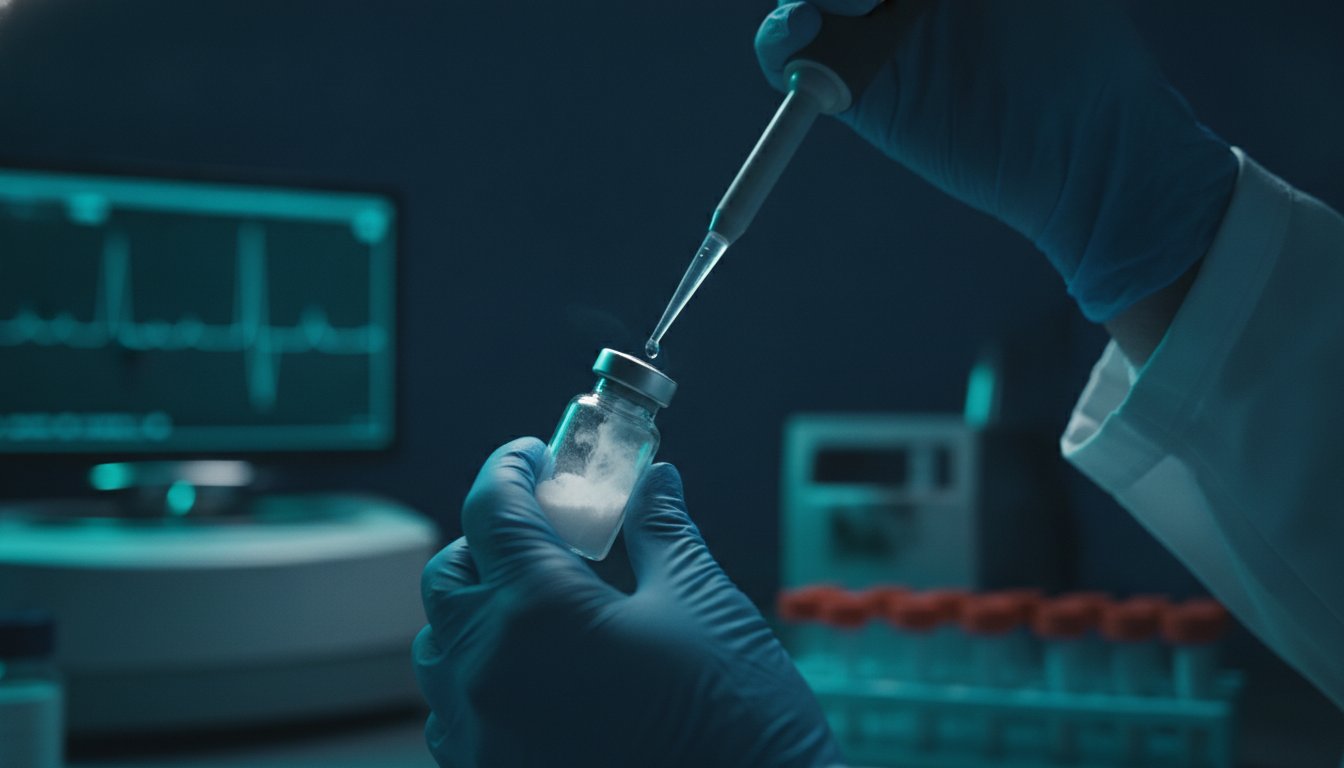
The presence of a Certificate of Analysis doesn't equate to the preservation of molecular integrity upon arrival. For the disciplined researcher, a document is only as reliable as the logistical chain that supports it. You recognize that inconsistent batch purity and degradation during transit aren't just inconveniences. They're volatile variables that can compromise an entire dataset. Precision. Verification. Integrity. Selecting a high-quality peptide blend for laboratory study requires a move beyond blind trust toward a culture of rigorous verification and clinical precision.
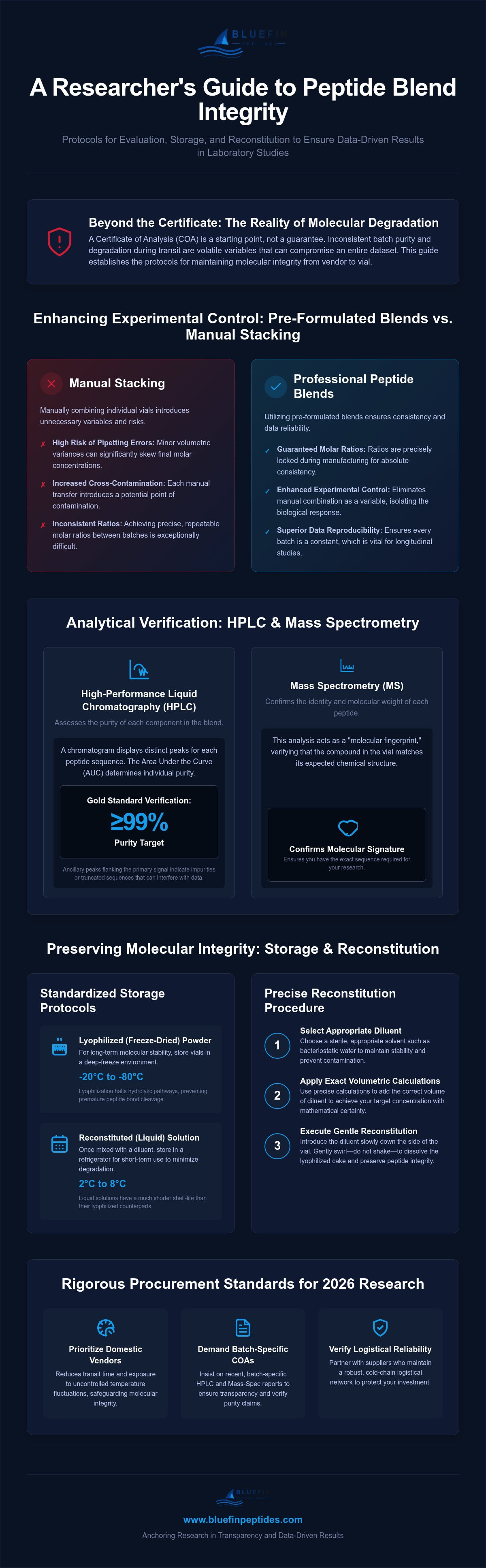
This article provides the technical expertise needed to master the evaluation, storage, and reconstitution protocols essential for maintaining peptide stability. You'll establish a repeatable protocol for vial preparation and define the criteria for verifying HPLC and Mass-Spec reports with authoritative accuracy. We'll also address reliable domestic sourcing strategies for 2026 research. This ensures your laboratory operations remain anchored in transparency and data-driven results, regardless of the complexity of multi-peptide ratios.
Key Takeaways
- Identify the molecular rationale for specific co-formulations and how utilizing a peptide blend for laboratory study reduces technical errors and cross-contamination risks.
- Master the interpretation of HPLC and Mass Spectrometry data to verify ≥99% purity and confirm the precise identity of every component within multi-peptide vials.
- Implement standardized storage protocols based on lyophilization science, ensuring molecular stability through disciplined refrigeration and deep-freeze temperature management.
- Execute precise reconstitution by selecting appropriate diluents and applying exact volumetric calculations to reach target concentrations with mathematical certainty.
- Establish rigorous procurement standards for 2026, prioritizing domestic vendors that offer batch-specific transparency and maintain maritime-level logistical reliability.
Defining the Research Utility of a Peptide Blend for Laboratory Study
Precision. Verification. Efficiency. Utilizing a peptide blend for laboratory study isn't merely a logistical convenience; it's a strategic decision to enhance experimental control and data reliability. By integrating complementary sequences into a single lyophilized matrix, researchers can achieve a level of synergy that isolated compounds often fail to replicate. This methodology is anchored in the fundamental principles of Peptide synthesis, where the chemical stability and purity of each component are verified before co-formulation. Professional blending ensures that the molar ratios remain constant, providing a stable foundation for complex biological analysis.
Molecular stability is influenced by sequence length and the total molecular weight of the components involved. Short-chain peptides like BPC-157 exhibit different degradation profiles than longer sequences; however, when co-lyophilized, they form a cohesive cake that resists thermal fluctuations more effectively than liquid-stable compounds. Lyophilization is the gold standard for preserving molecular integrity. It halts the hydrolytic pathways that lead to premature peptide bond cleavage. While liquid research compounds may offer immediate use, they lack the long-term stoic reliability of freeze-dried powders, which are essential for multi-phase longitudinal studies.
Synergistic Mechanisms in Molecular Biology
Multi-peptide interactions influence cellular signaling pathways with a depth that single-sequence studies can't reach. Common research pairings often focus on somatotropic signaling. For instance, combining GH secretagogues like Ipamorelin and CJC-1295 allows for a dual-mechanism approach to analyzing growth hormone pulses. For researchers focused on systemic repair and copper-mediated signaling, the GHK-Cu BPC-157 TB-500 research blend provides a sophisticated profile for evaluating tissue regeneration across multiple physiological layers. These pairings aren't arbitrary. They're designed to mirror the complex currents of endogenous biological systems.
Standardization in Laboratory Environments
Consistency is the bedrock of any valid dataset. Pre-formulated blends eliminate the volatility of manual "stacking," where pipetting errors and cross-contamination risks are frequent. When a researcher manually combines vials, they introduce minor volumetric variances that can skew the final molar concentration. Professional formulation surpasses these manual methods by ensuring exact ratios are locked in during the manufacturing stage. This level of standardization is vital for experimental reproducibility. It allows the researcher to focus on the biological response rather than the physical state of the vial's contents. Using a pre-verified peptide blend for laboratory study ensures that every batch remains a constant variable in an otherwise fluid environment.
Evaluating Analytical Standards: HPLC and Mass-Spec Verification
Data integrity is the anchor of credible science. Verification protocols must be exhaustive. For a peptide blend for laboratory study, the analytical challenge increases with each added sequence. A standard Certificate of Analysis (COA) must provide more than a summary percentage. It must offer granular visibility into each component's chemical behavior. Batch-specific COAs serve as the primary tool for researcher trust, providing the transparency required to treat a vendor as a professional partner rather than a mere supplier.
Reading the HPLC Chromatogram for Blends
High-Performance Liquid Chromatography (HPLC) serves as the primary tool for assessing purity levels. In a multi-peptide vial, the chromatogram displays distinct retention times for each peptide sequence. These peaks represent the specific moment each molecule elutes from the column based on its hydrophobicity. Researchers must calculate the area under the curve (AUC) for each primary peak to determine individual purity percentages. HPLC-verified purity is the gold standard for ≥99% compounds. Ancillary peaks flanking the primary sequences signify the presence of impurities or truncated sequences. These impurities can interfere with cellular signaling data and must be minimized to ensure experimental accuracy.
Mass Spectrometry: Confirming Molecular Signature
HPLC confirms purity; Mass Spectrometry (MS) confirms identity. It measures the mass-to-charge (m/z) ratio of the molecules. This data is compared against the theoretical molecular weight of the specific peptide sequences. MS verification provides the necessary assurance that no structural degradation occurred during the synthesis of the blend. It's the only method to verify that the vial contains the exact sequences intended for the study. Researchers should consult research peptide quality standards to establish a baseline for acceptable variance and identity confirmation.
Identifying impurity peaks is critical. These peaks represent chemical noise that can skew results in sensitive assays. A disciplined laboratory environment requires the elimination of these variables. Without batch-specific documentation, the risk of inconsistent results increases. For those requiring rigorous documentation and verified batch reports, maintaining these analytical standards is the only path to repeatable data. Precision isn't optional. It's the baseline for all legitimate research.
Preserving Molecular Integrity: Lyophilization and Storage Protocols
Lyophilization represents the zenith of molecular preservation. By removing solvent through sublimation under vacuum, this process effectively locks a peptide blend for laboratory study into a stable, crystalline lattice. This state of suspended animation is critical. It prevents the primary drivers of degradation: hydrolysis, oxidation, and deamidation. Without this structural stabilization, the fragile amide bonds within the sequence are vulnerable to cleavage, particularly when exposed to ambient moisture or thermal fluctuations. Integrity is non-negotiable. A researcher's results are only as robust as the physical state of the compound at the moment of reconstitution. Lyophilized powders provide a stoic defense against the entropy that typically compromises liquid research compounds.
Temperature control is the primary defense against molecular drift. For short-term experimental windows, standard refrigeration at 4°C is sufficient to maintain stability. However, for longitudinal research, deep-freeze environments ranging from -20°C to -80°C are mandatory. These temperatures minimize kinetic energy within the vial, effectively halting spontaneous chemical reactions. Deamidation, specifically of asparagine and glutamine residues, is a common degradation pathway that alters the peptide's charge and potentially its biological activity. Oxidation of methionine or cysteine residues can similarly skew experimental results. Preventing these reactions requires more than just cold storage; it requires a disciplined approach to every environmental variable.
Optimal Storage Conditions for Lyophilized Vials
Maintaining a temperature-controlled environment is merely the first layer of protection. UV light exposure acts as a catalyst for photochemical degradation, necessitating the use of amber vials or dark storage containers to shield the contents. Moisture ingress is equally catastrophic. Even trace amounts of atmospheric water can initiate hydrolysis, leading to peptide bond failure. Airtight seals and desiccated environments are the standard for any high-performance laboratory. Every barrier counts when the goal is the preservation of ≥99% purity. Researchers must treat the storage environment as an extension of the experiment itself, ensuring that no external current disrupts the chemical anchor of the blend.
Logistical Momentum and Stability
Logistical momentum is a form of chemical protection. The "cold chain" refers to the uninterrupted series of storage and distribution activities that maintain a specific temperature range. When a peptide blend for laboratory study spends excessive time in transit, it's subjected to fluctuating environmental gradients that can compromise the lyophilized cake. Bluefin Peptides prioritizes logistical fluidity to protect chemical purity. By utilizing US-based inventory and rapid fulfillment protocols, the brand ensures that the product spends minimal time outside of controlled environments. This precision in logistics reflects the precision in synthesis. It's a commitment to ensuring that the molecular signature remains anchored, providing the security needed for high-stakes laboratory analysis. US-based stocking isn't just about speed; it's about the preservation of data integrity through the reduction of environmental stress.
Step-by-Step Reconstitution for Laboratory Study
Reconstitution is the critical transition from a stable crystalline lattice to a fluid research medium. Precision is paramount during this phase. When preparing a peptide blend for laboratory study, the methodology must be exact to prevent denaturing the fragile sequences. Bacteriostatic water, containing 0.9% benzyl alcohol, is the standard diluent for multi-entry vials. It provides a sterile environment by inhibiting microbial proliferation. Sterile saline is an alternative, though it lacks the preservative properties required for extended study windows. The choice of diluent directly impacts the longevity of the solution and the reliability of the resulting data.
Mechanical shear stress is a significant risk to molecular integrity. Shaking a vial can irreversibly damage the peptide chains. Instead, use the "gentle swirl" method. When introducing the diluent, aim the needle at the interior glass wall. This allows the liquid to cascade down the side rather than striking the lyophilized powder directly. The internal vacuum of the vial will often draw the liquid in automatically; you must control this flow to prevent rapid splashing. Once the diluent is added, allow the vial to rest. Complete dissolution often requires 5 to 10 minutes of equilibration at room temperature to ensure the powder is fully integrated into the solution.
Reconstitution Calculations and Tools
Calculations must be verified with mathematical certainty. A peptide blend for laboratory study requires specific volumetric adjustments to reach target concentrations (mg/mL). For example, adding 2mL of diluent to a 5mg/5mg blend vial requires an understanding of the total peptide mass to determine the final concentration of each component. Utilizing a peptide calculator is a standard practice to determine precise dosing for in vitro models. Ensure the diluent is at room temperature before introduction to avoid thermal shock to the lyophilized cake. For detailed ratio frameworks, refer to the Ipamorelin CJC-1295 research blend USA guide, which outlines analytical specifications for common co-formulations.
Handling Post-Reconstitution Stability
Stability is finite once the peptide is in a liquid state. Reconstituted blends typically maintain their molecular integrity for 7 to 14 days when stored in a dedicated laboratory refrigerator. It's vital to note that reconstituted blends should never be frozen. Ice crystal formation causes irreversible structural damage to the peptide bonds, compromising the study's validity. Researchers must monitor the solution for cloudiness, precipitation, or particulates. These are clear indicators of degradation or contamination. If the solution's clarity is compromised, the vial must be discarded to protect the integrity of the experimental dataset.
Source HPLC-verified research peptide blends to ensure your laboratory protocols begin with the highest possible purity standards.
Procuring High-Purity Blends for Domestic Research
The procurement of a peptide blend for laboratory study in 2026 demands more than a simple transaction. It requires a strategic alliance with a vendor that prioritizes analytical transparency over commercial volume. In an environment where regulatory scrutiny is high, the distinction between research-grade materials and consumer products is absolute. Professional vendors must provide evidence of manufacturing excellence and rigorous third-party testing. This ensures that every vial remains strictly intended for laboratory use, protecting the researcher from the legal and technical risks associated with inferior sourcing. Rapid access to verified compounds, such as tirzepatide research peptide, is the baseline for maintaining experimental momentum in a competitive field.
Transparency isn't a suggestion; it's a requirement. A disciplined procurement process filters out vendors that obscure their testing methodologies or provide generic, non-batch-specific documentation. For the researcher, the vendor's role is to act as a logistical specialist that understands the high-stakes nature of the laboratory. This means providing clear paths to verification and ensuring that the chemical nature of the offerings is never in question. Security. Trust. Precision. These are the values that must guide the selection of a domestic partner for high-purity research compounds.
The Bluefin Commitment to Analytical Precision
Integrity is verified. Every batch of Retatrutide research peptide undergoes exhaustive HPLC and Mass-Spec analysis to confirm both purity and molecular identity. We don't ask for trust; we provide the data that earns it. By leveraging US-based logistics, we eliminate the environmental stressors associated with international transit, ensuring that the chemical signature of your peptide blend for laboratory study remains anchored. We operate as a disciplined laboratory partner, focusing on the fluid movement of high-purity compounds from our inventory to your bench. Reliability. Speed. Verification. These are the currents that drive our fulfillment process.
Final Checklist for Lab Procurement
Before integrating a new batch into your research protocol, a final verification of the sourcing standards is mandatory. This checklist serves as the final barrier against experimental drift:
- Verification of ≥99% purity: Confirm that HPLC results meet the gold standard for high-performance research.
- Batch-specific COAs: Ensure the documentation provided corresponds directly to the lot number on the vial.
- Research-only intent: Verify that the vendor maintains strict compliance with laboratory-only distribution standards.
- Logistical Transparency: Confirm that the shipping chain minimizes thermal exposure and maintains the cold chain through rapid fulfillment.
Precision in procurement is the final step in securing your data's integrity. By adhering to these standards, you ensure that your laboratory remains a bastion of verifiable science. The "how" of our process ensures the "what" of your results.
Advancing Experimental Integrity Through Analytical Rigor
The transition from raw data to breakthrough results is anchored in the precision of your methodology. Every variable matters. From the initial verification of HPLC chromatograms to the disciplined execution of the "gentle swirl" during reconstitution, maintaining the molecular signature of your peptide blend for laboratory study is a technical mandate. You've established the protocols for storage and preparation. Now, the focus shifts to sourcing. Reliability is found in transparency. Trust is built on batch-specific documentation and the stoic consistency of US-based logistics. We provide the tools for verification so your laboratory can operate with unwavering confidence.
Secure HPLC-Verified Research Blends for Your Laboratory Study. Our commitment is defined by ≥99% HPLC-verified purity, batch-specific COAs, and the momentum of rapid domestic US shipping. By removing the volatility of international transit and inconsistent batch quality, we ensure your data remains a true reflection of your experimental design. Your research deserves a partner that values precision as highly as you do.
Frequently Asked Questions
What is the best diluent for a peptide blend for laboratory study?
Bacteriostatic water is the superior diluent for a peptide blend for laboratory study. It contains 0.9% benzyl alcohol, which inhibits microbial proliferation and extends the solution's shelf life. Sterile saline is an alternative but lacks these preservative properties. Reconstituted solutions using bacteriostatic water typically remain stable for 7 to 14 days when refrigerated. Precision in diluent selection ensures the chemical signature of the compound remains anchored during the experimental window.
How do I interpret an HPLC report for a multi-peptide blend?
Interpreting an HPLC report requires identifying distinct elution peaks based on retention times. Each peptide in the blend will produce a specific peak on the chromatogram. You must calculate the area under the curve (AUC) for these primary peaks to determine the purity percentage of each component. Ancillary peaks indicate impurities or truncated sequences. A professional report provides granular visibility into these results, ensuring the compound meets the required analytical standards for research.
Can I freeze a peptide blend after it has been reconstituted?
Reconstituted peptide blends must never be frozen. The formation of ice crystals causes irreversible mechanical shear stress on the peptide chains, leading to structural degradation and bond cleavage. Once a peptide blend for laboratory study is in solution, it should be stored in a dedicated laboratory refrigerator at 4°C. Freezing a liquid compound compromises the molecular integrity and renders the resulting research data unreliable. Stability is finite once the crystalline lattice is broken.
Why is ≥99% purity critical for laboratory research results?
Purity levels of ≥99% are critical to eliminate chemical noise and unintended variables in sensitive assays. Impurities can interfere with cellular signaling pathways, leading to skewed results and failed experimental reproducibility. High-purity compounds ensure that the observed biological response is a direct result of the intended peptide sequences. Verification through HPLC and Mass-Spec serves as the primary tool for maintaining this level of clinical precision in any professional laboratory environment.
How long can lyophilized peptide blends be stored at room temperature?
Lyophilized peptide blends can remain at room temperature for brief periods during transit, but long-term stability requires refrigeration. Extended exposure to ambient temperatures increases the risk of oxidation and deamidation. For durations exceeding four weeks, storage at -20°C or -80°C is mandatory to halt kinetic energy and preserve the crystalline lattice. Rapid domestic fulfillment minimizes the time a compound spends in uncontrolled environments, protecting its initial chemical purity upon arrival at the bench.
What happens if a peptide blend is shaken during reconstitution?
Shaking a vial during reconstitution introduces mechanical shear stress that can denature the peptide chains. This physical agitation breaks the fragile amide bonds, effectively destroying the molecular integrity of the compound. You must use the "gentle swirl" method to integrate the diluent. Allowing the liquid to cascade down the interior glass wall prevents the splash-back that occurs with direct impact, ensuring the sequence remains structurally sound for the duration of the study.
Are Bluefin Peptides blends verified by third-party laboratories?
Every batch is verified through rigorous third-party analytical testing. We provide batch-specific Certificates of Analysis (COAs) that include both HPLC and Mass Spectrometry data. This documentation confirms the ≥99% purity and precise molecular weight of each component. We don't ask for trust; we provide the tools for verification. Our role as a disciplined laboratory partner is to ensure that every compound meets the highest professional standards before fulfillment and rapid US-based shipping.
Is there a difference between a research blend and individual peptides for lab use?
Research blends are pre-formulated to ensure consistent molar ratios and reduce the risk of pipetting errors during laboratory preparation. While individual peptides offer modularity, blends provide a standardized matrix that enhances experimental reproducibility. Pre-blending in a controlled manufacturing environment surpasses manual "stacking" by minimizing cross-contamination risks. This level of standardization allows researchers to focus on biological outcomes rather than the volatility of manual volumetric adjustments and potential sequence degradation.
For laboratory research use only. Not for human or veterinary use. This content is educational and does not constitute medical, dosing, or usage guidance.
Browse the BLUEFIN catalog