Comparative Analysis: Retatrutide vs Tirzepatide in Laboratory Research (2026)

The transition from dual-agonist tirzepatide to the triple-agonist profile of retatrutide represents a total recalibration of the metabolic research landscape. While tirzepatide remains a cornerstone for GLP-1 and GIP receptor study, the introduction of glucagon agonism in retatrutide introduces new variables that demand higher analytical precision. Conducting effective retatrutide vs tirzepatide research requires more than just access to compounds; it requires a disciplined understanding of how these differing molecular structures interact with complex biological systems. Precise data collection is impossible when researchers are forced to navigate the murky waters of inconsistent batch purity and indecipherable HPLC documentation from low-tier suppliers.
You understand that the validity of a metabolic model rests entirely on the chemical integrity of the peptide. This comprehensive technical comparison clarifies the mechanistic divergence between dual and triple-agonist pathways to help you select the optimal compound for your laboratory objectives. We will analyze the specific structural advantages of each peptide, define the rigorous analytical standards required to verify purity, and provide a clear framework for experimental protocol design. By the end of this analysis, you will possess the data necessary to anchor your research in verified chemical reality, ensuring your results withstand the pressure of academic scrutiny.
Key Takeaways
- Distinguish between the dual GLP-1/GIP agonism of tirzepatide and the triple-agonist architecture of retatrutide to refine your metabolic study parameters.
- Navigate the complexities of retatrutide vs tirzepatide research by evaluating how glucagon receptor activation impacts experimental outcomes in lipid regulation.
- Verify the analytical standards required for valid data collection, focusing on the necessity of batch-specific HPLC and mass spectrometry confirmation.
- Standardize laboratory protocols for reconstitution and storage to safeguard peptide bond integrity against mechanical stress and environmental degradation.
- Identify the logistical advantages of sourcing ≥99% pure research peptides from US-based specialists to ensure rapid fulfillment and experimental continuity.
Dual Agonism vs. Triple Agonism: The Molecular Divergence
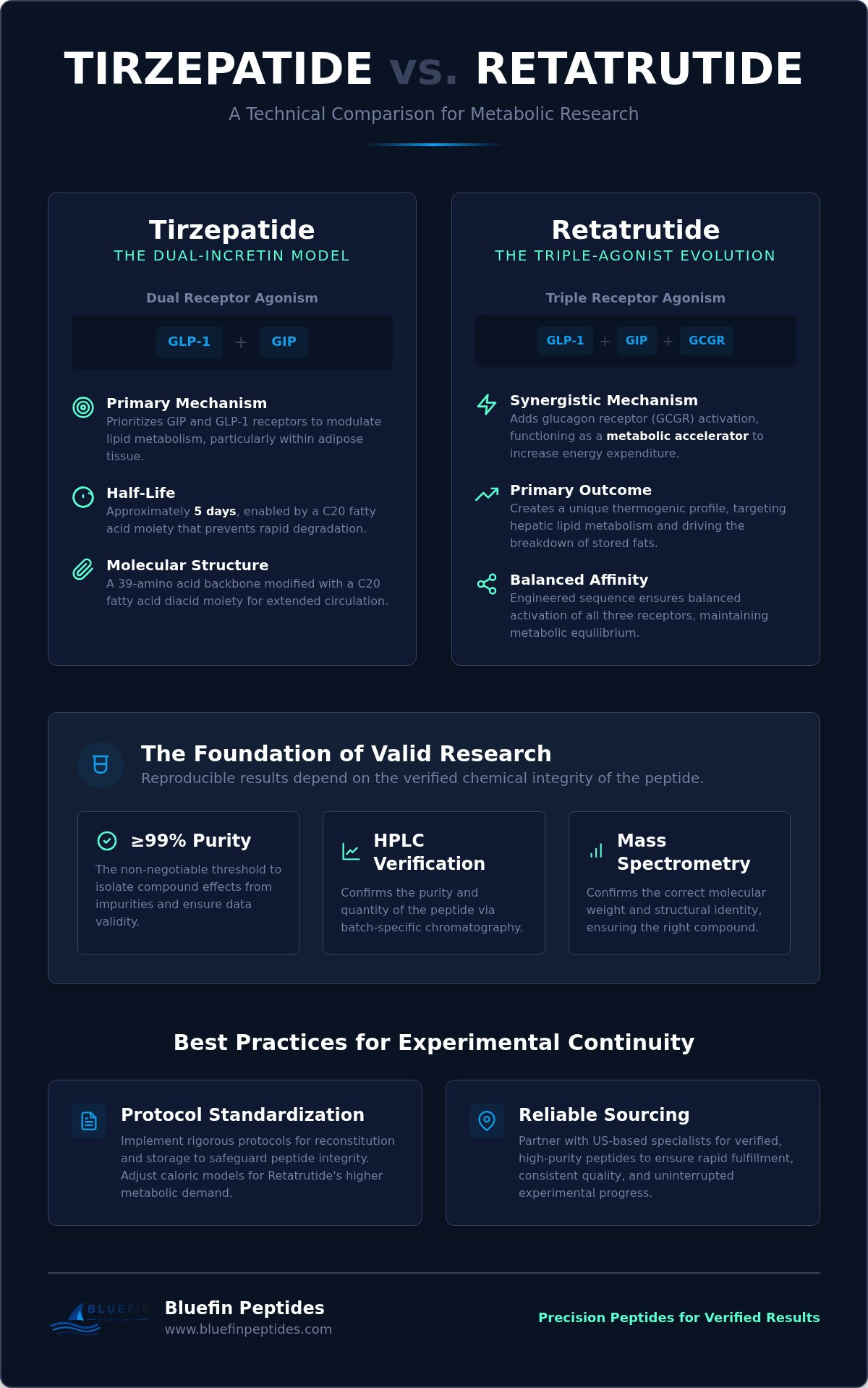
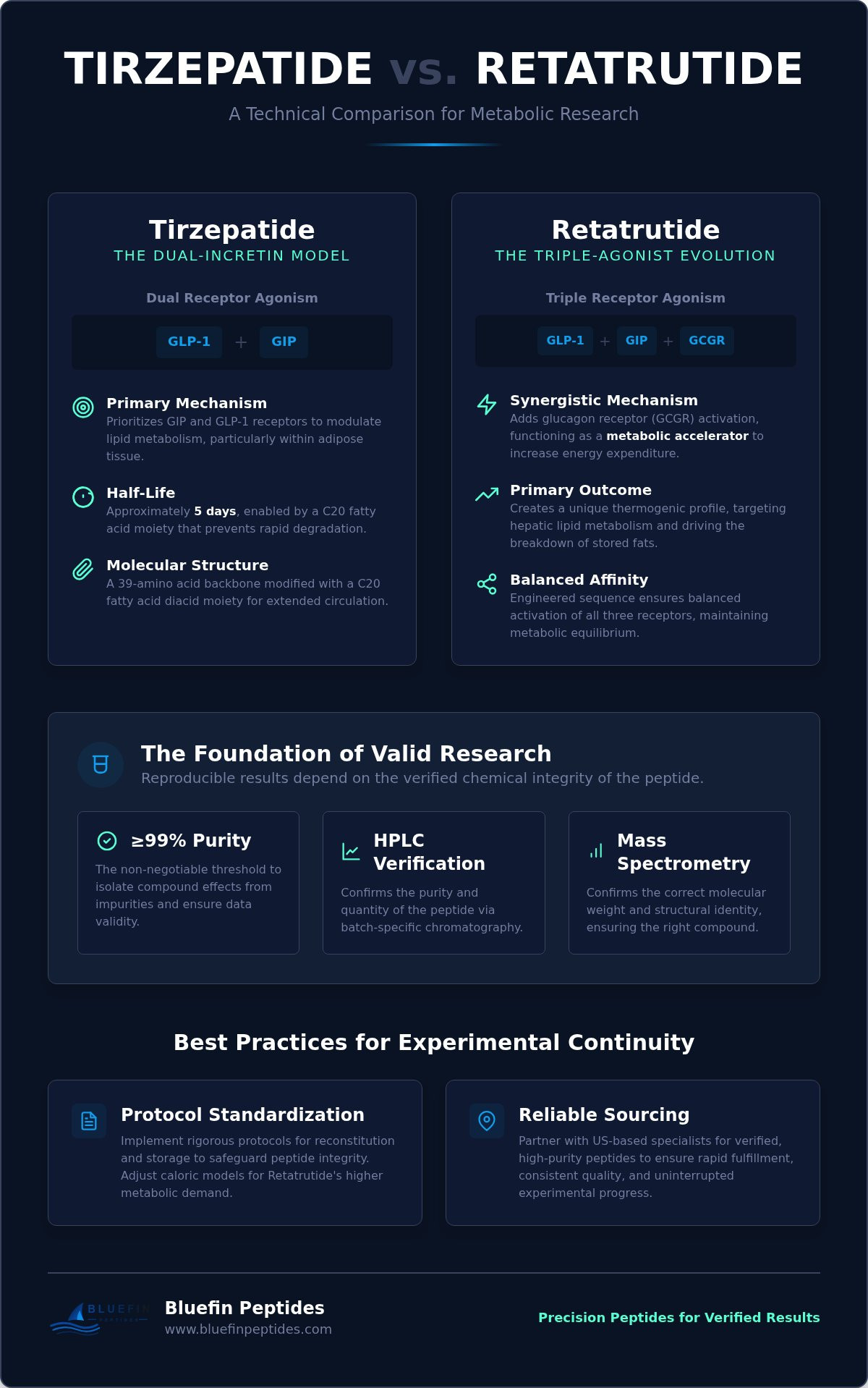
The molecular architecture of metabolic research has shifted from single-pathway activation toward complex, multi-receptor agonism. Understanding the distinction between these modalities is critical for protocol accuracy. Tirzepatide functions as a dual GIP and GLP-1 receptor agonist, while retatrutide represents a "triple G" evolution, targeting GLP-1, GIP, and glucagon receptors simultaneously. This addition of glucagon agonism isn't merely additive; it's a synergistic catalyst for energy expenditure and thermogenesis in research models. The integration of GLP-1 research peptides into modern study designs has set a new baseline for metabolic investigation. Precise titration of these signals allows researchers to map the deep-sea complexities of metabolic dysfunction with unprecedented clarity. In retatrutide vs tirzepatide research, the primary objective is often to determine how the introduction of the third agonist modifies established dual-incretin outcomes.
Tirzepatide: The Dual-Incretin Model
Tirzepatide's structural framework is centered on its dual-agonist mechanism. It prioritizes the glucose-dependent insulinotropic polypeptide (GIP) receptor alongside the glucagon-like peptide-1 (GLP-1) receptor. This specific Tirzepatide's dual-agonist mechanism relies on a 39-amino acid backbone with a C20 fatty acid diacid moiety. This modification extends the peptide's half-life to approximately five days, allowing for prolonged observation periods in vivo without rapid enzymatic degradation. GIP receptor activation is particularly significant for its role in modulating lipid metabolism within adipose tissue, a factor that differentiates it from pure GLP-1 agonists. For data to remain valid, a tirzepatide research peptide must meet a purity threshold of ≥99% as verified by HPLC. Analytical consistency is the only way to isolate the effects of dual-incretin activation from environmental noise or batch-level impurities.
Retatrutide: The Triple-Agonist Evolution
Retatrutide introduces a third vector of metabolic signaling through the glucagon receptor (GCGR). While GIP and GLP-1 focus on insulin sensitivity and appetite suppression, the inclusion of glucagon targets hepatic lipid metabolism and increases metabolic rate. Triple-agonism is the simultaneous activation of GLP-1R, GIPR, and GCGR. This balance of three distinct signals creates a unique thermogenic profile not found in dual-agonist models. In retatrutide vs tirzepatide research, the primary variable is often how this triple-signal balance alters lipid oxidation and energy expenditure compared to dual-agonist benchmarks. The glucagon component acts as a metabolic accelerator, driving the breakdown of stored fats while the incretin components maintain glycemic control. Precise receptor affinity is the key. Retatrutide's sequence is engineered to ensure no single signal overwhelms the others, maintaining a fluid metabolic equilibrium. Researchers must account for this increased metabolic demand when designing caloric intake protocols for their subjects. Without this triple-signal verification, comparative data remains incomplete.
Structural Stability and Analytical Profiles
Reliable metabolic modeling depends on the structural fidelity of the synthesized peptide. While both molecules share a 39-amino acid backbone, their side-chain modifications determine their interaction with biological receptors. The pharmacological profile of Tirzepatide reveals a C20 fatty acid diacid moiety attached via a linker at position 20. This design anchors the peptide to albumin and extends its circulation. Retatrutide utilizes a similar backbone but incorporates specific amino acid substitutions to achieve triple-receptor affinity. In retatrutide vs tirzepatide research, these subtle deviations in sequence influence not only binding kinetics but also the physical stability of the compound during laboratory handling. Verification of these sequences is the only way to ensure experimental reproducibility.
HPLC and Mass Spectrometry Requirements
Purity is the bedrock of scientific integrity. A threshold of ≥99% purity isn't a suggestion; it's a requirement for high-stakes research. High-Performance Liquid Chromatography (HPLC) serves as the primary tool for navigating molecular purity. It allows researchers to detect minute impurities that could skew data. 'Ghost peaks' in an HPLC report often indicate residual solvents, trifluoroacetic acid (TFA) salts, or truncated peptide sequences. These contaminants can trigger off-target effects that compromise results. Mass spectrometry provides the necessary secondary layer of verification. It confirms the molecular weight matches the theoretical value exactly, ensuring the peptide hasn't undergone unintended oxidation. Adhering to strict retatrutide research peptide analytical standards prevents the introduction of variables that could sink a study.
Comparative Stability in Lyophilized Form
Lyophilization converts these complex peptides into a stable, solid-state powder. This process is essential for long-term storage, yet the triple-agonist structure of retatrutide introduces unique stability considerations. Triple-agonists can be more sensitive to mechanical stress and thermal fluctuations than simpler dual-agonist models. Analyzing the structural differences in retatrutide vs tirzepatide research requires an understanding of how these molecules react to environmental stressors. Exposure to light or temperatures exceeding 4°C during transport can initiate peptide degradation. Every batch must be accompanied by a specific Certificate of Analysis (COA) to confirm its state before use. This level of documentation provides the security researchers need when designing long-term protocols. For those requiring verified compounds for their next project, you can explore our verified inventory. Maintaining a disciplined cold chain from the synthesis facility to the lab bench is non-negotiable. Without these safeguards, the chemical nature of the offerings can shift, leading to inconsistent results across different study cohorts.
Experimental Outcomes in Metabolic Research Models
Data from 2025 and 2026 phase trials highlight the functional divergence between dual and triple-receptor agonism. In retatrutide vs tirzepatide research, the primary differentiation lies in the metabolic throughput of the experimental subjects. While tirzepatide targets incretin receptors to stabilize glycemic levels, retatrutide incorporates a third vector to modulate basal metabolic rate. Recent comparative studies on retatrutide and tirzepatide in animal models demonstrate that triple-agonism alters hepatic lipid accumulation more aggressively than dual-agonist benchmarks. These results provide a necessary baseline for researchers navigating the complexities of metabolic dysfunction-associated steatotic liver disease (MASLD). Anchoring your study in these verified outcomes ensures the integrity of the resulting data set.
Glycemic Control and Insulin Sensitivity
Potency in modulating insulin secretion in vitro remains high for both compounds. Tirzepatide's reliance on GIP receptor activation significantly influences adipocyte function. This dual-action pathway promotes efficient lipid utilization and provides a robust baseline for glucose regulation studies. To understand the underlying signaling, researchers often consult a technical overview of GLP-1 to map receptor occupancy. In metabolic dysfunction models, tirzepatide demonstrates consistent stabilization of glycemic fluctuations. However, the data shifts when the third agonist enters the equation. Retatrutide maintains similar glycemic control while simultaneously addressing the underlying caloric surplus through glucagon-mediated pathways. This balance prevents the compensatory metabolic slowdown often observed in single or dual-agonist models.
Energy Expenditure and Thermogenesis
The glucagon component of retatrutide introduces a unique influence on metabolic rate. It drives thermogenesis through the 'browning' of white adipose tissue. This process increases the expression of uncoupling protein 1 (UCP1) within the mitochondria. Such a structural evolution allows for a more comprehensive metabolic profile than what is achievable with dual-agonists alone. In retatrutide vs tirzepatide research, the triple agonist demonstrates a superior capacity for reducing hepatic fat content. By directly stimulating hepatic glucagon receptors, retatrutide accelerates lipid oxidation; a mechanism absent in the dual-agonist model. This increased energy expenditure occurs without compromising the insulinotropic effects provided by the GIP and GLP-1 components. Researchers must account for this heightened metabolic demand when designing caloric intake protocols for their experimental cohorts. The synergy of three signals creates a metabolic current that is fundamentally different from the dual-incretin approach.
Protocol Considerations: Reconstitution and Storage
The transition from lyophilized powder to a liquid medium is a critical juncture in any metabolic study. Improper handling at this stage can degrade delicate peptide bonds, rendering your data invalid. Standardizing the reconstitution process is essential when conducting retatrutide vs tirzepatide research, as the structural complexity of these agonists increases their sensitivity to environmental stressors. Researchers should utilize bacteriostatic water or sterile saline as the primary solvent. This choice provides the necessary antimicrobial environment while maintaining a stable pH. Adhering to established research peptide quality standards ensures that the chemical nature of the compound remains uncompromised from the moment the seal is broken.
Maintaining Batch Consistency
Consistency is the anchor of longitudinal research. In multi-vial studies, utilizing vials from identical batch numbers is non-negotiable to eliminate inter-batch variability. The pH of the reconstitution medium must be monitored; deviations can lead to premature deamidation or oxidation of the amino acid sequence. Reconstituted peptides should be stored at 2°C to 8°C for no more than 30 days. Beyond this window, the risk of structural degradation increases significantly. For long-term storage of lyophilized vials, temperatures should be maintained at -20°C to prevent moisture ingress and maintain the solid-state stability of the offerings. Maintaining these precise conditions prevents the "drifting" of results across different cohorts.
Mitigating Peptide Degradation
Peptides are fragile cargo. Vigorous agitation or shaking of the vial can cause mechanical stress that shears the peptide bonds. Instead, use a gentle swirling motion to allow the powder to dissolve into the medium naturally. Protecting the vessel from light is equally vital. Photo-degradation can occur rapidly in clear glass, altering the molecule's receptor affinity. Researchers must inspect vials for signs of degradation before every use. Cloudiness or the presence of precipitate often indicates peptide aggregation, a state where the molecule is no longer biologically active. To ensure your laboratory is equipped with the highest caliber compounds, you can source HPLC-verified peptides here. Maintaining vacuum-sealed storage during national shipping and laboratory storage is the final safeguard against oxidation. These disciplined protocols ensure that your experimental results remain anchored in chemical reality.
Procurement for Precision Research: The Bluefin Standard
Sourcing compounds for retatrutide vs tirzepatide research requires a shift from vendor-based purchasing to disciplined strategic partnership. Within a landscape often clouded by low-tier suppliers and ambiguous HPLC reports, the Bluefin Standard serves as a beacon of clinical precision. We operate as a US-based logistics specialist. This ensures that the momentum of your laboratory work isn't stalled by international customs delays or batch inconsistencies that often plague global supply chains. Every vial is handled with a focused dedication to transparency. This commitment allows researchers to prioritize data collection over the tedious task of verifying the physical state and chemical nature of their offerings. Precision. Reliability. Speed. These are the anchors of our fulfillment process.
Verifying Purity and Identity
A Bluefin Peptides Certificate of Analysis (COA) isn't a static document; it's a batch-specific verification of molecular integrity. When you procure HPLC verified retatrutide, you receive a detailed roadmap of the compound's purity and identity. We utilize an "urgent precision" approach. This means speed in fulfillment never bypasses the slow, methodical process of mass spectrometry confirmation. We verify that every vial contains the precise lyophilized mass specified. This ensures your reconstitution ratios remain constant across all study cohorts. We don't ask for blind trust. We provide the analytical tools for verification. Every report is designed to be deciphered by professionals, removing the guesswork from complex HPLC chromatograms. We identify every peak so you don't have to.
Strategic Research Partnerships
Academic institutions and private laboratories choose Bluefin because we speak the language of technical transparency. Our operations are anchored in maritime-grade precision, navigating the complex currents of domestic peptide logistics with stoic reliability. We strictly adhere to 'Research Use Only' (RUO) designations. This clarity ensures our partnerships remain within strict legal and ethical boundaries, prioritizing the advancement of metabolic science above all else. By providing ≥99% pure compounds with verifiable documentation, we ensure your research models are built on a solid chemical foundation. We function as a high-performance laboratory partner rather than a simple retail vendor. Your data validity is our primary metric of success. If you're ready to secure the integrity of your next study and move beyond the uncertainty of unverified suppliers, you can explore our catalog of HPLC-verified research peptides today. We provide the tools. You provide the discovery.
Anchoring Your Metabolic Models in Chemical Reality
The transition toward triple-agonist investigation represents a significant evolution in metabolic science. While tirzepatide remains an essential model for dual-incretin signaling, the addition of glucagon agonism in retatrutide provides a more comprehensive framework for energy expenditure studies. Success in retatrutide vs tirzepatide research requires an unwavering commitment to analytical standards. Subtle variations in peptide purity can skew complex lipid-lowering data, making batch-specific verification the only safeguard against experimental noise. By prioritizing molecular identity and structural stability, you ensure your results remain reproducible and academically sound.
Precision is the cornerstone of every valid discovery. We provide ≥99% HPLC-verified batch purity. Mass-spec confirmed molecular identity. These aren't just metrics; they're commitments to your success. Our US-stocked inventory is positioned for immediate laboratory fulfillment, allowing you to maintain momentum without logistical delays. Secure HPLC-Verified Retatrutide for Your Research and anchor your next project in verified data. We provide the transparency you need to navigate the depths of metabolic science with confidence. Your data deserves the Bluefin Standard. We look forward to supporting your next breakthrough.
Frequently Asked Questions
What is the primary structural difference between Retatrutide and Tirzepatide?
The fundamental structural divergence lies in receptor affinity. Tirzepatide is a dual-agonist targeting GLP-1 and GIP receptors. Retatrutide expands this profile by incorporating glucagon receptor (GCGR) agonism. This "triple G" architecture allows for simultaneous signaling across three metabolic pathways, whereas tirzepatide remains limited to dual-incretin activation.
Can Retatrutide and Tirzepatide be used interchangeably in research models?
These compounds are not interchangeable in standardized research protocols. Retatrutide introduces glucagon-mediated thermogenesis and hepatic lipid oxidation variables that are absent in tirzepatide models. Conducting retatrutide vs tirzepatide research requires distinct experimental designs to account for these differing mechanistic throughputs and energy expenditure profiles.
How should lyophilized Retatrutide be stored for long-term research projects?
Lyophilized retatrutide must be stored at -20°C for long-term stability. Vials should remain vacuum-sealed and protected from light to prevent photo-degradation and moisture ingress. Maintaining this disciplined cold chain preserves the peptide bond integrity and ensures the chemical nature of the offering remains consistent for the duration of the study.
Why is HPLC verification critical for GLP-1 and GIP research peptides?
HPLC verification is the only way to navigate molecular purity with certainty. It identifies residual solvents, TFA salts, or truncated sequences that could trigger off-target effects. For GLP-1 and GIP analogues, a purity threshold of ≥99% is the non-negotiable standard for generating valid, peer-reviewed data.
Does Retatrutide demonstrate higher potency in metabolic research than Tirzepatide?
Comparative data from 2026 trials indicates that retatrutide demonstrates superior efficacy in weight and lipid reduction models. In the TRIUMPH-1 trial, retatrutide showed a 28.3% mean weight loss at 80 weeks. This exceeds the 22.5% mean weight loss recorded for tirzepatide in the SURMOUNT-1 trial. The triple-agonist profile provides a more aggressive metabolic throughput.
What is the molecular weight of research-grade Tirzepatide?
The theoretical molecular weight of tirzepatide is 4813.53 Daltons. Researchers should verify this value against batch-specific mass spectrometry reports to confirm the identity of the compound. Precise molecular weight verification is a primary requirement for calculating molar concentrations in complex retatrutide vs tirzepatide research.
Are Bluefin Peptides products intended for human or veterinary use?
Bluefin Peptides products are strictly designated for laboratory research use only. They are not intended for human or veterinary administration. These chemicals are supplied as bulk lyophilized powders for in vitro and in vivo metabolic modeling within a controlled laboratory environment.
How quickly can Bluefin Peptides fulfill national research orders for GLP-1 analogues?
We prioritize urgent precision in our logistics. Being US-stocked allows us to bypass international customs delays and fulfill national research orders with rapid efficiency. This speed ensures experimental continuity and prevents the stalling of high-stakes projects due to supply chain instability.
For laboratory research use only. Not for human or veterinary use. This content is educational and does not constitute medical, dosing, or usage guidance.
Browse the BLUEFIN catalog