BPC-157 Research Peptide: Molecular Profile and Laboratory Specifications
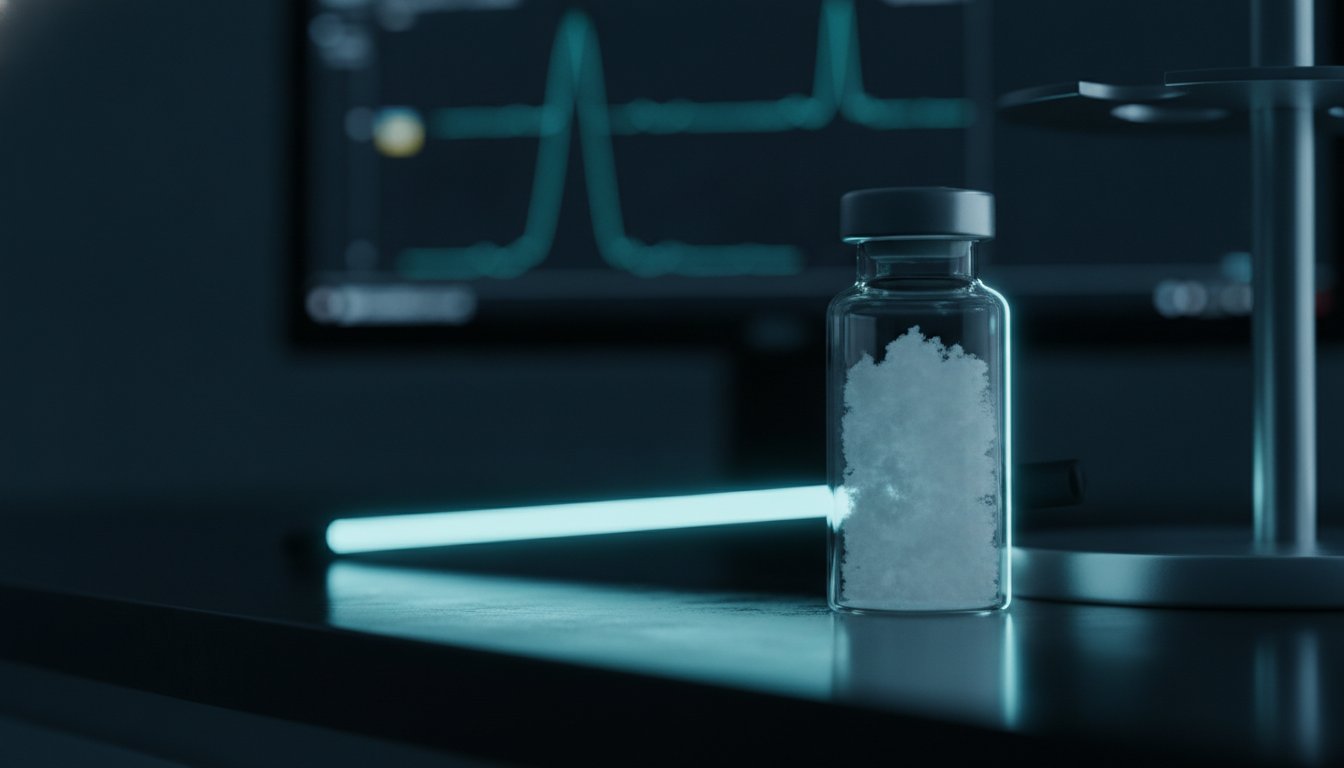
In the first quarter of 2026, the BPC-157 research peptide reached a 36.6% out-of-stock rate across the industry, a scarcity that often forces laboratories to navigate a sea of unverified materials. Precision. Verification. Reliability. You recognize that in a disciplined research environment, a generic purity claim is insufficient without the batch-specific HPLC data to confirm molecular integrity. High-performance liquid chromatography is the only compass that ensures your reagents meet the necessary purity threshold for reproducible results.
This analytical guide provides a comprehensive profile of the BPC-157 pentadecapeptide, detailing its unique gastric-derived resilience and its influence on angiogenic signaling pathways. We will dissect the specific amino acid sequence, establish verified protocols for reconstitution, and outline the laboratory standards necessary to maintain peptide stability during long-term storage. By the end of this technical overview, you'll have the data required to ensure your research remains anchored in chemical certainty. We move beyond marketing surface-tension to examine the deep-level biochemical properties that define this specific sequence.
Key Takeaways
- Identify the specific 15-amino acid sequence of the BPC-157 research peptide to confirm molecular identity and ensure experimental reproducibility.
- Analyze the primary mechanisms of action, including the modulation of VEGF pathways and the up-regulation of EGR-1 gene expression in laboratory models.
- Verify reagent integrity by interpreting high-performance liquid chromatography (HPLC) results, prioritizing batches that meet the ≥99% purity standard.
- Implement standardized protocols for aseptic reconstitution and precise concentration calculations to maintain long-term peptide stability and dosage accuracy.
- Evaluate the advantages of domestic logistics and the analytical profiles of multi-peptide research blends to ensure cold-chain integrity and experimental synergy.
What is BPC-157? Molecular Structure and Origin
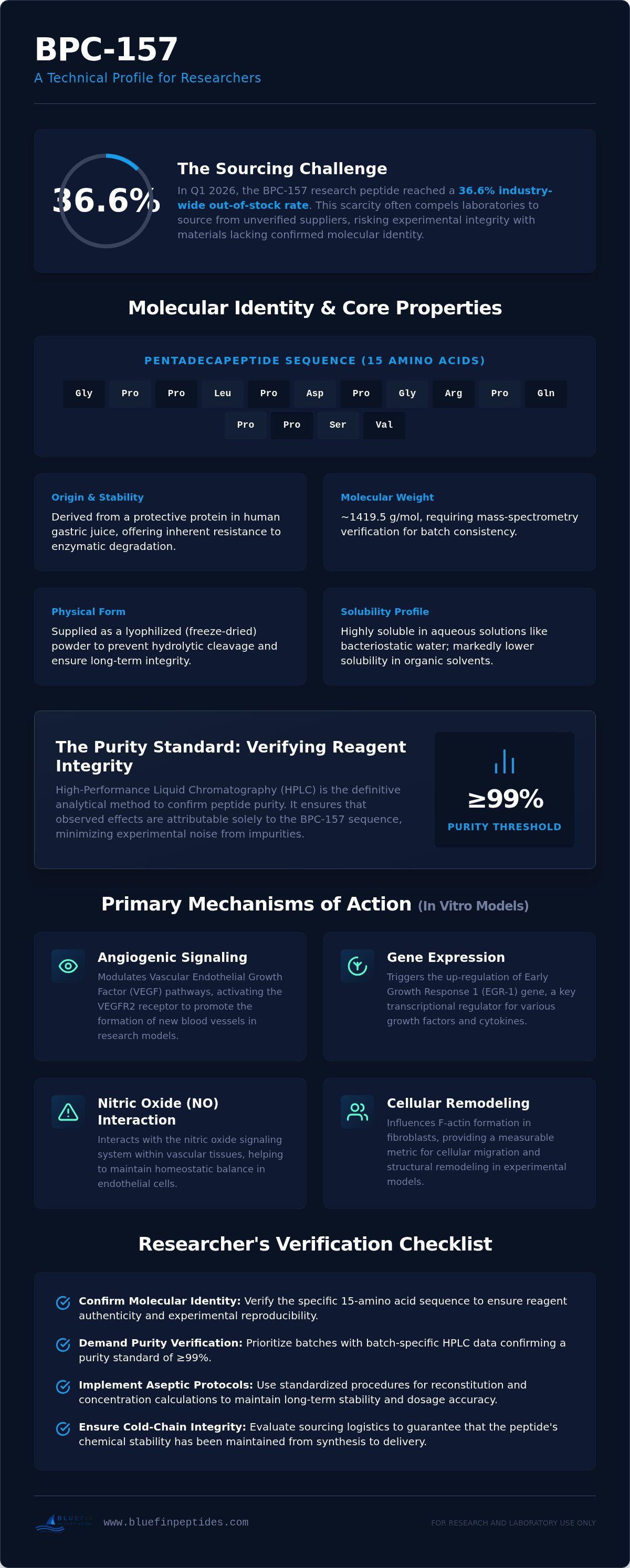
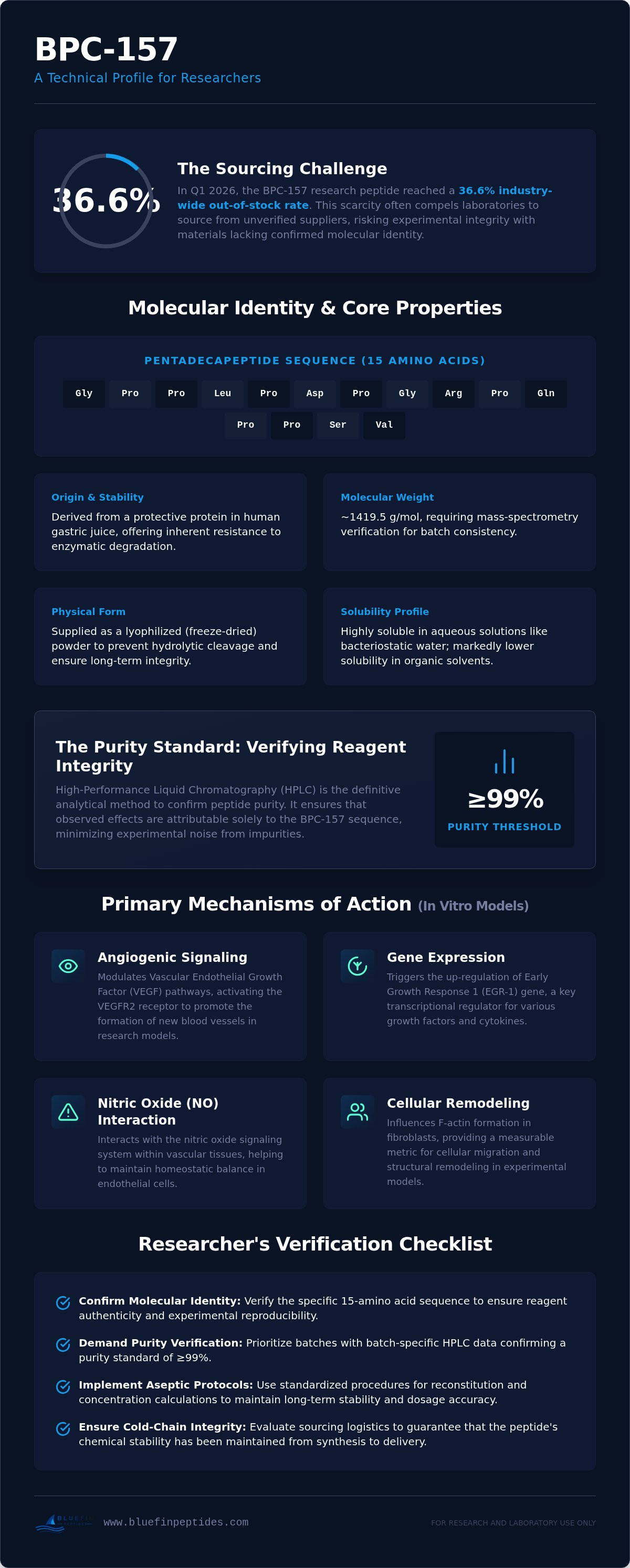
The BPC-157 peptide, formally identified as Body Protection Compound-157, is a synthetic pentadecapeptide. It's defined by a specific sequence of 15 amino acids: Gly-Pro-Pro-Leu-Pro-Asp-Pro-Gly-Arg-Pro-Gln-Pro-Pro-Ser-Val. With a molecular weight of approximately 1419.5 g/mol, this compound requires rigorous mass-spectrometry verification to ensure batch consistency. Unlike many signaling molecules that degrade rapidly under physiological stress, this BPC-157 research peptide is engineered for resilience. It's derived from a protective protein fragment naturally occurring in human gastric juice, a high-acid environment that would typically denature less robust peptides.
The Significance of Gastric Juice Stability
Molecular stability is the bedrock of reliable laboratory data. The primary advantage of the "Beuc's" sequence is its inherent resistance to enzymatic degradation. While many peptides are volatile and easily broken down by proteases, BPC-157 maintains its structural integrity even in harsh conditions. This sequence acts as a chemical anchor, providing stability against the tides of enzymatic activity that often compromise less durable research materials. This resilience makes it a unique candidate for experimental models involving gastrointestinal or musculoskeletal research. In a laboratory setting, this means the peptide doesn't require the same level of delicate handling as more fragile signaling molecules, though it still demands strict environmental controls. It remains functional where other compounds would lose their tertiary structure.
Chemical Properties and Solubility Profile
Precision in formulation depends on understanding the peptide's physical behavior. BPC-157 is highly soluble in aqueous solutions, such as bacteriostatic water or sterile saline, which are the standard vehicles for laboratory administration. Its solubility in organic solvents is markedly lower, a factor that researchers must account for during complex experimental design. The isoelectric point of the molecule influences its charge in various pH environments, affecting how it interacts with other compounds in GHK-Cu BPC-157 TB-500 research blends. To ensure long-term molecular integrity, the peptide is typically supplied in a lyophilized (freeze-dried) state. This white, crystalline powder form prevents the hydrolytic cleavage that occurs in liquid solutions over time. Achieving a purity level of ≥99% via HPLC is the industry standard for minimizing experimental noise and ensuring that the observed effects are attributable solely to the pentadecapeptide sequence.
Mechanisms of Action in Laboratory Research Models
BPC-157 operates through a sophisticated network of intracellular pathways. Its primary influence involves the modulation of Vascular Endothelial Growth Factor (VEGF), a critical signaling protein for vasculogenesis. In laboratory models, the peptide also triggers the up-regulation of Early Growth Response 1 (EGR-1) gene expression. This gene acts as a transcriptional regulator for several growth factors. The up-regulation of EGR-1 is not merely a byproduct; it is a fundamental shift in the transcriptional landscape. This gene facilitates the downstream expression of various cytokines and growth factors necessary for cellular proliferation. Additionally, the BPC-157 research peptide interacts with the nitric oxide (NO) signaling system within vascular tissues. This interaction helps maintain homeostatic balance in endothelial cells, preventing the dysfunction often seen in stressful laboratory environments. For researchers focused on cellular migration, the peptide's influence on F-actin formation in fibroblasts provides a measurable metric for movement and structural remodeling.
Angiogenic Signaling and Vascular Research
Angiogenesis research often centers on the VEGFR2 signaling pathway. In vitro studies demonstrate that BPC-157 promotes the formation of new blood vessels by activating this specific receptor. The activation involves the phosphorylation of specific tyrosine residues. This allows for a more controlled observation of angiogenic responses in ischemic models without the need for high concentrations of exogenous VEGF. It's a primary candidate for investigations into ischemic tissue models where vascular restoration is the central objective. Researchers must remember that while these mechanisms are documented in laboratory settings, the BPC-157 prohibited substance status highlights its lack of approval for human or athletic use. Clinical precision in the lab requires focusing strictly on these biochemical interactions. When verifying your research reagents, ensure the batch-specific data aligns with these known mechanisms.
Fibroblast Modulation and Extracellular Matrix (ECM) Studies
Fibroblasts are the architects of the extracellular matrix (ECM). In experimental settings, BPC-157 influences collagen synthesis, specifically type I collagen, which is vital for structural integrity. The peptide also impacts growth hormone receptor expression, enhancing the cellular response to endogenous growth factors. F-actin formation is another key area of study. Fibroblasts treated with the peptide show accelerated migration patterns due to the reorganization of the actin cytoskeleton. This is particularly relevant in scratch assay experiments where cellular movement across a gap is quantified. This specific pathway creates a natural point of comparison with the TB-500 research peptide, which also influences cellular migration but through different actin-sequestering mechanisms. By analyzing both, researchers can map the synergistic effects on ECM remodeling and cellular dynamics with high resolution.
Analytical Quality Standards: Verifying Peptide Purity
Precision is the anchor of valid laboratory research. For the BPC-157 research peptide, a purity level of ≥99% is the minimum standard required to ensure reproducible results. High-Performance Liquid Chromatography (HPLC) serves as the primary tool for this determination. It separates the target pentadecapeptide from related substances and synthesis byproducts. On an HPLC chromatogram, the area under the main peak represents the peptide's purity. Any secondary peaks, no matter how small, indicate the presence of impurities that could potentially interfere with sensitive experimental assays.
Mass Spectrometry (MS) provides the necessary secondary verification. While HPLC confirms purity, MS confirms identity by measuring the exact molecular mass. A high-quality BPC-157 research peptide must show a mass-to-charge ratio consistent with its 1419.5 g/mol profile. This step ensures the sequence has been synthesized correctly without missing or substituted amino acids. Without MS data, a researcher cannot be certain that the substance in the vial matches the intended molecular structure.
Identifying common impurities is a critical skill for laboratory personnel. The most frequent contaminants include residual solvents from the synthesis process, trifluoroacetic acid (TFA), and truncated sequences. Truncated sequences occur when the peptide chain is incomplete, resulting in a molecule that may still bind to receptors but fails to trigger the intended signaling pathway. TFA is often used as a counter-ion during purification; however, high residual levels can alter the pH of the final formulation, potentially confounding data in pH-sensitive cellular models.
Reading the Certificate of Analysis (COA)
A Certificate of Analysis (COA) serves as the 'maritime chart' for peptide navigation. It provides the data points necessary to verify the chemical state of each batch before research commences. You must cross-reference the batch number on the vial with the corresponding analytical report to ensure the data is current and specific. This document should explicitly list the HPLC purity percentage and the MS mass confirmation. For a deeper understanding of these metrics, you can consult our guide on research peptide quality standards. Verification is the only path to laboratory security.
The Impact of Purity on Experimental Integrity
Laboratory results are only as reliable as the reagents used to obtain them. Even 1% impurities can confound signaling pathway data by introducing unknown variables into the extracellular environment. This is why researchers distinguish between 'Research Grade' compounds and lower 'Cosmetic Grade' alternatives. Cosmetic grades often lack the rigorous testing and documentation required for molecular biology. Unverified sourcing in sensitive assays can lead to false positives or inconsistent data sets, wasting time and laboratory resources. Reliability starts with a commitment to documented purity.
Laboratory Handling: Reconstitution and Storage Protocols
Maintaining the molecular architecture of the BPC-157 research peptide requires adherence to strict aseptic techniques. Reconstitution is a delicate phase. It involves the transition from a lyophilized solid to an aqueous solution. Before beginning, sanitize the vial septum with 70% isopropyl alcohol. Use a sterile syringe to introduce the diluent slowly. Aim the needle at the glass wall of the vial rather than directly at the lyophilized powder. This prevents the formation of bubbles and limits unnecessary turbulence. Precision is mandatory. Any deviation in the reconstitution process can introduce contaminants that compromise the entire batch.
Mechanical stress is a primary cause of peptide degradation. Shaking a vial creates kinetic energy that can shear the delicate peptide bonds of the 15-amino acid chain. Swirl, don't shake. Gently rotate the vial between your palms until the powder is fully dissolved. This method ensures the structural integrity of the compound remains intact. If the solution appears cloudy after several minutes, the peptide may have denatured or the concentration has exceeded the solubility limit. Clear, colorless solutions indicate successful reconstitution.
Calculating concentrations is essential for experimental accuracy. Most researchers utilize mg/mL ratios for precise administration. For example, introducing 2.0 mL of diluent into a 5 mg vial produces a concentration of 2.5 mg/mL. If your study requires smaller increments, such as 250 mcg per dose, you'll utilize 0.1 mL of the resulting solution. Maintaining these mathematical standards prevents dosage errors that could skew your data. For the highest level of experimental security, source BPC-157 from verified US-based laboratories that provide exact vial quantities.
Reconstitution Media: Bacteriostatic Water vs. Sterile Saline
The choice of media dictates the solution's stability and shelf-life. Bacteriostatic water, containing 0.9% benzyl alcohol, inhibits bacterial growth and extends the viability of the reconstituted peptide for up to 28 days under refrigeration. Sterile saline is an alternative, though it lacks the preservative properties required for multi-dose vials. Understanding does reconstitution solution need to be refrigerated ensures your protocol remains compliant with established standards. For complex experiments involving multiple compounds, utilize a peptide blend reconstitution calculation to maintain mathematical accuracy across all reagents.
Long-term Stability and Degradation Prevention
Lyophilized BPC-157 is stable at room temperature for short durations during transit but requires refrigeration at 4°C for medium-term storage. For multi-year preservation, laboratories must utilize -20°C or -80°C environments. Multiple freeze-thaw cycles are detrimental. They introduce thermal stress that can cause structural fragmentation. Use desiccant packs in secondary containers to prevent moisture ingress. Moisture leads to hydrolytic cleavage. By anchoring your storage protocols in these standards, you protect the molecular integrity of your research materials.
Sourcing BPC-157 for Precision Research Applications
Procurement of the BPC-157 research peptide requires more than a simple transaction. It demands a verification of the entire supply chain. Researchers prioritize domestic US-based logistics to maintain cold-chain integrity. International transit often exposes sensitive lyophilized powders to thermal fluctuations that compromise molecular stability. By utilizing domestic stock, laboratories reduce transit time and ensure the reagent arrives in its intended chemical state. This material is strictly for laboratory research use only. It's not for human consumption or clinical application. Compliance with these legal boundaries is the foundation of institutional security.
The analytical landscape is evolving toward more complex experimental designs. We're seeing increased interest in GHK-Cu BPC-157 TB-500 research blends. These combinations allow for the study of synergistic signaling pathways in tissue remodeling and inflammatory response models. Analyzing these multi-peptide systems requires a supplier capable of verifying each component's purity with the same clinical precision applied to single-sequence vials. Reliable data depends on the consistency of the starting material.
Bluefin Peptides: A Disciplined Logistics Approach
Efficiency meets accuracy. Bluefin Peptides operates with maritime-speed shipping and academic-grade transparency. Every batch undergoes rigorous testing. We provide mass-spec confirmed batch reports and HPLC data as standard documentation. Our procurement process is designed for the high-stakes environment of qualified research institutions. We don't ask for blind trust. We provide the tools for verification. This "show, don't tell" philosophy ensures that your laboratory reagents are as reliable as your methodology. Speed never comes at the expense of data integrity.
The Future of BPC-157 in Molecular Biology
New horizons are appearing in the literature. Emerging research areas include neuroprotection and gut-brain axis models. These studies investigate how the pentadecapeptide interacts with central nervous system signaling and enteric nervous system homeostasis. As the field expands, the demand for high-purity standards will only intensify. Maintaining a purity of ≥99% is non-negotiable for high-impact publications. Inconsistent reagents lead to inconsistent conclusions. To begin your next phase of data collection, Secure HPLC-Verified BPC-157 for Your Laboratory today.
Advancing Laboratory Precision with Verified Pentadecapeptides
Reliable molecular biology depends on the chemical certainty of your reagents. We've established that the BPC-157 research peptide requires a purity threshold of ≥99% to ensure that experimental observations are attributable solely to the target sequence. Verification. Documentation. Precision. These are the anchors of high-impact research. By implementing standardized reconstitution protocols and utilizing domestic, batch-verified supplies, laboratories can mitigate the risks of molecular degradation and inconsistent signaling data. You've seen how the sequence's gastric-derived resilience provides a unique foundation for angiogenic and fibroblast migration studies.
Bluefin Peptides facilitates this rigorous standard through clinical-precision logistics. You gain access to batch-specific mass-spec reports and ≥99% HPLC-verified purity, all supported by fast US-based secure shipping. This disciplined approach ensures your materials arrive with their molecular architecture intact, ready for the most demanding analytical environments. Every vial represents a commitment to transparency and technical excellence. Procure HPLC-Verified BPC-157 for Laboratory Research and anchor your findings in empirical stability. We look forward to supporting your next breakthrough in cellular signaling and tissue research.
Frequently Asked Questions
Is BPC-157 legal for research use in the United States?
BPC-157 is legal in the United States strictly for laboratory research use. It is not an FDA-approved drug and cannot be legally sold or used for human consumption. While regulatory discussions regarding its status in compounding pharmacies reached a recommendation for 503A listing in July 2026, researchers must currently treat it as a non-approved substance for any application outside of a controlled laboratory environment.
What is the recommended purity level for BPC-157 in cellular assays?
High-fidelity cellular assays require a BPC-157 research peptide with a purity level of ≥99%. Utilizing lower purity grades can introduce unknown variables and residual synthesis byproducts that confound signaling data. Precision in molecular biology depends entirely on using reagents verified by third-party HPLC analysis to ensure that experimental observations are attributable solely to the target pentadecapeptide sequence.
How should lyophilized BPC-157 be stored upon arrival at the lab?
Store the lyophilized powder at 4°C for immediate use or -20°C for long-term preservation. Maintaining these temperatures prevents hydrolytic cleavage and structural fragmentation over time. Always keep the vials in a secondary container with desiccant to mitigate moisture ingress. This disciplined storage protocol is essential for preserving the molecular integrity of the reagent until the point of reconstitution.
What is the molecular weight and sequence of BPC-157?
BPC-157 is a pentadecapeptide with a molecular weight of approximately 1419.5 g/mol. Its primary structure consists of a specific 15-amino acid sequence: Gly-Pro-Pro-Leu-Pro-Asp-Pro-Gly-Arg-Pro-Gln-Pro-Pro-Ser-Val. This precise arrangement of amino acids defines its biochemical profile and its unique resistance to enzymatic degradation in various experimental models. Analytical verification via mass spectrometry is required to confirm this identity before research begins.
Can BPC-157 be used in synergistic research with other peptides like TB-500?
Researchers frequently utilize the BPC-157 research peptide in combination with TB-500 to study synergistic effects on cellular migration and extracellular matrix remodeling. These blends are designed to investigate complementary signaling pathways in vitro. Such studies require precise mathematical calculations during the reconstitution phase to maintain consistent concentrations of each constituent molecule. This approach allows for a more comprehensive analysis of complex tissue-repair mechanisms.
How do I interpret an HPLC report for BPC-157?
Locate the primary peak on the chromatogram, which represents the target peptide. The purity is calculated as the percentage of the area under this main peak relative to the total area of all detected peaks. A legitimate report must also display the specific retention time and be cross-referenced with a corresponding mass-spectrometry analysis. Any secondary peaks indicate impurities that could potentially interfere with sensitive molecular biology assays.
What happens if a research peptide is shaken instead of swirled during reconstitution?
Shaking introduces significant mechanical stress that can shear delicate peptide bonds and lead to molecular denaturation. This physical degradation renders the compound structurally compromised and often biologically inert. Always employ a gentle swirling motion to preserve the tertiary structure of the reconstituted solution. If bubbles or foam appear, wait for the solution to settle before proceeding with any experimental administration to ensure accuracy.
Is BPC-157 stable at room temperature during shipping?
Lyophilized BPC-157 maintains structural stability at room temperature for short-duration transit. However, prolonged exposure to ambient heat during the shipping process can accelerate the degradation of the peptide chain. Secure logistics providers utilize rapid domestic fulfillment and climate-controlled environments to ensure the reagent arrives well within its stability window. Once received, the material must be transferred to appropriate refrigeration to prevent any further molecular decay.
For laboratory research use only. Not for human or veterinary use. This content is educational and does not constitute medical, dosing, or usage guidance.
Browse the BLUEFIN catalog