Peptide Blend Reconstitution Calculation: A Laboratory Protocol for 2026
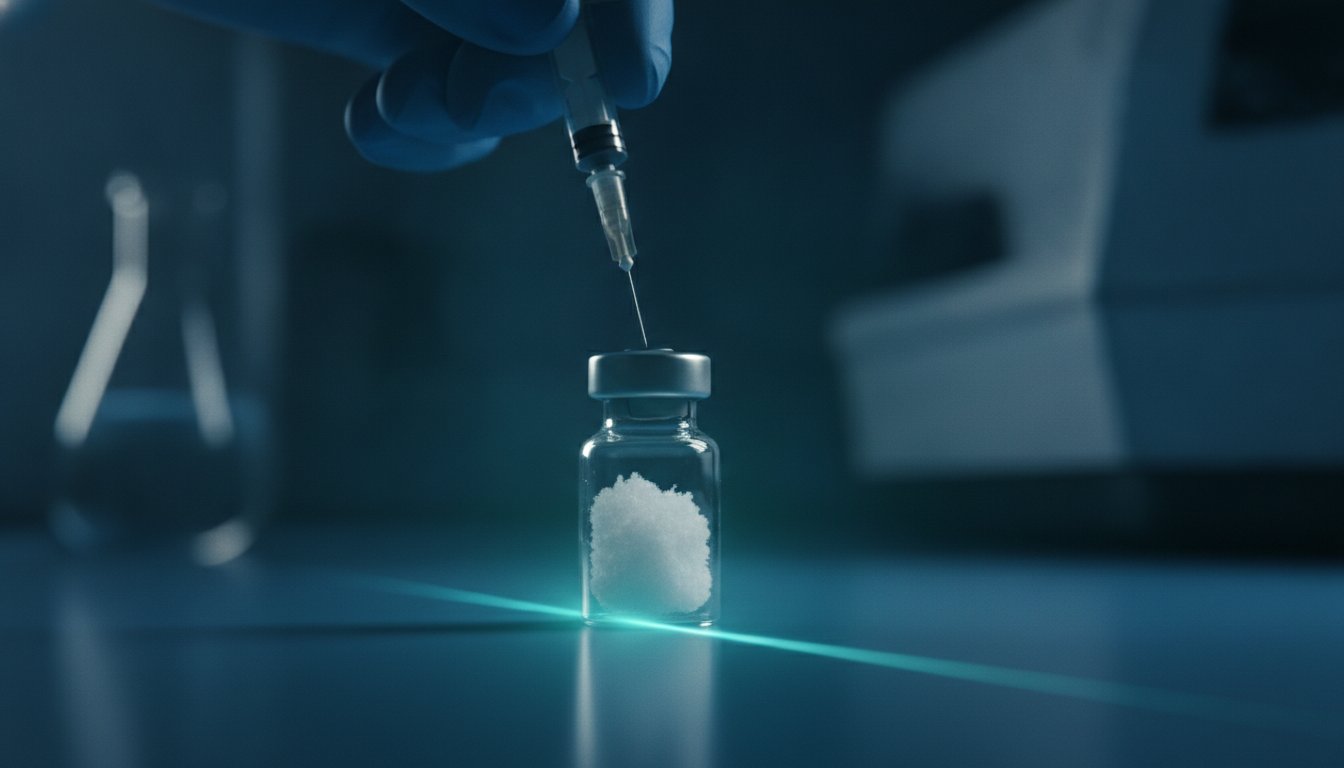
A single mathematical error in your peptide blend reconstitution calculation doesn't just skew a single data point; it compromises the integrity of your entire longitudinal study. You're likely aware that multi-peptide vials, such as the BPC-157 and TB-500 research blend, require a higher degree of analytical rigor than single-compound vials. The complexity of managing simultaneous concentrations often leads to uncertainty regarding solvent volumes and the resulting mg/mL ratios for each constituent. This lack of clarity can result in the degradation of sensitive chains or, worse, inconsistent experimental results.
This protocol provides the standardized mathematical framework needed to achieve absolute precision in every vial. You'll master the logic required to calculate individual peptide concentrations while preserving the structural bioactivity of sensitive compounds. We'll examine the volumetric equations, solvent compatibility for complex blends, and the specific handling requirements to ensure your research remains anchored in verifiable truth. By the end of this guide, you'll have a repeatable SOP that eliminates guesswork and secures the stability of your laboratory data.
Key Takeaways
- Master the fundamental equation of Total Mass (mg) divided by Solvent Volume (mL) to ensure your peptide blend reconstitution calculation yields precise mg/mL data for every constituent in the vial.
- Select bacteriostatic water containing 0.9% benzyl alcohol as the standard solvent to inhibit bacterial growth and maintain stability across multi-use research applications.
- Standardize laboratory protocols by identifying the specific mass ratios of each active compound, such as those found in BPC-157 / TB-500 Research Blends, before introducing the diluent.
- Preserve peptide bioactivity by minimizing mechanical agitation and maintaining a strict cold chain between 2°C and 8°C once the lyophilized cake is restored to a liquid state.
Understanding Peptide Blend Reconstitution in Laboratory Research
Reconstitution is the clinical process of restoring a lyophilized peptide blend to a liquid state. It's a phase transition that requires precision. In laboratory environments, this isn't a simple dilution; it's a calibrated restoration of bioactivity. Unlike single-compound vials, a multi-peptide vial contains distinct masses of different amino acid chains. A standard BPC-157 / TB-500 Research Blend, for instance, requires a peptide blend reconstitution calculation that accounts for the specific milligram count of every active component. This ensures that every aliquot drawn from the vial contains a predictable and verifiable mass of each peptide. The foundational stability of these compounds relies on lyophilization or cryodesiccation. This process removes moisture through sublimation, preserving the delicate secondary and tertiary structures of the peptide chains against thermal and chemical degradation during transit and storage.
The Fluid Dynamics of Lyophilized Cakes
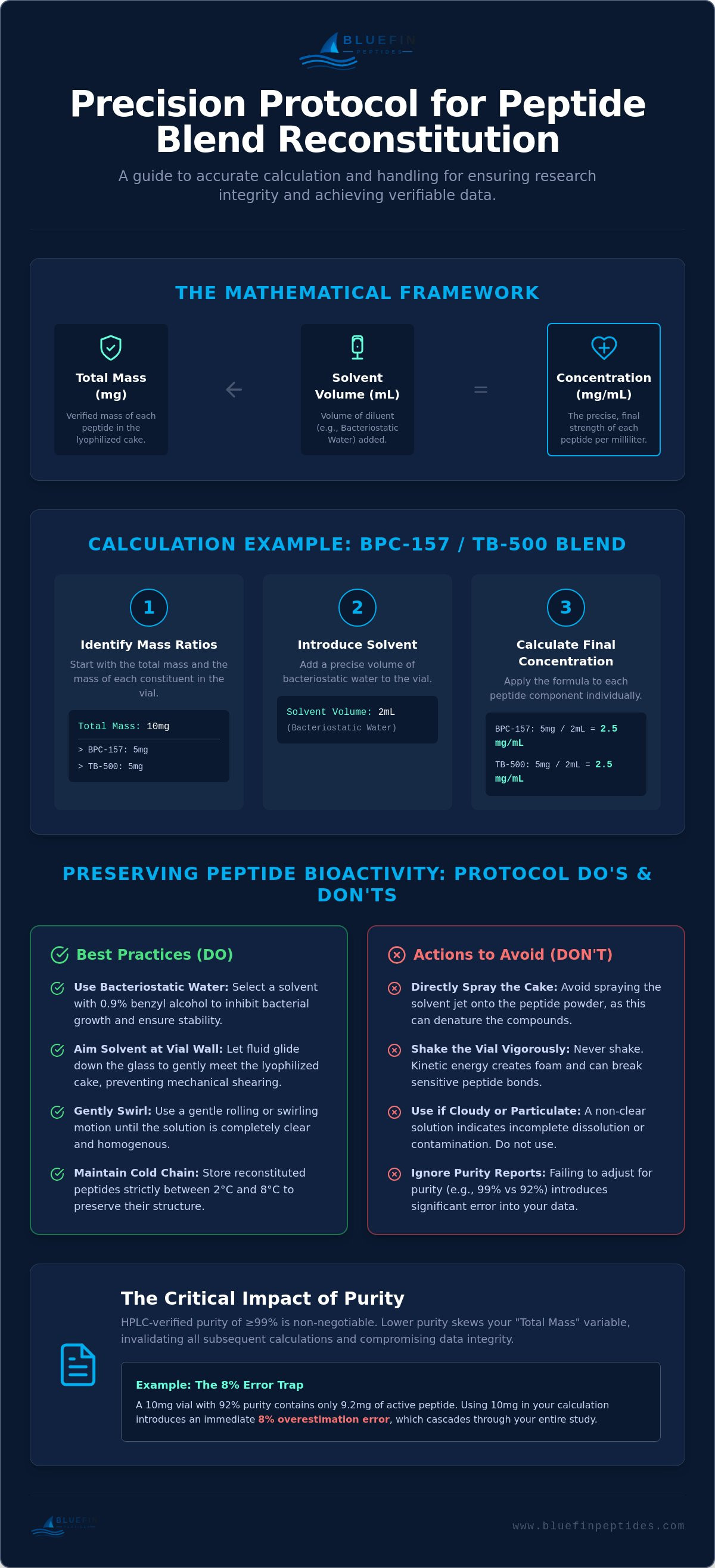
High-quality research blends arrive as a solid, vacuum-sealed cake. This vacuum is critical. It acts as a seal of integrity. When the needle penetrates the septum, the pressure differential creates a rapid intake of the solvent. You must control this flow. Allowing the solvent to spray directly onto the lyophilized cake can cause mechanical shearing of the peptide bonds. Instead, aim the stream at the glass wall of the vial. Let the fluid glide down to meet the cake. A successful reconstitution results in a perfectly clear, homogenous solution. Any cloudiness or persistent particulates indicate an incomplete dissolution or potential contamination. Professional protocols dictate a gentle swirling motion. Never shake the vial. Shaking introduces kinetic energy that can lead to foaming and the denaturing of sensitive sequences. This sensitivity to preparation is not unique to synthetic compounds; for instance, when exploring traditional botanical tools, you can discover Tribu Spirit to understand how proper technique ensures effectiveness.
Concentration vs. Dosage in Research Models
Clarity in mathematical modeling is the only way to ensure reproducible data. You must distinguish between the total vial mass and the concentration per milliliter. If a vial contains 5mg of BPC-157 and 5mg of TB-500, adding 2mL of solvent creates a concentration of 2.5mg/mL for each peptide. This volumetric baseline is the anchor for all subsequent data points in a longitudinal study. Establishing these values requires a high-purity starting material. Adhering to strict research peptide quality standards is a prerequisite for any meaningful calculation. Without HPLC-verified purity levels of 99% or higher, your mathematical framework is built on a shifting foundation. In the 2026 laboratory landscape, analytical accuracy is the difference between a successful trial and a compromised batch. Every microliter must be accounted for to maintain the integrity of the research model.
The Mathematical Framework of Multi-Peptide Reconstitution
The fundamental equation for any peptide blend reconstitution calculation is an absolute constant: Total Mass (mg) / Solvent Volume (mL) = Concentration (mg/mL). In a multi-peptide vial, this equation must be applied to each constituent individually, yet they share a common denominator. The solvent volume you choose dictates the concentration of every active compound simultaneously. When calculating for Ingredient A, you establish a volumetric baseline. However, you must immediately calculate for Ingredient B to understand the resulting concentration. In pre-mixed research blends, these compounds exist in a fixed-ratio constraint. You cannot adjust the concentration of one without proportionately altering the other. This mathematical tethering requires a forward-thinking approach to volume selection. Utilizing high-purity research blends ensures that your "Total Mass" variable is grounded in analytical fact rather than estimation.
Adjusting for purity is a non-negotiable step in high-stakes laboratory research. A 99% HPLC report is essential because it allows for "true mass" calculations. If a 10mg vial actually contains 9.2mg of active peptide and 0.8mg of residual salts, your concentration data will be off by 8%. Standard laboratory practice involves the use of Bacteriostatic Water for Injection, USP, which serves as the primary diluent for these multi-variable calculations. By anchoring your math in verified purity reports, you eliminate the variance that plagues less disciplined studies.
The Dual-Concentration Formula
Consider a 10mg total blend containing 5mg of BPC-157 and 5mg of TB-500. If you introduce 2mL of solvent, the calculation for each is 5mg / 2mL, resulting in 2.5mg/mL per peptide. To determine the mcg-per-tick value on a standard U-100 research syringe, you must recognize that 1mL equals 100 units. Therefore, 1 unit equals 0.01mL. Multiplying your 2.5mg/mL concentration by 0.01mL reveals a value of 0.025mg, or 25mcg, per unit for each peptide. For advanced biochemical assays, mass-spec data allows you to convert these mass concentrations into molarity, providing a deeper look at the molecular interactions within the solution.
Common Errors in Blend Calculations
The "Volume Displacement" myth remains a persistent source of error. It suggests that the lyophilized cake significantly increases the final liquid volume; however, in high-purity research settings, the displacement caused by 10mg of peptide in 2mL of solvent is mathematically negligible. Another critical factor is syringe dead space. The small amount of fluid retained in the needle hub can cause concentration variance if not accounted for during the draw. Precision requires consistent equipment and technique to mitigate these physical variables. The "Ratio Trap" is a calculation error where the researcher fails to realize that the concentration of the secondary peptide is irreversibly tethered to the solvent volume chosen for the primary peptide. To further refine your understanding of pharmacological applications and calculations, you can learn more about PharmEDU.
Solvent Selection: Is Bacteriostatic Water the Same as Reconstitution Solution?
Precision in solvent selection is the secondary pillar of laboratory accuracy. The diluent you choose is as critical as the peptide blend reconstitution calculation itself. Bacteriostatic water is the laboratory standard for multi-dose research vials. It's composed of sterile water for injection supplemented with 0.9% benzyl alcohol. This additive serves as a bacteriostatic agent; it effectively halts the replication of microorganisms that may be introduced during repeated septum punctures. In contrast, sterile water lacks this preservative. It's strictly for single-use applications. Once a vial of sterile water is breached, its lack of antimicrobial defense makes it a liability for longitudinal studies. Choosing the wrong diluent can invalidate your data by introducing biological contaminants that degrade the peptide chains before your study concludes.
The term "reconstitution solution" is often used as a catch-all, but in a professional setting, it refers to specific buffers tailored to a compound's chemical profile. While bacteriostatic water is sufficient for many blends, certain research peptides require pH-adjusted environments to remain in a liquid state. The choice of solvent directly dictates the intended shelf-life of the reconstituted blend. Without the 0.9% benzyl alcohol preservative, the risk of bacterial colonization increases exponentially after 24 hours, even under refrigeration. This necessitates a disciplined approach to inventory management and solvent procurement to ensure the "stability clock" doesn't expire prematurely.
Comparing Bacteriostatic Water and Sterile Water
Bacteriostatic water provides a 28-day stability window when stored between 2°C and 8°C. Sterile water requires immediate disposal after the initial draw. This choice impacts the solubility of the blend. Every peptide has a specific isoelectric point (pI), which is the pH at which it carries no net electrical charge. If the solvent's pH nears the peptide's pI, solubility drops; the compound may precipitate out of the solution. For complex sequences like the retatrutide research peptide, maintaining a precise pH environment is mandatory to prevent aggregation and ensure the solution remains homogenous. Analytical precision requires a solvent that supports the chemical nature of every peptide in the blend.
Specialized Reconstitution Buffers
While bacteriostatic water is common, specialized reconstitution solutions like Phosphate-Buffered Saline (PBS) are required for specific assays. PBS maintains a physiological pH of approximately 7.4. It acts as a chemical anchor against fluctuations that could denature sensitive amino acid chains. Some peptides with extreme hydrophobic profiles might require a slight addition of 0.1% acetic acid or a basic buffer to achieve full dissolution. Regardless of the buffer, the stability of the solution is non-negotiable. In 2026, standard laboratory SOPs mandate that all reconstituted solutions remain refrigerated. Thermal exposure is the primary catalyst for peptide bond hydrolysis; maintaining the cold chain is the only way to preserve the analytical integrity of your research material.

Step-by-Step Calculation for Research Blends (e.g., BPC-157/TB-500)
Executing a precise peptide blend reconstitution calculation begins with the verification of the total mass for every component in the vial. You cannot rely on aggregate numbers. You must isolate the specific milligram count of each peptide sequence. For a high-purity BPC-157 / TB-500 Research Blend, the starting point is usually a fixed ratio established by the manufacturer. Once the mass ($M$) is confirmed via the batch-specific HPLC report, you select a target concentration ($C$) for the primary peptide based on your study's specific volumetric requirements. The independent variable in this equation is the solvent volume ($V$). By applying the $C = M / V$ formula, you determine the exact amount of diluent required to reach your desired analytical baseline. This methodical approach ensures that the secondary peptide's concentration is also verified, preventing the "Ratio Trap" discussed in previous sections.
Accuracy is paramount. If your research model requires a specific microgram-per-aliquot ratio, the calculation must be performed before the first drop of solvent touches the lyophilized cake. For researchers seeking to maintain the highest levels of data integrity, utilizing HPLC-verified research blends provides the necessary starting mass for these complex equations. By anchoring the math in verified data, you eliminate the variance inherent in lower-grade materials.
Practical Example: 5mg/5mg Blend
Consider a laboratory goal of a 250mcg dose of BPC-157 using a 5mg/5mg blend vial. If you introduce 2mL of bacteriostatic water, the math is straightforward: 5mg divided by 2mL equals 2.5mg/mL. To find the volume for a 250mcg (0.25mg) aliquot, you divide 0.25mg by the concentration of 2.5mg/mL, resulting in 0.1mL. On a standard U-100 syringe, 0.1mL corresponds exactly to 10 units. Because the blend is a 5mg/5mg ratio, the concentration of TB-500 is identical. Every 10-unit draw provides exactly 250mcg of each compound. This symmetry simplifies the tracking of dual-peptide interactions within the research model.
Syringe Calibration for Blends
Precision aliquoting requires a deep understanding of syringe graduations. A 0.3mL research syringe offers finer resolution for small volumes than a 0.5mL or 1.0mL variant. You must convert mL measurements to "units" based on the syringe's scale; for U-100 syringes, 100 units always equal 1.0mL. This means each small "tick" mark on a 0.5mL syringe usually represents 1 unit (0.01mL), whereas a 0.3mL syringe may offer half-unit increments for even tighter tolerances. You should verify syringe volume accuracy by performing a dry-run draw with a calibrated scale before introducing the reconstituted peptide solution to ensure the plunger depth matches the intended volumetric displacement.
Analytical Integrity and Storage of Reconstituted Blends
Reconstitution is the beginning of a countdown. Once the solvent is introduced, the stability clock activates. The aqueous environment facilitates hydrolysis. This process eventually cleaves peptide bonds. Maintaining the cold chain between 2°C and 8°C is mandatory to slow this kinetic degradation. Thermal fluctuations are the primary threat to your peptide blend reconstitution calculation accuracy over time. If the peptide degrades, the concentration you calculated is no longer valid. High-purity lyophilized cakes, verified at ≥99% purity, provide a cleaner environment. Fewer residual contaminants mean fewer catalysts for degradation. In the 2026 laboratory landscape, ignoring these thermal boundaries is a failure of protocol. The integrity of the amino acid sequence is a fragile constant that requires absolute environmental control. If you are looking for a change of pace that still values expert knowledge and precision, you can visit Bass Online to discover professional bass fishing trips across Florida’s iconic lakes.
Just as laboratory precision is vital for experimental success, maintaining the legal and administrative integrity of your research documentation is equally crucial. For professionals who require certified authentication of clinical records or lab reports, Dyvine Medical & Wellness offers specialized notary and apostille services to ensure all paperwork meets the highest standards of accuracy.
Just as you wouldn't compromise on the quality of your laboratory reagents, athletes shouldn't compromise on the quality of their training gear. For those who apply the same level of discipline to their Muay Thai practice, Fairtex offers professional equipment designed for peak performance; to explore their collection, read more.
Similarly, for active women who apply a high level of discipline to their physical goals, GREENDO offers premium natural supplements designed to support strength, beauty, and a refined silhouette.
Likewise, for men who apply a similar level of discipline to managing the physical toll of demanding careers and long shifts, Blue Collar Fit provides specialized fitness and wellness resources designed to combat exhaustion and sustain long-term health.
Furthermore, for those who demand the same level of analytical rigor for their personal health as they do for their research, Summit Rejuvenation offers specialized hormone replacement therapy that prioritizes clinical precision and patient-specific optimization.
Additionally, for those who apply the same level of analytical discipline to selecting high-quality nicotine-free alternatives from UK Vape Sales, you can learn more about the top 0mg kits and vapes available for 2026.
Furthermore, for researchers or athletes who prioritize non-invasive methods for enhancing physical performance and well-being, sportpat.ch offers innovative patches utilizing vibrotactile technology to support recovery and optimization.
Light sensitivity also plays a role. Photo-degradation can alter the molecular structure of sensitive sequences. Professional laboratories utilize amber vials or opaque storage containers to shield the solution from UV exposure. This is especially critical for blends containing light-sensitive amino acids. Protecting the solution ensures the molecular integrity remains anchored to your initial data points. It's a matter of preserving the analytical depth of the study, which is why clinical facilities like the Houston Medical Wellness Clinic prioritize similar levels of precision when managing wellness and anti-aging protocols.
Post-Reconstitution Storage Protocols
Aliquoting is a mandatory procedure for long-term preservation. Repeatedly puncturing the same vial introduces oxygen and potential contaminants. It also subjects the solution to thermal stress. You should divide the solution into single-use aliquots immediately after your initial peptide blend reconstitution calculation. This prevents the damaging effects of freeze-thaw cycles. Watch for signs of precipitation or "crashing out." This often appears as a fine sediment or cloudiness. It indicates that the peptide has lost solubility. Salt forms like acetate or trifluoroacetate (TFA) influence this shelf-life. Acetate salts are common; however, TFA often provides a more stable baseline for many research compounds by maintaining a lower pH environment that resists certain types of microbial growth. This varies by sequence and must be verified in the batch specifications. For researchers who apply this same level of scientific rigor to their personal health, Pureffect provides molecular hydrogen solutions designed to manage inflammation and support overall wellness.
Verification via Batch-Specific COAs
Final verification relies on cross-referencing your math with the batch-specific HPLC report. Every milligram counts. Use mass-spec confirmation to validate the molecular weight before finalizing your volumetric draw. This ensures the theoretical mass matches the physical reality of the vial. Secure your data's future. Procure HPLC-verified research blends for your next laboratory study to ensure analytical precision from start to finish.
Securing Analytical Integrity in 2026
Precision is the cornerstone of reproducible science. You've now mastered the mathematical framework required to execute a flawless peptide blend reconstitution calculation, ensuring every aliquot drawn from a multi-peptide vial is anchored in verifiable mass data. By selecting the correct bacteriostatic solvent and adhering to strict cold-chain protocols, you prevent the chemical degradation that compromises so many longitudinal studies. These steps don't just protect the amino acid chains; they protect the validity of your entire research model. High-purity starting material is the only way to eliminate the variables that lead to experimental drift. Our commitment to ≥99% HPLC-verified purity and batch-specific Mass-Spec confirmation provides the baseline you need for absolute certainty. With US-based logistical speed, your laboratory can maintain momentum without sacrificing the analytical rigor your field demands. For researchers who prioritize similar levels of precision in their personal wellness, check out Zenutri Personalised Vitamins for tailored health supplements.
Secure HPLC-Verified Research Blends for Analytical Precision today and bring a new level of discipline to your laboratory workflows. Your commitment to precise methodology is the key to unlocking consistent, high-fidelity results in every study.
Frequently Asked Questions
Is bacteriostatic water the same as reconstitution solution?
No. Bacteriostatic water is a specific subtype of reconstitution solution containing 0.9% benzyl alcohol as a preservative. While "reconstitution solution" is a broad category that includes sterile water, phosphate-buffered saline (PBS), and pH-adjusted diluents, bacteriostatic water is the laboratory standard for multi-dose vials. It's designed to inhibit microbial replication after the initial septum puncture, whereas other solutions may lack the necessary antimicrobial defense for longitudinal studies.
How do I calculate the concentration of a 5mg/5mg peptide blend?
You must apply the $C = M / V$ formula to each component independently using the shared solvent volume. If you introduce 2mL of diluent into a 5mg/5mg vial, each peptide achieves a concentration of 2.5mg/mL. This peptide blend reconstitution calculation ensures that every 0.1mL (10 units on a U-100 syringe) contains exactly 250mcg of each active compound. The ratio remains fixed based on the lyophilized mass of the starting material.
Can I use sterile saline instead of bacteriostatic water for reconstitution?
Sterile saline is generally avoided in multi-use research protocols. It lacks a bacteriostatic agent, meaning it cannot prevent bacterial colonization once the vial's sterile environment is breached. While saline may support initial solubility, it's strictly for single-use applications. For studies requiring repeated aliquoting over a 28-day window, bacteriostatic water is the only solvent that maintains the necessary antimicrobial barrier.
Does the volume of the lyophilized powder affect the final liquid volume?
In high-purity research settings, the volume displacement caused by the lyophilized cake is mathematically negligible. A 10mg mass of ≥99% pure peptide dissolved in 2mL of solvent does not significantly alter the total liquid volume. Your calculations should treat the final volume as equal to the volume of the solvent introduced. This ensures your mg/mL data remains anchored in precise volumetric reality without accounting for phantom displacement.
How long does a peptide blend remain stable after reconstitution?
Reconstituted blends typically maintain analytical integrity for up to 28 days when stored at 2°C to 8°C in bacteriostatic water. Beyond this window, the "stability clock" expires as hydrolysis accelerates the degradation of the amino acid chains. Thermal exposure or improper pH can shorten this duration. Maintaining a strict cold chain is the only way to preserve the secondary structure of the peptides and ensure reproducible data.
What happens if I add too much solvent to my research vial?
Adding excess solvent results in a lower concentration (mg/mL) for every peptide in the blend. While the total mass of the peptides remains unchanged, you must recalculate your aliquot volumes to reach the intended dose. For example, if your peptide blend reconstitution calculation targeted 5mg/mL but resulted in 2.5mg/mL due to doubling the solvent, you must draw twice the volume to maintain the same milligram delivery.
Why is my reconstituted peptide solution cloudy instead of clear?
Cloudiness, or turbidity, indicates incomplete dissolution or that the peptide has "crashed out" of the solution. This often happens if the solvent's pH is too close to the peptide's isoelectric point (pI) or if the solution is supersaturated. High-purity blends should yield a clear, homogenous solution. Persistent cloudiness suggests a failure in the dissolution process or the presence of insoluble contaminants that invalidate the concentration data.
Do all peptides in a blend dissolve at the same rate?
Dissolution rates vary significantly based on the hydrophobic or hydrophilic nature of each peptide sequence. A short, polar chain may dissolve instantly, while a longer, hydrophobic sequence requires more time to reach equilibrium. You must utilize gentle swirling to navigate these different dissolution speeds. Never shake the vial; instead, allow the fluid to move naturally until the solution is perfectly clear and every constituent is fully integrated.
For laboratory research use only. Not for human or veterinary use. This content is educational and does not constitute medical, dosing, or usage guidance.
Browse the BLUEFIN catalog