Does Reconstitution Solution Need to Be Refrigerated? Laboratory Storage Standards
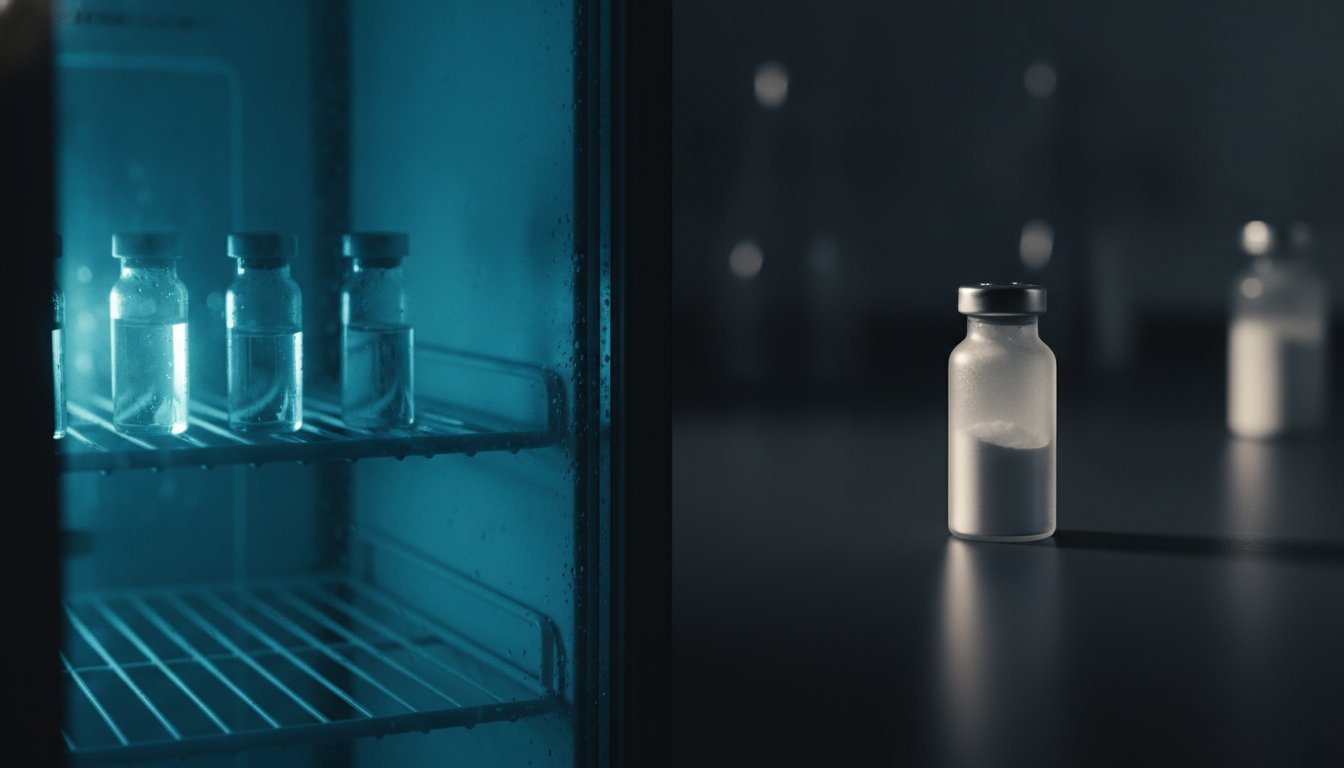
A single degree of thermal deviation can be the catalyst for molecular cleavage. Precision. Verification. Reliability. These are the pillars of laboratory integrity, yet many researchers remain uncertain when asking, does reconstitution solution need to be refrigerated. While unmixed diluents like bacteriostatic water maintain stability at controlled room temperatures between 20°C and 25°C, the moment a lyophilized peptide meets its solvent, the biochemical clock accelerates.
Maintaining ≥99% purity requires more than just high-quality compounds; it demands a disciplined adherence to thermal standards. You recognize that bacterial contamination or chemical degradation can void months of research data. This analysis provides a technical breakdown of storage requirements for bacteriostatic water and reconstituted peptides. We examine the updated 2023 USP Chapter <797> standards, the specific 2-8°C refrigeration protocols for active solutions, and the 28-day beyond-use dates for multi-dose vials. Secure your results through deep-sea precision and methodological transparency.
Key Takeaways
- Determine when does reconstitution solution need to be refrigerated by distinguishing between shelf-stable diluents and active research compounds that require immediate cold-chain management.
- Maintain the structural integrity of peptide chains by adhering to mandatory 2°C to 8°C refrigeration protocols to prevent ambient-temperature molecular cleavage.
- Implement strict beyond-use dating for bacteriostatic water, ensuring multi-use vials containing 0.9% benzyl alcohol are discarded within 28 days per USP standards.
- Mitigate the "four enemies" of stability—thermal kinetics, photo-degradation, moisture, and microbial ingress—to preserve HPLC-verified purity profiles of ≥99%.
- Understand the direct correlation between thermal storage precision and the resolution of analytical data in subsequent laboratory evaluations.
Defining Reconstitution Solutions: Bacteriostatic Water vs. Sterile Diluents
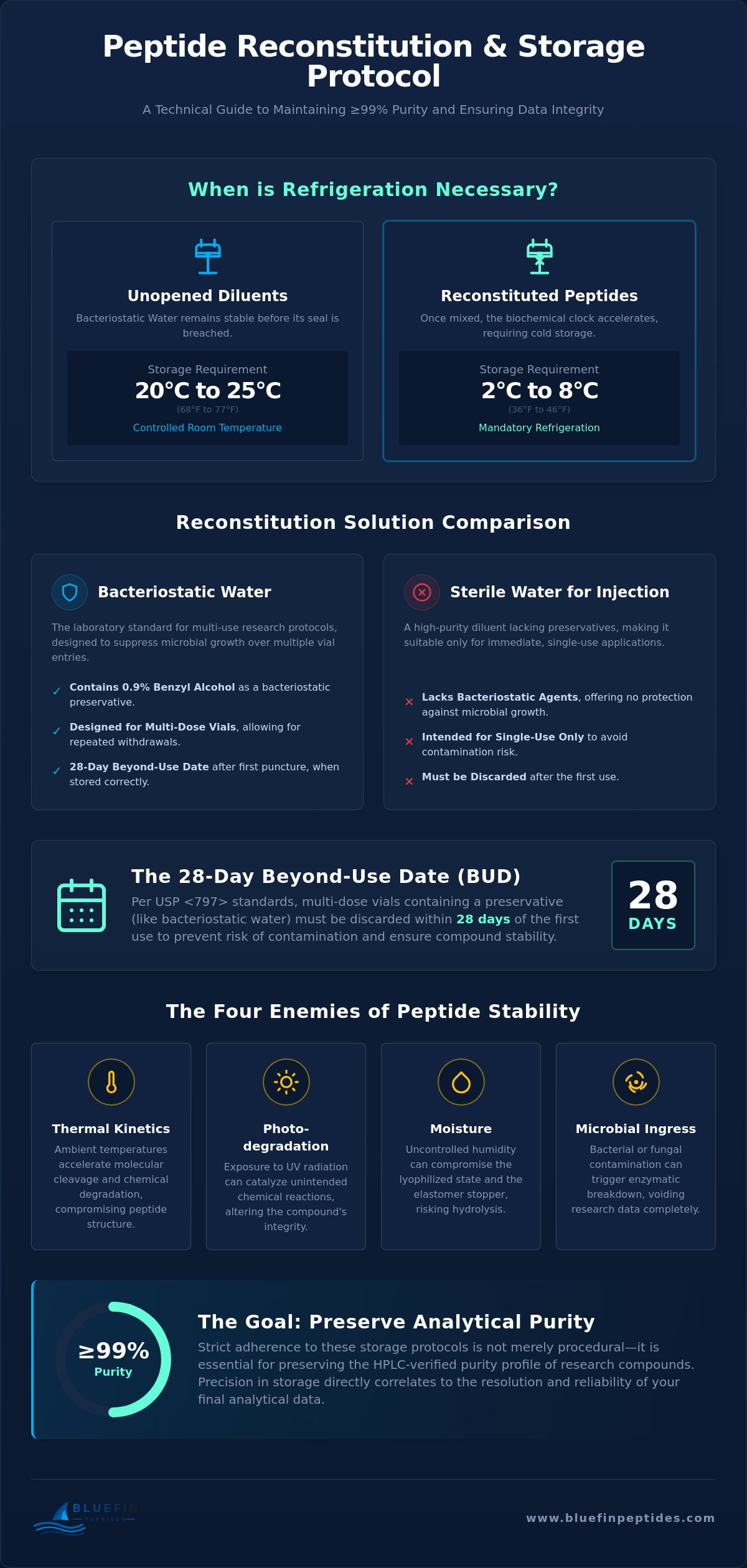
Bacteriostatic water serves as the primary medium for high-purity research compounds. It consists of sterile water supplemented with 0.9% benzyl alcohol. This additive functions as a preservative. It prevents microbial proliferation. In contrast, Sterile water for injection (SWFI) lacks any bacteriostatic agents. It's intended for single-use applications. Once the seal on an SWFI vial is breached, the risk of contamination increases with every subsequent entry. This makes it unsuitable for research protocols requiring multiple withdrawals from a single source.
The question of does reconstitution solution need to be refrigerated depends largely on the presence of these stabilizers and the current state of the compound. For lyophilized peptides, the diluent does more than just dissolve solids. It maintains the delicate pH balance required to prevent immediate hydrolysis. Bacteriostatic water is the laboratory standard for multi-withdrawal protocols. It allows for repeated vial access over a 28-day period while suppressing bacterial growth. This reliability is essential for maintaining the purity of compounds like Retatrutide, where even minor microbial presence can trigger enzymatic breakdown.
Chemical Properties of Benzyl Alcohol
Benzyl alcohol acts by disrupting the cell membranes of most gram-positive and gram-negative bacteria. This prevents the replication of contaminants introduced during the needle-entry process. At a concentration of 0.9%, it provides a reliable inhibitory environment without compromising the chemical integrity of the peptide bonds. This specific concentration is the laboratory-grade benchmark. Beyond its antimicrobial properties, benzyl alcohol can subtly influence the solubility of complex, hydrophobic peptide sequences. It ensures a clear, homogeneous solution that is free from particulates, which is vital for accurate HPLC verification.
Diluent Selection for Specific Research Peptides
Selecting the correct medium is a critical analytical decision. Most researchers prefer water-based bacteriostatic solutions for GLP-1 analogues like Retatrutide or Tirzepatide because they offer high solubility and stability. However, specific sequences or blends may require saline-based alternatives to achieve the necessary osmotic balance for the research environment. The choice of diluent directly impacts the peptide blend reconstitution calculation. Precision is non-negotiable. When evaluating if does reconstitution solution need to be refrigerated, one must first ensure the diluent is compatible with the target peptide sequence. Using the wrong volume or type of solution can lead to concentration errors that compromise the entire research data set. High-purity compounds require a medium that matches their analytical grade to ensure results remain verifiable.
Storage Requirements for Unopened Reconstitution Solutions
Precision. Stability. Verification. These are the non-negotiable requirements for successful laboratory data. Many researchers conflate the storage needs of the final peptide mixture with those of the precursor diluent. When determining does reconstitution solution need to be refrigerated, the answer depends entirely on whether the vial remains sealed. Unopened, laboratory-grade bacteriostatic water is engineered for shelf stability at controlled room temperatures.
Standard storage protocols for unopened bacteriostatic water dictate a Controlled Room Temperature (CRT) range between 20°C and 25°C (68°F to 77°F). Brief deviations are acceptable. However, sustained thermal excursions above 30°C (86°F) jeopardize the preservative concentration. High heat accelerates the degradation of benzyl alcohol. This compromises its ability to inhibit microbial growth once the vial is eventually breached. Light sensitivity is another critical variable. UV radiation can catalyze unintended chemical reactions within the solution. Amber vials or specialized dark storage cabinets provide the necessary shielding to maintain chemical longevity. Always verify the manufacturer's expiration date. These dates are calibrated based on strictly controlled environmental conditions.
Environmental Control in the Laboratory
Precision is paramount. Maintaining a stable climate prevents the subtle evaporation of benzyl alcohol through the elastomer stopper. Humidity also plays a role. Excessive moisture can compromise the integrity of the crimp seal or encourage fungal growth on the vial exterior. Inspect every vial before use. Look for specific indicators of a compromised diluent:
- Turbidity or cloudiness within the liquid.
- Discoloration or yellowing of the water.
- Particulate matter or visible sediment.
Long-term Stockpiling Protocols
Large-scale research requires robust inventory management. Implement a First-In, First-Out (FIFO) inventory rotation to ensure diluent freshness for critical longitudinal studies. Secondary containment strategies, such as plastic bins or sealed cabinets, protect against accidental breakage and temperature fluctuations. Upon procurement, verify the seal vacuum. A secure seal is the final line of defense against atmospheric contaminants. For studies requiring HPLC-verified research compounds, every component of the reconstitution process must meet the same rigorous standards of purity. The primary concern when asking does reconstitution solution need to be refrigerated is often the preservation of the bacteriostatic agent, which remains stable at room temperature until the vial is opened and the sterile environment is breached.
Mandatory Refrigeration for Reconstituted Research Peptides
Hydration initiates a precarious chemical countdown. While the previous analysis established CRT standards for unopened diluents, the introduction of a peptide solute fundamentally alters the storage requirements. When researchers ask, does reconstitution solution need to be refrigerated, they must distinguish between the inert solvent and the active compound. Once the lyophilized powder is reconstituted, the solution enters a state of heightened vulnerability. Maintaining a strict thermal range between 2°C and 8°C (36°F to 46°F) is the only way to preserve the structural integrity of the peptide chain. Ambient temperatures provide the thermal kinetic energy necessary to accelerate molecular cleavage. This process breaks the amide bonds that hold the amino acid sequence together, resulting in inactive fragments and compromised research data.
The 28-day rule serves as the definitive temporal boundary for multi-use vials. Even with the presence of 0.9% benzyl alcohol, the preservative's efficacy eventually reaches a plateau. Beyond this window, the risk of microbial ingress increases. Simultaneously, the peptide itself begins a slow, inevitable descent into degradation. Freezing reconstituted solutions is generally discouraged in professional laboratory settings. The expansion of water into ice crystals creates significant mechanical stress and shear forces. These forces can denature the peptide, permanently altering its three-dimensional conformation and rendering the HPLC-verified purity moot. Stability is found in the steady current of controlled refrigeration, not in the extremes of the freezer.
Stability Profiles of GLP-1 and GIP Analogues
Different compounds exhibit varying degrees of thermal resilience. The retatrutide research peptide is particularly sensitive to thermal excursions following its transition from a lyophilized state to a liquid solution. Comparative studies indicate that reconstituted Tirzepatide degrades at a slightly different rate than robust repair peptides like BPC-157 or TB-500 blends. However, all these compounds share a common enemy: agitation. Vibration within a refrigerated environment can lead to aggregation or precipitation. Secure your vials in a dedicated rack to prevent movement and ensure the solution remains homogeneous and analytically viable.
Monitoring Refrigeration Consistency
Precision requires specialized equipment. Domestic refrigerators are unsuitable for high-stakes research due to their frequent defrost cycles and inconsistent internal air circulation. A dedicated laboratory refrigerator provides the stability necessary for maintaining ≥99% purity. Utilize digital data loggers to track temperature fluctuations during off-hours. These devices provide a verifiable audit trail of the storage environment. If a documented thermal excursion occurs, the solution's integrity must be questioned. Protocol dictates that any reconstituted vial exposed to temperatures above 8°C for an extended duration should be discarded to avoid the loss of research data due to compromised sample stability. Reliability is built on these strict, non-negotiable boundaries.

The Four Enemies of Peptide Stability in Research
Chemical degradation is a multi-front assault. While refrigeration addresses the thermal component, three other vectors threaten the ≥99% purity of research compounds. The central inquiry of this analysis, does reconstitution solution need to be refrigerated, only solves one quadrant of the stability equation. Thermal kinetic energy is the most immediate threat. It provides the energy required for unintended chemical reactions and side-chain synthesis. Even brief exposure to ambient temperatures post-reconstitution can initiate these reactions, leading to a rapid loss of potency that is only visible through subsequent mass spectrometry.
Photo-degradation represents a silent risk. UV radiation targets specific amino acid residues, most notably Tryptophan and Tyrosine. These residues absorb light energy, triggering photo-oxidation that permanently alters the peptide's molecular signature. Oxidative stress also plays a significant role. Atmospheric exposure during the reconstitution process introduces reactive oxygen species into the vial. This often leads to the oxidation of methionine or cysteine residues. Finally, microbial contamination remains a constant danger. If storage temperatures fluctuate or sterile techniques fail, the bacteriostatic barrier provided by the 0.9% benzyl alcohol can be overwhelmed. Once proteases from bacterial growth are present, they digest the peptide sequence with absolute efficiency.
Mitigating Light Exposure
Shielding is essential. Use amber vials whenever possible. If clear vials are the only option, wrap them in aluminum foil to create a complete light block. Opaque storage containers are a requirement in high-traffic laboratory settings where overhead lighting is constant. Research indicates that fluorescent lighting emits higher UV levels than LED alternatives. This makes long-term viability harder to maintain under traditional laboratory bulbs. Anchoring your samples in a dark, temperature-controlled environment is the only way to ensure the data remains verifiable. To maintain these standards, you must secure your high-purity research compounds from a source that prioritizes batch-specific COAs.
Sterile Technique and Contamination Prevention
Sanitization is the first line of defense. Standard Operating Procedures (SOPs) must dictate the use of 70% Isopropyl Alcohol on the vial septum before every entry. Allow the alcohol to air dry completely to ensure maximum efficacy. Adopt a single-needle entry protocol to minimize the introduction of atmospheric contaminants. This preserves the bacteriostatic integrity of the solution. Visual markers of contamination, such as turbidity or visible "floaters," indicate a total failure of the sterile field. However, chemical degradation is often invisible to the naked eye. This is why the question of does reconstitution solution need to be refrigerated must always be answered with a strict adherence to 2°C to 8°C protocols once the vial is breached. Discipline in storage is the only path to disciplined results.
Best Practices for Maintaining Analytical Purity Standards
Analytical purity is not a static attribute. It is a perishable asset. Maintaining a ≥99% purity profile requires a disciplined approach to every variable in the laboratory environment. Storage is the primary determinant of long-term viability. It is a critical component of research peptide quality standards. When considering if does reconstitution solution need to be refrigerated, the researcher must prioritize the preservation of the compound's primary structure. A failure to maintain thermal boundaries results in a tide of degradation that compromises the entire analytical dataset.
The relationship between storage temperature and HPLC peak resolution is direct. High-performance liquid chromatography relies on molecular homogeneity. Thermal excursions post-reconstitution trigger hydrolysis and oxidation, creating a spectrum of impurities. These impurities manifest as "shoulders" or widened peaks on the HPLC chromatogram. This loss of resolution indicates that the compound no longer reflects its original certificate of analysis. Bluefin Peptides provides lyophilized powders engineered for maximum shelf-life, ensuring that the research begins with the highest possible baseline of stability.
Documentation serves as the navigational data for your study. Every vial must be labeled with the exact reconstitution date and the precise volume of diluent utilized. This is essential for adhering to the 28-day window for bacteriostatic solutions. If the question of does reconstitution solution need to be refrigerated is ignored, the chemical integrity of the sample will drift within hours. Labeling provides the transparency required for peer-reviewed verification. It ensures that every withdrawal from a multi-use vial is backed by a documented history of thermal stability.
Interpreting Batch-Specific COAs Post-Storage
Storage conditions can cause a significant "drift" from the original HPLC report specifications. A compound that tested at 99.4% purity upon fulfillment may drop below acceptable thresholds if exposed to light or heat. Re-verifying purity through secondary mass spectrometry is necessary when working with aged samples or after a documented temperature spike. Starting with high-purity, US-stocked research chemicals minimizes the initial risk. It provides a more robust buffer against environmental stressors during the early stages of a study.
Protocols for Sample Transport
Maintaining a cold chain between 2°C and 8°C is mandatory during any inter-laboratory transfer of reconstituted compounds. Utilize vacuum-insulated containers and specialized phase-change materials to ensure thermal stability during transit. Domestic ice packs are often insufficient for maintaining the precise currents of temperature required for delicate peptide bonds. Secure your research integrity with HPLC-verified compounds from Bluefin Peptides to ensure your data remains anchored in verifiable quality. Precision in logistics is the final safeguard for analytical success.
Securing Long-Term Analytical Integrity
Precision in storage is as critical as the initial purity of the compound. Unopened bacteriostatic water remains shelf-stable at controlled room temperatures, but the transition to a liquid solution initiates a delicate biochemical countdown. Adherence to a strict 2°C to 8°C refrigeration protocol post-reconstitution is the only way to prevent molecular cleavage and maintain the structural integrity of the peptide chain. It's essential to understand exactly when does reconstitution solution need to be refrigerated to ensure your data remains anchored in verifiable results rather than chemical drift.
By neutralizing the four enemies of stability—heat, light, oxidation, and contamination—you preserve the analytical resolution required for professional-grade research. To maintain these rigorous standards, you must start with compounds that meet uncompromising benchmarks. Procure HPLC-Verified Research Peptides at Bluefin Peptides to secure your research integrity. We provide ≥99% HPLC-verified purity and batch-specific mass-spec confirmation, supported by rapid domestic US shipping to protect your cold-chain requirements. Navigate your research with the confidence that only verified quality can provide.
Frequently Asked Questions
Does unopened bacteriostatic water need to be refrigerated for lab use?
Unopened bacteriostatic water does not require refrigeration. It should be stored at controlled room temperatures between 20°C and 25°C (68°F to 77°F). Maintaining this CRT range preserves the 0.9% benzyl alcohol concentration. Excessive heat above 30°C may compromise the preservative's efficacy. Refrigeration is only mandatory after the diluent is mixed with the peptide solute to form a reconstituted solution.
How long does a reconstituted peptide solution remain stable in the refrigerator?
Reconstituted peptide solutions typically remain stable for 28 to 30 days when stored at 2°C to 8°C. This window aligns with USP standards for multi-dose vials containing bacteriostatic preservatives. Beyond this period, the risk of microbial ingress increases and the peptide chain begins to undergo inevitable molecular cleavage. Always record the reconstitution date on the vial to ensure strict adherence to this analytical timeline.
Can I freeze a peptide after it has been mixed with reconstitution solution?
Freezing a reconstituted peptide solution is generally discouraged due to the mechanical stress of ice crystal formation. The expansion of water into ice can denature the peptide's secondary and tertiary structures. This shear force permanently alters the compound's chemical nature. While lyophilized powders are stable in the freezer, liquid solutions should remain in the 2°C to 8°C range to preserve HPLC-verified purity and structural integrity.
What happens to the research compound if it is left at room temperature for 24 hours?
Leaving a reconstituted compound at room temperature for 24 hours results in rapid molecular degradation. Ambient heat provides the thermal kinetic energy required to accelerate the breakdown of amide bonds. This hydrolysis reduces the concentration of the active compound, often resulting in a significant loss of analytical potency. If a thermal excursion occurs, the solution's integrity is compromised and the resulting research data may be void.
Is there a difference in storage requirements between bacteriostatic water and sterile water?
Yes, the primary difference lies in the presence of antimicrobial preservatives and subsequent usage limits. Bacteriostatic water contains 0.9% benzyl alcohol, which permits multiple vial entries over a 28-day period. Sterile water for injection lacks this additive and is strictly for single-use applications. When asking does reconstitution solution need to be refrigerated, remember that bacteriostatic solutions offer a wider margin of safety for multi-withdrawal research protocols.
How can I tell if my reconstitution solution has degraded or is no longer sterile?
Visual markers such as turbidity, discoloration, or visible particulate matter indicate a compromised solution. A clear, homogeneous state is the benchmark for sterile diluents. Any cloudiness or visible sediment suggests microbial proliferation or chemical precipitation. However, chemical degradation is often invisible to the naked eye. If the solution has exceeded its 28-day beyond-use date or was exposed to thermal excursions, it must be discarded.
Does light exposure affect the shelf-life of unopened reconstitution solutions?
Light exposure significantly reduces the shelf-life of unopened reconstitution solutions through photo-oxidation. UV radiation targets the chemical bonds within the diluent and its preservative. This process can degrade the benzyl alcohol or catalyze the formation of reactive oxygen species. Utilize amber vials or opaque storage cabinets to shield the solution from laboratory lighting. Shielding is a non-negotiable requirement for maintaining long-term chemical stability and verification.
Why is 2°C to 8°C the industry standard for reconstituted research peptides?
The 2°C to 8°C range is the industry standard because it minimizes thermal kinetic energy without causing mechanical damage. This specific temperature window slows the rate of hydrolysis and oxidation, which are the primary drivers of peptide degradation. It maintains the compound in a liquid state, avoiding the denaturing shear forces associated with freezing. This balance is essential for preserving the ≥99% purity profile required for verifiable and reproducible research results.
For laboratory research use only. Not for human or veterinary use. This content is educational and does not constitute medical, dosing, or usage guidance.
Browse the BLUEFIN catalog