BPC-157 and TB-500 Synergistic Effects: Analytical Research and Laboratory Applications
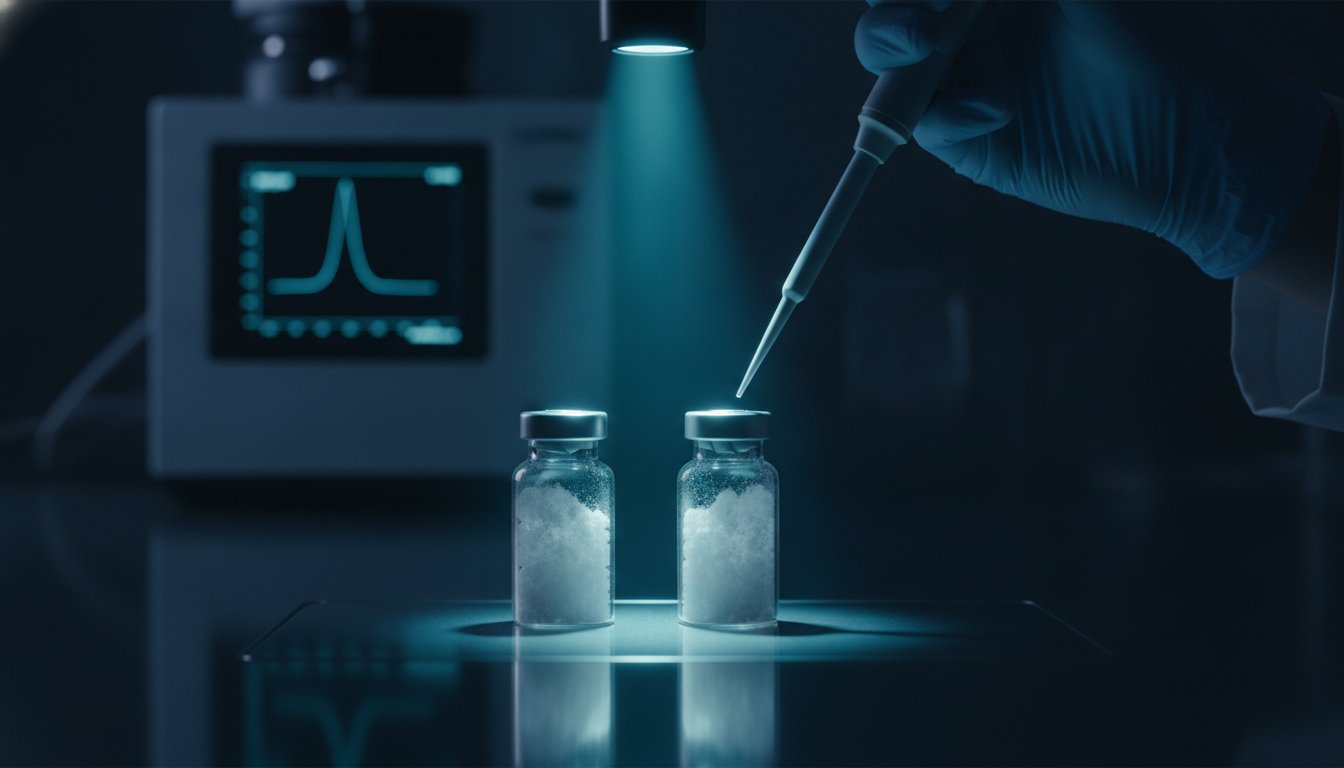
The integrity of BPC-157 and TB-500 synergistic effects research depends entirely on the analytical purity of the lyophilized compounds. Precision. Verification. These are not merely goals but absolute requirements for any disciplined laboratory protocol. Many researchers face a fragmented supply chain where overseas vendors provide inconsistent batches and absent documentation. This instability during transit can compromise the viability of a study before it even begins. You need certainty to design effective research models that yield predictable, verifiable data.
This article provides a rigorous technical breakdown of the molecular synergies between these two peptides, examining how their distinct biochemical pathways intersect to influence tissue repair and cellular signaling. We'll analyze the analytical requirements for high-purity blends and the necessity of ≥99% HPLC verification for every batch. By prioritizing maritime logistics and domestic US shipping, we ensure that cold-chain integrity remains uncompromised throughout the fulfillment process. This analysis serves as a professional guide for researchers seeking to understand the biochemical interactions of these compounds within a strictly controlled laboratory environment.
Key Takeaways
- Identify the biochemical "Scaffold and Signal" model where TB-500-driven cell migration intersects with BPC-157-mediated cytoprotection.
- Analyze how BPC-157 and TB-500 synergistic effects research relies on dual-pathway activation to achieve outcomes greater than the sum of individual components.
- Establish rigorous validation standards using ≥99% HPLC-verified purity and mass spectrometry to ensure batch-to-batch consistency.
- Optimize laboratory protocols by determining precise reconstitution requirements and baseline concentrations for in vitro research models.
- Ensure research continuity and cold-chain integrity through domestic US sourcing and aquatic-speed logistical fulfillment.
Molecular Synergy: Defining BPC-157 and TB-500 Interaction in Research
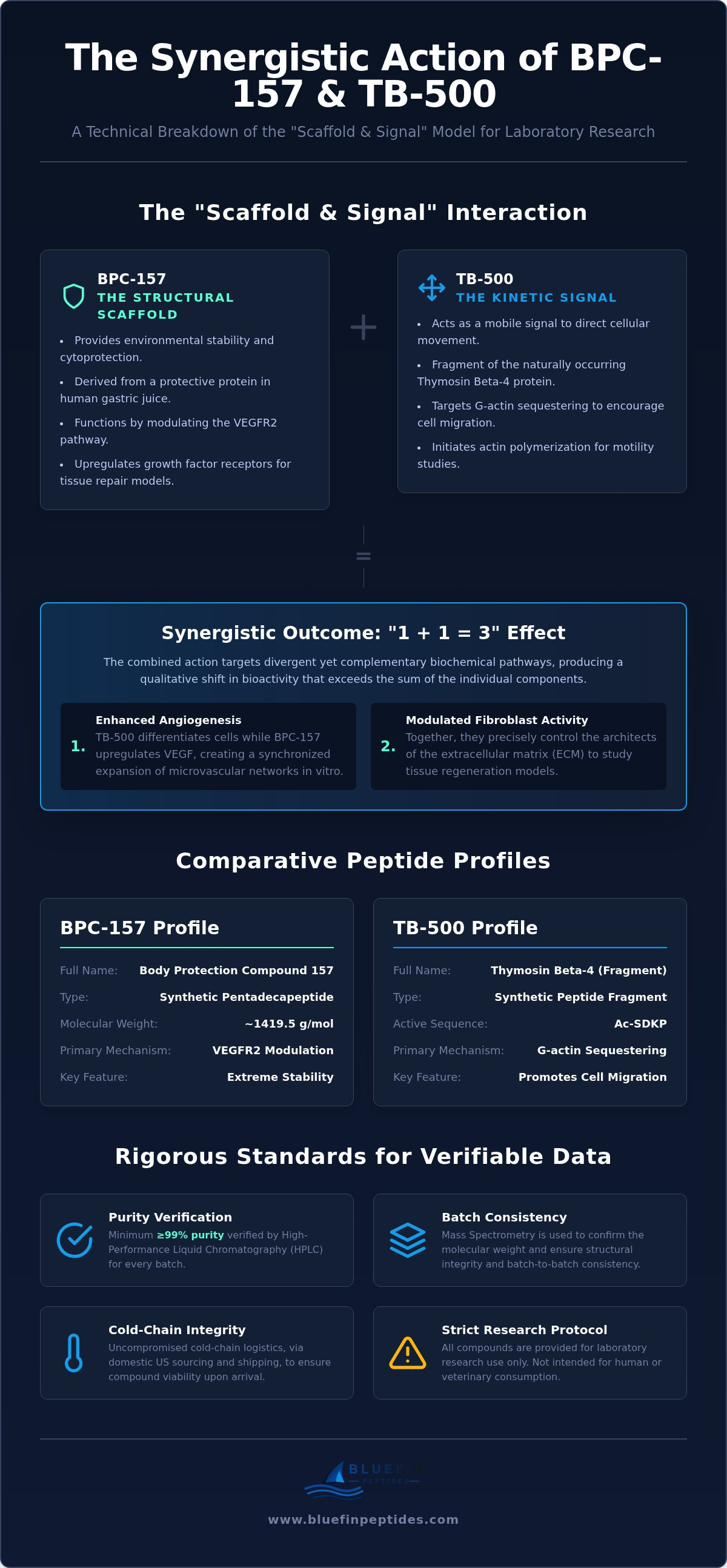
In the context of BPC-157 and TB-500 synergistic effects research, synergy describes a phenomenon where the combined influence of two distinct chemical entities exceeds the aggregate of their individual properties. It's a "1+1=3" molecular outcome. Researchers utilize this interaction to target divergent yet complementary pathways within biological models. By blending these peptides, laboratories can observe complex cellular responses that remain dormant when using isolated compounds. This interaction is not merely additive; it's a qualitative shift in bioactivity.
These compounds are distinct chemical tools. They're not supplements or medications. All data provided is for laboratory research use only. They're not for human or veterinary consumption. Bluefin Peptides maintains these strict boundaries to ensure the integrity of the scientific community.
The Biochemical Profile of BPC-157
The BPC-157 peptide is a synthetic pentadecapeptide derived from a protective protein found in human gastric juice. Its primary characteristic is extreme stability. It functions through the modulation of the VEGFR2 pathway and the activation of nitric oxide signaling. This 15-amino acid sequence, possessing a molecular weight of approximately 1419.5 g/mol, demonstrates significant resilience in gastric juice models, maintaining structural integrity where other peptides degrade. This stability makes it a unique candidate for studies involving harsh environments or complex enzymatic interactions.
The Bioactivity of TB-500 (Thymosin Beta-4)
TB-500 is a synthetic fragment of the naturally occurring Thymosin Beta-4 protein. It specifically targets the G-actin sequestering mechanism. This encourages cellular migration and actin polymerization. By focusing on the Ac-SDKP sequence, TB-500 promotes angiogenesis models more effectively than full-length proteins. The fragment's smaller molecular size allows for improved diffusion and localized interaction in research environments. It acts as a mobile signal, directing cellular movement toward areas of simulated injury in vitro.
Blending these entities creates a dual-pathway approach. TB-500 initiates cellular movement and facilitates the migration of progenitor cells. BPC-157 provides environmental stability and cytoprotection through the upregulation of growth factor receptors. This simultaneous activation is the core rationale behind BPC-157 / TB-500 Research Blends. Navigating the complexities of cellular signaling requires tools that move with fluid precision. Such blends allow for the study of complex regenerative processes that a single peptide cannot replicate in isolation. The result is a more robust data set for advanced study design.
Mechanistic Analysis: How BPC-157 and TB-500 Synergize
The "Scaffold and Signal" model defines the interaction between these two compounds. TB-500 acts as the kinetic signal. It drives cellular migration through G-actin sequestering. BPC-157 functions as the structural scaffold. It stabilizes the cellular environment and enhances cytoprotective responses. This dual-pathway activation is central to BPC-157 and TB-500 synergistic effects research. While TB-500 initiates movement, BPC-157 ensures the extracellular matrix (ECM) can sustain that movement. Together, they modulate fibroblast activity with high precision. Fibroblasts are the primary architects of the ECM. Their modulation is essential for observing tissue-like regeneration in vitro. This interaction influences the fundamental rate and quality of ECM synthesis in laboratory models.
Angiogenesis and Vascular Endothelial Growth Factor (VEGF)
Angiogenesis requires both a trigger and a support system. TB-500 accelerates the differentiation of endothelial cells. This biochemical shift is critical for tube formation in vitro. Simultaneously, BPC-157 upregulates Vascular Endothelial Growth Factor (VEGF) expression. The WADA analysis of TB-500 metabolites provides insight into the peptide's metabolism and detection in biological systems. In combined simulations, researchers observe a distinct increase in microvascular density. It's a synchronized expansion of the vascular network. This dual activation provides a more comprehensive model for studying vascular development than single-peptide applications.
Upregulation of Growth Factor Receptors
Synergy extends to the upregulation of growth factor receptors. Combined applications show a measurable increase in Growth Hormone (GH) receptor expression on fibroblasts. This sensitizes cells to endogenous signals. The JAK2-STAT3 signaling pathway serves as the primary conduit for these effects. This pathway's activation directly influences the structural integrity of the ECM. Researchers often track the ratio of collagen type I to type III. A balanced ratio indicates a more organized and resilient structural matrix. The data suggests that the blend facilitates a more efficient maturation of collagen fibers during the study period.
Expanding the study design often involves adding more variables to the experimental matrix. The GHK-Cu BPC-157 TB-500 research blend offers a three-pronged approach to molecular study. It adds copper-peptide signaling to the existing synergistic framework. This allows for deeper investigation into copper-dependent enzymatic processes and antioxidant responses. For laboratories requiring high-resolution data, choosing HPLC-verified research blends ensures that the molecular ratios remain constant across all test groups. Precision in sourcing is the only way to guarantee precision in results, maintaining the deep-sea integrity of your research environment.
Analytical Specifications: Verifying Purity and Stability
Analytical integrity is the cornerstone of reproducible science. In BPC-157 and TB-500 synergistic effects research, even infinitesimal levels of impurity can introduce confounding variables that compromise the entire data set. Purity isn't a luxury; it's a baseline requirement. The Bluefin Standard mandates a minimum of ≥99% purity for all research blends, a benchmark achieved through rigorous High-Performance Liquid Chromatography (HPLC). This process separates the mixture into its individual components, allowing for the precise quantification of each peptide within the synergistic matrix. Mass Spectrometry then validates the molecular identity by confirming the exact molecular weight of both BPC-157 and TB-500. We provide batch-specific Certificates of Analysis (COAs) to ensure that every researcher has a verifiable record of the compound's profile. Adhering to these strict research peptide quality standards is the only way to guarantee the success and validity of a technical study.
Interpreting HPLC and Mass-Spec Reports
Reading a chromatogram requires an eye for maritime precision. The primary peak must be sharp and isolated, representing the high-purity concentration of the target molecule. In a synergistic blend, the HPLC report should display two distinct peaks with minimal baseline fluctuations or "noise." These fluctuations often indicate the presence of truncated peptide sequences, residual solvents, or salts from the synthesis process. Lower-grade samples from unreliable vendors frequently show multiple smaller peaks, which represent degraded fragments that can interfere with cellular signaling in your models. Mass-Spec reports complement this by providing a high-resolution snapshot of the molecular signature, measuring the mass-to-charge ratio with absolute accuracy. It's a disciplined approach to verification that treats the researcher as a peer in a high-stakes environment.
Lyophilization and Chemical Stability
Lyophilization is the primary defense against chemical degradation. By removing moisture through a controlled sublimation process, we preserve the peptide's primary amino acid sequence and secondary structure. This freeze-drying method ensures that the BPC-157 / TB-500 blend remains chemically inert while vacuum-sealed in its vial. Once the vacuum seal is established, the compound is protected from atmospheric oxygen and moisture, which are the primary drivers of peptide breakdown. For maximum longevity, the vials should be stored at -20°C, though short-term stability is maintained during rapid domestic transit from our US-based inventory. Understanding the Regulatory Status of BPC-157 is also critical for maintaining institutional compliance and ensuring all laboratory work meets the necessary legal standards for unapproved research compounds. Proper storage and handling are the final steps in maintaining the deep-sea integrity of your analytical materials.
Laboratory Protocols: Designing Synergistic Research Models
Establishing a rigid framework for BPC-157 and TB-500 synergistic effects research requires absolute control over baseline concentrations. Inconsistent dosing across experimental groups introduces noise that can obscure subtle molecular interactions. Researchers must calibrate concentrations based on the specific biological model, whether utilizing in vitro cell cultures or in vivo rodent simulations. Precision in the early stages of study design ensures that the observed data reflects true biochemical synergy rather than logistical variance. Longitudinal studies depend on this consistency to track regenerative biomarkers over extended periods.
Reconstitution and Solution Stability
The transition from lyophilized powder to a bioactive solution is a delicate procedure. It's the point where molecular integrity is most vulnerable. First, allow the vial to reach room temperature to prevent condensation. When adding a diluent, researchers must choose between bacteriostatic water and sterile saline. Bacteriostatic water is standard for multi-use preservation; however, sterile saline is often preferred for sensitive in vitro assays to avoid the potential cytotoxic effects of benzyl alcohol. Introduce the liquid slowly down the interior wall of the vial. Do not shake the vial. Agitation can shear the peptide bonds and degrade the compound. Use a gentle swirling motion until the solution is clear.
Once reconstituted, the blend is highly sensitive to thermal fluctuations. Maintain the solution at a constant temperature between 2°C and 8°C. Stability is also a function of pH. Peptides typically demonstrate optimal solubility and bioactivity at a near-neutral pH of 7.0 to 7.5. Deviations from this range can lead to peptide precipitation or accelerated hydrolysis, which compromises the data. Proper handling ensures that the "maritime precision" of the synthesis remains intact until the moment of application.
Comparative Research Designs
Robust study design necessitates multiple control and test groups to isolate the synergistic effect. A standard matrix includes a vehicle-only control, a BPC-157 isolated group, a TB-500 isolated group, and the synergistic blend group. Outcomes are measured through histological analysis, specifically focusing on H&E staining to visualize tissue morphology. Biomarkers such as VEGF and collagen ratios provide the quantitative data needed to validate the mechanistic theories discussed in previous sections. For laboratories expanding into metabolic modeling, the Retatrutide research peptide offers a distinct comparative tool for studying energy homeostasis alongside regenerative pathways. To maintain the highest fidelity in your longitudinal results, you should procure HPLC-verified research blends that meet the Bluefin Standard for analytical purity.
Procurement and Logistics: Sourcing High-Purity Blends
The successful execution of BPC-157 and TB-500 synergistic effects research relies on a stable, domestic supply chain. Procuring materials from overseas vendors introduces unnecessary variables that can compromise analytical integrity. International transit often exposes sensitive lyophilized compounds to unpredictable temperature fluctuations and customs delays. These factors can lead to peptide degradation before the vial even reaches the laboratory bench. Maintaining research continuity requires a logistics partner that prioritizes speed and cold-chain integrity through US-based inventory. Bluefin Peptides operates with aquatic-speed logistics, providing fast-strike fulfillment to ensure that the chemical state of every blend remains pristine during domestic transit.
Domestic Fulfillment vs. International Sourcing
International sourcing carries significant risks for time-sensitive projects. Customs inspections often involve non-climate-controlled environments where vials may sit for days or weeks. These temperature spikes can destabilize the primary structure of the peptides. Domestic shipping bypasses these bottlenecks. We utilize secure, vacuum-sealed packaging to protect every vial from atmospheric moisture and oxygen. This ensures the maritime precision of the synthesis is preserved from the moment it leaves our facility. US-stocked inventory allows for rapid deployment, enabling researchers to maintain strict experimental timelines without the threat of supply chain disruptions. It's a disciplined approach to fulfillment that treats logistics as an extension of the laboratory environment itself.
The Bluefin Guarantee: Transparency and Verification
Professional researchers require more than just a product; they need a verifiable chain of custody. Batch-level documentation is non-negotiable for high-stakes study designs. We provide direct access to batch COAs for our entire inventory, including the tirzepatide research peptide and other catalog offerings. This transparency allows for the immediate verification of purity and molecular identity. We offer direct support for qualified researchers who require deeper insight into analytical specifications or batch-specific data. This level of verification ensures that your study is built on a foundation of certainty. Navigate your research with precision; procure your BPC-157 / TB-500 Research Blend today to secure the analytical tools required for advanced laboratory simulations.
Advancing Analytical Precision in Peptide Synergy
The intersection of TB-500 driven cellular migration and BPC-157 mediated cytoprotection offers a robust framework for complex regenerative study. Achieving reliable results requires moving beyond surface-level observations and into the deep-sea integrity of high-resolution analytical data. Every study design must prioritize chemical stability and molecular weight verification to ensure that findings are both reproducible and scientifically sound. It's the only way to maintain the rigorous standards of a professional laboratory environment.
The future of BPC-157 and TB-500 synergistic effects research depends on strict adherence to these established protocols. Using compounds with ≥99% HPLC-verified purity eliminates the confounding variables introduced by synthesis impurities and degraded fragments. This precision allows you to focus on the biochemical signaling rather than questioning the viability of your materials. Secure the tools your protocol requires through a partner committed to clinical transparency and maritime precision.
You can Procure HPLC-Verified BPC-157 / TB-500 Research Blends with confidence, knowing that batch-specific COAs are included with every order. Our US-stocked inventory ensures rapid fulfillment, maintaining the momentum your laboratory demands. Navigate your next study with absolute certainty.
Frequently Asked Questions
What is the primary synergistic mechanism between BPC-157 and TB-500?
The primary mechanism is the dual-pathway activation of cellular migration and environmental stabilization. TB-500 drives the migration of progenitor cells via G-actin sequestering, while BPC-157 upregulates growth factor receptors and stabilizes the extracellular matrix. This interaction is the core of BPC-157 and TB-500 synergistic effects research. It creates a "Scaffold and Signal" model that allows laboratories to observe regenerative outcomes that exceed the capabilities of either peptide when studied in isolation.
Is the BPC-157 and TB-500 blend stable for long-term storage?
Lyophilized blends remain stable for extended periods when stored in a vacuum-sealed environment. For long-term preservation, vials should be maintained at -20°C to prevent peptide degradation and preserve the primary amino acid sequence. Once reconstituted, the solution's stability decreases significantly, requiring refrigeration between 2°C and 8°C. Researchers must use the reconstituted blend within a specific window, typically 14 to 28 days, depending on the diluent used and the storage conditions.
How do I interpret an HPLC report for a peptide blend?
An HPLC report provides a visual and quantitative map of a compound's purity. For a BPC-157 / TB-500 blend, the chromatogram should display two distinct, sharp peaks corresponding to each peptide's retention time. The area under these peaks determines the purity percentage. A clean report shows minimal baseline noise, indicating the absence of truncated sequences or residual solvents. Professional researchers prioritize reports that demonstrate the maritime precision of the synthesis through high-resolution data.
Can these peptides be used for human clinical trials?
These compounds are strictly for laboratory research use and aren't intended for human clinical trials or any form of human consumption. Bluefin Peptides doesn't sell human-grade pharmaceuticals or medical-grade substances. All products in our catalog are designed for in vitro and in vivo research models within a controlled laboratory setting. Adhering to these strict boundaries ensures that the integrity of the research environment is maintained and that all work complies with institutional standards.
What is the purity standard for Bluefin Peptides research blends?
Bluefin Peptides maintains a rigorous purity standard of ≥99% as verified by High-Performance Liquid Chromatography (HPLC). We also utilize mass spectrometry to confirm the precise molecular weight of every batch, ensuring that the chemical identity of the BPC-157 and TB-500 synergistic effects research materials is absolute. Every order includes a batch-specific Certificate of Analysis (COA). This documentation provides the verifiable data necessary for researchers to achieve reproducible results in advanced study designs.
Why is domestic US shipping important for research peptides?
Domestic US shipping is critical for maintaining the cold-chain integrity of sensitive research peptides. International sourcing often involves customs delays and exposure to extreme temperature fluctuations that can destabilize the lyophilized structure. By stocking inventory within the United States, Bluefin Peptides ensures fast-strike fulfillment and rapid transit times. This logistical efficiency minimizes environmental stress on the vials, preserving the analytical integrity of the peptides from the point of synthesis to the laboratory.
What is the correct reconstitution protocol for a lyophilized blend?
Reconstitution begins by allowing the lyophilized vial to reach room temperature. Introduce a diluent, such as bacteriostatic water or sterile saline, slowly down the interior wall of the vial to avoid direct impact on the powder. Don't shake or agitate the vial, as mechanical stress can shear the peptide bonds. Instead, use a gentle swirling motion until the solution is clear. Proper reconstitution is essential for preserving the molecular structure and ensuring consistent solubility across all test groups.
Are BPC-157 and TB-500 legally available for laboratory research in the USA?
BPC-157 and TB-500 are legally available in the United States for laboratory research purposes only. They're classified as "Research Use Only" compounds and aren't approved for human or veterinary use. While the FDA's Pharmacy Compounding Advisory Committee voted in July 2026 to recommend their addition to the 503A Bulk Drug Substances list for compounding pharmacies, this doesn't change their status as primary tools for independent laboratory and biochemical research within the scientific community.
For laboratory research use only. Not for human or veterinary use. This content is educational and does not constitute medical, dosing, or usage guidance.
Browse the BLUEFIN catalog