Troubleshooting Failed Peptide Experiments: A Systematic Analytical Approach
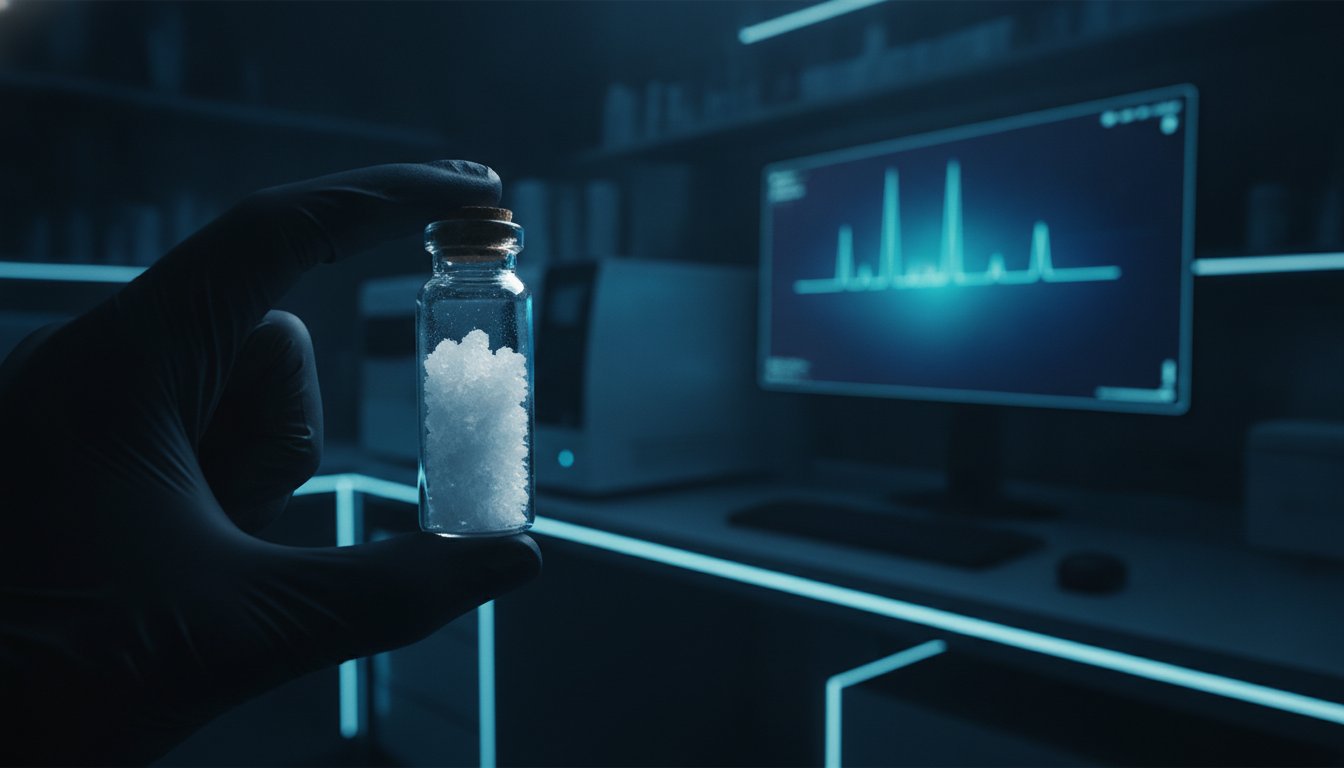
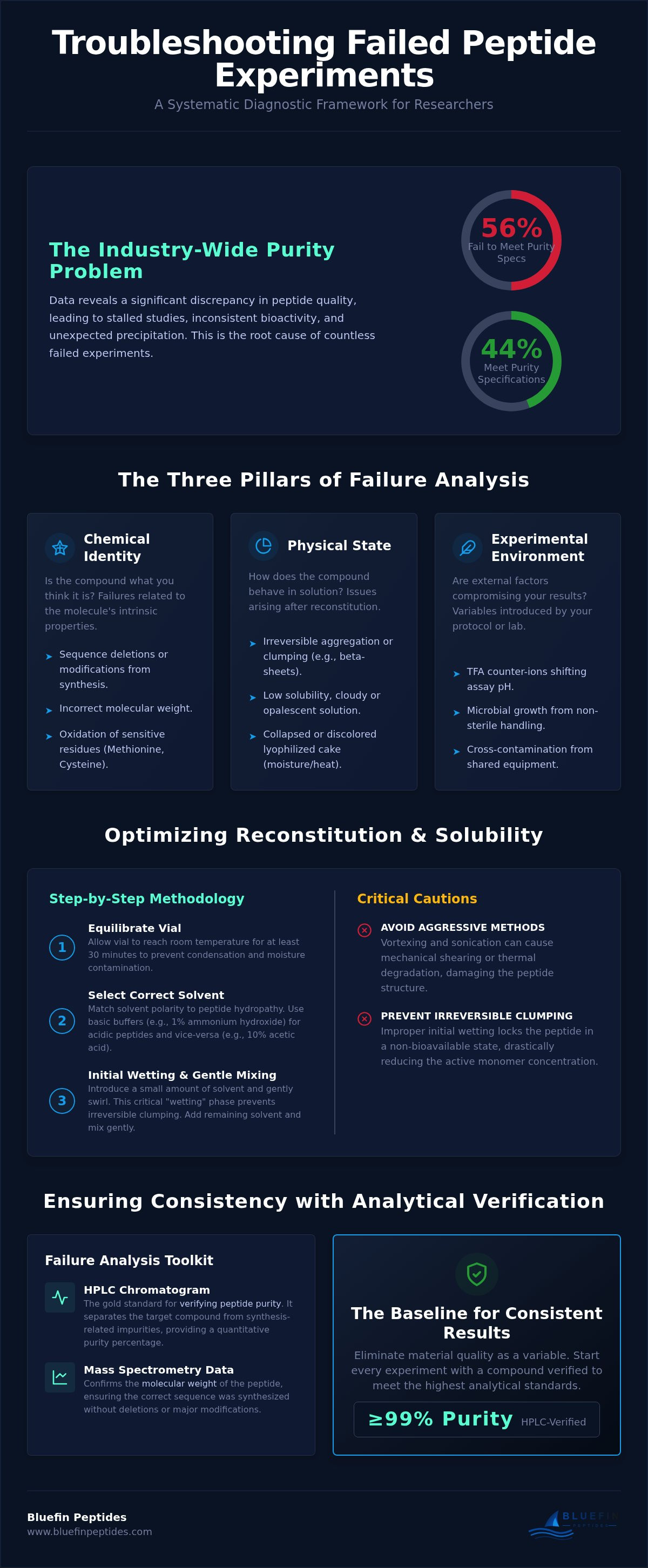
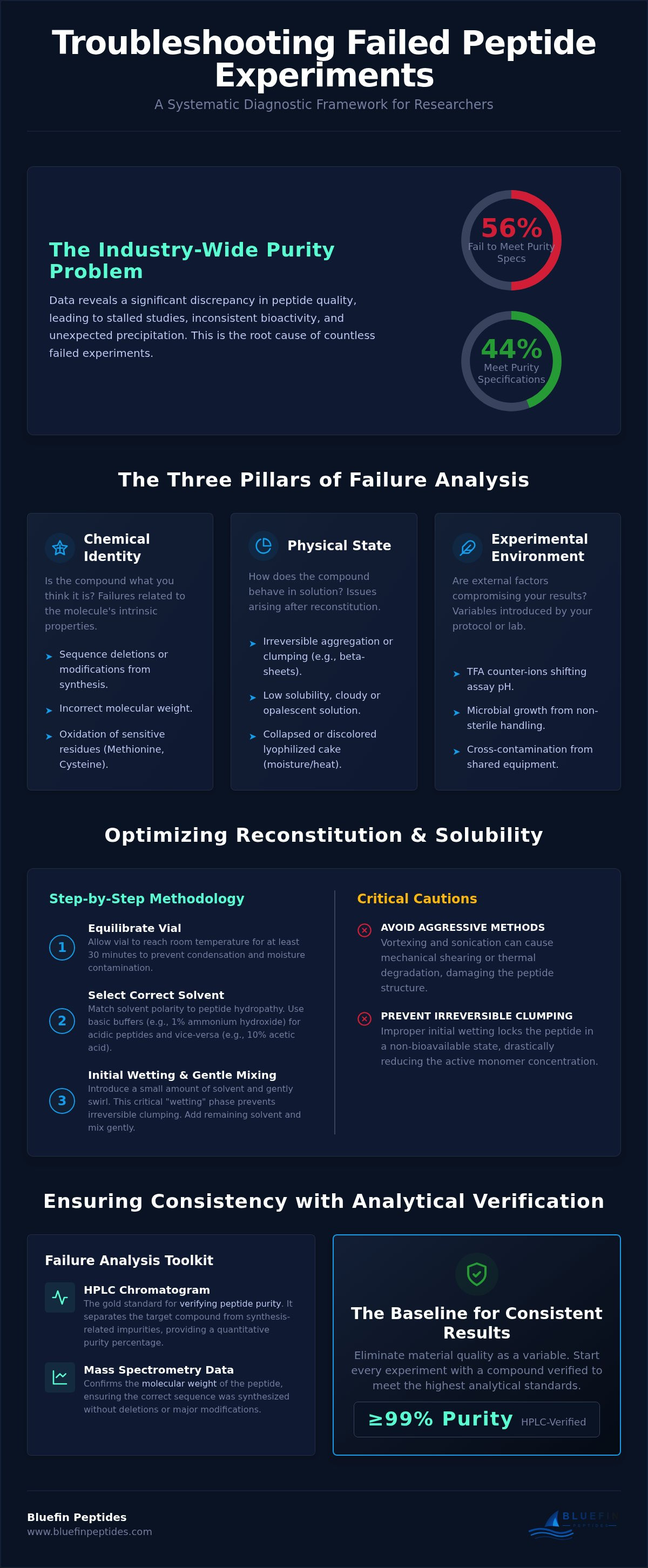
Data indicates that only 44% of tested peptides across the industry meet their documented purity specifications. This discrepancy often surfaces as inconsistent bioactivity or unexpected precipitation during reconstitution, leaving researchers to confront a sea of uncertainty. When a study stalls, troubleshooting failed peptide experiments requires more than trial and error; it demands a disciplined, analytical deep dive into chemical stability and handling protocols. Precision is the only viable anchor.
You understand that laboratory success depends on the absolute verification of your research compounds. This article provides a systematic diagnostic framework to isolate experimental variables and rectify the factors leading to compromised results. We'll detail methods for improved recovery of lyophilized powders and establish protocols to ensure your materials meet the highest analytical standards. By the end, you'll possess the tools to transform volatile experimental outcomes into consistent, verifiable data. It's time to eliminate the "bad batch" excuse and secure your results with clinical certainty.
Key Takeaways
- Categorize failures using the Three Pillars framework, Chemical Identity, Physical State, and Experimental Environment, to pinpoint precisely where an assay diverged from expected results.
- Master the methodology for troubleshooting failed peptide experiments by optimizing solvent polarity and managing the critical initial wetting phase to prevent irreversible sample clumping.
- Identify the primary pathways of chemical failure, such as the oxidation of Methionine and Cysteine residues; implement thermodynamic storage protocols to mitigate long-term degradation.
- Interpret HPLC chromatograms and Mass Spectrometry data to confirm molecular weight and detect sequence deletions within your research samples.
- Establish a baseline of experimental consistency by utilizing HPLC-verified compounds with ≥99% purity, effectively removing material quality as a potential failure variable.
Identifying the Root Causes of Peptide Assay Failure
Peptide assay failure is a systemic divergence from expected laboratory parameters. It manifests in two primary forms: bioactivity loss and physical degradation. Bioactivity loss occurs when the primary sequence remains intact, yet the compound fails to elicit a functional response. Physical degradation involves the actual breakdown of the peptide backbone or side chains. These failures aren't always immediate; they can develop during storage or upon the first introduction of a solvent. Precision in identifying these deviations is the only viable anchor for your research.
Effective troubleshooting failed peptide experiments requires a rigid diagnostic framework. We categorize these variables into the "Three Pillars" of failure analysis: Chemical Identity, Physical State, and the Experimental Environment. Distinguishing between a sequence that is inherently "difficult" and one compromised by external contaminants is the first step toward resolution. Initial diagnostics begin with visual inspection. A collapsed or discolored lyophilized cake often signals moisture infiltration or thermal stress. Upon reconstitution, an opalescent or cloudy solution indicates the presence of large aggregates rather than a true monomeric state.
Biological and Chemical Contamination
External variables often mask the true performance of a research compound. Trifluoroacetic acid (TFA) counter-ions, a standard byproduct of synthesis, can significantly shift the pH of your final assay. This acidity often results in false negatives by compromising cellular viability or altering enzyme kinetics. Additionally, non-sterile reconstitution environments introduce microbial growth that can enzymatically cleave the peptide overnight. When troubleshooting failed peptide experiments, cross-contamination in multi-peptide environments remains a silent threat to data integrity. It's necessary to maintain strict adherence to isolated handling protocols and the use of dedicated equipment for each batch.
Sequence-Specific Aggregation
The primary sequence determines the physical behavior of the compound in solution. For example, the retatrutide research peptide contains hydrophobic domains that increase the risk of intermolecular aggregation. These hydrophobic interactions often lead to the formation of secondary structures, such as beta-sheets, which physically mask active binding sites. High peptide concentrations in aqueous media accelerate this rate of aggregation, effectively removing the active compound from the available pool. Verification through High-performance liquid chromatography is essential to determine if the perceived failure is a result of purity or physical state. Precision in these early diagnostic steps prevents the loss of expensive reagents and laboratory time.
Optimizing Reconstitution and Solubility Protocols
Reconstitution represents a critical phase transition where many research protocols falter. It's more than a simple dilution; it's a delicate molecular unfolding that determines the stability and availability of the compound. Troubleshooting failed peptide experiments often reveals that the initial "wetting" phase was mishandled, leading to the formation of irreversible clumps. These aggregates effectively lock the peptide in a non-bioavailable state, reducing the concentration of the active monomer and introducing noise into your data. Precision at this stage is the only way to anchor your results.
Effective dissolution requires matching the solvent polarity to the peptide's hydropathy index. Researchers must navigate the isoelectric point of the sequence to select the correct buffer. Acidic peptides often require a basic environment, such as 1% ammonium hydroxide, while basic sequences may necessitate 10% acetic acid for complete solubility. While sonication and vortexing can accelerate the process, they carry a significant risk of mechanical shearing or thermal degradation. Use these methods with caution. For high-stakes laboratory work, sourcing HPLC-verified research compounds ensures that solubility challenges are sequence-inherent rather than a result of synthesis impurities.
Step-by-Step Reconstitution Methodology
Begin by equilibrating the vial to room temperature for at least 30 minutes. This prevents condensation from forming inside the vial, which can trigger immediate hydrolysis of the lyophilized powder. Add the solvent slowly along the interior vial wall to maintain the integrity of the cake; avoid dropping the liquid directly onto the powder. Use gentle swirling movements to achieve a homogenous distribution without causing aeration or foaming. The optimal temperature for reconstitution is approximately 20-25°C to facilitate dissolution while minimizing kinetic degradation.
Overcoming Insolubility in Blends
Complex mixtures, such as the GHK-Cu BPC-157 TB-500 research blend, present unique challenges because the individual components may have conflicting solubility profiles. A sequential dissolution strategy is often the most effective approach. Dissolve the most hydrophobic component first using a sterile-filtered organic co-solvent like DMSO before slowly introducing the aqueous buffer. This method prevents the sudden precipitation of sensitive sequences when they encounter a shift in solvent polarity. Maintaining this level of control over the fluid environment is essential for preserving the analytical integrity of the research blend.
Mitigating Chemical Degradation: Storage and Handling Variables
Peptides exist in a state of suspended reactivity when lyophilized; however, this stability is fragile. Troubleshooting failed peptide experiments frequently leads back to the mismanagement of storage variables, where thermal or atmospheric exposure has compromised the compound's integrity. The thermodynamic profile shifts dramatically upon reconstitution. In a solid state, the peptide is anchored against most degradative pathways. Once in solution, it enters a volatile environment where kinetic energy facilitates chemical failure. Stability is not a constant; it's a variable that must be actively preserved.
Primary pathways of failure include the oxidation of Methionine and Cysteine residues. Atmospheric oxygen or trace peroxides in solvents can convert these into sulfoxides or disulfides, altering the molecular weight and binding affinity. Deamidation of Asparagine and Glutamine-rich sequences also presents a significant risk, particularly in alkaline environments. These isobaric modifications are often subtle, yet they can render a high-purity research compound biologically inert. Repetitive freeze-thaw cycles further degrade the buoyancy of research data. Each cycle introduces mechanical stress and localized concentration gradients during the phase transition, encouraging the formation of insoluble aggregates.
Long-term Storage Protocols
Optimal environmental regulation is the primary defense against degradation. Vials must be stored in a desiccated environment at temperatures between -20°C and -80°C to minimize molecular motion. Light shielding is equally critical; many sequences are susceptible to photo-oxidation. Aliquotting the peptide into single-use volumes is the only reliable method to prevent repetitive thermal stress. Every time a vial is opened, it's exposed to moisture ingress and atmospheric contaminants, which can catalyze the very failures you're attempting to avoid. When troubleshooting failed peptide experiments, monitoring vial seals for integrity is a necessary laboratory standard.
Handling Reconstituted Peptides
The "half-life" of bioactivity in aqueous solution is significantly shorter than in a lyophilized state, particularly for complex molecules like GLP-1 analogues. Post-reconstitution, chemical stability depends heavily on pH buffering. Maintaining the solution within a specific range prevents deamidation and preserves the intended secondary structure. Bacteriostatic agents, such as 0.9% benzyl alcohol, play a role in preventing enzymatic degradation caused by microbial growth in non-sterile environments. However, researchers must verify that these additives don't interfere with the specific assay parameters. Precision in handling ensures that the variables remain isolated and the results remain verifiable.
Utilizing HPLC and Mass Spectrometry for Failure Analysis
Troubleshooting failed peptide experiments requires a shift from procedural review to analytical verification. High-performance liquid chromatography (HPLC) serves as the primary tool for isolating these variables. By interpreting the chromatogram, researchers can detect impurities that interfere with binding assays. Mass Spectrometry (MS) complements this by confirming the exact molecular weight. It identifies deletion sequences where an amino acid failed to couple during synthesis. A mass-spec deviation exceeding 1 Dalton from the theoretical mass indicates a potential synthesis error or significant post-processing degradation.
Analytical reports require careful navigation. You must distinguish between "Purity" and "Peptide Content." Purity indicates the ratio of the target peptide to other peptide-based impurities. Conversely, Peptide Content accounts for the total mass including counter-ions and residual moisture. A sample with ≥99% purity can still have a peptide content of 75-80%. This distinction is critical for concentration accuracy. Failing to adjust your dosage based on this content leads to under-concentration in your assays, a common root cause of bioactivity failure. Precision in these calculations is the only way to anchor your results.
Diagnostic Peak Analysis
HPLC chromatograms provide a visual roadmap of chemical health. "Shoulder peaks" or broadening of the main peak typically indicate oxidation or partial degradation products that share similar hydrophobicity with the target. Significant retention time shifts suggest chemical modifications, such as deamidation, which alter the interaction with the stationary phase. These analytical signatures are essential when troubleshooting failed peptide experiments to verify if a compound has maintained its integrity through storage and handling. Analyzing the area under the curve for these secondary peaks provides a quantitative measure of degradation that mass spectrometry alone might miss if the mass shift is negligible.
Verifying Quality Standards
Anchoring your research in research peptide quality standards eliminates "supply-side" variables. Cross-referencing batch-specific COAs with experimental failures allows you to determine if the noise is internal to your lab environment or external. For sensitive models, maintaining a 99% purity threshold is non-negotiable. Lower purity levels introduce unknown variables that can mask subtle biological responses. To ensure your laboratory results are backed by verifiable data, you should always source HPLC-verified research peptides that include mass-spec confirmation for every batch.
Ensuring Experimental Consistency with Verified Research Compounds
Consistency is the bedrock of laboratory verification. When troubleshooting failed peptide experiments, the most critical variable is the chemical integrity of the starting material. Anchoring your methodology in high-purity, HPLC-verified compounds reduces experimental noise and isolates the compound as a reliable constant. Bluefin Peptides provides a baseline of security by delivering ≥99% purity across all offerings, substantiated by batch-specific Certificates of Analysis (COAs) and mass-spectrometry confirmation. This transparency eliminates the "bad batch" variable, allowing researchers to focus exclusively on their experimental parameters rather than questioning the source material.
Streamlining laboratory logistics is equally vital for maintaining the buoyancy of your research data. US-stocked inventory prevents the degradation risks associated with extended international transit times, where temperature fluctuations can compromise sensitive sequences. A disciplined procurement process ensures that every vial arriving at your facility meets the same rigorous analytical standards. To conclude your diagnostic process, follow this final checklist for every new batch: verify that the COA matches the vial lot number, perform a visual inspection of the lyophilized cake, and document the exact reconstitution parameters used. This level of meticulousness transforms volatile experiments into reproducible science.
The Bluefin Advantage in Failure Prevention
Eliminating supply-side uncertainty is the first step in any systematic analytical approach. Utilizing a mass-spec confirmed tirzepatide research peptide ensures that the molecular weight and sequence identity are exactly as specified. Rapid US shipping protocols further protect these compounds from thermal stress during delivery, preserving the secondary structure before it ever reaches your bench. Researchers gain full access to technical documentation for every vial, providing the data necessary to troubleshoot complex interactions within their specific models. This commitment to transparency acts as a safeguard against the most common causes of assay failure.
Standardizing Reconstitution for Consistency
Implementing a laboratory-wide SOP for peptide handling is essential for long-term data integrity. These protocols should be based on Bluefin specifications to ensure that every researcher handles the material with the same clinical precision. High-purity standards significantly impact the reproducibility of multi-peptide blend studies, where even minor impurities in one component can catalyze degradation in another. Disciplined procurement and standardized handling ensure long-term experimental buoyancy. By removing the compound as a variable, you secure the "what" of your results through the "how" of your processes. This systematic approach is the only way to achieve unwavering professional standards in peptide research.
Securing Experimental Buoyancy through Analytical Rigor
Mastery over the fluid environment of the laboratory requires a transition from reactive observation to proactive verification. You've established that troubleshooting failed peptide experiments begins with isolating chemical identity from handling variables. By standardizing reconstitution protocols and utilizing mass-spec data to confirm molecular weights, you remove the ambiguity that often compromises research data. Precision is your only anchor.
A systematic approach ensures that every variable is accounted for, from the initial wetting phase to the final data acquisition. By eliminating supply-side uncertainty, you protect the integrity of your biological models and the future of your research. It's time to replace trial and error with clinical certainty and documented proof.
To ensure your results remain verifiable, you must anchor your studies in materials that meet the highest laboratory standards. Procure HPLC-Verified Research Peptides for Your Laboratory to access compounds with ≥99% purity, batch-specific COAs, and fast US-based shipping. With the right diagnostic framework and high-purity inputs, you can transform volatile experimental outcomes into a legacy of consistent, reliable data.
Frequently Asked Questions
Why is my peptide not dissolving in bacteriostatic water?
Solubility is dictated by the specific amino acid sequence and the net charge at a given pH. If your compound is highly hydrophobic, bacteriostatic water alone may be insufficient to overcome intermolecular forces. Troubleshooting failed peptide experiments often involves adjusting the pH with dilute acetic acid or ammonium hydroxide to move the solution away from the peptide’s isoelectric point. If the pH remains near this point, the peptide won't ionize and will remain insoluble.
Can I use sonication to help my research peptide dissolve faster?
Sonication is a viable method for accelerating dissolution, but it must be applied with extreme caution. High-intensity ultrasonic waves can cause mechanical shearing of the peptide backbone or localized heating that leads to thermal degradation. It's best to use short bursts of low-frequency sonication in an ice bath to maintain the chemical integrity of the compound. Always prioritize gentle swirling before resorting to mechanical aids to ensure the buoyancy of your experimental data.
How do I know if my peptide has degraded during shipping?
Visual indicators of transit-related degradation include a collapsed, discolored, or "melted" lyophilized cake, which suggests moisture ingress or thermal stress. However, chemical integrity cannot be fully verified by sight alone. Researchers should utilize HPLC analysis to detect the presence of oxidation or hydrolysis products that may have formed during transit. Bluefin Peptides mitigates this risk by utilizing US-based inventory and rapid fulfillment to minimize environmental exposure during the shipping process.
What should I look for in an HPLC report when troubleshooting?
When troubleshooting failed peptide experiments, examine the HPLC chromatogram for "shoulder peaks" or significant baseline noise. These features indicate the presence of truncated sequences or degradation products that co-elute with the target. Verify that the main peak matches the expected retention time documented in the batch-specific Certificate of Analysis. Any deviation in peak symmetry or the emergence of unexpected peaks suggests that the research compound doesn't meet the ≥99% purity threshold.
Why does my peptide solution look cloudy after reconstitution?
A cloudy or opalescent appearance indicates that the peptide has formed large, insoluble aggregates rather than a true monomeric solution. This typically occurs when the solvent is added too rapidly or when the solution pH is too close to the peptide's isoelectric point. These aggregates are biologically inert and will result in inconsistent bioactivity across batches. To rectify this, slowly adjust the pH or introduce a sterile-filtered co-solvent like DMSO to facilitate complete dissolution.
How long can a reconstituted peptide be stored at 4°C?
Reconstituted peptides are chemically volatile and should ideally be used immediately. While some sequences remain stable at 4°C for 7 to 14 days, the rate of deamidation and oxidation increases significantly in an aqueous state. For long-term preservation, aliquot the solution and store at -20°C or -80°C to prevent repetitive freeze-thaw cycles. Always refer to the specific stability profile of the compound, as GLP-1 analogues and complex blends may degrade faster than simpler sequences.
Does the presence of TFA counter-ions affect my research results?
Trifluoroacetic acid (TFA) is a standard counter-ion used during HPLC purification. Its presence can significantly lower the pH of your final reconstitution, potentially interfering with pH-sensitive assays or compromising cellular viability in vitro. For experiments where even trace acidity might shift the results, researchers should account for the TFA content or utilize TFA-removal protocols. Verification of the counter-ion concentration is essential for maintaining the analytical precision required in high-stakes laboratory environments.
What is the difference between peptide purity and peptide content?
Peptide purity refers to the percentage of the target sequence relative to other peptide-based impurities, usually verified at ≥99% via HPLC. Peptide content, however, represents the actual mass of the peptide in the lyophilized powder, excluding residual water and counter-ions like TFA. A vial may have 99% purity but only 80% peptide content. Failing to distinguish between these two values leads to inaccurate dosing and compromised results in quantitative research models.
For laboratory research use only. Not for human or veterinary use. This content is educational and does not constitute medical, dosing, or usage guidance.
Browse the BLUEFIN catalog