KPV, GHK-Cu, BPC-157, and TB-500: A Comprehensive Research Overview
The integrity of a multi-peptide sequence is only as reliable as the analytical data backing its synthesis. For investigators, the primary challenge isn't just identifying the right compounds but ensuring that KPV GHK-Cu BPC-157 TB-500 research is conducted with materials that meet a strict ≥99% purity threshold. We recognize the frustration of inconsistent results that stem from a lack of verifiable Mass-Spec documentation or unstable formulations that degrade before they reach the bench. This analytical exploration provides a disciplined dive into the biochemical mechanisms and synergistic potential of these four key research peptides within controlled laboratory models.
You'll gain a technical understanding of the individual pathways for KPV, GHK-Cu, BPC-157, and TB-500, moving beyond marketing fluff toward a peer-level examination of cellular repair. We also establish a rigorous baseline for laboratory storage and reconstitution to preserve molecular stability. By the end of this overview, you'll be equipped to identify a reliable, USA-based source for high-purity research chemicals, ensuring your data maintains the deep-sea precision required for reproducible results.
Key Takeaways
- Define the molecular architecture of each compound, identifying KPV as a specific C-terminal fragment of alpha-MSH with distinct anti-inflammatory properties.
- Examine the biochemical pathways involved in cellular repair, such as BPC-157’s role in VEGF upregulation and GHK-Cu’s impact on glycosaminoglycan synthesis.
- Evaluate the synergistic potential of multi-peptide blends to determine how additive effects may enhance KPV GHK-Cu BPC-157 TB-500 research regarding ligamentous modeling.
- Master the standards of analytical verification by utilizing HPLC and Mass Spectrometry documentation to confirm the identity and ≥99% purity of laboratory samples.
- Streamline research logistics through the use of USA-stocked, pre-formulated blends that prioritize molecular stability and rapid fulfillment.
Biochemical Profiles: KPV, GHK-Cu, BPC-157, and TB-500 in Laboratory Models
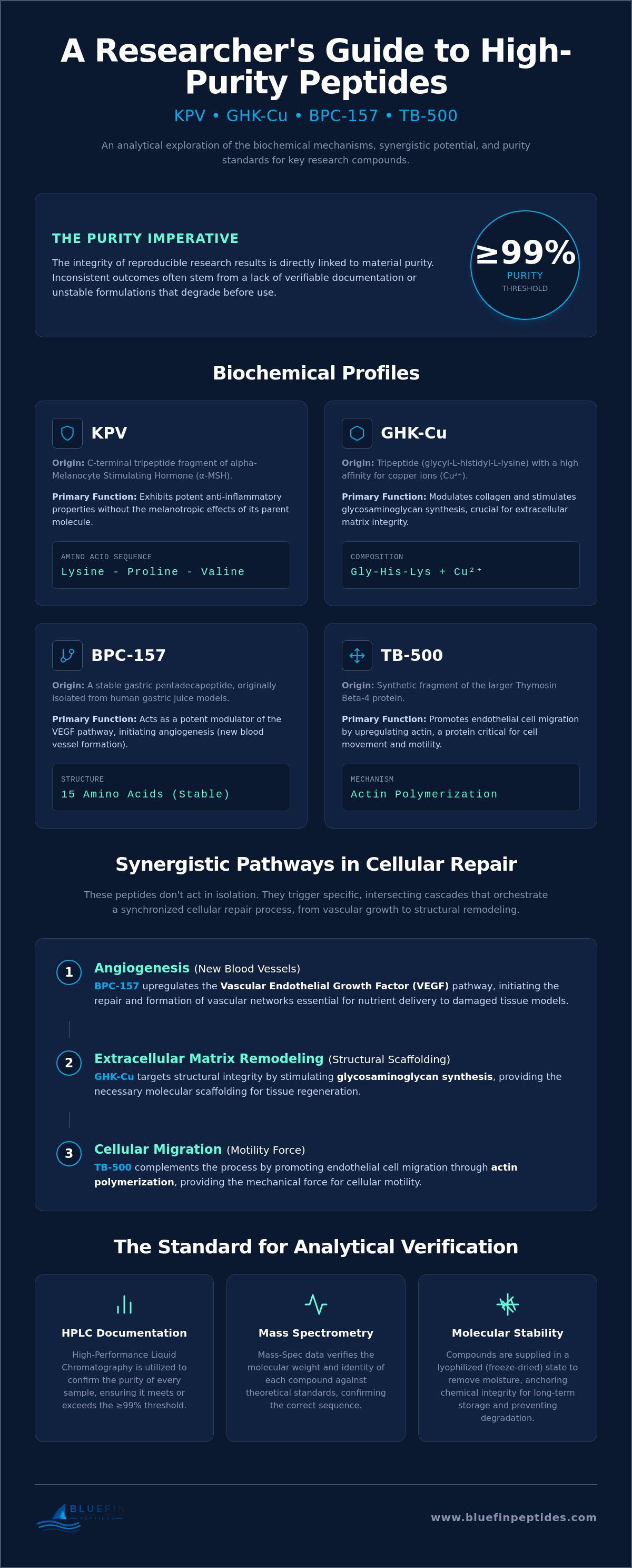
Laboratory precision begins with the molecular definition. KPV GHK-Cu BPC-157 TB-500 research demands a granular understanding of how these sequences interact with biological substrates. These compounds aren't interchangeable; they're distinct chemical entities with specific stoichiometric requirements. KPV, for instance, is the C-terminal tripeptide fragment of alpha-Melanocyte Stimulating Hormone (α-MSH). It maintains the potent anti-inflammatory properties of its parent molecule while lacking the melanotropic effects. GHK-Cu is a tripeptide (glycyl-L-histidyl-L-lysine) defined by its exceptional affinity for copper ions (Cu2+). This complex is essential for its role in modulating collagen synthesis. BPC-157, a stable gastric pentadecapeptide, and TB-500, a synthetic fragment of Thymosin Beta-4, serve as the primary benchmarks for tissue modeling and cellular migration research.
Chemical Composition and Molecular Weights
Amino acid sequences dictate functionality. KPV consists of Lysine-Proline-Valine. GHK-Cu links Glycine, Histidine, and Lysine to a copper center. BPC-157 features 15 amino acids in a sequence that remains stable even in acidic environments. TB-500 mimics the active domain of the larger Thymosin Beta-4 protein. Stability is paramount. We provide these compounds in a lyophilized state, a process that removes moisture to anchor the chemical integrity of the peptide during long-term storage. Without this freeze-dried precision, molecular degradation occurs rapidly. The copper complex in GHK-Cu is particularly sensitive; the stoichiometry must be exact to ensure the bioactivity of the tripeptide remains intact. Every batch is anchored by rigorous documentation to verify these molecular weights against theoretical standards.
Historical Context in Peptide Research
The evolution of these compounds reflects a shift toward targeted molecular study. BPC-157 was originally isolated from human gastric juice models. Researchers observed its unique resilience and regenerative influence within the gastrointestinal tract. TB-500 emerged through cellular migration studies, specifically focusing on its ability to upregulate actin, a protein critical for cell movement. KPV followed a different trajectory. It transitioned from broad endocrine research into specific inflammation modeling. This shift allowed investigators to isolate the anti-inflammatory signaling pathways without the systemic hormonal interference of full-length α-MSH. These historical milestones highlight the transition from general observation to the deep-sea precision of modern biochemical analysis.
Mechanistic Intersections: Cellular Repair and Anti-Inflammatory Pathways
Understanding the molecular structure is merely the precursor to analyzing the functional intersections of these compounds. In KPV GHK-Cu BPC-157 TB-500 research, the focus shifts to how these sequences orchestrate cellular signaling. They don't simply "heal"; they trigger specific cascades that reorganize the cellular environment. These pathways are highly specific, requiring a disciplined look at how each peptide interacts with its respective biological target to drive tissue modeling.
Angiogenesis and Extracellular Matrix Remodeling
BPC-157 acts as a potent modulator of the Vascular Endothelial Growth Factor (VEGF) pathway. This upregulation is essential for initiating the repair of damaged vascular networks. Angiogenesis is the formation of new blood vessels from pre-existing ones, critical for tissue repair models. While BPC-157 focuses on vascularity, GHK-Cu targets the structural integrity of the extracellular matrix. Extensive GHK-Cu peptide research demonstrates its capacity to stimulate glycosaminoglycan synthesis, providing the necessary scaffolding for tissue regeneration. TB-500 complements this by promoting endothelial cell migration through actin polymerization. This process involves the assembly of actin filaments, which provides the mechanical force required for cellular motility. These peptides converge on fibroblast activation, ensuring that the structural and vascular components of the matrix are synchronized during the repair phase.
Modulating the Inflammatory Microenvironment
KPV operates through a highly targeted interaction with the Melanocortin 1 Receptor (MC1R). Unlike broad-spectrum agents, KPV modulates inflammatory cytokines by inhibiting the NF-kappaB signaling pathway. This inhibition prevents the translocation of pro-inflammatory transcription factors into the nucleus, effectively quieting the cellular response at the source. When studied collectively, these peptides demonstrate a sophisticated ability to influence TNF-alpha and IL-6 levels in vitro. Traditional compounds often utilize a blunt-force approach that can disrupt systemic homeostasis. In contrast, peptide signaling offers a level of precision that mirrors the body's endogenous regulatory systems. This precision is why many laboratories prioritize high-purity research blends for their modeling. By reducing the noise of non-specific inflammation, researchers can observe the direct effects of their experimental variables with greater clarity and reliability.
Synergistic Potential of Multi-Peptide Blends in Molecular Biology
Synergy in molecular biology isn't merely additive; it's often catalytic. While individual peptides target specific receptors, multi-peptide blends allow for concurrent modulation of several biological stages. In KPV GHK-Cu BPC-157 TB-500 research, the objective is to create a comprehensive model where vascularization, structural remodeling, and inflammatory suppression happen in tandem. This synchronized approach mirrors the complexity of endogenous tissue modeling more accurately than single-compound studies, providing a more robust framework for laboratory analysis.
The Rationale for the Four-Peptide Research Blend
GHK-Cu provides the essential copper-dependent signals for glycosaminoglycan synthesis, effectively building the collagen scaffolding. BPC-157 then organizes this matrix by modulating the expression of early growth response genes. Research into GHK peptide cellular pathways suggests that this tripeptide acts as a foundational signal for connective tissue regeneration. When KPV is introduced, it stabilizes the inflammatory microenvironment. This stability is vital for TB-500 to drive actin-mediated cellular migration without the interference of excessive oxidative stress. Using a pre-formulated blend reduces the margin of error in multi-compound studies, where individual reconstitution variables can often skew data.
Potential Research Applications: From Dermatology to Orthopedics
The applications for this four-peptide model span from dermatology to orthopedics. In vitro studies on dermal fibroblast proliferation demonstrate how GHK-Cu and KPV work together to enhance extracellular matrix production while minimizing cytokine noise. Similarly, musculoskeletal models utilize BPC-157 and TB-500 to study ligamentous modeling and the acceleration of tendon repair in laboratory subjects. While this specific blend focuses on tissue modeling, other compounds like the retatrutide research peptide provide high-purity options for metabolic and endocrine research. This diversity in research tools allows for a more nuanced exploration of cellular biology.
Chemical stability remains a critical concern for investigators. The KPV / GHK-Cu / BPC-157 / TB-500 Research Blend is engineered for maximum stability in its lyophilized state. We ensure that the molecular integrity of each component is maintained through precise stoichiometric balancing. This disciplined approach to formulation ensures that researchers achieve a higher degree of reproducibility across different laboratory batches, anchoring their findings in verifiable data rather than speculative outcomes. Every vial is a testament to the "show, don't tell" philosophy of quality control.

Analytical Verification: Ensuring HPLC Purity for Multi-Component Blends
Data integrity in the laboratory is anchored in analytical verification. High-Performance Liquid Chromatography (HPLC) is the non-negotiable standard for determining the purity of research chemicals by separating the components of a mixture based on their chemical properties. While single-compound testing is standard, KPV GHK-Cu BPC-157 TB-500 research requires a more sophisticated approach. Separating four distinct peptide sequences within a single chromatogram demands high resolution to ensure each component meets the required ≥99% purity threshold. Mass Spectrometry (MS) acts as the secondary lock, confirming the molecular identity of each peptide by measuring its mass-to-charge ratio against theoretical values. Without these dual layers of verification, laboratory findings risk being skewed by truncated sequences, residual synthesis solvents, or cross-contamination. High-purity standards are the only way to ensure that the biological response observed in an assay is caused by the peptides themselves rather than unknown impurities.
Interpreting Certificates of Analysis (COAs)
A COA is a formal document that provides the analytical results for a specific batch of chemical compound. Researchers don't settle for generic data; they require batch-level precision. When reading an HPLC chromatogram, you must identify potential impurities or degradation products that appear as secondary peaks or baseline noise. A clean report should show sharp, well-defined peaks for KPV, GHK-Cu, BPC-157, and TB-500. This level of transparency is essential for maintaining the high-stakes accuracy of your work. You can verify our current batch standards by reviewing the HPLC-verified research catalog, which provides the documentation necessary for academic and professional rigor.
Storage and Reconstitution Protocols for Researchers
Maintaining chemical integrity extends beyond the synthesis lab to the researcher's facility. Lyophilized vials should be stored at -20°C for short-term use or -80°C for long-term stability. It's vital to maintain these conditions to prevent sequence fragmentation. Light and moisture are the primary catalysts for the degradation of GHK-Cu complexes, making opaque storage and desiccants vital. During reconstitution, researchers should use bacteriostatic water or sterile saline, adding the diluent slowly along the side of the vial. Avoid mechanical degradation. Gentle swirling is preferred over vigorous shaking, as high-shear forces can break the delicate peptide bonds in longer sequences like BPC-157 or TB-500. Following these strict protocols ensures that your KPV GHK-Cu BPC-157 TB-500 research remains anchored in reproducible science.
Procuring Research-Grade Peptide Blends: The Bluefin Peptides Standard
Bluefin Peptides operates as a disciplined logistics specialist and laboratory partner. We recognize that the success of KPV GHK-Cu BPC-157 TB-500 research is contingent upon the reliability of the supply chain. Inconsistent purity levels between batches can compromise months of laboratory work. To mitigate this risk, we maintain a strict standard of clinical precision. Our USA-stocked inventory allows for rapid fulfillment, ensuring that your research materials arrive with their chemical integrity intact. This "urgent precision" is the cornerstone of our operations. We don't just supply chemicals; we provide the analytical tools necessary for professional verification.
The KPV / GHK-Cu / BPC-157 / TB-500 Research Blend stands as the pinnacle of our current offerings. It's a high-performance tool for cellular study, engineered for researchers who demand more than generic data. Every vial is subject to a rigorous "Research Use Only" policy. This ensures full compliance with laboratory standards and legal boundaries, maintaining the professional register required in a scientific environment. We don't sell marketing fluff. We sell verified data.
Commitment to Academic and Professional Researchers
Transparency is our primary directive. We provide batch-specific Mass-Spec confirmation and HPLC documentation for every compound in our catalog. This "show, don't tell" philosophy ensures that you aren't forced to rely on blind trust. Navigating the logistical complexities of peptide distribution requires maritime-level precision. Our fulfillment processes are anchored in speed and accuracy, moving with the fluid movement of a deep-sea operation while maintaining the discipline of a high-performance laboratory. We invite you to explore our full catalog of HPLC-verified compounds to see how our standards align with your research requirements.
Ensuring Secure and Verified Procurement
Security is paramount when procuring research chemicals. Ordering from a USA-based entity specializing in high-purity synthesis provides a level of stoic reliability that international gray-market vendors can't match. By centralizing our operations within the United States, we ensure that every batch is handled with the care required for sensitive biochemical sequences. This localized approach reduces transit times and environmental exposure, protecting the molecular stability of the GHK-Cu complexes and other sensitive peptides. Secure your KPV / GHK-Cu / BPC-157 / TB-500 Research Blend today and anchor your laboratory results in verifiable quality.
Anchoring Your Laboratory Findings in Verifiable Data
Advancing KPV GHK-Cu BPC-157 TB-500 research requires more than theoretical knowledge; it demands the highest tier of analytical verification. We've examined how these compounds orchestrate cellular signaling through specific pathways like VEGF upregulation and glycosaminoglycan synthesis. The stability of these sequences is contingent upon strict adherence to lyophilized storage and precise reconstitution protocols. Achieving reproducible results is only possible when your starting materials meet a disciplined standard of purity.
Bluefin Peptides provides the infrastructure for this rigorous study. We deliver ≥99% HPLC-verified purity and include batch-specific COAs to ensure your laboratory findings remain anchored in objective truth. With USA-stocked inventory and rapid fulfillment, we act as a high-performance partner in your scientific endeavors. Order HPLC-Verified Research Peptides to secure the tools necessary for your next phase of molecular analysis. Your commitment to rigorous methodology deserves materials that match your own standard of excellence.
Frequently Asked Questions
What is the primary function of KPV in research models?
KPV acts as a potent anti-inflammatory modulator by interacting with the MC1R receptor to suppress pro-inflammatory cytokines. It targets pathways such as TNF-alpha without the systemic hormonal effects of its parent molecule, alpha-MSH. In research models, investigators use KPV to isolate specific inflammatory signals within the cellular microenvironment. This targeted approach provides the precision necessary for modeling complex immune responses without the noise of hormonal interference.
How does GHK-Cu influence collagen remodeling in vitro?
GHK-Cu influences collagen remodeling by stimulating glycosaminoglycan synthesis and facilitating copper-dependent signaling pathways. It acts as a catalytic agent for extracellular matrix integrity. This tripeptide modulates the balance between matrix metalloproteinases and their tissue inhibitors. In laboratory settings, this ensures a structured and organized approach to tissue modeling. This mechanism is foundational for studies focusing on dermal and connective tissue regeneration and the restoration of structural substrates.
Why are BPC-157 and TB-500 often studied together in tissue repair?
BPC-157 and TB-500 are studied together because they target complementary stages of the repair cascade. BPC-157 facilitates angiogenesis through VEGF upregulation, while TB-500 promotes cellular motility via actin polymerization. This combination allows investigators to observe the simultaneous development of vascular networks and migrating cellular populations in complex repair models. Combining these sequences provides a more comprehensive overview of how tissue systems reorganize after a controlled injury stimulus.
Can multi-peptide blends be verified with a single HPLC report?
A high-resolution HPLC report can verify a multi-peptide blend by displaying distinct peaks for each separate sequence. Each compound has a unique retention time based on its specific hydrophobicity and molecular structure. KPV GHK-Cu BPC-157 TB-500 research relies on these chromatograms to ensure that each peptide is present in the correct ratio. This analytical verification confirms that the blend meets the specified purity thresholds across all four components simultaneously.
What is the shelf life of a lyophilized KPV / GHK-Cu / BPC-157 / TB-500 blend?
Lyophilized blends typically maintain chemical stability for up to 24 months when stored at -20°C. For long-term preservation, storage at -80°C can extend this shelf life beyond five years. It's critical to avoid repeated freeze-thaw cycles and light exposure, as these factors can lead to the fragmentation of the sequences. Maintaining these strict storage temperatures ensures that the molecular integrity remains anchored for future laboratory analysis.
Is bacteriostatic water suitable for the reconstitution of these research peptides?
Bacteriostatic water is suitable for the reconstitution of these research peptides, particularly in multi-dose laboratory environments. The 0.9% benzyl alcohol serves as a preservative to inhibit bacterial growth during the research window. Investigators should introduce the diluent slowly along the vial wall to prevent mechanical degradation of the sequences. This careful handling maintains the molecular integrity of the peptide bonds during the transition from lyophilized powder to solution.
How do I interpret the mass-spec confirmation for a multi-peptide vial?
Mass-spec confirmation for a multi-peptide vial is interpreted by identifying the characteristic mass-to-charge (m/z) ratio for each compound. The report should show clear signals corresponding to the theoretical molecular weights of KPV, GHK-Cu, BPC-157, and TB-500. This verification confirms the identity of each sequence and ensures no truncated fragments are present in the batch. It's a vital tool for researchers who require absolute certainty regarding their chemical inputs.
Why is ≥99% purity critical for peptide research?
Purity of ≥99% is critical to minimize experimental noise and ensure that biological observations are directly attributable to the peptides. Lower purity levels introduce unknown impurities that can cause non-specific cellular reactions or toxicity. High-purity standards provide the deep-sea precision required for reproducible data and professional academic publication. Using materials below this threshold risks compromising the integrity of the entire study and producing skewed, non-verifiable results.
For laboratory research use only. Not for human or veterinary use. This content is educational and does not constitute medical, dosing, or usage guidance.
Browse the BLUEFIN catalog