Ipamorelin Research Applications: An Analytical Guide to Growth Hormone Secretagogues (2026)
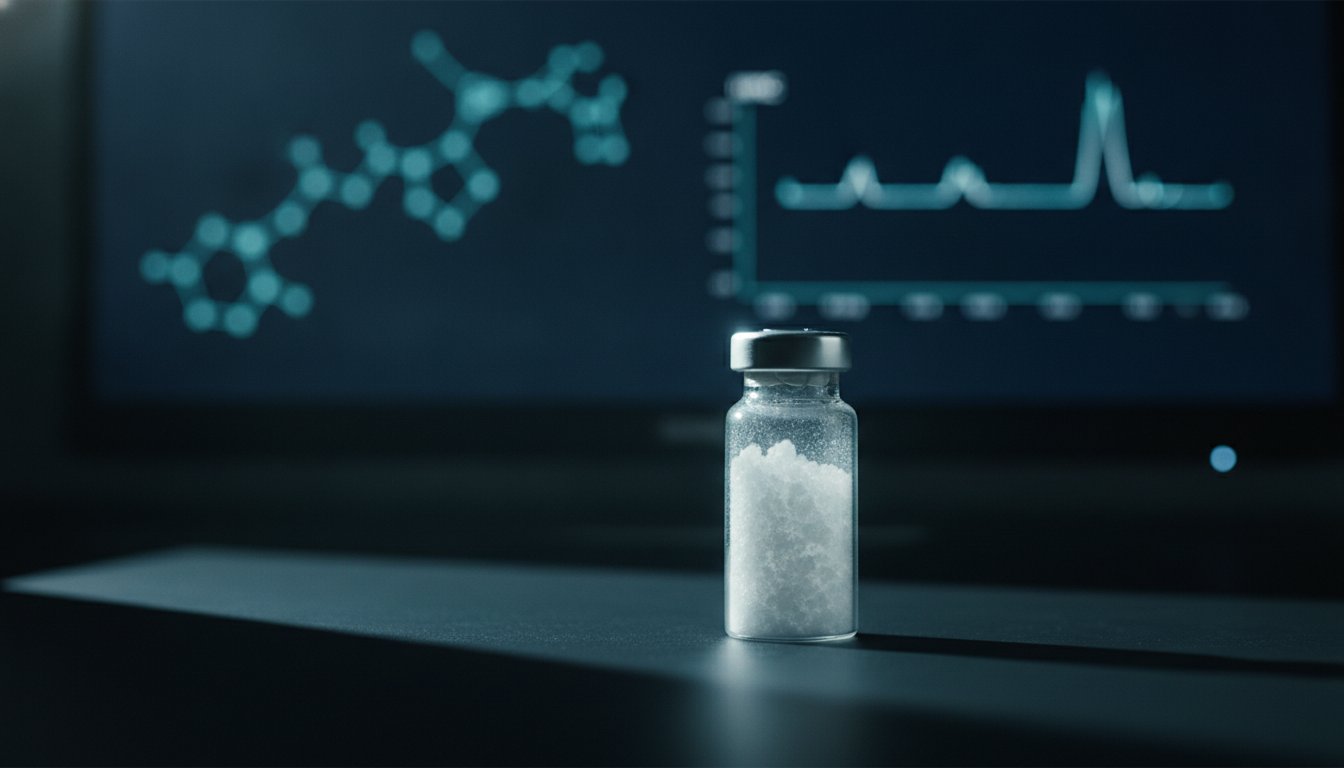
Selectivity defines the utility of a research reagent. While earlier generations of growth hormone secretagogues frequently induced confounding elevations in cortisol and ACTH, Ipamorelin maintains a disciplined focus on the GHSR-1a receptor. It's the most selective agent in its class. For investigators, this means cleaner data sets and more predictable physiological modeling. Understanding Ipamorelin research applications requires a firm grasp of this biochemical precision; it's about isolating the signal from the noise.
You require reagents that arrive with the same fluid velocity as a bluefin navigating deep-sea currents. Unreliable purity and missing documentation shouldn't hinder your timeline. This analytical guide delivers a technical overview of Ipamorelin's properties, including its synergistic potential with CJC-1295 to amplify GH release by up to five times. We'll explore the molecular architecture of this pentapeptide, identify high-impact research opportunities, and establish the handling standards required to preserve a ≥99% HPLC-verified state. From batch-specific COAs to domestic logistical speed, the focus remains on verification and clinical-grade accuracy.
Key Takeaways
- Identify the biochemical mechanism that allows Ipamorelin to target the GHSR-1a receptor with high selectivity, avoiding the confounding cortisol and ACTH elevations common in earlier secretagogues.
- Analyze how the specific D-isomer amino acid sequence in the pentapeptide chain provides superior resistance to enzymatic degradation, ensuring stability during laboratory assays.
- Evaluate the primary Ipamorelin research applications for investigating longitudinal bone growth and growth hormone-mediated lipolysis in contemporary animal models.
- Leverage the dual-action synergy of the Ipamorelin / CJC-1295 Research Blend to model amplified physiological responses through simultaneous GHRH and GHRP signaling pathways.
- Establish rigorous laboratory handling and reconstitution protocols using ≥99% HPLC-verified reagents to maintain chemical integrity and data precision throughout your study.
Mechanism of Action: Ipamorelin and the Ghrelin Receptor (GHSR-1a)
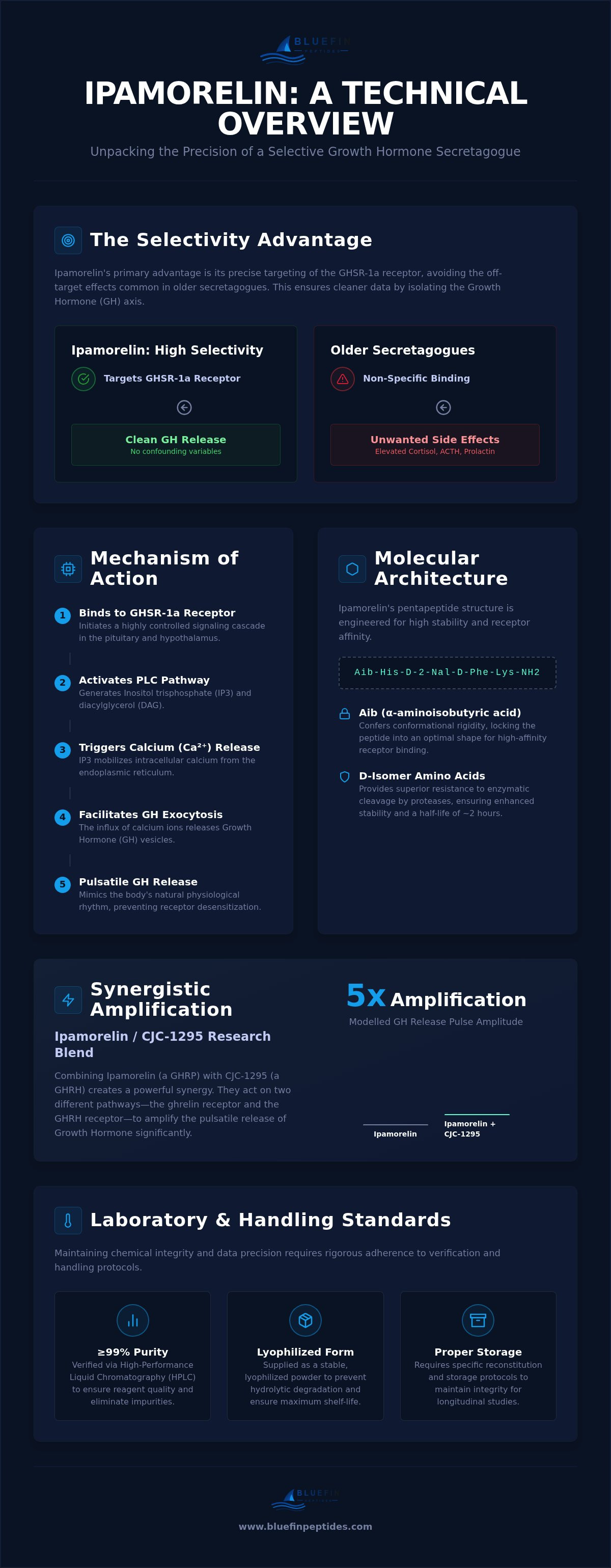
Ipamorelin is a selective pentapeptide agonist with a specific affinity for the growth hormone secretagogue receptor (GHSR-1a). It functions as a precise molecular key. It engages the ghrelin receptor in the pituitary gland and hypothalamus to initiate a highly controlled signaling cascade. Unlike first-generation agents like GHRP-2 and GHRP-6, this compound exhibits a disciplined selectivity profile. It isolates the growth hormone axis from ancillary endocrine pathways. This isolation is the foundation of modern Ipamorelin research applications where data purity is paramount.
The intracellular signaling pathway follows the Phospholipase C (PLC) and Inositol trisphosphate (IP3) route. Upon binding to GHSR-1a, the receptor activates G-proteins that stimulate PLC to hydrolyze phosphatidylinositol 4,5-bisphosphate (PIP2). This reaction generates IP3 and diacylglycerol (DAG). IP3 then triggers the release of intracellular calcium from the endoplasmic reticulum. The sudden influx of calcium ions facilitates the exocytosis of growth hormone (GH) vesicles. This process results in a pulsatile release of GH that closely mirrors the natural physiological rhythm of somatotrophs.
Selective Agonism vs. Non-Specific Secretagogues
Selectivity remains the primary advantage. Traditional secretagogues often show crossover with melanocortin receptors. This non-specific binding leads to the unintended release of adrenocorticotropic hormone (ACTH), cortisol, and prolactin. Ipamorelin avoids these pitfalls. It doesn't stimulate the adrenal axis or interfere with lactotrophic function even at high saturating doses. This lack of crossover ensures that metabolic data sets remain clean. Investigators can study the GH axis without the confounding variables of stress hormones or altered glucose metabolism. It's a surgical tool for biochemical isolation.
Pharmacokinetics and Half-Life in Research Models
Stability is critical for reliable data. Ipamorelin incorporates a C-terminal amide that enhances its resistance to proteolytic enzymes. In rodent models, researchers report a half-life of approximately 2 hours. This duration allows for significant physiological modeling while ensuring the peptide eventually clears the system. The pulsatile nature of the GH release it induces is preferable to continuous stimulation. Continuous exposure can lead to receptor desensitization or downregulation. Ipamorelin maintains a fluid rhythm. This enables researchers to observe long-term anabolic or lipolytic effects without exhausting the target receptors.
Structural Biochemistry and Analytical Specifications
Ipamorelin's functional utility is a direct result of its specific amino acid sequence: Aib-His-D-2-Nal-D-Phe-Lys-NH2. This pentapeptide structure is engineered for maximum stability. The N-terminal alpha-aminoisobutyric acid (Aib) is the primary driver of conformational rigidity. It locks the peptide into a shape that fits the GHSR-1a receptor with high affinity. As noted in the National Cancer Institute definition of Ipamorelin, this compound acts as a potent ghrelin mimetic. The inclusion of D-isomer amino acids like D-2-Nal and D-Phe provides a significant advantage. Standard proteases typically recognize L-amino acid chains. By incorporating D-isomers, Ipamorelin resists enzymatic cleavage. This resistance is essential for Ipamorelin research applications involving extended metabolic monitoring.
Long-term storage requires lyophilization. This process removes water through sublimation, resulting in a stable, lyophilized powder. It prevents the hydrolytic degradation that occurs in aqueous solutions. When researchers procure reagents from Bluefin Peptides, they receive a product designed for maximum shelf-life and structural consistency. A porous, white cake indicates a successful lyophilization cycle, ensuring the peptide remains viable for longitudinal study designs.
Purity Verification: The 99% HPLC Standard
High-Performance Liquid Chromatography (HPLC) serves as the definitive tool for peptide verification. It identifies and quantifies impurities that may have survived the synthesis process. In a laboratory setting, a 99% purity threshold is the benchmark for excellence. Sub-standard reagents introduce variables that can compromise the validity of sensitive in vitro assays. For a deeper dive into these metrics, researchers can review the Analytical Quality Standards for Research Peptides. Maintaining this standard ensures that the physiological responses observed are solely attributable to the peptide itself.
Mass Spectrometry Confirmation
Mass spectrometry provides the final layer of identity confirmation. While HPLC confirms the purity level, MS verifies the exact molecular weight. It ensures the synthesized sequence matches the intended pentapeptide structure. Every batch must match the theoretical mass of 711.85 g/mol to be cleared for use. Bluefin Peptides applies a maritime precision to these verification protocols. Every batch includes a specific Certificate of Analysis (COA). This documentation offers a "data-first" security protocol for modern investigators. It eliminates the risks associated with unverified reagents. You can rely on the technical data provided to drive your study forward without hesitation.
Primary Research Applications in Cellular and Animal Models
Ipamorelin's utility in laboratory settings stems from its ability to induce physiological changes without the endocrine turbulence associated with non-selective agents. Modern Ipamorelin research applications focus on quantifying growth hormone (GH) output and its subsequent effect on peripheral tissues. In animal models, particularly rodents, this pentapeptide serves as a high-fidelity tool for mapping GH pulsatility. Researchers use it to analyze the frequency and amplitude of secretion events. This provides a clear window into pituitary function. Because it doesn't trigger the release of ACTH or cortisol, investigators can isolate the GH axis with a degree of surgical precision that earlier secretagogues couldn't achieve.
Gastrointestinal motility represents another significant area of study. As established by the National Cancer Institute definition of Ipamorelin, the compound acts as a ghrelin mimetic. Ghrelin receptors are densely populated in the enteric nervous system. This makes Ipamorelin a primary candidate for investigating gastric emptying and intestinal transit times. By navigating these pathways, researchers can model biological responses to ghrelin receptor agonism without the confounding variables of hunger-induced stress or adrenal activation.
Bone Mineral Density and Skeletal Research
Skeletal modeling remains a cornerstone of Ipamorelin research. A landmark 1999 study involving rat models demonstrated that Ipamorelin significantly increased longitudinal bone growth (LGR). Data indicated an increase from a baseline of 42 μm/day to 52 μm/day in treated subjects. These effects are dosage-dependent. In female rat models, this growth occurs without shifting markers of bone formation or resorption, such as IGFBP-3. This suggests that Ipamorelin promotes tibial growth through direct GH/IGF-1 axis stimulation rather than through broader systemic shifts. It's an ideal reagent for studying skeletal maturation and mineral density in controlled environments.
Metabolic and Muscle Wasting Models
Investigating nitrogen balance and lean mass retention requires a reagent that maintains metabolic stability. Ipamorelin is frequently utilized in models of cachexia and muscle wasting to evaluate fat-free mass partitioning. In rodent studies, the peptide influences the retention of nitrogen, which is a critical indicator of anabolic state. Unlike GHRP-2, which often induces a significant increase in appetite and cortisol, Ipamorelin provides a "clean" metabolic profile. This allows researchers to attribute changes in body composition directly to GH-mediated lipolysis and protein synthesis. It provides the security of verifiable results in high-stakes longitudinal research.
Synergistic Applications: Ipamorelin and CJC-1295 Research Blends
Maximizing the GH axis response in a laboratory setting often requires a multi-pathway strategy. While Ipamorelin isolates the GHSR-1a receptor, its efficacy is amplified when paired with a Growth Hormone Releasing Hormone (GHRH) analogue. This dual-mechanism approach creates a biological synergy that significantly outpaces the results of monotherapy. In contemporary Ipamorelin research applications, this combination is the standard for modeling maximal pulsatile GH output. Specifically, data suggests that combining these agents can result in a 2 to 5 times greater release of growth hormone than either compound used in isolation. This isn't merely additive; it's a multiplicative physiological event.
The logic behind this synergy lies in the division of cellular labor. CJC-1295 acts as the architect, increasing the "pool" of available growth hormone within pituitary somatotrophs. It optimizes the secretory potential of the gland. Ipamorelin acts as the catalyst, triggering the immediate release of that stored GH while simultaneously suppressing somatostatin, the primary inhibitor of GH secretion. This results in a massive increase in pulse amplitude rather than just pulse frequency. For detailed data on these interactions, investigators should consult the Ipamorelin CJC-1295 Research Blend USA technical guide.
CJC-1295 vs. Ipamorelin: Mechanistic Differences
The distinction between these two peptides is found at the receptor level. CJC-1295 targets the GHRH receptor, which primarily governs the synthesis and storage of growth hormone. Ipamorelin targets the GHSR-1a receptor to initiate the signaling cascade for exocytosis. One prepares the cellular environment; the other executes the release. By inhibiting somatostatin, Ipamorelin ensures the GH pulse remains unobstructed by the body's natural "braking" mechanism. This creates a fluid, high-velocity response that researchers prefer for intensive metabolic and musculoskeletal modeling.
Formulating Blends for Laboratory Study
Chemical stability is the primary concern when co-lyophilizing peptide blends. Exact molar ratios are non-negotiable for maintaining the integrity of multi-peptide assays. If the ratio is skewed, the resulting data won't accurately reflect the intended synergy. Verification protocols for these blends must mirror the tirzepatide research peptide standards, requiring HPLC and mass-spec confirmation for each component. Bluefin Peptides ensures that every co-lyophilized batch maintains the precise chemical signature required for reproducible results. To secure the highest-purity reagents for your next study, buy Ipamorelin CJC-1295 Research Blends from a verified US-based source.
Laboratory Handling: Reconstitution and Storage Protocols
Reagent integrity is the final hurdle in any study. Procurement of high-purity lyophilized powders from domestic US sources is vital. It minimizes the risk of transit-induced degradation. Long international shipping routes expose sensitive peptides to fluctuating temperatures and mechanical vibration. These factors can compromise the peptide's primary structure before it even reaches the bench. For Ipamorelin research applications, maintaining a cold chain from synthesis to delivery ensures that the chemical signature remains intact. This logistical discipline separates a reliable study from one plagued by unrepeatable data. Investigators must also account for temperature-controlled storage requirements. Lyophilized powders are most stable when kept at -20°C, a temperature that arrests the kinetic energy responsible for slow chemical degradation over time.
Reconstitution Best Practices
Precision is required during the transition from powder to solution. Researchers should select the appropriate diluent based on the specific laboratory assay. Bacteriostatic water or sterile 0.9% saline are standard choices. When adding the diluent, the stream should be directed against the inner wall of the vial. Don't drop the liquid directly onto the lyophilized cake. This prevents foaming and reduces the risk of protein denaturation. Once the diluent is added, use gentle rotation to encourage dissolution. Avoid vigorous agitation or shaking. Mechanical stress can shear delicate pentapeptide bonds. Once reconstituted, stability timelines are strict. Reconstituted Ipamorelin should be stored at 2-8°C and utilized within a narrow window to avoid hydrolysis.
Logistics and Reagent Integrity
The speed of fulfillment is a hallmark of the Bluefin identity. Domestic US fulfillment ensures that sensitive laboratory reagents aren't stalled in customs or subjected to uncontrolled environments for weeks. This level of logistical discipline is not unique to Ipamorelin. Both the retatrutide research peptide and Ipamorelin require the same rigid adherence to supply chain security. By maintaining rapid, secure supply lines, Bluefin Peptides provides the tools researchers need to plan complex longitudinal studies. It's about ensuring the 'what' of the results through the 'how' of the process. The maritime-speed logistics we employ are designed for deep-sea precision. Light exposure and mechanical stress must be minimized throughout the entire lifecycle. Protect the vials from direct UV light. Store them in an opaque secondary container. These small, disciplined steps preserve the ≥99% HPLC-verified purity your research demands. Verification is the only path to security.
Advancing Precision in Somatotrophic Modeling
Ipamorelin remains the definitive tool for investigators seeking to isolate the growth hormone axis without the interference of ancillary stress hormones. Its specific pentapeptide structure and high selectivity for the GHSR-1a receptor ensure that metabolic data remains clean and verifiable. By leveraging the multiplicative power of synergistic blends and adhering to rigid reconstitution protocols, researchers can maintain the chemical integrity required for high-stakes modeling. These factors are essential for achieving reproducible results in contemporary laboratory environments.
The success of your study depends on the quality of your reagents. Unreliable purity levels or slow international fulfillment can compromise sensitive assays. We provide the tools for verification so you don't have to rely on blind trust. Our commitment to batch-specific COAs ensures that every vial meets the rigorous standards of modern science. Precision isn't just a goal; it's a requirement.
Procure HPLC-Verified Ipamorelin for Laboratory Research to secure materials backed by ≥99% HPLC-verified purity and mass-spec confirmed sequences. With domestic US-based fulfillment, your supply chain remains as swift and precise as a bluefin in open water. We're ready to facilitate your next breakthrough in Ipamorelin research applications.
Frequently Asked Questions
Is Ipamorelin selective for growth hormone release?
Ipamorelin is the most selective growth hormone secretagogue currently available in laboratory research. It acts as a biased agonist of the ghrelin receptor (GHSR-1a). This specificity allows for the stimulation of growth hormone without the non-selective crossover seen in earlier peptides. Researchers utilize this selectivity to isolate the somatotrophic axis. It ensures that physiological observations are a direct result of GH release rather than secondary hormonal shifts.
What is the purity standard for Bluefin Peptides' Ipamorelin?
Bluefin Peptides maintains a ≥99% HPLC-verified purity standard for all Ipamorelin batches. Every reagent undergoes rigorous High-Performance Liquid Chromatography testing to ensure the absence of synthesis byproducts. Mass spectrometry confirms the exact molecular weight and sequence. We provide batch-specific Certificates of Analysis (COAs) for every order. This data-first approach provides the clinical precision required for high-stakes laboratory environments and reproducible data sets.
Does Ipamorelin increase cortisol or ACTH in research models?
Ipamorelin doesn't induce significant elevations in cortisol or ACTH levels in established research models. Unlike GHRP-2 or GHRP-6, it lacks affinity for the receptors responsible for adrenal activation. This biochemical discipline is a primary advantage for Ipamorelin research applications. It allows investigators to study metabolic and anabolic pathways without the confounding variables of stress hormones. It maintains endocrine stability throughout the entire study period.
How should Ipamorelin be stored to maintain chemical stability?
Lyophilized Ipamorelin should be stored at -20°C for long-term stability. This temperature arrests kinetic energy and prevents hydrolytic degradation. For short-term use, reconstituted vials must be kept at 2-8°C. Exposure to direct UV light and mechanical stress must be avoided. Protect the vials in an opaque secondary container to preserve the peptide's primary structure. Proper storage ensures that the chemical integrity remains consistent across longitudinal study designs.
What is the difference between Ipamorelin and GHRP-6?
The primary difference lies in receptor selectivity and side-effect profiles. GHRP-6 is a non-selective agonist that frequently triggers hunger through ghrelin pathways and increases cortisol and prolactin. Ipamorelin is a selective pentapeptide that isolates growth hormone release. It doesn't induce the same appetite stimulation or adrenal crossover. This makes Ipamorelin a superior tool for researchers who require a clean physiological model with minimal confounding endocrine variables.
Can Ipamorelin be combined with CJC-1295 in a single research protocol?
Combining Ipamorelin with CJC-1295 is a common strategy to model maximal growth hormone axis response. This dual-mechanism approach utilizes the synergy between GHRH analogues and GHRPs. CJC-1295 increases the available pool of GH while Ipamorelin triggers the pulsatile release. Research indicates this combination can amplify GH output by up to five times compared to monotherapy. It's a standard configuration for intensive Ipamorelin research applications.
Is Ipamorelin available for human or veterinary use?
Ipamorelin is strictly for laboratory research use only. It's not an FDA-approved drug for human therapeutic use and is not intended for veterinary applications. All products are labeled "not for human consumption" to maintain the professional boundary of chemical supply. It's legal to purchase in the US for qualified investigators as a research reagent. Adherence to these legal and professional boundaries is a mark of laboratory discipline.
What diluents are recommended for Ipamorelin reconstitution?
Recommended diluents include bacteriostatic water or sterile 0.9% saline. The choice depends on the specific requirements of the laboratory assay. Bacteriostatic water is often preferred for its ability to inhibit microbial growth in multi-use vials. The diluent should be added slowly via the vial wall to prevent denaturation and foaming. Following these reconstitution protocols is essential for maintaining the ≥99% HPLC-verified purity of the peptide during the experimental phase.
For laboratory research use only. Not for human or veterinary use. This content is educational and does not constitute medical, dosing, or usage guidance.
Browse the BLUEFIN catalog