How to Handle a Compromised Peptide Shipment on Arrival
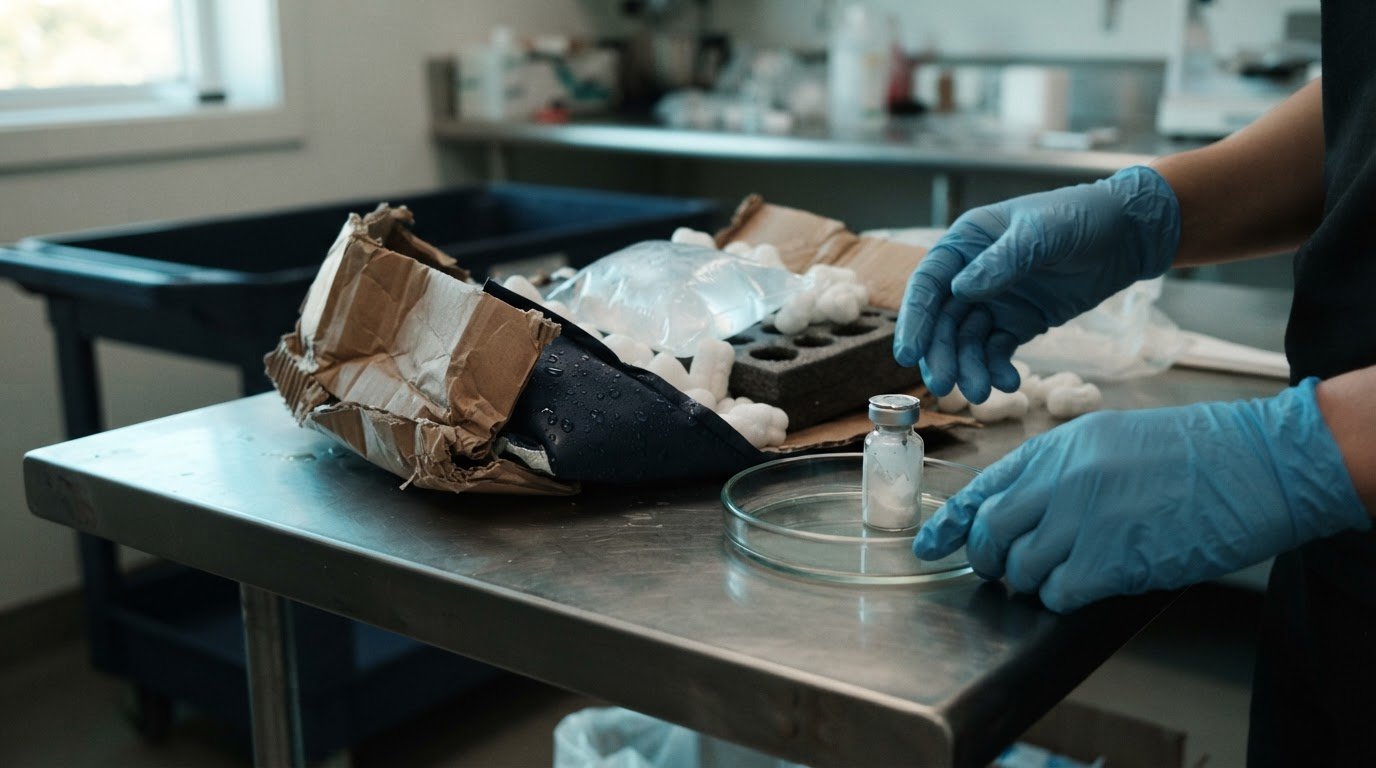
A warm cold pack does not, by itself, prove that a lyophilized peptide has been damaged. Knowing what to do with a compromised peptide shipment means documenting the package and vial, isolating anything that appears compromised, and assessing exposure in light of the peptide’s form and product-specific handling guidance. A damaged seal, visible moisture, or a collapsed or sticky cake warrants closer review before use.
Temperature history matters, but it is only one part of the evidence. Vial condition, powder appearance, transit duration, and whether the material was lyophilized or reconstituted all inform the assessment. This guide explains how to inspect a shipment, preserve useful documentation, store it after delivery, and assess possible temperature exposure. It also covers what information to provide when reporting a damaged or incorrect order, so next steps are based on observable evidence rather than guesswork.
Key Takeaways
- Inspect the carton, vial, seal, and peptide appearance before use, and document visible damage with photographs.
- Distinguish a cosmetic change in a lyophilized cake from signs such as moisture, a sticky film, or a compromised seal.
- Assess temperature exposure in context: peptide format, transit duration, packaging condition, and handling history all matter.
- Keep questionable material separate from active work, store it according to product-specific guidance, and provide order and batch details when requesting a review.
- Use visible contamination, discoloration, unusual odor, or particles as reasons to stop and seek an assessment before proceeding.
Cold-Chain and Transit Risk: What Happens to Peptides During Shipping?
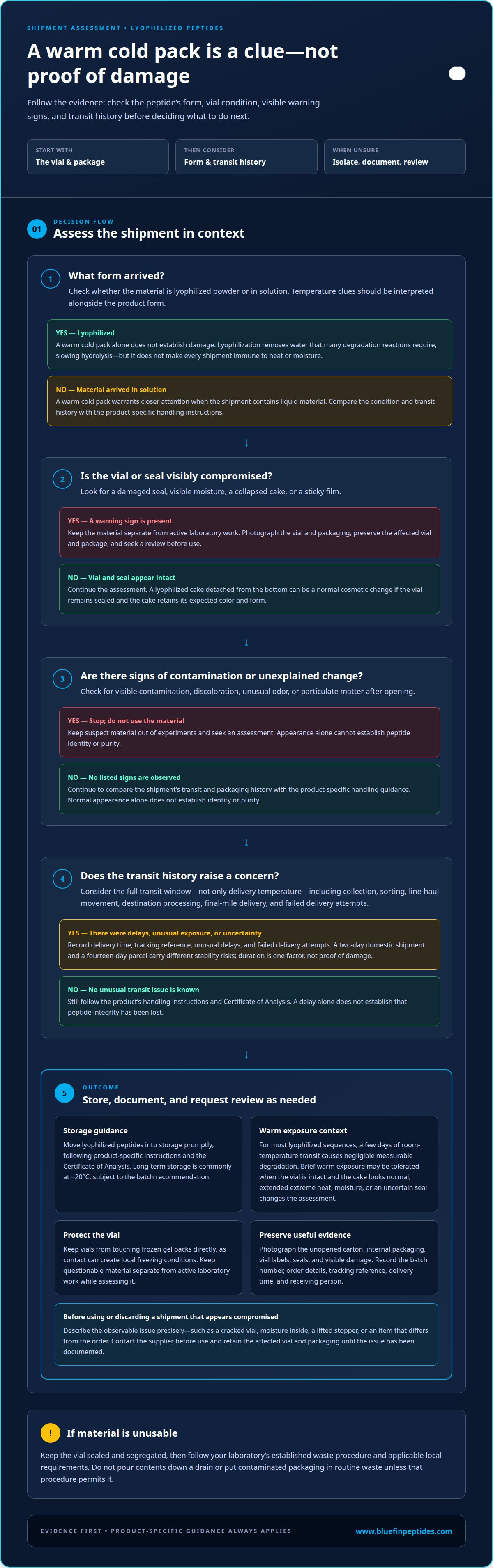
Assess the vial’s physical condition alongside its transit history. A detached lyophilized cake can be normal, while moisture or a compromised seal warrants isolation. Lyophilization removes water that many degradation reactions require, slowing hydrolysis, but it does not make every shipment immune to heat or moisture.
- Inspect the vial and package before interpreting temperature clues. A lyophilized cake detached from the bottom of the vial can be a normal cosmetic change if the vial remains sealed and the cake retains its expected color and form. A collapsed cake or sticky film may indicate moisture exposure. Photograph the vial and packaging if you notice either warning sign, and keep the material separate from active laboratory work while assessing it.
- Consider the full transit window, not just the moment of delivery. Collection, sorting, line-haul movement, destination processing, final-mile delivery, and failed delivery attempts all contribute to exposure. A two-day domestic shipment and a fourteen-day parcel carry different stability risks. A warm cold pack alone does not establish damage to lyophilized powder, but it warrants closer attention if the shipment contains liquid material.
-
Consider Stability During Shipping and Storage
Move lyophilized peptides into storage promptly, following the product-specific instructions and Certificate of Analysis. For most lyophilized sequences, a few days of room-temperature transit causes negligible measurable degradation; long-term storage is commonly at −20°C, subject to the batch’s recommendation. Compare the shipment’s duration and packaging condition with those instructions rather than treating every warm arrival as proof of failure.
Brief warm exposure may be tolerated when the vial is intact and the cake looks normal. Extended extreme heat, moisture, or an uncertain seal changes the assessment. Keep vials from touching frozen gel packs directly, as contact can create local freezing conditions.
-
Identify Risks from Degraded or Contaminated Peptides
Keep suspect material out of experiments until its condition has been assessed. Visible contamination, discoloration, unusual odor, or particulate matter after opening are reasons not to use it. Degradation can undermine the integrity and reproducibility of laboratory results, while contamination can introduce unintended material into a procedure. Appearance alone cannot establish peptide identity or purity.
For unusable peptides, keep the vial sealed and segregated, then follow your laboratory’s established waste procedure and applicable local requirements. Do not pour contents down a drain or put contaminated packaging in routine waste unless that procedure permits it.
- Distinguish shipment condition from regulatory status. FDA requirements depend on a product’s classification and intended use; a damaged parcel or a “research” label alone does not establish which requirements apply. Do not treat the shipment’s appearance as evidence of FDA approval or suitability for human use.
Eligibility for replacement of damaged or incorrect shipments
Compare the parcel with the order and document observable evidence before using or discarding anything. Replacement eligibility depends on the documented issue and the supplier’s applicable terms.
-
Assess Damage and Replacement Eligibility
Separate physical damage, possible temperature exposure, and an incorrect item, since each presents a distinct issue for the supplier to assess. Photograph crushed or wet packaging, damaged insulation, and any visible vial or seal defect. For an incorrect shipment, record what arrived and what the order specified. A delay alone does not establish that the peptide’s integrity has been lost.
Knowing what to do with a compromised peptide shipment starts with its transit record. Note the delivery time, tracking reference, unusual delays, and any failed delivery attempt. Compare the vial’s condition with the product’s handling instructions, including whether the material arrived lyophilized or in solution. These details support a review based on documented circumstances, rather than an assumption that every warm delivery qualifies for replacement.
-
Document Damage and Contact the Supplier
Document the parcel before rearranging or disposing of its contents. Photograph the unopened carton from several angles, then capture the internal packaging, vial labels, seals, and visible damage. Record the batch number, order details, tracking reference, delivery time, and receiving person. Clear images should connect the package condition to the specific item and order.
Contact the supplier before using a shipment that appears compromised, and provide those records. Describe the issue precisely, such as a cracked vial, moisture inside, a lifted stopper, or an item that differs from the order. Retain the affected vial and packaging until the supplier confirms that the issue has been documented. This preserves evidence for review.
-
Choose How to Handle Compromised Peptides
Isolate a suspect vial from active laboratory work while assessing its condition. Do not discard it before documenting the issue, and do not use material with a compromised seal, visible moisture, or unexplained discoloration. These observations help distinguish a handling concern from a cosmetic change and preserve evidence relevant to a replacement request.
Maintaining appropriate storage during review is another part of what to do with a compromised peptide shipment. Follow the product-specific instructions because lyophilized and reconstituted peptides have different handling needs. A liquid shipment with possible temperature exposure needs particular attention. Avoid opening or transferring material just to inspect it, since that can alter the condition being documented.
- Organize the evidence into a concise shipment record: order identifier, batch number, delivery time, tracking reference, photographs, and a short description of the discrepancy. For a delayed parcel, include its transit timeline and delivery attempts. This helps the supplier assess the documented event against applicable replacement terms.
- Keep the review focused on observable facts. A detached cake in an intact vial differs from a cracked container, visible moisture, or an incorrect item. Include relevant handling instructions with the evidence, and wait for an assessment before returning, discarding, or using the material. Replacement decisions depend on the documented condition and applicable terms.
Arrival inspection for vial, seal, moisture, and powder condition
Follow a consistent receipt sequence to document package condition before storage or opening. The carton, vial, seal, and powder each provide distinct evidence about handling.
- Record the delivery as soon as it arrives. Log the delivery time, tracking reference, batch number, and receiving person’s name. These details connect the shipment’s condition to a specific order and transit record. A receipt inspection can take less than two minutes if the record fields are ready. Keep the entry objective, for example, “carton wet on one side,” rather than “peptide damaged.”
- Inspect the outer carton and insulation before removing the vials. Note crushing, tears, moisture damage, or signs of insulation failure. Photograph visible damage from multiple angles, including the shipping label and any affected area. Check whether coolant is warm, leaking, or displaced, but do not treat a warm pack alone as proof that dry powder has degraded. The peptide’s physical form affects how to interpret that observation.
- Examine each vial without opening it. Look for cracks, a loose or lifted cap, a raised or dislodged stopper, and visible moisture inside. A raised stopper signals a compromised seal; do not use that vial. A breached seal can admit ambient moisture, restarting hydrolysis in sensitive compounds. Keep the vial and packaging together so the condition remains traceable to its batch.
- Check the lyophilized material through the vial before reconstitution. Confirm that the expected cake or film appears dry and retains its usual color and form. A detached cake can be a cosmetic change if the vial remains sealed and the material otherwise looks normal. A collapsed cake, sticky film, or visible moisture is a warning sign. Photograph the powder’s appearance before moving the vial into storage.
- Allow a cold vial to reach room temperature before opening it. Opening it while cold can cause condensation, adding moisture where the seal is broken. Keep vials from touching frozen gel packs directly, because contact can create local freezing conditions. If the shipment includes liquid material, assess its temperature history separately. Reconstituted peptides need tighter temperature control than dry vials.
- Keep an inspection record with the batch and order details, photographs, receipt time, and observations for each affected vial. Separate suspect material from active work while assessing it. Do not use a vial with a compromised seal, moisture intrusion, or abnormal powder appearance. This record supports a clear review of the shipment condition and helps prevent confusing one vial’s findings with another’s.
Cold-chain failure and temperature exposure
Assess temperature exposure by considering the peptide’s physical form, transit history, and available monitoring evidence together. A warm pack alone does not establish that lyophilized material was damaged.
- Reconstruct the shipment’s temperature timeline from dispatch through delivery. Include collection, sorting, line-haul movement, destination processing, final-mile delivery, and any failed delivery attempt. A 24-hour insulated overnight shipment has a smaller cumulative thermal load than a parcel held in transit for two weeks. Record delays and storage conditions the parcel may have encountered.
-
Review Temperature Indicators and Data Loggers
Read any indicator or temperature logger before discarding the packaging. An indicator can show whether a specified threshold was crossed, while a logger records temperature over time. For critical, high-value, or bulk shipments, a time-and-temperature record provides more context than a single indicator. Preserve the reading with the shipment record and compare it with the product’s handling guidance.
-
Assess Temperature and Humidity Control
Check whether the package kept coolant separate from the vials and protected the contents from moisture. Direct contact with frozen gel packs can create local freezing conditions, while damaged insulation can weaken temperature control. A wet carton or damp internal packaging presents a separate moisture concern. Photograph these conditions and distinguish them from temperature evidence when documenting the shipment.
- Account for seasonal and delivery-location exposure. A peptide parcel left on a hot loading dock or inside a delivery vehicle can reach 50-60°C. The same package delivered promptly into controlled storage faces a different exposure history. Hot-season conditions and long transit times increase the importance of appropriate insulated packaging, especially for liquid material.
- Assess lyophilized vials separately from reconstituted material. A few days of room-temperature transit causes negligible measurable degradation for most lyophilized sequences. Reconstituted peptides need tighter operational control because degradation reactions proceed readily in solution. Do not infer equivalent stability from the same delivery temperature; assess each format against its product-specific guidance.
- Choose the next storage action from the material’s format and instructions. Move lyophilized vials into freezer storage promptly, following the supplier’s guidance and batch-specific recommendation. Keep reconstituted material refrigerated as directed. Storage at 4°C for a few days may suit short-term use for some peptides, depending on stability. Avoid repeated warming and cooling, which can promote aggregation in solutions.
- For repeat shipments, maintain a documented shipping profile covering product format, insulation, coolant quantity, carrier service, dispatch timing, expected transit, and recipient contact process. Early-week dispatch can reduce the risk of weekend holding for next-day domestic shipments. This record helps identify whether a cold-chain concern reflects packaging, seasonal exposure, delay, or recipient handoff.
Should compromised peptides be used, refrigerated, quarantined, or discarded?
Base the decision on observable condition, peptide format, and handling instructions. Keep suspect material out of active laboratory work until it has been assessed.
- Quarantine any vial with a cracked body, compromised seal, visible moisture, or unexplained discoloration. Keep it closed and clearly separated from usable research materials. A damaged container can admit moisture or contaminants, while an intact vial with a detached lyophilized cake may show only a cosmetic change. Record the condition of each vial rather than grouping the entire shipment together.
- Do not use material showing visible contamination, unusual odor, discoloration, or particulate matter after opening. These signs make a vial unsuitable for routine research use because identity, purity, or sterility cannot be established by appearance. A clear-looking solution does not prove integrity either. Keep questionable material isolated and request an assessment before introducing it into an experiment.
- Choose storage by physical form and product-specific instructions. Move lyophilized vials into freezer storage promptly, following the supplier’s guidance and the batch Certificate of Analysis. Reconstituted peptides require refrigeration or other specified conditions because degradation reactions proceed readily in solution. Storage at 4°C for a few days may be acceptable for short-term use, depending on peptide stability.
- Avoid repeated warming and cooling while a shipment is under review. Temperature cycling and physical agitation can promote aggregation, particularly in peptide solutions. Do not place a vial directly against a frozen gel pack, which can create local freezing conditions. Keep the suspect vial in its original container and maintain the conditions specified for that peptide format.
- Preserve evidence before disposal. Photograph the vial, label, seal, and any visible material; retain the packaging and damaged or discolored container until the supplier has documented the concern. Include the order and batch details when requesting an assessment. This supports review of replacement eligibility and prevents an uncertain vial from being mistaken for a verified batch.
- Dispose of unusable material only through your laboratory’s established waste procedure and applicable local requirements. Keep the vial sealed and segregated until that procedure determines how to handle both contents and contaminated packaging. Do not pour peptide solutions down a drain or put contaminated packaging in routine waste unless laboratory procedures permit it.
- For future work, select research peptides with documented batch information and defined handling guidance. Review research peptide options when sourcing material for laboratory use.
Follow your laboratory’s established waste procedure and applicable local requirements. Keep the vial sealed and segregated until the procedure determines how to handle both the peptide and contaminated packaging.
Bluefin Peptides
Bluefin Peptides offers research peptides for laboratories that need batch documentation and handling information when planning future work. Its catalog includes Retatrutide Research Peptide, Tirzepatide Research Peptide, BPC-157 / TB-500 Research Blend, and Ipamorelin / CJC-1295 Research Blend. Products are ≥99% HPLC-verified, with mass-spectrometry confirmation and batch Certificates of Analysis. These records provide batch-level identity and purity information; follow the product’s storage instructions to manage handling after delivery.
If a shipment appears compromised, continue documenting the issue and contact the supplier about that order before using the material. For laboratory research peptide needs, contact Bluefin Peptides to discuss its offerings.
Turn Shipment Exceptions Into a Stronger Receiving Process
A reliable protocol for what to do with a compromised peptide shipment can turn an unexpected delivery issue into a traceable quality event. Use each incident to refine how your laboratory records exceptions, assigns review responsibility, and preserves relevant shipment details.
Keep the resulting record with the batch documentation. Over time, these records can help your team recognize recurring handling concerns and improve receiving procedures for future orders. Clear internal steps also help colleagues respond consistently when package condition, storage needs, or product format raise questions.
For research peptide sourcing, contact Bluefin Peptides to discuss your laboratory’s needs. A disciplined review process and well-documented procurement decisions help keep future work on a more reliable course.
Frequently Asked Questions
How can I tell if a shipment was compromised?
Look for physical evidence that differs from the expected condition of the package or vial. Examples include a crushed carton, torn or wet insulation, a cracked vial, a lifted stopper, or moisture inside the container. For lyophilized material, a collapsed cake or sticky film can indicate moisture exposure. A detached cake alone can be cosmetic if the vial remains sealed and the material looks normal.
Is a warm ice pack a sign the peptide is ruined?
No. A warm ice pack does not automatically mean lyophilized peptide powder was damaged. Interpret it alongside the vial seal, powder appearance, transit duration, and product-specific handling instructions. A warm pack is a stronger reason to assess liquid or reconstituted material carefully, since peptides in solution can degrade more readily. Record the pack’s condition as one observation, not as a standalone conclusion about integrity.
My vial arrived warm. Should I use it?
Do not decide based on warmth alone. First identify whether the vial contains lyophilized powder or reconstituted material, then compare its condition and transit history with the supplier’s storage guidance. An intact vial with a normal-looking lyophilized cake may tolerate brief warm exposure, while prolonged extreme heat or a liquid format warrants closer assessment. Keep the vial out of active work until you have reviewed those details.
Should I refrigerate a damaged vial while I sort it out with the supplier?
Follow the storage instructions for that peptide’s physical form rather than automatically refrigerating it. Lyophilized and reconstituted peptides have different storage needs, and a damaged seal or moisture intrusion remains a concern regardless of temperature. Keep the vial isolated from active materials and preserve its original packaging. If the instructions specify freezer storage for the dry product, follow them while documenting the issue.
The stopper looks popped up. What do I do?
Do not use the vial. A raised or dislodged stopper indicates a compromised seal, which can allow ambient moisture to enter lyophilized material. Keep the vial closed, separate it from active work, and photograph the stopper and vial label. Retain the container and packaging while reporting the condition with the order and batch details. Avoid pressing the stopper back into place, since that alters the evidence.
How can you tell if a peptide shipment was compromised or improperly stored?
Compare the shipment’s physical evidence with its documented handling history. A wet carton, failed insulation, unusual delay, or temperature-indicator reading can support concern about storage conditions. A cracked vial, lifted stopper, moisture, or abnormal powder appearance points to a product-level issue. No single observation establishes every aspect of integrity, so keep packaging evidence, tracking details, and vial observations together for assessment.
What should you do immediately if a peptide shipment arrives damaged, warm, or delayed?
Separate the shipment from active laboratory materials and preserve its current condition. Photograph the carton and internal packaging, note the delivery time and tracking reference, and record the batch number. Check whether the material is dry or reconstituted, since its format changes the temperature assessment. Do not open or use a vial with visible damage or a compromised seal before documenting the concern.
How do you document package damage and report it to the seller or carrier?
Photograph the unopened carton from several angles, then capture damaged insulation, labels, and affected vials. Record the order details, tracking reference, delivery time, batch number, and receiving person. Describe visible facts, such as a tear or wet area, rather than assuming a cause. Send the record to the supplier before using the material; provide the same documentation to the carrier if filing a shipment-damage report.
For laboratory research use only. Not for human or veterinary use. This content is educational and does not constitute medical, dosing, or usage guidance.
Browse the BLUEFIN catalog