How to Aliquot Peptides for Experiments With Less Waste
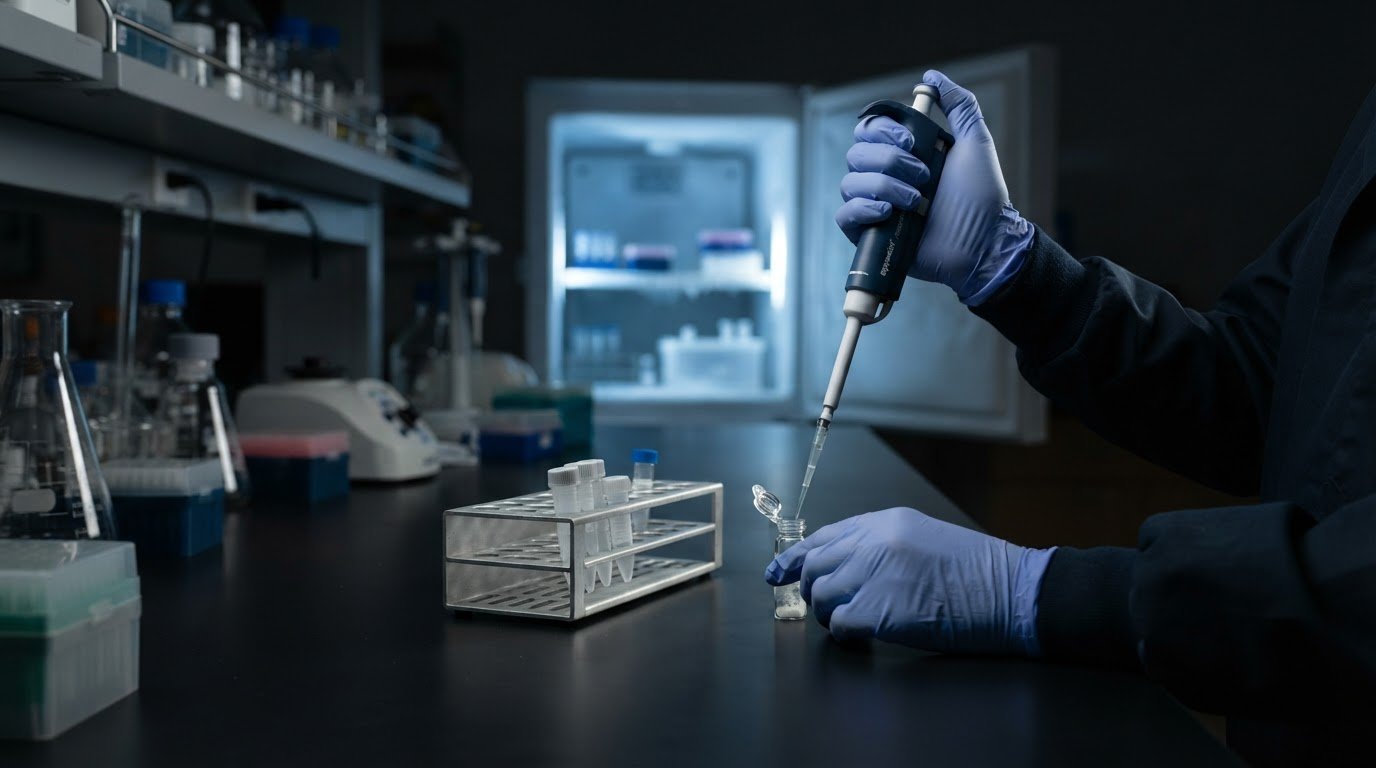
Aliquot peptides into planned-use portions, limit exposure to moisture and oxygen, and keep prepared solutions frozen at −20 °C or below. Learning how to aliquot peptides for experiments starts before the vial is opened: let the sealed sample reach room temperature in a desiccator, then handle it in a way that reduces moisture uptake and oxidation. These steps help protect sample integrity and avoid repeatedly opening the same stock.
Careful portioning can make research workflows more consistent and reduce avoidable sample loss. Peptide properties vary, so dissolution and storage choices should account for sequence-sensitive residues and acidic or basic character. This guide covers preparation, portion planning and labeling, oxidation-sensitive sequences, and appropriate solution storage. It also explains when brief sonication may help with dissolution and why limited shelf life matters when planning experiments. The aim is a methodical approach to preparing peptide samples for research, with key handling decisions made before an experiment begins.
Key Takeaways
- Let a sealed peptide vial reach room temperature in a desiccator before opening to limit moisture uptake.
- Plan aliquot sizes around intended use so you can reduce repeated opening and handling of the stock vial.
- Give peptides containing Trp, Met, or Cys added attention during handling because they are oxidation-sensitive.
- Match dissolution conditions to the peptide’s acidic or basic character, and use brief sonication only if needed to assist dissolution.
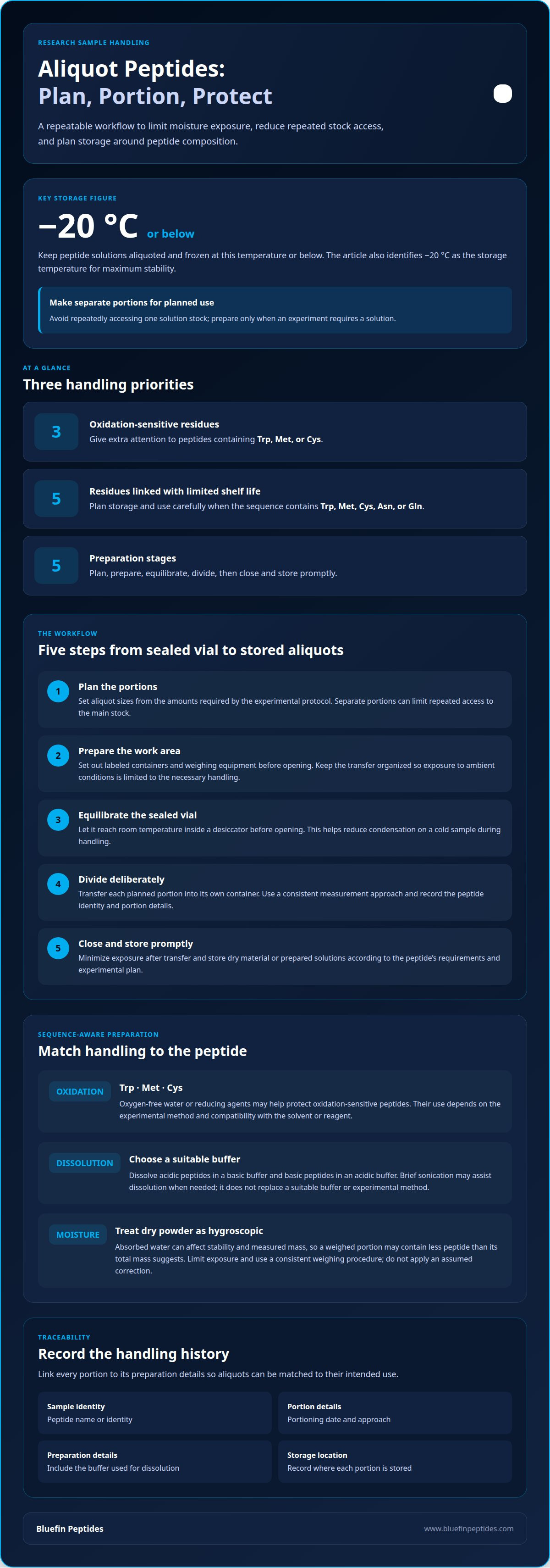
- Aliquot peptide solutions and keep them frozen at −20 °C or below; sequence composition can also affect shelf-life planning.
How to aliquot peptides for experiments
A reliable aliquoting workflow helps protect peptide material from moisture, repeated handling, and avoidable oxidation. How to aliquot peptides for experiments depends first on the sample’s state: dry powder and dissolved peptide call for different handling decisions. Plan portions around the experiments, then prepare the work area and storage plan before opening the vial.
Peptides can be hygroscopic, meaning they may absorb moisture from the air. This can affect stability and measured mass, and water adsorption can make a weighed portion contain less peptide than expected. Before opening, let the sealed vial warm to room temperature inside a desiccator. This helps reduce condensation on a cold sample during handling.
Prepare and portion the sample
- Plan the aliquots. Use the amounts required by your experimental protocol to determine portion sizes. For example, if separate experiments use separate portions, dividing the sample accordingly can limit repeated access to the main stock. Avoid choosing a portion size without considering the planned use.
- Prepare the work area. Set out the labeled containers and weighing equipment before opening the vial. Keep the handling sequence organized, so the sample is exposed to ambient conditions only during the necessary transfer and portioning steps.
- Equilibrate the sealed vial. Place it in a desiccator until it reaches room temperature. Open it only after equilibration. This step matters because a cold vial exposed to warmer air can collect moisture, while hygroscopic powder can adsorb water during handling.
- Divide the material deliberately. Transfer each planned portion into its own container. Use the same measurement approach across portions, and record the peptide identity and portion details in your laboratory records. Consistent handling makes later sample tracking clearer.
- Close and store promptly. Minimize the time each portion remains exposed after transfer. Keep dry material and prepared solutions under their appropriate storage conditions, following the peptide’s handling requirements and experimental plan.
Portioning by mass requires particular attention to moisture. If a peptide absorbs water, a weighed portion may contain less peptide than its total mass suggests, affecting the amount introduced into an experiment. Do not apply an assumed correction. Instead, limit moisture exposure and use a consistent weighing procedure.
Consider sequence and dissolution
Sequence composition affects handling priorities. Peptides containing tryptophan (Trp), methionine (Met), or cysteine (Cys) need special care to limit oxidation. Oxygen-free water or reducing agents may help protect oxidation-sensitive peptides, but their use depends on the experimental method and compatibility with the selected solvent or reagent.
Dissolve acidic peptides in a basic buffer and basic peptides in an acidic buffer. Prepare a solution only when the experiment requires one, then divide it into portions sized for planned use. Brief sonication may help with dissolution when needed, but it does not replace a suitable buffer or the experimental method.
Peptides containing Trp, Met, Cys, asparagine (Asn), or glutamine (Gln) generally have limited shelf life. That composition makes storage and use planning especially relevant. Keep peptide solutions aliquoted and frozen at −20 °C or below. Peptides should be stored at −20 °C for maximum stability. Avoid repeated access to a single solution stock by preparing separate portions for planned experimental use.
Record the peptide identity, portioning date, and storage location in the laboratory’s sample records. Note relevant preparation details, including the buffer used for dissolution. These records distinguish separate preparations and help trace which aliquot was used in an experiment. A controlled workflow links each portion to its handling history.
Decide on access and storage before opening: identify the portions needed for planned experiments, prepare labeled containers, and determine how each will be stored. Since peptides are often hygroscopic, warm the sealed vial to room temperature in a desiccator before opening. Once it has equilibrated, make the planned transfers without leaving the material exposed longer than necessary.
After sealing the portions, record the sample identity and portion details so each can be matched to its intended use. Use a consistent weighing and handling procedure, and follow the peptide’s handling requirements and experimental plan for storage. This reduces avoidable moisture exposure and repeated access to the main stock.
Bluefin Peptides: Retatrutide Research Peptide
Bluefin Peptides offers Retatrutide Research Peptide for laboratory research use. It may fit workflows that require this peptide and documented sample information for planning and handling. The catalog’s peptides are HPLC-verified, with mass-spectrometry confirmation and batch-specific certificates of analysis (COAs). Researchers can review these records alongside their sample preparation and experimental protocols.
For other research needs, the catalog also includes Tirzepatide Research Peptide, BPC-157 / TB-500 Research Blend, and Ipamorelin / CJC-1295 Research Blend. Choose an offering based on the research material required, then apply the appropriate handling and aliquoting procedures to the sample. Product documentation and careful preparation serve different roles: one describes the material, while the other supports consistent laboratory use.
Contact Bluefin Peptides to explore its research peptide offerings.
Build a Repeatable Workflow for Future Studies
Make aliquoting decisions reproducible across studies rather than dependent on memory. A concise preparation record can capture the sample identity, solvent or buffer, portioning approach, storage location, and experiment assigned to each aliquot. This may help reveal whether handling differences, rather than the experimental variable, explain inconsistent results. Review the workflow when the protocol or peptide changes, since sequence composition and solubility can affect handling choices.
Knowing how to aliquot peptides for experiments is most useful when the procedure reflects the study’s design. Before a new run, map planned uses to sample portions and record decisions that could affect interpretation. This creates a clear handoff between sample preparation and data review, while keeping each aliquot traceable to its intended use.
As you plan upcoming laboratory work, explore Bluefin Peptides. A disciplined record and a well-defined preparation workflow give the next experiment a more reliable starting point.
For laboratory research use only. Not for human or veterinary use. This content is educational and does not constitute medical, dosing, or usage guidance.
Browse the BLUEFIN catalog