GHK-Cu Peptide Research Applications: Molecular Mechanisms and Laboratory Standards

Can a single tripeptide truly reset the expression of over 4,000 human genes to a more resilient state? In the high-stakes environment of molecular biology, ghk-cu peptide research applications represent a frontier where genomic modulation meets clinical precision. Researchers often face the frustration of navigating ambiguous purity standards and a lack of verifiable data on synergistic multi-peptide blends. You require more than just a chemical; you need analytical certainty and HPLC-verified compounds that withstand the rigors of sensitive assays.
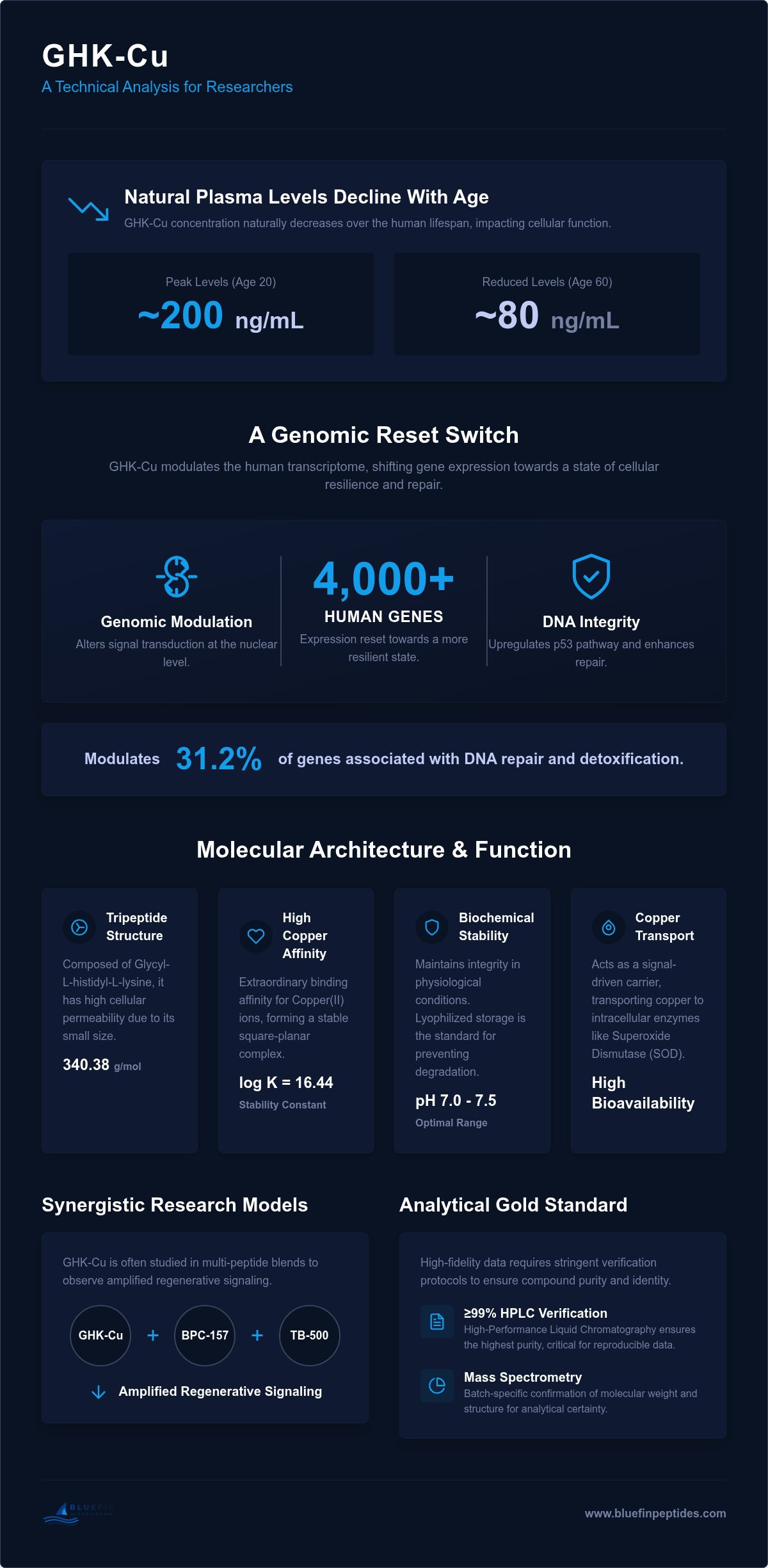
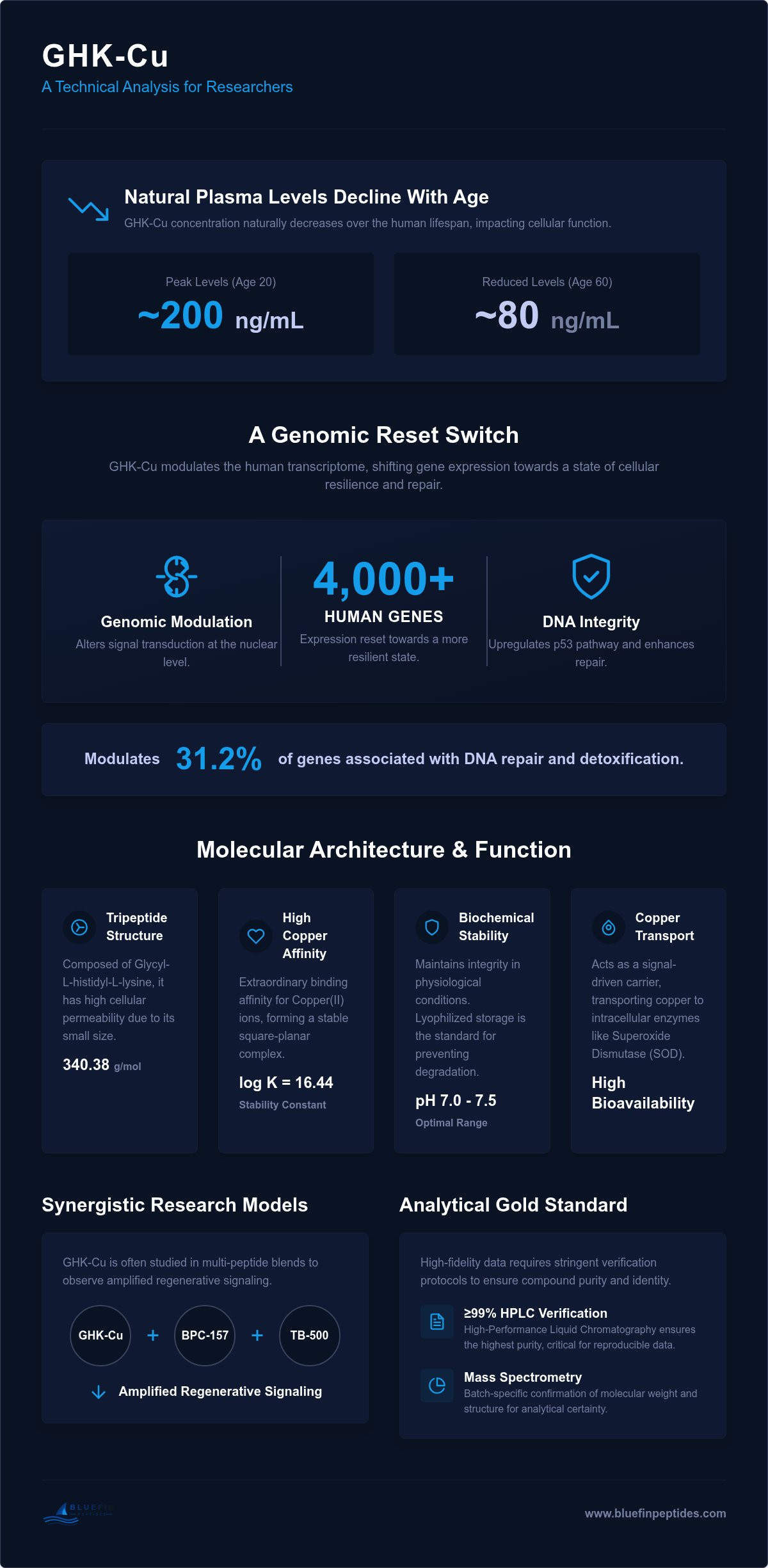
This article delivers a definitive technical analysis of GHK-Cu bioactivity and its complex signaling pathways. We'll examine the specific genomic "reset" mechanisms that occur as natural plasma levels decline from 200 ng/mL to 80 ng/mL over the human lifespan. By the end of this guide, you'll have a comprehensive understanding of laboratory standards, including protocol guidance for synergistic models involving BPC-157 and TB-500. We'll also dive into the verification of analytical standards necessary for high-purity procurement, ensuring your laboratory data remains beyond reproach.
Key Takeaways
- Analyze the molecular architecture of the GHK-Cu tripeptide, focusing on its high-affinity copper(II) sequestration and stability within complex biological environments.
- Examine the genomic modulation potential of GHK-Cu, including its capacity to reset the expression of over 4,000 human genes and enhance DNA repair pathways.
- Evaluate ghk-cu peptide research applications within synergistic multi-peptide models to understand how BPC-157 and TB-500 fragments amplify regenerative signaling.
- Identify the analytical protocols required for high-fidelity data, including the necessity of ≥99% HPLC verification and batch-specific mass spectrometry confirmation.
Molecular Architecture of GHK-Cu: A High-Affinity Copper Complex
The Copper peptide GHK-Cu is a naturally occurring tripeptide composed of Glycyl-L-histidyl-L-lysine. It exhibits an extraordinary binding affinity for copper(II) ions. This interaction is central to ghk-cu peptide research applications, where the molecule serves as a primary vehicle for copper sequestration. With a molecular weight of approximately 340.38 g/mol, the tripeptide maintains high cellular permeability. Its small size allows it to navigate dense extracellular matrices in research assays with high efficiency. This structural agility ensures that copper remains bioavailable while shielded from participating in deleterious Fenton-type reactions.
Biochemical Structure and Stability
The Gly-His-Lys sequence forms a distinct complex with copper through the involvement of nitrogen atoms from the histidine imidazole ring and the terminal amino group. This coordination creates a stable, square-planar geometry. Stability. Precision. In laboratory settings, maintaining this architecture requires strict control over pH and temperature. Fluctuations outside the physiological range of pH 7.0 to 7.5 can destabilize the ligand-metal bond. Lyophilized storage remains the standard to prevent hydrolytic degradation. The chelation mechanism is defined by a high stability constant of approximately log K = 16.44, ensuring copper(II) remains sequestered until reaching targeted cellular receptors.
Researchers must account for the physical state of the peptide during experimentation. High-purity compounds, such as those verified by HPLC, show superior resistance to degradation in aqueous solutions compared to lower-grade alternatives. This molecular resilience is critical for long-term assays where maintaining a consistent concentration of the copper-peptide complex is paramount for reproducible data.
Copper Transport and Bioavailability In Vitro
GHK-Cu functions as a signal-driven carrier. It transports copper to critical intracellular enzymes like superoxide dismutase (SOD). This delivery is vital for preventing oxidative damage in laboratory models by neutralizing reactive oxygen species. Unlike bulkier copper-binding ligands, GHK-Cu exhibits fluid dynamics that facilitate rapid exchange between the peptide and enzyme active sites. It outpaces larger proteins in molecular research due to its kinetic agility. This mobility ensures that copper bioavailability remains high even in complex, nutrient-dense media. The peptide's role extends beyond mere transport; it acts as a molecular switch, modulating enzymatic activity through precise metal ion donation.
When comparing GHK-Cu to other ligands like albumin, the tripeptide demonstrates a unique ability to cross lipid bilayers. This permeability is a cornerstone of ghk-cu peptide research applications involving intracellular signaling. It navigates biological fluids with the precision of a specialized vessel, delivering its metallic cargo exactly where enzymatic demand is highest. This targeted approach minimizes the risk of free copper toxicity, a common confounding variable in high-sensitivity assays.
Genomic Modulation and Signal Transduction Pathways
GHK-Cu functions as a sophisticated genomic switch. It transcends simple protein stimulation by resetting the human transcriptome. Evidence suggests that ghk-cu peptide research applications encompass the modulation of over 4,000 human genes, shifting them toward a state associated with cellular resilience. This systemic influence is achieved through high-affinity interactions that alter signal transduction at the nuclear level. Precision. Reproducibility. These are the benchmarks for researchers mapping these complex pathways. By navigating the intricate landscape of gene expression, the tripeptide offers a unique mechanism for investigating cellular "reset" protocols in molecular biology.
DNA Repair and Antioxidant Gene Expression
The peptide's impact on DNA integrity is profound. It upregulates the p53 pathway, a critical checkpoint for preventing the replication of damaged genetic material. By enhancing DNA polymerase activity, GHK-Cu ensures higher fidelity during cellular division. It also triggers the induction of metallothioneins, which are specialized proteins that sequester toxic metals and bolster the cellular antioxidant system. Genomic studies indicate that GHK-Cu modulates the expression of approximately 31.2% of genes specifically associated with DNA repair and cellular detoxification. This level of control makes it an indispensable tool for investigating cellular longevity and genomic stability. Researchers can observe these shifts in real-time, providing a window into the molecular mechanisms of cellular defense.
Cytokine Modulation and Anti-Inflammatory Signaling
Research assays consistently demonstrate the peptide's ability to suppress pro-inflammatory signaling. It directly interacts with the NF-kB pathway to downregulate cytokines such as IL-6 and TNF-alpha. This suppression is not merely inhibitory; it rebalances the cellular environment to favor regeneration over chronic inflammation. In fibrotic research models, GHK-Cu modulates TGF-beta signaling to prevent excessive collagen cross-linking and scarring. This nuanced regulation allows for a more accurate study of tissue remodeling processes. Laboratory models focused on chronic inflammation benefit from this controlled cytokine environment, as it permits the isolation of specific regenerative variables. For investigators requiring rigorous data, Bluefin Peptides offers HPLC-verified compounds to ensure that signaling responses are not confounded by impurities. Maintaining a high purity register is essential when observing subtle shifts in signal transduction across long-duration assays.
Investigating GHK-Cu in Regenerative Medicine Models
GHK-Cu serves as a high-fidelity signaling molecule in tissue engineering. Its role in ghk-cu peptide research applications extends far beyond dermal repair, influencing systemic regenerative pathways through precise protein modulation. By acting as a molecular catalyst, the tripeptide coordinates the complex interplay between cellular activation and structural synthesis. Researchers utilize these models to observe how GHK-Cu initiates the production of collagen types I, III, and V, which are fundamental to the mechanical integrity of connective tissues. This multi-collagen approach ensures a balanced architecture during the remodeling phase, preventing the erratic cross-linking often seen in lower-fidelity repair models.
Fibroblast Proliferation and Extracellular Matrix (ECM) Remodeling
Fibroblasts drive the engine of tissue repair. In GHK-Cu treated models, these cells exhibit heightened activation, leading to a quantifiable increase in glycosaminoglycan synthesis. These molecules are essential for maintaining the hydration and elasticity of the extracellular matrix. Precision. Control. The tripeptide also regulates the ratio between matrix metalloproteinases (MMPs) and their inhibitors (TIMPs). This balance is critical. It prevents excessive matrix degradation while allowing for the fluid movement of cells through the repair site. Maintaining ECM integrity is a primary focus in wound healing research, where GHK-Cu serves as a stabilizing force against oxidative stress and enzymatic breakdown.
Angiogenesis and Vascular Endothelial Growth
Successful regeneration requires a robust blood supply. GHK-Cu influences angiogenesis by upregulating Vascular Endothelial Growth Factor (VEGF) in microvascular research. In 3D cell culture models, investigators have observed increased capillary formation when the tripeptide is present. This effect stems from the synergy between sequestered copper ions and peptide fragments, which act as chemoattractants for endothelial cells. Navigating the complexities of microvascular repair is essential in ischemic research, where establishing new vascular networks determines the survival of regenerated tissues. The peptide's ability to facilitate this growth without inducing pathological vessel formation makes it a primary tool for vascular signaling assays.
Beyond soft tissue, GHK-Cu shows promise in nerve regeneration and bone tissue engineering. It enhances the expression of Nerve Growth Factor (NGF) in neural models, supporting axon outgrowth and myelination. In skeletal research, the tripeptide stimulates osteoblast activity, increasing the secretion of alkaline phosphatase and promoting bone mineral density. These diverse ghk-cu peptide research applications highlight the molecule's versatility as a master regulator of cellular growth. Whether anchoring new nerve fibers or reinforcing the mineral matrix of bone, the peptide remains a disciplined choice for high-stakes regenerative assays.
Synergistic Research: GHK-Cu in Multi-Peptide Laboratory Blends
Modern ghk-cu peptide research applications are increasingly shifting toward multi-peptide models that mimic the complex biochemical environment of biological systems. While individual peptide assays provide foundational data, investigating the interplay between distinct signaling pathways offers a more comprehensive view of cellular remodeling. Formulating GHK-Cu BPC-157 TB-500 research blends requires precise analytical control to ensure that each component maintains its structural integrity without interfering with the copper-sequestration capacity of the GHK-Cu tripeptide. Stability. Solubility. Fidelity. These factors determine the success of synergistic laboratory assays, where the objective is to observe multi-faceted tissue responses in a controlled environment.
GHK-Cu and BPC-157: Dual-Pathway Repair Models
The combination of GHK-Cu and BPC-157 represents a sophisticated dual-pathway approach to tissue repair research. BPC-157 modulates the nitric oxide (NO) pathway and upregulates growth factor receptors, while GHK-Cu focuses on genomic modulation and copper transport. When utilized together, these molecules can enhance cellular migration and fibroblast activation more effectively than when applied in isolation. Researchers studying chronic inflammatory states often utilize the BPC-157 research peptide to observe its protective effects on the endothelium alongside GHK-Cu's collagen-synthesis pathways. This interaction creates a robust model for investigating the restoration of vascular and connective tissue integrity through simultaneous genomic and vascular signaling.
The Role of TB-500 Fragments in Complex Signaling
TB-500, a synthetic fragment of Thymosin Beta-4, functions as a primary actin-sequestering protein. Its interaction with GHK-Cu's copper-mediated signaling facilitates more efficient actin polymerization, which is a prerequisite for cell motility. It's essential to prevent competitive inhibition or solubility crashes by optimizing concentrations for synergistic bioactivity. Triple-peptide blends demonstrate a synergistic potential where the combined genomic, vascular, and structural signaling pathways accelerate the observation of regenerative milestones in 3D cell cultures. This tripartite model allows for the simultaneous study of ECM remodeling, angiogenesis, and cytoskeletal organization within a single experimental framework.
Maintaining the analytical standards of these complex blends is paramount for qualified researchers. Any deviation in purity can lead to confounding variables that obscure the subtle cross-talk between these signaling molecules. For investigators requiring verifiable data and domestic logistical speed, you can procure HPLC-verified multi-peptide blends that meet the highest laboratory benchmarks. Precision in formulation ensures that your research into ghk-cu peptide research applications remains accurate and reproducible across all assay iterations. Every batch includes mass-spec confirmation to guarantee that the molecular identity of each peptide remains uncompromised.
Analytical Verification and Handling Protocols for GHK-Cu Research
Analytical integrity is the bedrock of ghk-cu peptide research applications. High-fidelity results depend on the elimination of confounding variables, which starts with the chemical purity of the compound itself. Researchers require ≥99% HPLC verification to ensure that experimental observations stem from the peptide's bioactivity rather than unidentified solvent residuals or synthetic byproducts. This level of transparency isn't optional. It's a fundamental requirement for the reproducibility of complex molecular assays. Navigating the data requires a disciplined eye, focusing on the specific peaks that confirm a clean separation of the target molecule from its precursors.
HPLC and Mass Spectrometry: The Gold Standard for Purity
A chromatogram provides a visual map of the peptide's purity. By identifying solvent residuals and minor impurities, investigators can safeguard their assays against unintended chemical interactions. Mass spectrometry serves as the final confirmation, verifying the molecular identity of the GHK-Cu complex through its mass-to-charge ratio. This dual-verification process ensures the stoichiometric balance of the copper-peptide bond is maintained. Just as one might verify the specs for HPLC verified retatrutide, GHK-Cu demands batch-specific Certificates of Analysis (COAs). These documents provide the physical evidence needed to maintain consistency across long-duration research projects.
Reconstitution and Stability in the Laboratory
The transition from lyophilized powder to aqueous solution is a critical phase. Reconstitution must be handled with care to avoid mechanical stress on the peptide structure. While bacteriostatic water is the standard diluent for many ghk-cu peptide research applications due to its antimicrobial properties, sterile saline is often utilized in assays where pH sensitivity is paramount. Stability is temperature-dependent. Reconstituted peptides face rapid degradation at room temperature; therefore, maintaining a cold chain at 2-8°C is essential for short-term preservation. For long-term storage, the lyophilized vials should remain at -20°C to prevent hydrolytic cleavage of the peptide bonds.
Logistical precision ensures that these sensitive compounds arrive in an optimal state. Stocking domestically in the United States allows for rapid fulfillment, minimizing the time the peptide spends in transit where temperature fluctuations are harder to control. This commitment to research peptide quality standards provides the security and trust required for high-stakes laboratory environments. Speed. Verification. Security. These pillars support the "show, don't tell" philosophy of modern biochemistry, allowing researchers to focus on the "how" of their processes while being certain of the "what" in their results.
Advancing Molecular Fidelity in Genomic Research
The progression of ghk-cu peptide research applications hinges on the transition from basic observation to high-resolution genomic analysis. By leveraging the tripeptide's capacity to modulate over 4,000 genes, researchers can unlock new data within regenerative medicine and cellular signaling models. Success in these complex assays requires more than just biological insight; it demands the security of analytical standards that eliminate confounding variables. Synergistic models involving BPC-157 and TB-500 further amplify these possibilities, provided the compounds maintain stoichiometric precision and structural integrity.
Analytical certainty is the anchor of every successful laboratory assay. To ensure your data reflects true bioactivity, you must prioritize compounds that meet the highest benchmarks for purity and documentation. Secure HPLC-Verified GHK-Cu for Your Laboratory Research to access ≥99% purity, batch-specific COAs, and mass-spec confirmation. With rapid domestic US shipping, your laboratory can maintain momentum without compromising on verification. We provide the precise tools needed for your next breakthrough with unwavering professional discipline.
Frequently Asked Questions
What is the primary mechanism of action for GHK-Cu in laboratory research?
GHK-Cu functions primarily through high-affinity copper(II) sequestration and transport. It acts as a signal-driven carrier that delivers copper to critical intracellular enzymes, such as superoxide dismutase, while preventing oxidative damage from free copper ions. This mechanism allows the tripeptide to modulate enzymatic activity and cellular signaling with high precision in various ghk-cu peptide research applications.
How does GHK-Cu influence gene expression in cellular models?
The tripeptide operates as a sophisticated genomic switch capable of resetting the human transcriptome to a state of heightened resilience. Research data suggests it modulates the expression of over 4,000 human genes, specifically those associated with DNA repair and antioxidant defense. This systemic influence is achieved by altering signal transduction at the nuclear level, providing a robust model for investigating cellular longevity.
Can GHK-Cu be combined with BPC-157 and TB-500 for research purposes?
Yes, researchers frequently utilize ghk-cu peptide research applications within multi-peptide blends to study synergistic tissue repair pathways. These models combine GHK-Cu's genomic effects with the nitric oxide pathway modulation of BPC-157 and the actin-sequestering properties of TB-500. This tripartite approach allows for the simultaneous observation of ECM remodeling, angiogenesis, and cytoskeletal organization within a single experimental framework.
Why is HPLC verification critical for GHK-Cu research applications?
HPLC verification ensures a purity level of ≥99%, which is vital for maintaining experimental fidelity. High-purity standards prevent confounding variables caused by synthetic byproducts or solvent residuals that could interfere with the stoichiometric balance of the copper-peptide complex. This analytical certainty is required for the reproducibility of sensitive molecular biology assays and long-duration signaling studies.
What are the recommended storage conditions for lyophilized GHK-Cu powder?
Lyophilized GHK-Cu vials should be stored at -20°C for long-term preservation to prevent hydrolytic cleavage of the peptide bonds. This physical state is highly stable and protects the molecular architecture from environmental degradation. Researchers must maintain a consistent cold chain to ensure the tripeptide remains viable for reconstitution and subsequent laboratory analysis.
Is GHK-Cu stable after reconstitution for long-term assays?
Stability decreases significantly once the peptide is in an aqueous solution. Reconstituted GHK-Cu is highly temperature-dependent and should be stored at 2-8°C for short-term use to minimize degradation rates. Researchers should avoid frequent freeze-thaw cycles and mechanical stress, as these factors can destabilize the ligand-metal bond and compromise the integrity of the copper-tripeptide complex.
What is the role of copper in the GHK-Cu tripeptide complex?
Copper(II) ions are the central metallic cargo that the Gly-His-Lys sequence sequesters to form a stable, square-planar geometry. This interaction ensures that copper remains bioavailable for enzymatic donation while being shielded from participating in harmful Fenton-type reactions. The peptide's ability to navigate biological fluids as a carrier depends entirely on this high-affinity coordination with the copper ion.
How do researchers verify the purity of GHK-Cu peptides?
Verification is achieved through the analysis of batch-specific Certificates of Analysis (COAs) that include HPLC chromatograms and mass spectrometry reports. These documents provide the physical evidence of molecular identity and purity. By examining the mass-to-charge ratio and identifying any potential solvent residuals, investigators can confirm that the compound meets the rigorous laboratory standards necessary for high-fidelity data collection.
For laboratory research use only. Not for human or veterinary use. This content is educational and does not constitute medical, dosing, or usage guidance.
Browse the BLUEFIN catalog