GHK-Cu Mechanism of Action: A Comprehensive Molecular Analysis
A single tripeptide capable of modulating the expression of over 4,000 human genes represents a paradigm shift in regenerative biochemistry. Precision. Stability. Verification. These are the benchmarks of legitimate inquiry, yet the current landscape of non-academic literature often obscures the GHK-Cu mechanism of action behind inconsistent data and unverified claims. You require absolute clarity on how this molecule navigates the complex currents of the cellular environment to facilitate copper transport and genomic signaling.
This analysis provides a rigorous molecular breakdown of the GHK-Cu tripeptide. We examine the GHK-Cu/copper transport axis and identify specific gene expression targets through the lens of the Connectivity Map. By the conclusion, you'll possess a comprehensive understanding of cellular remodeling pathways and the batch-level verification standards essential for high-fidelity laboratory research. We provide the tools for verification. You drive the discovery. This is the deep-sea precision your research demands.
Key Takeaways
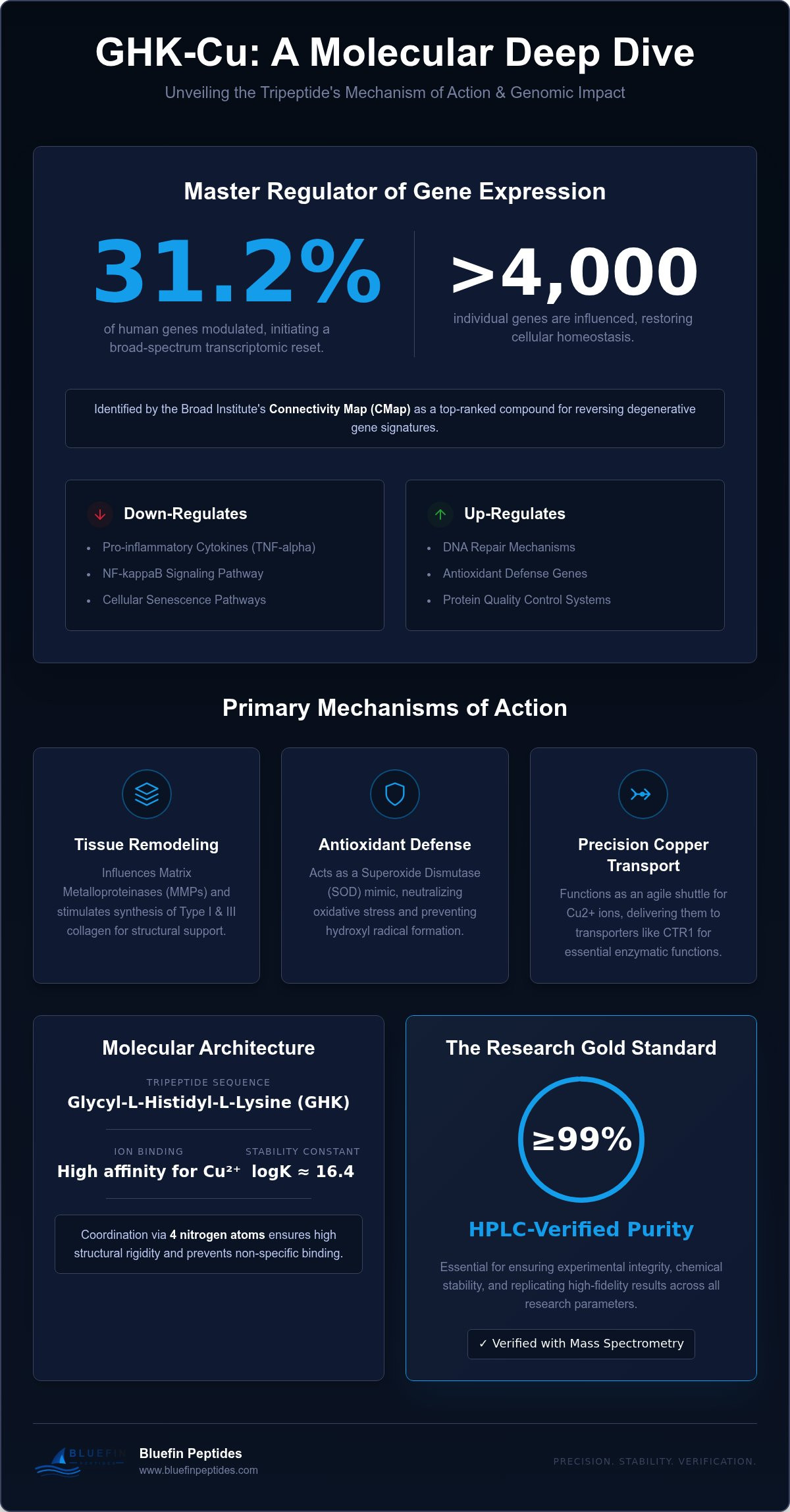
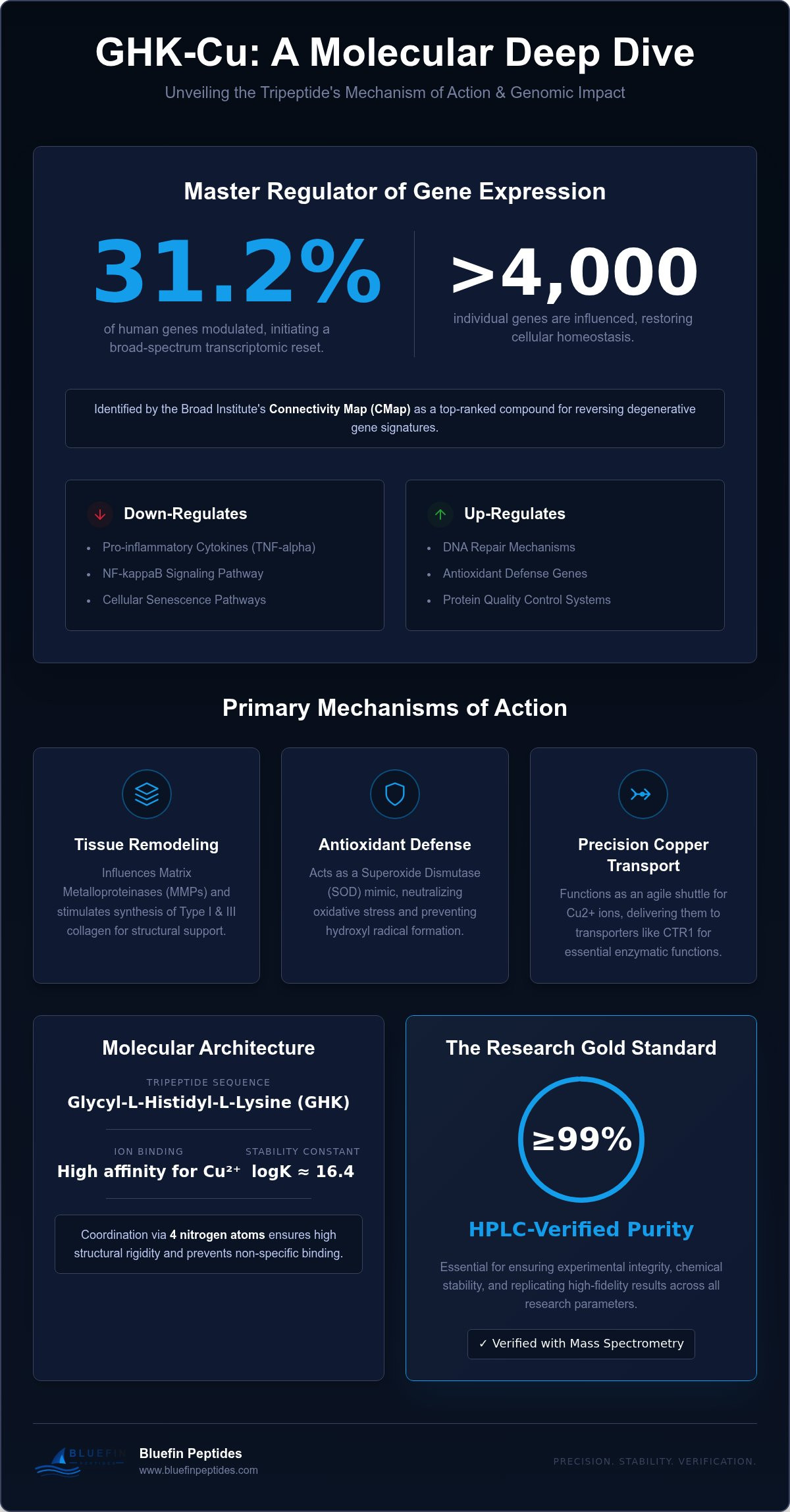
- Analyze the GHK-Cu mechanism of action through the Connectivity Map (CMap) to understand its modulation of 31.2% of human genes.
- Differentiate the tripeptide's role in tissue remodeling by examining its influence on Matrix Metalloproteinases and the synthesis of Type I and III collagen.
- Evaluate the antioxidant signaling pathways where GHK-Cu acts as a Superoxide Dismutase mimic to neutralize oxidative stress in research environments.
- Confirm laboratory standards for procurement by prioritizing ≥99% HPLC-verified purity and comprehensive mass spectrometry documentation.
- Explore the chemical stability of the copper-binding axis to maintain experimental integrity during molecular analysis.
Molecular Architecture and Copper-Binding Affinity of GHK-Cu
The glycyl-L-histidyl-L-lysine (GHK) tripeptide possesses a distinct evolutionary blueprint. It's a naturally occurring plasma constituent with a high, specific affinity for Cu2+ ions. This spontaneous complexing forms the Copper peptide GHK-Cu, a molecule that functions as a sophisticated shuttle within the biological current. Precision. Stability. Verification. These are the anchors of its molecular structure.
The Gly-His-Lys Sequence and Ion Coordination
Coordination occurs through the participation of four distinct nitrogen atoms. These include the alpha-amino nitrogen of the glycine residue, the deprotonated amide nitrogens of the peptide backbone, and the nitrogen from the histidine imidazole ring. This specific configuration ensures structural rigidity and chemical buoyancy. The stability of the complex is governed by the pKa values of the histidine residue, which allow for the precise release of copper under specific pH fluctuations. The complex exhibits a log stability constant of approximately 16.4. This high affinity ensures that copper remains sequestered from non-specific binding sites, preventing the generation of hydroxyl radicals through Fenton-type reactions. It's a controlled sequestration that maintains experimental integrity.
The Copper-Transport Axis in Cellular Research
Navigating the cellular membrane requires a balance of stability and bioavailability. The GHK-Cu mechanism of action relies on its ability to present copper to high-affinity transporters, such as CTR1, without inducing the oxidative stress associated with free metal ions. It acts as a regulated reservoir. Within laboratory models, this mechanism facilitates the delivery of copper to essential intracellular enzymes. Cytochrome c oxidase, a critical component of the electron transport chain, depends on this mediated delivery for optimal mitochondrial function. Without this precise transport axis, cellular respiration remains compromised.
Compared to larger copper carriers like albumin or ceruloplasmin, GHK-Cu offers a more agile profile for cellular uptake. Its low molecular weight allows for rapid diffusion through the extracellular matrix. Research environments requiring high-fidelity results must prioritize the chemical integrity of the compound. Utilizing ≥99% HPLC-verified GHK-Cu ensures that the stability constants observed in literature are replicated within your specific experimental parameters. Consistent results. Verified data. Deep-sea precision in every batch. We provide the high-purity compounds required to navigate these complex molecular pathways.
GHK-Cu as a Master Regulator of Gene Expression
The genomic impact of GHK-Cu represents one of the most profound areas of contemporary peptide research. While its copper-binding affinity is foundational, the tripeptide functions as a systemic master regulator of gene expression. This isn't a localized effect. It's a broad-spectrum transcriptomic reset that influences thousands of genes simultaneously. It navigates the complex genomic currents to restore cellular homeostasis.
The Connectivity Map and Transcriptomic Reset
The Broad Institute's Connectivity Map (CMap) provides the data-driven framework for this understanding. In these large-scale genomic screenings, GHK-Cu was identified as a top-ranked compound for reversing degenerative gene signatures. It specifically targets pathways associated with chronic inflammation and cellular senescence. By down-regulating pro-inflammatory cytokines like TNF-alpha and inhibiting the NF-kappaB signaling pathway via P65 modulation, GHK-Cu shifts the cellular environment away from a state of decline. Precision in these measurements is vital for laboratory accuracy.
This transcriptomic reset essentially reverts gene expression to a more youthful profile in various research models. It's not just about suppressing negative signals. The peptide simultaneously up-regulates genes involved in DNA repair and antioxidant defense. This dual-action approach ensures that the GHK-Cu mechanism of action addresses both the symptoms and the underlying genomic drivers of cellular aging. For researchers focusing on longevity, utilizing verified GHK-Cu compounds is essential to ensure that these transcriptomic shifts remain consistent across experimental replicates.
Modulating the Ubiquitin-Proteasome System
Beyond direct gene transcription, GHK-Cu maintains cellular health by regulating protein quality control. It influences the ubiquitin-proteasome system, the primary machinery for removing damaged or misfolded proteins. Studies indicate that GHK-Cu modulates the expression of the heat shock protein (HSP) family, which acts as molecular chaperones to ensure proper protein folding and stability. Understanding the full GHK-Cu mechanism of action requires analyzing its impact on these chaperone-mediated pathways.
The scale of this influence is significant. CMap studies demonstrate that GHK-Cu shifts the expression of 31.2% of human genes toward a regenerative profile. This systemic impact on the proteome ensures that damaged components don't accumulate, preventing the proteotoxic stress that often characterizes aged or diseased cells. Precision in these pathways requires a compound free from the contaminants that can skew transcriptomic data. We provide the analytical documentation necessary to verify that every batch meets the rigorous standards of your laboratory environment. Reliability isn't an option. It's the baseline.
Mechanisms of Tissue Remodeling and Extracellular Matrix Synthesis
The GHK-Cu mechanism of action extends beyond genomic signaling into the physical architecture of the extracellular matrix (ECM). It governs the delicate equilibrium between tissue degradation and synthesis. Specifically, the tripeptide modulates the activity of Matrix Metalloproteinases (MMPs) and their natural counterparts, Tissue Inhibitors of Metalloproteinases (TIMPs). This regulation ensures that remodeling occurs without the chaotic breakdown often seen in pathological states. By maintaining this balance, GHK-Cu facilitates a structured reconstruction of the biological scaffold. Precision. Stability. Structural integrity.
Fibroblast Activation and Collagen Pathways
Direct activation of dermal fibroblasts is a core component of this remodeling process. GHK-Cu significantly increases mRNA expression for both Type I and Type III collagen, alongside elastin. This isn't merely a stimulation of bulk production. It's a targeted orchestration. Type III collagen, often associated with early-stage repair, is synthesized in tandem with Type I to ensure structural integrity and flexibility. In complex research models, studying this effect in a GHK-Cu BPC-157 TB-500 research blend allows for the observation of multi-pathway synergistic remodeling. The tripeptide also influences the production of glycosaminoglycans (GAGs) and proteoglycans, such as decorin, which are essential for hydration and osmotic balance within the matrix.
Angiogenesis and Vascular Endothelial Growth Factor (VEGF)
Tissue remodeling remains incomplete without a robust vascular supply. GHK-Cu induces angiogenesis by up-regulating Vascular Endothelial Growth Factor (VEGF) and basic Fibroblast Growth Factor (bFGF). This mechanistic pathway ensures that newly synthesized ECM is supported by a functional microvascular network. Increased blood vessel formation facilitates the transit of nutrients and the efficient clearance of metabolic waste. In experimental environments, the reliability of these observations depends entirely on adhering to strict research peptide quality standards. Contaminants can disrupt growth factor signaling, leading to inconsistent data.
The anti-inflammatory signaling inherent in the tripeptide prevents the development of chronic fibrosis. By stabilizing Antioxidant Defense and Anti-Inflammatory Signaling, GHK-Cu ensures that the remodeling phase transitions smoothly into maturation. This prevention of oxidative stress protects the integrity of newly formed collagen fibers. It's a deep-sea precision in structural management. Every molecular interaction is verified. Every result is documented. This is the baseline for high-fidelity laboratory analysis. We provide the high-purity compounds required to navigate these complex structural pathways with absolute certainty.
Antioxidant Defense and Anti-Inflammatory Signaling
The GHK-Cu mechanism of action encompasses a robust defense against oxidative degradation. It functions as a catalytic antioxidant, navigating the turbulent chemical currents within cellular fluids to neutralize reactive oxygen species. This isn't a passive sequestration. It's an active, enzymatic-like intervention that stabilizes the biological environment against the corrosive effects of free radicals. Precision in these antioxidant pathways is critical for maintaining the integrity of laboratory models. Inconsistent purity leads to inconsistent data. We prioritize the documentation necessary to verify these biochemical interactions.
Direct Radical Scavenging and SOD Activity
GHK-Cu functions as a potent Superoxide Dismutase (SOD) mimic. It directly neutralizes superoxide radicals, preventing the subsequent cascade of oxidative damage that often compromises cellular viability in research settings. Beyond simple radical scavenging, the peptide exhibits the capacity to quench toxic byproducts of lipid peroxidation, specifically 4-hydroxynonenal. This specific quenching ability sets GHK-Cu apart from standard laboratory antioxidants like vitamin E or glutathione, which often lack the same catalytic efficiency in aqueous environments. It provides a more resilient buffer against the oxidative tide. When your research requires this level of chemical stability, you can procure HPLC-verified GHK-Cu to ensure experimental reproducibility.
Iron Homeostasis and Hydroxyl Radical Prevention
A primary driver of oxidative stress is the release of free iron, which catalyzes the formation of highly reactive hydroxyl radicals via the Fenton reaction. GHK-Cu intervenes in this process through its unique iron-binding properties. It effectively binds non-transferrin bound iron, preventing it from participating in radical-generating cycles. This sequestration is particularly vital in models of tissue injury where ferritin may release its iron stores into the extracellular space. GHK-Cu sequesters free iron ions to inhibit their participation in the Fenton reaction, thereby preventing the formation of destructive hydroxyl radicals.
This antioxidant profile is complemented by a systemic suppression of pro-inflammatory signaling. GHK-Cu modulates the expression of key inflammatory markers, including IL-1, IL-6, and TGF-beta. By down-regulating these cytokines, the tripeptide prevents the transition from acute response to chronic inflammation. It maintains a disciplined signaling environment. This dual-action approach-neutralizing oxidative threats while simultaneously dampening inflammatory signals-ensures that cellular remodeling proceeds without the interference of excessive proteolysis or oxidative decay. Reliability in these results starts with the chemical nature of the compound. We ensure every batch meets the ≥99% purity threshold required for high-stakes biochemistry.
Laboratory Procurement: Verifying GHK-Cu Purity and Stability
The molecular efficacy of the GHK-Cu mechanism of action is contingent upon the chemical fidelity of the compound utilized. Impurities within a research batch act as biochemical noise, potentially obscuring genomic signals or inducing non-specific cellular responses. Precision. Verification. Reproducibility. For laboratory environments, these aren't merely objectives; they're the baseline for valid data. Procuring GHK-Cu requires a rigorous transition from theoretical understanding to analytical confirmation of the physical material.
Analyzing HPLC and Mass-Spec Documentation
A Certificate of Analysis (COA) provides the necessary transparency for every batch. High-Performance Liquid Chromatography (HPLC) is the gold standard for determining purity, ensuring that the GHK-Cu tripeptide meets or exceeds the ≥99% threshold required for high-fidelity research. A single, sharp peak on the chromatogram indicates a lack of truncated sequences or synthesis byproducts. Mass Spectrometry (MS) serves as the secondary anchor, confirming the exact molecular weight of the complex. It's essential to verify the absence of residual Trifluoroacetic acid (TFA), a common byproduct of peptide synthesis that can induce cytotoxicity in sensitive cell cultures. For researchers established in multi-peptide studies, these standards mirror the rigorous Tirzepatide research peptide analytical specifications used to maintain experimental control.
Logistical Considerations for Research Supplies
The physical state of the peptide dictates its stability profile. Lyophilized GHK-Cu powders exhibit high thermal resistance when stored in a desiccated state; however, reconstituted solutions are significantly more prone to degradation. Researchers should aliquot reconstituted peptides to minimize freeze-thaw cycles, which can disrupt the copper-binding axis and compromise the tripeptide structure. Maintaining this stability requires a disciplined logistics chain. US-based fulfillment ensures that materials aren't subjected to the prolonged transit times or temperature fluctuations often associated with international shipping. This speed maintains the cold-chain integrity essential for peptide longevity.
Batch-specific testing is the only definitive method for ensuring that the compound delivered matches the compound analyzed in literature. We provide the analytical documentation necessary to verify that every vial supports the complex remodeling and gene-regulatory pathways discussed in this review. Reliability is the bedrock of discovery. You can explore our GHK-Cu research peptide offerings to secure the high-purity compounds required for your next phase of laboratory inquiry. Stoic reliability. Deep-sea precision. This is the standard of a professional laboratory partner.
Advancing Cellular Discovery through Molecular Precision
The GHK-Cu mechanism of action represents a sophisticated intersection of genomic regulation and structural remodeling. By modulating over 4,000 human genes and maintaining the copper transport axis, this tripeptide serves as a foundational tool for studying cellular longevity and extracellular matrix synthesis. Its catalytic antioxidant properties and iron-sequestration capabilities provide a stabilized environment for high-fidelity research models. Discovery requires more than just hypothesis; it demands the highest grade of chemical verification to ensure every data point is accurate and reproducible.
Reliability is the anchor of successful laboratory inquiry. We provide the transparency necessary to confirm experimental integrity through batch-specific HPLC and Mass-Spec reports. With ≥99% purity guaranteed and domestic US shipping for rapid deployment, your research remains focused on results rather than procurement ambiguity. It's time to elevate your laboratory standards with compounds that match your academic rigor. Secure HPLC-Verified GHK-Cu for Your Research Laboratory and drive your next breakthrough with absolute confidence. Your discovery starts with verified precision.
Frequently Asked Questions
What is the primary mechanism of action for GHK-Cu?
The primary GHK-Cu mechanism of action involves the high-affinity transport of copper ions into cells to modulate genomic and enzymatic pathways. It acts as a specific shuttle for Cu2+; it facilitates uptake via CTR1 transporters while preventing the toxicity of free metal ions. This axis regulates systemic gene expression and maintains the structural integrity of the extracellular matrix through disciplined cellular signaling.
How does GHK-Cu influence gene expression in research models?
GHK-Cu influences gene expression by resetting the human transcriptome to a more youthful state across approximately 31.2% of genes. According to Connectivity Map (CMap) data, it up-regulates genes associated with DNA repair and antioxidant defense. Simultaneously, it down-regulates pro-inflammatory cytokines like TNF-alpha. This broad-spectrum modulation occurs through the inhibition of NF-kappaB signaling, allowing for a systemic transcriptomic reset.
Is GHK-Cu stable in aqueous solution for laboratory study?
GHK-Cu is relatively stable in aqueous solutions for short-term laboratory study but is highly susceptible to degradation over time. Lyophilized powder is the preferred storage state for long-term stability. Reconstituted solutions should be aliquoted and stored at -20°C to -80°C to prevent peptide hydrolysis. This protocol ensures the copper-peptide complex remains intact and prevents the release of free copper ions.
What is the difference between GHK and GHK-Cu in a research context?
The primary difference lies in the presence of the Copper(II) ion, which is essential for the peptide's biological activity. GHK is the tripeptide sequence (Glycyl-L-histidyl-L-lysine) without its metal ligand. While GHK alone has minor signaling properties, the GHK-Cu complex is required to facilitate copper transport. It's this specific complex that achieves the genomic shifts and antioxidant effects observed in CMap research.
How does GHK-Cu interact with matrix metalloproteinases (MMPs)?
GHK-Cu interacts with Matrix Metalloproteinases (MMPs) by regulating the balance between these degradative enzymes and their inhibitors (TIMPs). It prevents the excessive breakdown of the extracellular matrix by modulating MMP-2 and MMP-9 activity. This controlled remodeling ensures that collagen synthesis and degradation occur in a structural equilibrium. It maintains the biological scaffold against the chaotic breakdown seen in pathological states.
What purity level is required for GHK-Cu in biochemical assays?
High-fidelity biochemical assays require a purity level of ≥99% as verified by HPLC and Mass Spectrometry. Lower purity grades introduce synthesis byproducts and residual salts like TFA that can skew transcriptomic data. These contaminants often induce non-specific cellular toxicity, compromising experimental results. Reliable research depends on batch-specific documentation to confirm the exact chemical nature and stability of the tripeptide complex.
Does GHK-Cu exhibit antioxidant properties in cell cultures?
GHK-Cu exhibits potent antioxidant properties by functioning as a Superoxide Dismutase (SOD) mimic in cell cultures. It directly neutralizes superoxide radicals and prevents the formation of hydroxyl radicals by sequestering free iron ions. This dual-action mechanism protects cellular membranes from lipid peroxidation. It maintains oxidative homeostasis during experimental stress, providing a more resilient buffer than standard laboratory antioxidants like vitamin E.
Can GHK-Cu be used in combination with other peptides like BPC-157?
GHK-Cu is frequently studied in combination with peptides like BPC-157 to observe synergistic effects on tissue remodeling and vascular signaling. Research blends, such as the GHK-Cu / BPC-157 / TB-500 complex, target multiple regenerative pathways simultaneously. These multi-peptide environments allow for the analysis of VEGF-mediated angiogenesis alongside collagen synthesis and gastric-protective signaling. Such studies require rigorous purity standards to maintain experimental control and reproducibility.
For laboratory research use only. Not for human or veterinary use. This content is educational and does not constitute medical, dosing, or usage guidance.
Browse the BLUEFIN catalog