Tirzepatide Research Applications: A Comprehensive Analytical Overview

The integrity of a longitudinal metabolic study rests entirely on the chemical fidelity of its reagents. Inconsistent peptide purity remains the primary obstacle for modern laboratories, where a single percentage point of variance can skew complex datasets. Understanding tirzepatide research applications requires more than a surface-level grasp of its dual-agonist properties. It demands a rigorous commitment to analytical verification. Precision. Reliability. These are the anchors of valid experimentation.
You're likely familiar with the logistical risks that threaten peptide stability, from thermal degradation during transit to the absence of batch-specific HPLC documentation. This article provides an authoritative technical examination of tirzepatide's dual-agonist architecture and its role in non-human metabolic research. We'll preview standardized laboratory reconstitution protocols and the necessity of ≥99% purity for research integrity. By the end, you'll understand how to navigate the complexities of peptide procurement with the confidence of USA-stocked, batch-verified materials and stringent analytical transparency.
Key Takeaways
- Master the biochemical architecture of tirzepatide, specifically how its dual-agonist mechanism targets both GIP and GLP-1 receptors to drive synergistic metabolic responses.
- Evaluate established tirzepatide research applications within cellular signaling pathways and adipose tissue remodeling to refine your experimental design and non-human models.
- Implement standardized laboratory protocols for reconstitution and lyophilized storage to prevent peptide degradation and ensure the stability of your longitudinal datasets.
- Secure the integrity of your findings by requiring ≥99% HPLC-verified purity and mass-spectrometry confirmation for every research batch to eliminate analytical variance.
- Streamline procurement by prioritizing USA-stocked materials that provide batch-specific Certificates of Analysis for immediate, transparent verification of chemical fidelity.
Biochemical Architecture: The GIP and GLP-1 Dual Agonist Mechanism
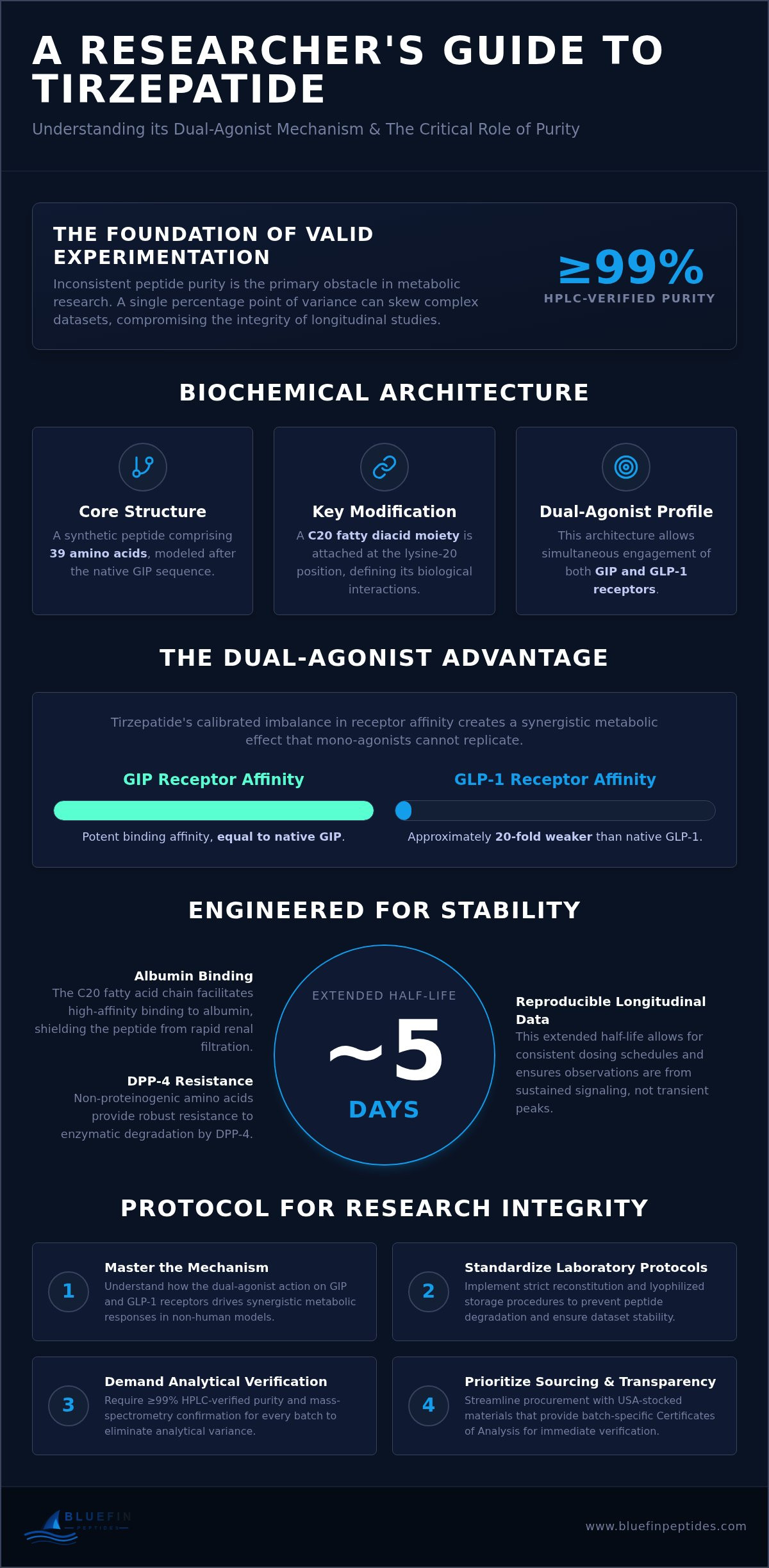
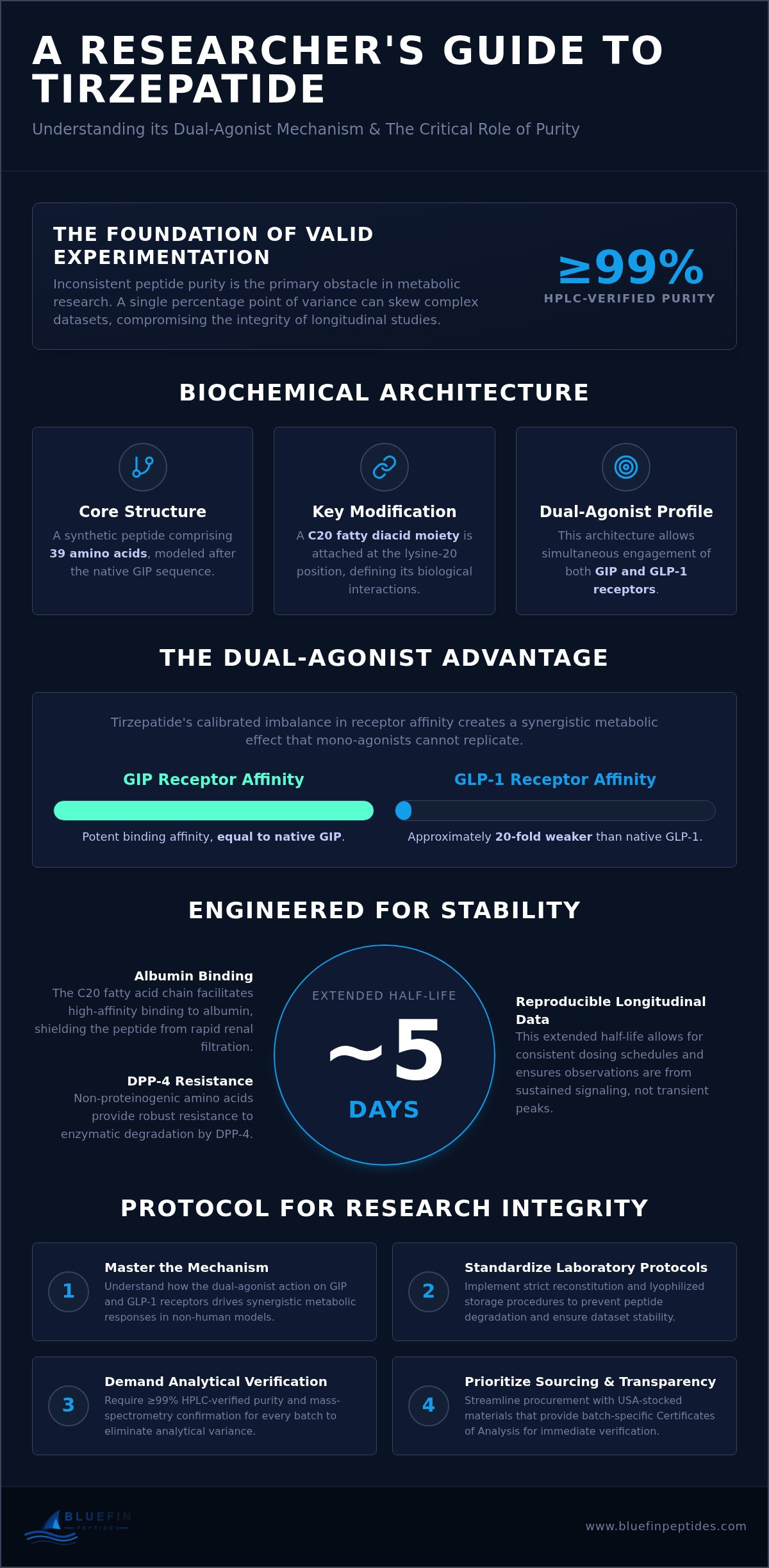
Tirzepatide represents a fundamental shift in the landscape of metabolic research. It's a synthetic peptide comprising 39 amino acids, primarily modeled after the glucose-dependent insulinotropic polypeptide (GIP) sequence. The structural cornerstone of this molecule is the attachment of a C20 fatty diacid moiety via a linker at the lysine residue at position 20. This modification isn't merely a stabilizer; it's the architectural anchor that defines the peptide's interaction with biological systems. By integrating these specific chemical attributes, the molecule achieves a dual-agonist profile that mono-agonist models cannot replicate.
Analytical. Verifiable. Precise.
In laboratory environments, the fidelity of these structural modifications determines the success of the experimental assay. Any deviation in the amino acid sequence or the attachment of the fatty acid chain can compromise the dual-activation pathway. This makes batch-level verification essential for maintaining the integrity of tirzepatide research applications.
The Synergy of GIP and GLP-1 Receptors
Mechanistic divergence is the primary value proposition of tirzepatide in non-human models. Unlike mono-agonist GLP-1 research models that target a single pathway, tirzepatide engages both the GIP and GLP-1 receptors simultaneously. This dual activation creates a synergistic effect on nutrient-stimulated hormone secretion, particularly in pancreatic islet studies where GIP activity complements GLP-1 signaling. Tirzepatide's dual agonist mechanism is defined by a potent binding affinity for the GIP receptor that equals native GIP, coupled with a GLP-1 receptor affinity that is approximately 20-fold weaker than native GLP-1. This calibrated imbalance is designed to maximize metabolic throughput while minimizing the overstimulation of the GLP-1 pathway, providing a unique variable for comparative metabolic studies.
Molecular Stability and Peptide Half-Life
Stability is the prerequisite for reproducible longitudinal data. The C20 fatty acid chain facilitates high-affinity binding to albumin, which effectively shields the peptide from rapid renal filtration. Beyond clearance protection, the inclusion of non-proteinogenic amino acids, such as aminoisobutyric acid at positions 2 and 13, provides robust resistance to dipeptidyl peptidase-4 (DPP-4) degradation. These structural safeguards extend the half-life to approximately five days in many experimental models. For researchers, this means longitudinal laboratory dosing schedules can be maintained with greater consistency. Steady-state concentrations are achieved without the volatility typical of less stable analogues. This ensures that observations regarding adipose tissue remodeling or glycemic control are the result of sustained signaling rather than transient peaks.
Cellular Signaling and Metabolic Research Applications
The physiological effects of tirzepatide are mediated through the activation of cyclic adenosine monophosphate (cAMP) signaling pathways. It's this secondary messenger system that facilitates the potentiation of glucose-dependent insulin secretion in pancreatic tissues. Beyond the pancreas, research increasingly focuses on extra-pancreatic tissues, where dual-agonist activity modulates systemic energy balance. Experimental data indicates that tirzepatide research applications extend into the regulation of hepatic lipid metabolism, providing a framework for studying the reversal of steatosis in cellular models. High-fidelity results in these assays depend on the exclusion of peptide impurities that might otherwise trigger non-specific cellular stress responses.
Glucose Homeostasis and Insulin Sensitivity
Research into glucose regulation often benchmarks tirzepatide’s ability to restore first- and second-phase insulin secretion. In vitro assays using pancreatic cell lines demonstrate that GIP receptor activation enhances the insulinotropic response to glucose more effectively than GLP-1 agonism alone. This synergy is critical for experimental models exploring beta-cell preservation and the suppression of postprandial glucagon. According to a Tirzepatide Clinical Overview, the molecule's unique signaling profile provides a stable baseline for quantifying glycemic variability in research cohorts. These studies often highlight the peptide's capacity to modulate glucose-dependent insulinotropic effects without the risk of hypoglycemia in non-diabetic models, a vital distinction for metabolic safety profiling.
Lipid Metabolism and Thermogenesis
The dual-agonist mechanism is particularly impactful in adipose tissue remodeling studies. Researchers have observed the upregulation of thermogenic genes, such as UCP1, in brown adipose tissue during chronic dosing schedules. This increase in thermogenic capacity suggests a role for tirzepatide in promoting energy expenditure through mitochondrial biogenesis in skeletal muscle assays. In metabolic syndrome models, the peptide’s influence on circulating lipid profiles involves the reduction of triglycerides and very-low-density lipoproteins. This modulation of lipid kinetics is a primary area of interest for laboratories investigating the intersection of obesity and cardiovascular risk. Navigating the complexities of these tirzepatide research applications requires reagents that maintain their chemical state throughout the study duration.
Precision in signaling requires precision in chemistry. To ensure that metabolic observations are attributable to the peptide's dual-agonist pathway rather than contaminants, researchers must utilize HPLC-verified tirzepatide with a purity of ≥99%. Anchored in data, tirzepatide research requires precise reagent purity to maintain experimental reproducibility. Mass spectrometry confirmation of the molecular sequence is the only way to verify that the 39-amino acid structure remains intact through the synthesis and shipping process.
Comparative Analysis in Obesity and Glycemic Control Models
Benchmarking tirzepatide against mono-agonist GLP-1 analogues like semaglutide reveals a distinct hierarchy in metabolic potency. While semaglutide targets the GLP-1 receptor exclusively, the integration of GIP agonism in tirzepatide creates a superior kinetic profile for weight loss and glycemic control in experimental settings. Research models often focus on how this dual activation accelerates the reduction of fat mass while preserving lean tissue. This synergy is a focal point of many tirzepatide research applications, particularly when investigating the threshold of metabolic efficiency in non-human subjects. According to a Tirzepatide Dual-Targeted Treatment Review, the molecular integration of these two pathways allows for a more nuanced modulation of nutrient-stimulated hormone secretion.
Neurological models further differentiate these compounds by examining appetite regulation pathways. Tirzepatide appears to influence central satiety signals through both GIP and GLP-1 receptors in the hypothalamus, potentially offering a broader spectrum of appetite suppression than mono-agonist alternatives. For laboratories focused on these high-stakes metabolic queries, utilizing a high-purity tirzepatide research peptide is non-negotiable. Purity ensures that observed satiety responses are biological, not toxicological. Superior kinetics. Enhanced affinity. Verified data.
Tirzepatide vs. Retatrutide: Research Trajectories
Comparing dual-agonism to the triple-agonism found in a retatrutide research peptide provides insight into the limits of receptor-mediated signaling. While tirzepatide balances GIP and GLP-1, retatrutide introduces glucagon (GCG) receptor activation. This third pathway increases energy expenditure through hepatic thermogenesis, creating a distinct research trajectory for studies involving extreme metabolic dysfunction. Assessing the potency differences between these dual and triple agonists allows researchers to map the incremental value of each receptor target. Navigating these comparative data points requires reagents that haven't been compromised by thermal degradation or sequence errors.
Efficacy in Non-Alcoholic Steatohepatitis (NASH) Models
Tirzepatide’s utility extends into the study of liver pathology, specifically the reduction of intrahepatic triglyceride content. In experimental murine models of metabolic dysfunction, dual-agonist treatment has shown a significant impact on fibrosis markers and the modulation of inflammatory cytokines. These studies often measure the decrease in hepatic fat accumulation as a primary endpoint. By targeting both insulin sensitivity and lipid oxidation, tirzepatide provides a robust model for investigating the reversal of NASH-related cellular damage. Consistent results in these complex assays require reagents that adhere to the highest analytical standards. Anchoring results in verified purity is the only way to ensure the reproducibility of fibrosis data.
Methodological Standards for In Vitro and In Vivo Stability
Validating complex metabolic pathways requires more than a correct peptide sequence. It requires the preservation of that sequence through every stage of laboratory handling. The physical state of the reagent is the silent variable in tirzepatide research applications. If the chemical integrity of the 39-amino acid chain is compromised by improper storage or handling, the resulting signaling data becomes invalid. Precision. Stability. Results. These aren't just goals; they're the prerequisites for reproducible science. Researchers must account for the susceptibility of the C20 fatty acid chain to oxidative stress and the potential for peptide hydrolysis when exposed to moisture.
Mitigating degradation begins with understanding the physical nature of lyophilized material. Lyophilization, or freeze-drying, removes water while maintaining the peptide's secondary structure, providing a stable medium for long-term storage. However, once the vacuum seal is breached or the peptide is reconstituted, the window of stability narrows. Standardized protocols are essential to ensure that molar concentrations remain consistent across different experimental batches, preventing the variance that often plagues longitudinal metabolic studies.
Reconstitution Protocols for Research Vials
The choice of diluent is a critical decision in the experimental design. Bacteriostatic water, containing 0.9% benzyl alcohol, is frequently utilized for multi-use research vials because it inhibits microbial growth over the course of a study. Conversely, sterile saline may be preferred for specific in vivo models where benzyl alcohol could interfere with sensitive neurological or cardiovascular assays. Aseptic techniques, including the use of filtered needles and sanitized vial septums, are mandatory to maintain reagent sterility. For a deeper dive into the analytical requirements of laboratory reagents, consult our guide on research peptide quality standards. Proper solubility is achieved through slow, controlled addition of the diluent, allowing the peptide to hydrate naturally without mechanical stress.
Long-term Storage and Thermal Stability
Thermal management is the anchor of peptide longevity. While lyophilized vials can withstand short-term transit at room temperature, they must be moved to a controlled cold chain upon arrival. Reconstituted peptides are significantly more fragile and should be stored at 2°C to 8°C for immediate use, or aliquoted and frozen to avoid repeated freeze-thaw cycles. Light exposure and mechanical agitation are also primary catalysts for degradation; shaking a vial can lead to peptide aggregation or denaturing of the delicate amino acid structure. When stored in a lyophilized state at -20°C and shielded from light exposure, tirzepatide maintains a shelf-life of up to 24 months without significant degradation of the primary amino acid sequence. Maintaining these strict environmental controls ensures that the tirzepatide research applications you're investigating are based on high-fidelity chemical interactions.
To secure the success of your next metabolic assay, it's vital to source reagents from a partner that prioritizes analytical transparency and logistical speed. You can procure HPLC-verified tirzepatide directly from our USA-stocked inventory to ensure your research starts with maximum chemical fidelity.
Procurement and Purity: Bluefin Peptides’ Analytical Rigor
Securing high-purity reagents is the final safeguard in laboratory procurement. Bluefin Peptides operates with a "show, don't tell" philosophy regarding chemical integrity, prioritizing transparency over marketing claims. Every batch of Tirzepatide Research Peptide undergoes rigorous High-Performance Liquid Chromatography (HPLC) and Mass Spectrometry confirmation to ensure the molecular weight and sequence align perfectly with theoretical values. These aren't suggestions; they're the foundational requirements for valid tirzepatide research applications. We maintain a strict adherence to "Research Use Only" protocols, ensuring our offerings remain within the boundaries of laboratory standards. Professional. Disciplined. Transparent.
Analytical verification is the only path to experimental security. In an era where inconsistent peptide purity can derail years of metabolic study, the ability to verify a reagent's chemical state is paramount. Our commitment to ≥99% HPLC-verified purity isn't a static goal but a baseline for every shipment. By removing the variable of impurity, we allow researchers to focus on the fluid movement of their data rather than the limitations of their materials.
Interpreting Batch-Specific COAs
Interpreting batch-specific Certificates of Analysis (COAs) is a skill essential for modern researchers. A COA must provide a clear view of the peak purity, illustrating the absence of significant impurities that could interfere with metabolic assays. While many suppliers offer generic reports, Bluefin provides documentation specific to the individual batch in your possession. This level of detail allows for the confirmation of chemical identity and ensures batch-to-batch consistency for longitudinal research. Mass-spec data acts as the definitive anchor, verifying that the 39-amino acid sequence has been synthesized without deletions or substitutions. It's the difference between assuming quality and possessing the data to prove it.
Bluefin Logistics: The Urgent Precision Advantage
Efficiency in fulfillment is as critical as purity in synthesis. Bluefin Peptides maintains a USA-stocked inventory to facilitate rapid domestic logistics, meeting the urgent needs of high-stakes laboratory environments. Our supply chain operates with deep-sea precision, moving reagents through a streamlined fulfillment process that minimizes exposure to environmental stressors. Secure packaging is utilized to prevent thermal degradation during transit, ensuring the peptide arrives in its intended physical state. By providing a reliable supply to the national research infrastructure, we allow laboratories to focus on the "what" of their results while we handle the "how" of the procurement process. This logistical speed doesn't cut corners; it reinforces the reliability of tirzepatide research applications across the scientific community.
Advancing Metabolic Research with Analytical Precision
The evolution of dual-agonist research depends on the convergence of biochemical theory and analytical rigor. We've examined how tirzepatide's 39-amino acid structure targets divergent signaling pathways to modulate systemic energy balance. Success in these studies requires more than just a conceptual grasp of GIP and GLP-1 receptors; it demands a commitment to methodological stability and reagent fidelity. Maintaining the chemical integrity of your samples through standardized handling and storage is the only way to secure reproducible datasets.
Navigating the complexities of tirzepatide research applications requires a partnership with a logistics specialist that treats data as the ultimate priority. You shouldn't have to guess at the purity of your reagents. Bluefin Peptides provides the tools for immediate verification, offering ≥99% HPLC-verified purity and batch-specific COAs for every vial. Our USA-stocked inventory ensures your laboratory remains operational with rapid delivery times. Procure HPLC-Verified Tirzepatide for Your Laboratory Research and ensure your next metabolic assay is anchored in absolute chemical precision. We're here to support the next wave of metabolic innovation.
Frequently Asked Questions
What is the primary mechanism of tirzepatide in research applications?
The primary mechanism involves the simultaneous activation of the glucose-dependent insulinotropic polypeptide (GIP) and glucagon-like peptide-1 (GLP-1) receptors. This dual-agonist pathway facilitates a synergistic metabolic response, primarily through the upregulation of cAMP signaling. In tirzepatide research applications, this mechanism is utilized to study glucose homeostasis and adipose tissue remodeling in non-human models, providing a more complex signaling profile than traditional mono-agonist GLP-1 analogues.
Is tirzepatide research peptide intended for human use?
No, tirzepatide research peptide is strictly intended for laboratory use and is not for human, veterinary, or consumer consumption. Bluefin Peptides provides these compounds exclusively to qualified researchers for in vitro and in vivo experimental studies. Adherence to these procurement standards is mandatory to maintain the legal and ethical boundaries of scientific inquiry. Products are sold as chemical reagents and do not carry FDA approval for any clinical or therapeutic application.
How should lyophilized tirzepatide be stored in a laboratory setting?
Lyophilized tirzepatide should be stored in a controlled environment at -20°C to ensure long-term chemical stability. It is essential to shield the vials from light exposure and minimize mechanical agitation, which can lead to peptide denaturing. Once the vacuum seal is breached for reconstitution, the peptide should be kept at 2°C to 8°C and used within a defined experimental window to prevent the degradation of its primary amino acid sequence.
What purity level is required for tirzepatide in metabolic studies?
Metabolic studies require a purity level of ≥99% as verified by High-Performance Liquid Chromatography (HPLC). Lower purity levels introduce unknown chemical variables that can trigger non-specific cellular stress responses or skew longitudinal datasets. Securing high-fidelity tirzepatide research applications depends on the exclusion of peptide fragments and synthesis byproducts. Mass spectrometry confirmation is also required to verify that the molecular weight and sequence remain consistent with the theoretical architecture.
Can tirzepatide be used in combination with other peptides in research?
Tirzepatide can be used in combination with other peptides, such as BPC-157 or GHK-Cu, within specific experimental frameworks to study multi-pathway interactions. These combinations are often explored in models of tissue repair or complex metabolic syndrome. However, researchers must account for potential cross-reactivity and maintain strict control over molar concentrations. Each peptide in the blend must meet the same ≥99% purity standards to ensure that the observed synergy is attributable to the intended biochemical targets.
What is the difference between tirzepatide and retatrutide in lab models?
The fundamental difference lies in the number of receptor targets engaged by each molecule. Tirzepatide is a dual agonist targeting GIP and GLP-1 receptors. In contrast, retatrutide is a triple agonist that adds glucagon (GCG) receptor activation to the GIP and GLP-1 pathways. This additional GCG agonism in retatrutide models introduces hepatic thermogenesis and increased energy expenditure, offering a distinct experimental trajectory for laboratories investigating advanced metabolic dysfunction and lipid oxidation.
How do batch-specific COAs ensure research integrity?
Batch-specific Certificates of Analysis (COAs) provide the empirical proof of a reagent's chemical state. These reports include HPLC chromatograms and mass spectrometry data that confirm the peak purity and molecular identity of the specific vial in use. By providing batch-level transparency, Bluefin Peptides allows researchers to eliminate synthesis variance as a potential source of error. This documentation is the anchor of research integrity, ensuring that every data point is rooted in a verified chemical sequence.
For laboratory research use only. Not for human or veterinary use. This content is educational and does not constitute medical, dosing, or usage guidance.
Browse the BLUEFIN catalog