Ipamorelin and CJC-1295 Research Blend: Molecular Mechanisms and Analytical Standards
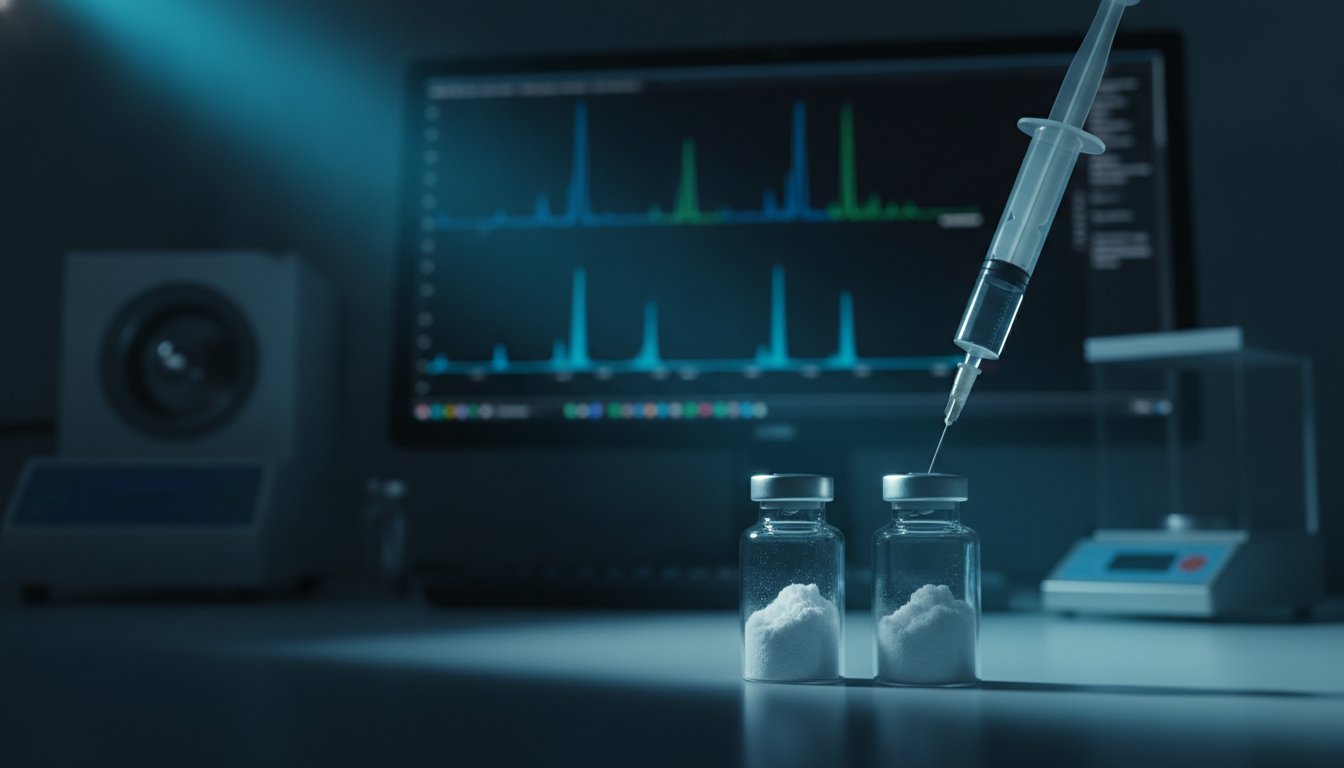
Can a research reagent truly be considered "analytical grade" if the supplier refuses to disclose the raw mass spectrometry data behind the vial? In an industry often clouded by opaque sourcing, the integrity of your data hinges on the chemical precision of your materials. You recognize that the success of Ipamorelin CJC-1295 blend research depends entirely on the stability of the lyophilized matrix and the absence of truncated peptide sequences. Inconsistent batch quality isn't just a frustration; it's a variable that can compromise months of laboratory work.
This technical reference establishes a new standard for transparency and verification. We'll explore the dual-pathway synergy of these compounds, examining how they target the GHRH and ghrelin receptors without the desensitization common in single-ligand models. We'll also detail the analytical requirements for high-purity reagents, including the necessity of batch-specific HPLC verification. From standardized reconstitution protocols to the molecular mechanics of secretagogue signaling, this guide provides the data-driven foundation required for disciplined scientific inquiry. Expect a deep dive into the biochemical currents that define this potent research combination.
Key Takeaways
- Analyze the dual-pathway synergy of GHRH analogues and GHRPs as they converge on pituitary somatotrophs to drive intracellular cAMP elevation.
- Establish rigorous analytical benchmarks for Ipamorelin CJC-1295 blend research by prioritizing reagents with ≥99% HPLC-verified purity and mass spectrometry confirmation.
- Implement standardized laboratory reconstitution protocols using bacteriostatic water to maintain the structural integrity of the lyophilized peptide matrix.
- Protect reagent stability through refined handling techniques designed to prevent mechanical shearing and chemical degradation during laboratory preparation.
- Ensure research continuity by sourcing materials from US-based facilities that provide transparent, batch-specific documentation and rapid fulfillment cycles.
The Ipamorelin and CJC-1295 Research Blend: A Dual-Pathway Reagent
The Ipamorelin CJC-1295 blend research focuses on the synergistic interaction between a Growth Hormone Releasing Peptide (GHRP) and a Growth Hormone Releasing Hormone (GHRH) analogue. This specific pairing is designed to maximize the endogenous secretory response of the pituitary gland. Most laboratory formulations utilize a 1:1 molecular ratio to ensure balanced receptor saturation across the experimental duration. By targeting two distinct signaling pathways, the blend effectively bypasses somatostatin-mediated inhibition, which is a common regulatory hurdle in isolated research models. It's strictly for in vitro and in vivo laboratory research. These reagents aren't intended for human consumption or clinical application.
The rationale for blending these specific peptides lies in their complementary mechanisms. While GHRH analogues prime the pituitary somatotrophs, GHRPs act as the trigger for the release. This dual-reagent approach allows researchers to observe amplified growth hormone signaling that exceeds the capabilities of either peptide used in isolation. Maintaining a high-fidelity environment requires reagents with verified purity, as even minor contaminants can skew the results of signaling assays.
Biochemical Profile of Ipamorelin
Ipamorelin is a selective ghrelin receptor agonist and a pentapeptide known for its high degree of specificity. It binds to the growth hormone secretagogue receptor (GHS-R1a) with significant affinity. Unlike earlier generations of GHRPs, it doesn't stimulate the secretion of ACTH, cortisol, or prolactin in controlled research settings. This selectivity allows researchers to isolate growth hormone dynamics without interference from other endocrine variables. Its molecular structure facilitates a pulsatile release of GH, mimicking the natural rhythm observed in mammalian models. Because it lacks the secondary hormonal impacts of its predecessors, it's a preferred tool for high-precision endocrine mapping.
Biochemical Profile of CJC-1295 (Mod GRF 1-29)
CJC-1295 is a synthetic 29-amino acid peptide that functions as a GHRH analogue. In the context of Ipamorelin CJC-1295 blend research, the non-DAC (Drug Affinity Complex) version, often termed Mod GRF 1-29, is the laboratory standard. The absence of the DAC component is critical for studies requiring a short half-life to replicate physiological GH pulses. While CJC-1295 with DAC extends the peptide's presence in the system, the non-DAC variant provides the precision needed for acute signaling analysis. This ensures that the research model remains reflective of natural biological cycles rather than a continuous, non-physiological "bleed" of hormone levels. The 1-29 sequence represents the fully functional portion of the natural GHRH molecule, optimized for stability in a lyophilized state.
Molecular Mechanisms: Investigating GH Axis Synergy
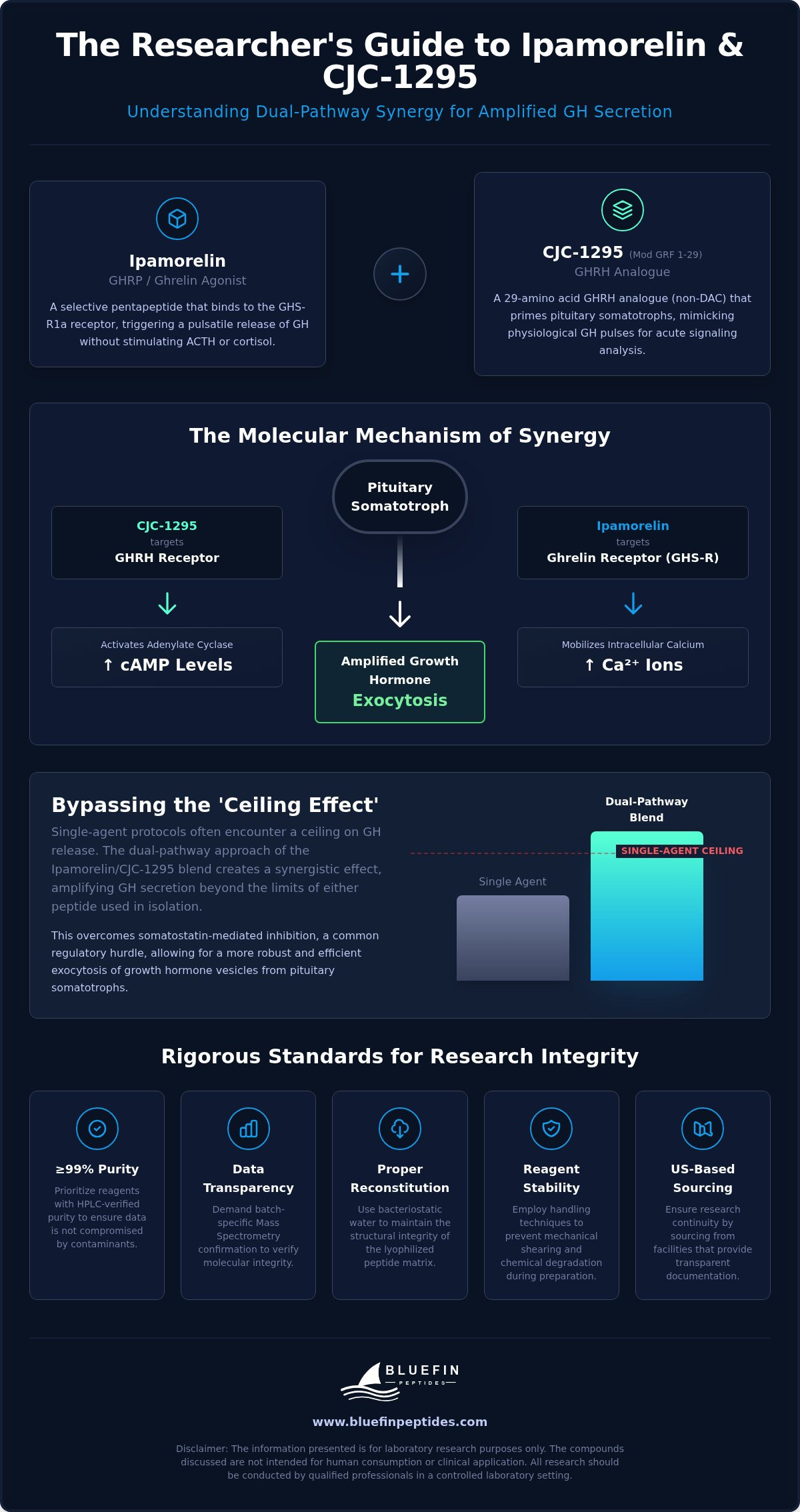
The synergy observed in Ipamorelin CJC-1295 blend research stems from the simultaneous stimulation of two distinct receptor populations on the pituitary somatotroph. While CJC-1295 targets the GHRH receptor, Ipamorelin acts upon the ghrelin receptor. This dual-agonism bypasses the "ceiling effect" often encountered with single-agent secretagogue protocols. By leveraging cross-talk between these intracellular signaling pathways, the blend maximizes the total secretagogue potential within the experimental model. This interaction creates a physiological environment where growth hormone release is amplified beyond the capabilities of isolated peptide administration.
Intracellularly, these peptides utilize different secondary messenger systems to drive secretion. CJC-1295 activation of the GHRH receptor triggers adenylate cyclase, which increases cyclic adenosine monophosphate (cAMP) levels. Simultaneously, Ipamorelin's activation of the Growth Hormone Secretagogue Receptor (GHS-R) increases intracellular calcium ion mobilization via the phospholipase C pathway. The convergence of elevated cAMP and calcium results in a more robust and efficient exocytosis of growth hormone vesicles. Researchers studying these mechanisms can procure high-purity research reagents to ensure that observed signaling responses aren't influenced by batch impurities.
These molecular pathways are particularly relevant when investigating somatopause and age-related hormonal decline. Research models utilize the blend to study how the pituitary gland maintains its capacity for GH production even when natural signaling starts to fail. By analyzing the interplay between GHRH and ghrelin receptor ligands, laboratories can better understand the regulatory mechanisms that govern the growth hormone axis throughout the biological lifecycle.
GHRH Receptor Activation via CJC-1295
CJC-1295 mimics endogenous GHRH by binding to the GHRH receptor (GHRHR) with high affinity. This interaction doesn't just trigger immediate GH release; it also influences growth hormone gene transcription and supports somatotroph proliferation. Unlike natural GHRH, the modified structure of CJC-1295 resists rapid enzymatic degradation, allowing for more consistent experimental data. CJC-1295 serves as the primary catalyst for sustaining the baseline amplitude of growth hormone signaling within the pituitary gland.
Ghrelin Receptor Modulation via Ipamorelin
Ipamorelin provides a highly selective activation of the Growth Hormone Secretagogue Receptor (GHS-R), as documented in the PubChem database on Ipamorelin. This selectivity is a critical distinction from earlier analogues like GHRP-2 or GHRP-6, which often demonstrate cross-reactivity with non-target receptors. In laboratory models, this specificity ensures that the impact on pulsatile secretion frequency remains isolated from secondary hormonal fluctuations. Its pentapeptide structure allows for sustained receptor interaction without the rapid desensitization frequently observed in less selective ghrelin mimetics.
Analytical Specifications and Purity Verification
Data integrity starts with the chemical assay. Ipamorelin CJC-1295 blend research necessitates reagents that meet or exceed a ≥99% purity threshold. Anything less introduces unknown variables into the somatotroph signaling model. Synthesis byproducts, such as truncated sequences or residual solvents, can interfere with receptor binding assays. These impurities often manifest as baseline noise in sensitive experimental protocols, obscuring the true biochemical response. Verification isn't just a preference; it's a requirement for reproducible science.
High-fidelity laboratory environments demand reagents that are free from cross-contaminants. When dealing with a multi-peptide formulation, the analytical challenge increases. The researcher must be certain that the ratio of the two compounds is precise and that neither has degraded during the lyophilization process. Maintaining this level of chemical stability is what separates professional-grade reagents from substandard marketplace offerings.
HPLC Analysis for Research Blends
High-Performance Liquid Chromatography (HPLC) is the primary tool for verifying blend composition. In a multi-peptide vial, the chromatogram should display two distinct, sharp peaks corresponding to each peptide species. Analysts calculate the purity by measuring the area-under-the-curve (AUC) for each peak relative to the total signal. This quantification ensures the 1:1 or specified ratio is accurate. For a deeper understanding of these metrics, consult our Analytical Quality Standards for Research Peptides: A Laboratory Guide. These chromatograms serve as the chemical fingerprint of the batch, proving the absence of closely related peptide impurities.
Mass Spectrometry Confirmation
Mass spectrometry (MS) provides the necessary qualitative confirmation to complement HPLC's quantitative data. While HPLC identifies purity, MS verifies the exact molecular weight of Ipamorelin and CJC-1295. This step is vital for detecting synthesis errors where an amino acid might be missing or substituted. Institutional compliance often requires batch-specific Certificates of Analysis (COAs) that include both HPLC and MS data. This level of documentation is critical because these substances appear on the WADA Prohibited List, reinforcing their status strictly as research-grade reagents rather than clinical products. Without MS confirmation, a researcher cannot be certain of the sequence identity within the vial.
Beyond peptide identity, researchers must account for counter-ions like Trifluoroacetic acid (TFA). While TFA is a standard byproduct of solid-phase peptide synthesis, high residual levels can be cytotoxic in certain cell culture models. Verifying the salt content and residual solvent levels ensures that the biological effects observed during Ipamorelin CJC-1295 blend research are due to peptide-receptor interaction, not chemical artifacts. Precise analytical verification remains the only safeguard against compromised data in a high-stakes laboratory environment.
Laboratory Protocols: Reconstitution and Stability
Reconstitution represents a critical transition from a stabilized solid state to a reactive solution. In Ipamorelin CJC-1295 blend research, the integrity of the results depends on the precision of this process. The lyophilized cake is a delicate matrix. Rapid or high-pressure introduction of diluent can cause mechanical shearing. This physical stress potentially compromises the peptide sequences. Clinical precision. Absolute stability. Professional handling ensures that the molecular structure remains intact for the duration of the study.
Reconstitution Methodology for Researchers
Researchers must select a diluent that aligns with their specific experimental parameters. Bacteriostatic water, containing 0.9% benzyl alcohol, is the standard for studies requiring multi-dose withdrawal from a single vial. For acute in vitro assays where alcohol might interfere with cell viability, sterile 0.9% saline is often preferred. The "gentle swirl" technique is mandatory. Never shake the vial. Aggressive agitation creates foam and increases the surface area exposed to oxygen, accelerating oxidation. Once reconstituted, the blend maintains optimal chemical stability for up to 14 days when stored at 2-8°C.
Storage and Preservation in 2026
Stability is a function of environment. Lyophilized vials should remain at -20°C for long-term preservation. This temperature minimizes the kinetic energy available for degradation reactions. Light exposure is another variable. UV radiation can catalyze the breakdown of sensitive amino acid side chains. Ensure vials are stored in light-resistant containers. pH fluctuations in the diluent can also shift the peptide's charge, affecting solubility and receptor affinity. For comprehensive technical data, refer to our Ipamorelin CJC-1295 Research Blend USA: Analytical Specifications and Laboratory Guide.
Experimental design requires calculating precise molar concentrations. A 1:1 blend often contains specific milligram weights that must be converted to micromolar or nanomolar units for dosing accuracy. This ensures that receptor saturation is consistent across different batches. To maintain this level of control in your laboratory, you can order HPLC-verified research blends directly from our facility. Maintaining these protocols prevents the data drift caused by chemical degradation. Precision in storage mirrors the stillness of deep-sea environments. It's the only way to ensure the "how" of your process secures the "what" of your results.
Procuring Research-Grade Blends in the United States
Sourcing Ipamorelin CJC-1295 blend research materials within the United States provides a critical logistical advantage for domestic laboratories. Overseas transit often involves unpredictable thermal fluctuations and prolonged exposure to oxidative environments that can compromise the delicate molecular structure of the peptides. US-based inventory ensures a compressed delivery timeline, significantly reducing the window for potential degradation. This speed preserves the structural fidelity of the lyophilized cake, ensuring that the reagent arriving at your facility is chemically identical to the one that left our synthesis floor. Bluefin Peptides operates with a commitment to clinical-grade precision. Every vial is treated as a high-stakes analytical reagent. We prioritize the physical state and chemical nature of our offerings over marketing aesthetics.
Logistics and Fulfillment for Lab Supplies
Rapid domestic shipping is the primary defense against temperature-dependent degradation. We utilize secure, vacuum-sealed packaging to eliminate atmospheric moisture and oxygen. This prevents the oxidation of sensitive peptide chains during transit. As a disciplined logistics specialist, we prioritize the "how" of fulfillment to guarantee the "what" of your experimental results. Fluid movement. Deep-sea precision. Our fulfillment protocols are designed for researchers who cannot afford to lose months of data to inconsistent supply chains or substandard handling. We ensure that the cold chain remains unbroken where required, treating each shipment with the urgency of a professional laboratory partner. Reliability is our anchor.
Verification and Transparency Standards
Transparency is our baseline standard. Researchers can access batch-specific HPLC and Mass-Spec reports to verify sequence identity and purity levels for every order. This documentation is essential for maintaining institutional compliance and ensuring batch-to-batch consistency in multi-year studies. When a study spans several years, the slightest drift in purity can introduce catastrophic variables. We eliminate this risk through unwavering adherence to strict testing protocols. We speak the language of the laboratory. Peer-to-peer communication. No marketing fluff. For comparative data on other high-purity reagents, see our guide on Retatrutide Research Peptide: Analytical Specifications and Laboratory Standards.
Every batch undergoes rigorous verification. We don't ask for blind trust; we provide the tools for objective verification. This stoic reliability is the foundation of our partnership with the scientific community. By maintaining a high-level technical register, we ensure that our documentation meets the standards of the most demanding institutional review boards. Precision is not an aspiration; it's our operational baseline. We navigate the complexities of peptide synthesis so you can focus on the data. Your research continuity is our primary objective.
Advancing Endocrine Mapping through Analytical Precision
The convergence of GHRH and ghrelin receptor signaling provides a robust framework for investigating pulsatile growth hormone dynamics. Successful Ipamorelin CJC-1295 blend research relies on the synergy of these pathways to overcome regulatory feedback loops like somatostatin inhibition. These biochemical insights are only as reliable as the reagents used to generate them. Purity isn't a variable; it's the bedrock of the experimental model. Verification remains the only shield against logistical drift and compromised data.
Maintaining this level of scientific rigor requires a partner focused on verification over volume. Bluefin Peptides provides the infrastructure for high-fidelity studies. Every vial features ≥99% HPLC-verified purity and is accompanied by batch-specific mass-spectrometry documentation. Our US-based inventory and rapid fulfillment protocols ensure that your laboratory timeline remains uninterrupted. Reliability is the anchor of every successful study. Elevate your laboratory standards with reagents designed for clinical-grade precision.
Secure HPLC-Verified Ipamorelin / CJC-1295 Research Blends at Bluefin Peptides
Frequently Asked Questions
What is the primary mechanism of action for the Ipamorelin CJC-1295 blend?
The primary mechanism involves the simultaneous activation of the GHRH receptor by CJC-1295 and the ghrelin receptor by Ipamorelin. This dual-pathway approach facilitates synergistic growth hormone secretion by increasing both cAMP levels and intracellular calcium mobilization. By targeting two distinct signaling cascades, the blend bypasses the somatostatin-mediated inhibition that often limits the efficacy of single-agent secretagogues in experimental models.
How should the Ipamorelin CJC-1295 blend be stored for long-term research?
Lyophilized vials must be stored at -20°C for long-term stability to prevent peptide degradation. Once reconstituted, the solution should be maintained at 2-8°C and protected from light exposure to preserve the chemical integrity of the chains. Researchers should avoid repeated freeze-thaw cycles, as the resulting mechanical stress can cause sequence shearing and lead to inconsistent data in Ipamorelin CJC-1295 blend research.
Is Ipamorelin CJC-1295 research blend intended for human use?
No, these compounds are strictly intended for in vitro and in vivo laboratory research and are not for human consumption. They lack FDA approval for medical use and are classified as research chemicals for scientific inquiry only. Every vial is labeled and sold with the explicit understanding that it's to be handled by trained professionals in a controlled laboratory environment.
What is the difference between CJC-1295 with DAC and without DAC in a research context?
CJC-1295 without DAC (Mod GRF 1-29) has a shorter half-life of approximately 30 minutes, allowing for the replication of natural pulsatile growth hormone rhythms. In contrast, the DAC version binds to albumin to extend the half-life to several days, resulting in a continuous hormone "bleed" rather than distinct pulses. Most Ipamorelin CJC-1295 blend research utilizes the non-DAC version to maintain physiological relevance in signaling studies.
Can Ipamorelin and CJC-1295 be reconstituted in the same vial safely?
Yes, Ipamorelin and CJC-1295 can be safely reconstituted in the same vial because they are chemically compatible and stable in a shared solution. The lyophilized blend is specifically formulated to ensure that both peptides dissolve uniformly without interfering with one another's molecular structure. Researchers should use bacteriostatic water or sterile saline and employ a gentle swirling motion to achieve a homogenous mixture.
What purity level is required for the Ipamorelin CJC-1295 blend in laboratory studies?
A purity level of ≥99% is the analytical standard required for high-fidelity laboratory data. Substandard reagents containing synthesis byproducts or truncated sequences can introduce unknown variables that compromise the accuracy of receptor binding assays. Verification via HPLC ensures that the peptide ratio remains precise and that contaminants don't interfere with the observed biological responses during the study.
How does the blend affect pulsatile growth hormone release compared to single peptides?
The blend increases the amplitude of pulsatile growth hormone release more effectively than either peptide administered in isolation. While CJC-1295 primes the somatotrophs, Ipamorelin triggers the release, resulting in a coordinated surge that mimics natural endocrine patterns. This synergistic interaction allows for a more robust secretagogue response while minimizing the risk of receptor desensitization common in single-peptide protocols.
Why is mass spectrometry necessary for verifying this specific peptide blend?
Mass spectrometry is necessary to verify the exact molecular weight and sequence identity of both peptides within the blend. While HPLC quantifies purity, only mass spectrometry can confirm that the correct amino acids are present in the proper order. This qualitative verification is essential for detecting synthesis errors or substitutions that could fundamentally alter the signaling properties of the research reagent.
For laboratory research use only. Not for human or veterinary use. This content is educational and does not constitute medical, dosing, or usage guidance.
Browse the BLUEFIN catalog