Buy BPC-157 TB-500 Blend: Analytical Specifications and Laboratory Standards
The integrity of a laboratory result is only as robust as the analytical data supporting its reagents. For many researchers, the decision to buy BPC-157 TB-500 blend is often complicated by a lack of transparency in overseas supply chains and inconsistent batch quality. You've likely encountered the frustration of "blind" procurement, where HPLC documentation is either absent or generic. We understand that in a high-stakes research environment, trust is a secondary requirement to verification; you need data that anchors your findings in objective reality.
This technical guide serves as a manual for the chemical synergy and laboratory handling of combined peptide sequences. We promise a comprehensive overview of the analytical specifications necessary to ensure ≥ 99% purity in every lyophilized vial. We'll explore the logistics of US-based fulfillment, the necessity of batch-specific COAs, and the standardized protocols required to maintain molecular stability. By the end of this analysis, you'll have the framework to secure high-purity materials and implement the deep-sea precision required for consistent, reproducible results.
Key Takeaways
- Analyze the chemical profiles of the BPC-157 pentadecapeptide and TB-500 synthetic fragment to understand their molecular synergy in a research environment.
- Evaluate the necessity of High-Performance Liquid Chromatography and Mass Spectrometry in verifying ≥99% purity and identity for every batch.
- Streamline procurement timelines by understanding how to buy BPC-157 TB-500 blend from US-stocked inventory with transparent, batch-specific COAs.
- Implement standardized laboratory handling protocols for reconstitution and storage to maintain the structural stability of the lyophilized peptide cake.
Molecular Synergy: The Chemical Profile of BPC-157 and TB-500 Blends
The decision to buy BPC-157 TB-500 blend requires a sophisticated understanding of how two distinct peptide sequences interact within a single lyophilized environment. This isn't a mere mixture for convenience; it's a calculated co-formulation intended to standardize the molar ratio of the pentadecapeptide BPC-157 and the synthetic fragment TB-500. Meticulous laboratory standards dictate that these compounds must maintain their individual structural integrity while sharing a stabilized cake. This ensures that every aliquot delivered to a research model contains the exact specified concentration of both agents, eliminating the variability often found when researchers manually combine individual vials.
BPC-157 (Pentadecapeptide) Structural Overview
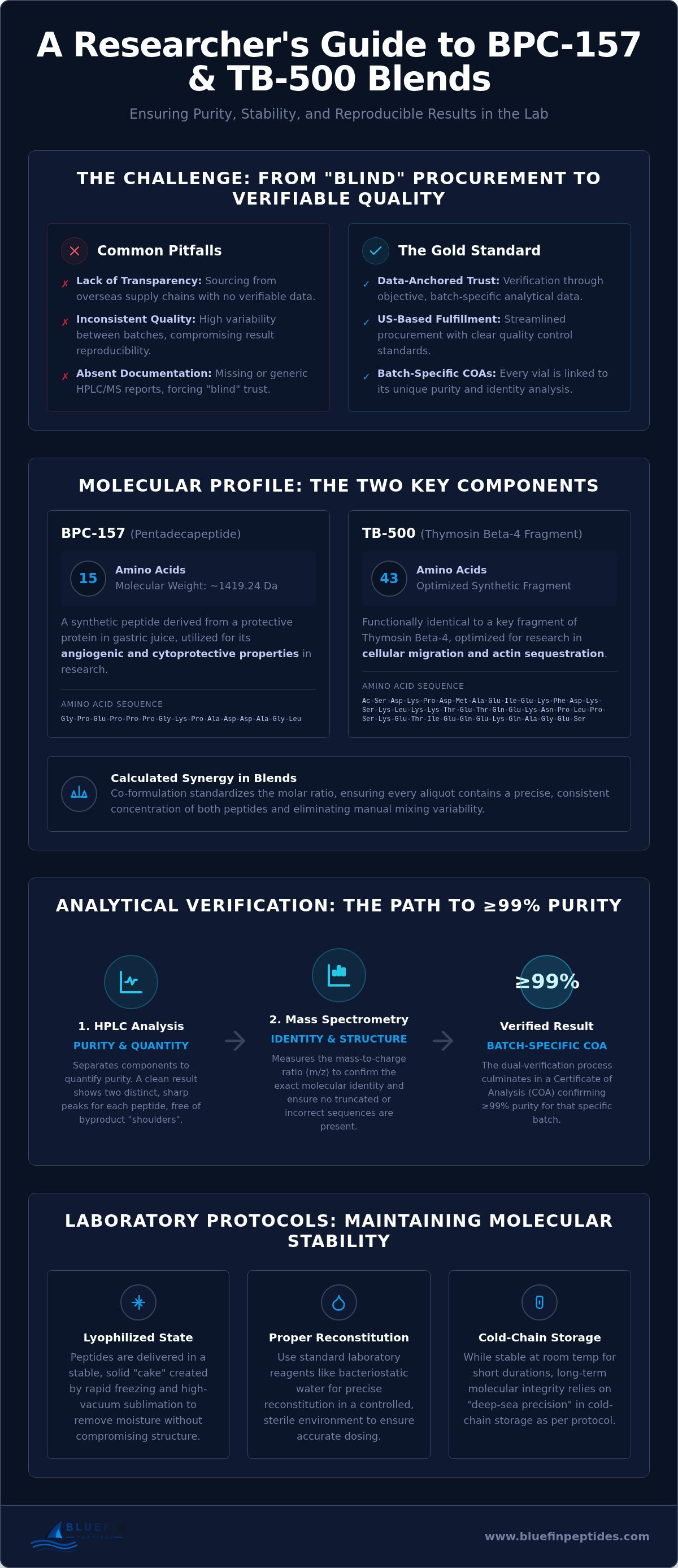
The primary component of this blend is BPC-157, a synthetic 15-amino acid sequence: Gly-Pro-Glu-Pro-Pro-Pro-Gly-Lys-Pro-Ala-Asp-Asp-Ala-Gly-Leu. With a molecular weight of approximately 1419.24 Da, this peptide is derived from a protective protein found in gastric juice. In laboratory settings, it's utilized primarily for its angiogenic and cytoprotective properties. It demonstrates high solubility in standard reagents like bacteriostatic water and sterile saline. When you buy BPC-157 TB-500 blend for research, the BPC-157 component is verified for its ability to remain stable at room temperature for short durations, though long-term integrity relies on deep-sea precision in cold-chain storage.
TB-500 (Thymosin Beta-4 Fragment) Analytical Profile
The second sequence is TB-500, which is functionally identical to the 43-amino acid fragment of naturally occurring Thymosin Beta-4. Its sequence is meticulously identified as: Ac-Ser-Asp-Lys-Pro-Asp-Met-Ala-Glu-Ile-Glu-Lys-Phe-Asp-Lys-Ser-Lys-Leu-Lys-Lys-Thr-Glu-Thr-Gln-Glu-Lys-Asn-Pro-Leu-Pro-Ser-Lys-Glu-Thr-Ile-Glu-Gln-Glu-Lys-Gln-Ala-Gly-Glu-Ser. Unlike the full-length Tβ4 protein, this fragment is optimized for cellular migration and actin sequestration research. Verification of this fragment is critical; mass spectrometry must confirm the absence of truncated sequences or residual solvents from the synthesis process. The synergy between these two peptides in a single vial relies on the clinical precision of the lyophilization process, which locks the molecules into a stable state, preventing degradation during transit.
Chemical stability in a dual-peptide lyophilized cake is achieved through rapid freezing and high-vacuum sublimation. This process removes moisture without compromising the secondary or tertiary structures of the peptides. For researchers, this means the blend arrives with a verified purity of ≥99%, ready for precise reconstitution in controlled environments.
Analytical Verification: HPLC and Mass Spectrometry Standards
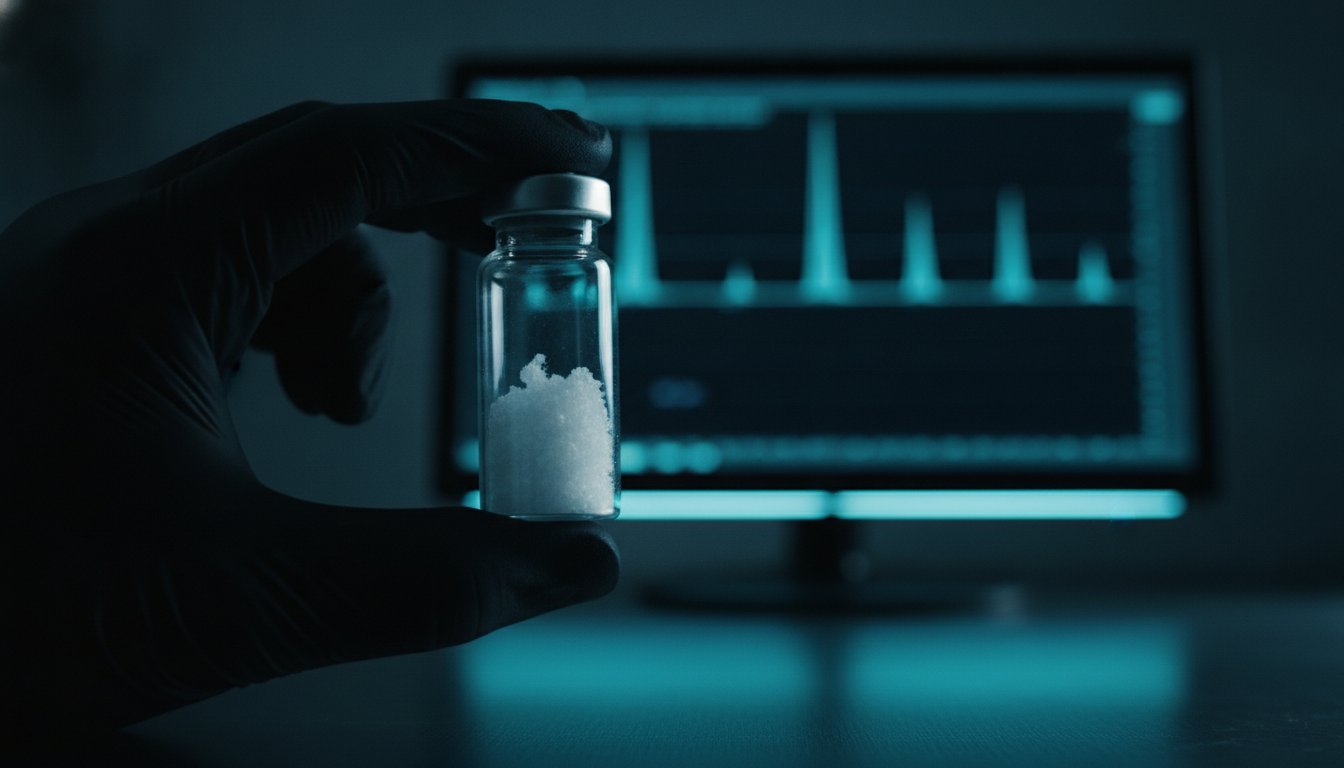
Analytical verification isn't a formality; it's the barrier between data and noise. When laboratories buy BPC-157 TB-500 blend, the primary concern is sequence identity and purity quantification. High-Performance Liquid Chromatography (HPLC) serves as the definitive tool for assessing chemical purity by separating the constituent molecules based on their hydrophobic properties. In a blended vial, the resulting chromatogram must display two distinct, sharp peaks representing each peptide. Any secondary "shoulders" or baseline noise indicate the presence of synthesis byproducts or truncated sequences.
Mass Spectrometry (MS) provides the necessary identity confirmation. While HPLC measures how much of the substance is present, MS verifies exactly what the substance is by measuring the mass-to-charge ratio (m/z). For research integrity, every batch must undergo this dual-verification process to ensure that the physical state of the lyophilized cake matches the theoretical chemical formula. To maintain these standards, researchers should source verified reagents from transparent suppliers.
Achieving ≥99% Purity in Peptide Blends
Superior synthesis protocols aim for a threshold of ≥99% purity. Adherence to research peptide quality standards requires the identification of residual reagents used during the solid-phase peptide synthesis (SPPS) process. Trifluoroacetic acid (TFA) is a common counter-ion used in the cleavage and purification stages. Reputable suppliers quantify and limit residual TFA levels to ensure they don't interfere with cellular assays or lead to unintended toxicity in research models. Consistency in the lyophilization ratio is equally paramount. The molar concentration of BPC-157 must remain constant relative to TB-500 across all vials in a single lot.
Interpreting Analytical Documentation
Reading a Certificate of Analysis (COA) for a blend requires a higher level of technical scrutiny than for individual peptides. The HPLC report should clearly delineate the peak area percentage for both sequences. For instance, in a 10mg/10mg blend, the peaks should reflect this ratio with minimal deviation. Identity verification through MS should show the expected molecular weights: approximately 1419.24 Da for BPC-157 and 4963.44 Da for the TB-500 fragment.
Understanding the BPC-157 regulatory status is also essential for institutional compliance, as these agents are strictly classified for laboratory research use only. When you buy BPC-157 TB-500 blend, you are procuring a precision-engineered chemical reagent. Transparency in documentation is the only way to confirm that the identity and purity of the material meet the rigorous demands of modern biochemistry.
Comparative Utility: Blended Vials vs. Individual Component Research
The selection of a co-lyophilized system over separate reagents is a strategic decision in experimental design. When researchers buy BPC-157 TB-500 blend, they're typically addressing the need for multi-pathway signaling observations while minimizing procedural variables. Manual combination of individual peptides introduces unnecessary risks. These include inaccurate volumetric pipetting and increased exposure to ambient contaminants. By utilizing a pre-formulated blend, the laboratory fixes the molar ratio at the point of manufacture. This ensures that every subject in a longitudinal study receives an identical concentration of both active sequences.
Workflow Advantages of Co-Lyophilized Vials
Efficiency in a high-throughput laboratory environment is paramount. Using a single vial for dual-peptide research streamlines the reconstitution process, requiring only one injection of bacteriostatic water or sterile saline. This reduction in handling steps directly correlates with a lower probability of sequence degradation or vial septum compromise. Precision matters. The manufacturing process of co-lyophilization ensures that the BPC-157 and TB-500 are distributed uniformly within the lyophilized cake. This homogeneity is difficult to replicate through manual mixing of reconstituted solutions, which can lead to localized concentration gradients and inconsistent data points.
- Reconstitution Efficiency: Single-step dissolution reduces the time required for reagent preparation.
- Ratio Stability: Fixed molar concentrations prevent human error in multi-peptide titration.
- Contamination Control: Fewer vial entries minimize the risk of introducing microbial or chemical impurities.
Synergistic Research Applications
Investigating complex cellular repair models often requires the simultaneous activation of different biological pathways. BPC-157 is frequently studied for its role in the upregulation of growth factor receptors, while TB-500 is analyzed for its influence on actin sequestration and cellular migration. The synergy between these two mechanisms is a focal point of modern biochemistry. For instance, the GHK-Cu BPC-157 TB-500 research blend is utilized in advanced molecular modeling to observe cross-pathway signaling across three distinct peptide sequences. Such blends are essential for optimizing data collection in time-sensitive studies where sequential administration would complicate the observation of immediate cellular responses.
There are limitations to this approach. If the primary objective is to isolate the specific mechanistic effect of a single peptide without the presence of secondary variables, individual vials are mandatory. Isolate research remains the gold standard for initial sequence determination. However, for established research models exploring the combined impact of these agents, the decision to buy BPC-157 TB-500 blend provides the analytical consistency required for high-confidence results.
Laboratory Protocols: Reconstitution, Stability, and Storage
The structural integrity of a dual-peptide reagent is contingent upon meticulous handling. When you buy BPC-157 TB-500 blend, you're managing delicate amino acid chains susceptible to mechanical and thermal degradation. The secondary and tertiary structures of these molecules are held by relatively weak hydrogen bonds. Excessive agitation or thermal fluctuations can lead to denaturation, rendering the research material analytically useless. Professional laboratory standards demand a "deep-sea precision" approach to every interaction with the vial, ensuring that the physical state of the peptides remains optimal for subsequent assays.
Reconstitution Step-by-Step Guide
Reconstitution must be performed using an aseptic technique within a controlled environment. Bacteriostatic water (0.9% benzyl alcohol) is the preferred diluent for multi-use vials due to its ability to inhibit microbial growth. Researchers should calculate the final concentration per mL based on the total milligram content of the BPC-157 and TB-500 components. If a vial contains 10mg of each peptide, adding 2mL of diluent results in a 5mg/mL concentration for each agent.
- Aseptic Entry: Swab the vial septum with 70% isopropyl alcohol before needle penetration.
- Slow Introduction: Direct the diluent stream against the glass wall of the vial, not directly onto the lyophilized cake.
- Mechanical Integrity: Gently swirl the vial in a circular motion. Never shake the vial. Mechanical shear forces can break the fragile peptide bonds.
- Dissolution Verification: Allow the solution to sit for several minutes until it's completely clear and free of visible particulates.
Stability and Storage Parameters
Thermal regulation is the anchor of peptide stability. Lyophilized vials are remarkably stable when kept in a deep-freeze environment. For long-term storage exceeding 24 months, vials should be maintained at -20°C. For immediate research needs, storage at 2°C to 8°C is acceptable for short durations. Once reconstituted, the solution's stability window narrows significantly. Reconstituted peptides must be refrigerated at 2°C to 8°C and are typically stable for approximately 28 to 30 days. It's critical to avoid repeated freeze-thaw cycles, which induce structural stress. Additionally, protect the vials from direct UV light exposure to prevent photodegradation.
Maintaining these rigorous standards ensures the reliability of your data. To secure reagents manufactured under these strict quality controls, buy BPC-157 TB-500 blend from a supplier committed to analytical transparency.
Procurement Excellence: Sourcing Verified Blends in the USA
The transition from analytical verification to physical procurement is where many research projects encounter logistical friction. When laboratories decide to buy BPC-157 TB-500 blend, the geographic origin of the inventory becomes a primary factor in data integrity. Overseas procurement often introduces variables such as prolonged exposure to unregulated temperatures during customs transit or the total loss of material in international shipping lanes. Domestic, US-stocked inventory eliminates these risks. It provides a secure foundation for national research timelines. Procurement excellence requires more than a simple transaction. It demands a partnership in data security.
When you buy BPC-157 TB-500 blend from a domestic source, you're securing the chemical integrity of your reagents against the turbulence of international logistics. We prioritize the "how" of our processes to ensure the "what" of your results. This commitment to security and transparency in domestic chemical logistics is essential for maintaining the high standards required in modern biochemistry.
Logistical Precision at Bluefin Peptides
Fulfillment speed is a core pillar of our operational framework. By maintaining inventory in domestic US hubs, we ensure a rapid logistical turnaround that maintains the momentum of your laboratory's schedule. Every BPC-157 TB-500 research blend is dispatched in secure, temperature-stable packaging designed to withstand the rigors of cross-country transit. This isn't merely about speed; it's about the preservation of the lyophilized cake's secondary structure. Transparency is anchored by the provision of batch-specific COAs for every order. We provide the tools for verification. We don't ask for blind trust.
Commitment to Academic and Professional Standards
Bluefin Peptides operates with a traditionalist's adherence to strict testing protocols and legal boundaries. Our catalog is strictly for laboratory use. We exclude all products for human, veterinary, or consumer use. This disciplined focus ensures that our resources are dedicated to serving the academic and professional scientific community. We continue to invest in our HPLC and Mass-Spec infrastructure to ensure every sequence we provide meets a ≥99% purity threshold.
Our persona is that of a high-performance laboratory partner. We provide the analytical tools for peer-level verification. This includes the regular recalibration of our HPLC columns and the use of high-resolution Mass Spectrometry to confirm m/z ratios for every unique lot. We don't just sell peptides. We provide the chemical certainty required for high-stakes molecular modeling. By focusing on batch-level details and standardized protocols, we ensure that your procurement process is as rigorous as your research.
Advancing Analytical Standards in Peptide Research
The transition from theoretical modeling to empirical validation requires reagents that mirror their analytical specifications with deep-sea precision. As established, the efficacy of dual-peptide research is anchored in the verification of ≥99% HPLC purity and the confirmation of molecular identity through mass spectrometry. These standards eliminate the variables of synthesis byproducts and truncated sequences, providing a stable foundation for cellular migration and angiogenic studies. When you choose to buy BPC-157 TB-500 blend, you are prioritizing a fixed molar ratio that removes the procedural risks associated with manual combination and titration.
Maintaining research momentum depends on a supply chain that operates with clinical efficiency. US-stocked inventory and batch-specific documentation aren't merely conveniences; they're essential safeguards for laboratory integrity. By adhering to standardized reconstitution protocols and temperature-controlled storage, you ensure that the secondary and tertiary structures of your peptides remain intact for the duration of your study. We invite you to Procure HPLC-Verified BPC-157 TB-500 Blends for Research and experience the reliability of a partner dedicated to your analytical success. We look forward to supporting your next breakthrough with the highest standards in biochemistry.
Frequently Asked Questions
Is the BPC-157 TB-500 blend intended for human consumption?
No, the BPC-157 TB-500 blend is strictly for laboratory research use only. These compounds are not approved for human consumption, veterinary use, or retail supplementation. Every vial is labeled for research purposes to comply with regulatory frameworks. Institutional researchers must handle these agents in controlled environments. Safety data for human application is absent in current peer-reviewed literature, making strictly defined laboratory-only use a mandatory protocol for all procurement.
How is the purity of the BPC-157 and TB-500 blend verified?
Purity is verified through High-Performance Liquid Chromatography (HPLC) and identity is confirmed via Mass Spectrometry (MS). Reputable suppliers target a threshold of ≥99% purity. HPLC assesses the chemical concentration and detects impurities, while MS measures the mass-to-charge ratio to ensure the physical sequence matches the theoretical model. This dual-testing protocol anchors the integrity of the research material, ensuring that no truncated sequences or residual solvents compromise laboratory results.
What is the standard ratio for a 20mg BPC-157 TB-500 blend?
A standard 20mg vial typically contains a 1:1 ratio consisting of 10mg BPC-157 and 10mg TB-500. This co-lyophilized format establishes a fixed molar concentration during the manufacturing phase. When you buy BPC-157 TB-500 blend in this ratio, it provides a standardized baseline for cross-pathway signaling research. Maintaining this precise balance ensures that every aliquot delivered to a model contains an identical concentration of both active pentadecapeptide and synthetic fragment sequences.
Does the blend require refrigeration during shipping?
Lyophilized peptide blends do not require active refrigeration during transit because the freeze-drying process ensures molecular stability at room temperature for short durations. The solid state of the peptide cake protects the secondary structure from thermal degradation during standard shipping timelines. However, once the shipment arrives at the facility, immediate transfer to long-term cold storage is required. Deep-sea precision in storage is only required upon arrival at the facility.
Can I access the HPLC report for my specific batch?
Yes, batch-specific HPLC and Mass Spectrometry reports are available for every lot. Transparency is a core requirement of professional laboratory procurement. These Certificates of Analysis (COAs) provide the quantitative data needed to verify the ≥99% purity levels and sequence identity. Researchers can access these documents to ensure their reagents meet the rigorous analytical standards required for peer-level verification. Providing these tools for verification navigates the complexities of domestic logistics.
What is the shelf life of a lyophilized peptide blend?
The shelf life of a lyophilized peptide blend is approximately 24 months when stored at -20°C. For extended preservation reaching 36 months or longer, storage at -80°C is recommended. At these temperatures, the tertiary structures are locked into a stable state, preventing molecular degradation. Once the vial is reconstituted with bacteriostatic water, the shelf life reduces to 28 to 30 days under refrigeration at 2°C to 8°C to maintain integrity.
How should I reconstitute the BPC-157 TB-500 vial for lab use?
Reconstitution requires the slow introduction of bacteriostatic water or sterile saline directed against the vial wall. Avoid direct impact on the lyophilized cake to prevent mechanical stress. Once the diluent is added, gently swirl the vial in a circular motion until the solution is clear. Never shake the vial; high mechanical shear forces can denature the fragile peptide sequences. Aseptic techniques, including swabbing the septum with 70% isopropyl alcohol, are mandatory.
Why choose a blend over individual BPC-157 and TB-500 vials?
Choosing to buy BPC-157 TB-500 blend over individual vials improves laboratory workflow by reducing reconstitution steps and minimizing vial entry risks. It ensures a fixed molar ratio that is difficult to replicate through manual titration of separate solutions. This homogeneity is critical for longitudinal studies where consistent dual-peptide concentrations are required. Using a co-lyophilized system anchors the experimental design in analytical consistency, allowing for more precise observations of synergistic cellular responses.
For laboratory research use only. Not for human or veterinary use. This content is educational and does not constitute medical, dosing, or usage guidance.
Browse the BLUEFIN catalog