Peptide Reconstitution Solvents: A Comparative Analysis for Laboratory Research
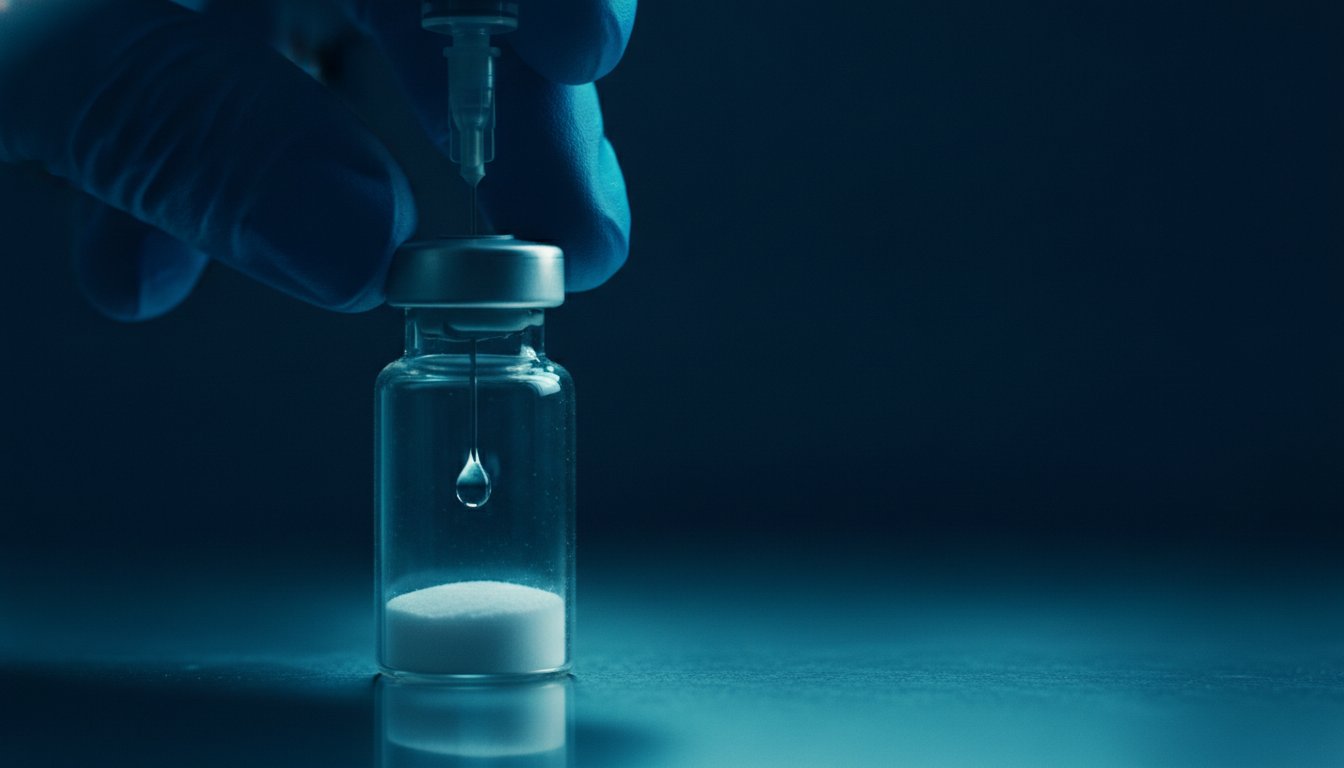
Selecting the wrong solvent can render a ≥99% pure research peptide analytically useless in seconds. Precision. Verification. These are the anchors of high-stakes laboratory research. You understand that even minor deviations in your workflow can lead to premature degradation or catastrophic solubility issues, especially when working with hydrophobic sequences. Utilizing the correct peptide reconstitution solvents is not a secondary task; it is the fundamental baseline for protecting your chemical assets.
Your research depends on the stability of compounds like Retatrutide and Tirzepatide, yet the fluid dynamics of reconstitution often introduce unintended variables. This guide provides a technical analysis of solvents to ensure your experimental results remain reproducible and your data remains beyond reproach. We examine the chemical nuances of bacteriostatic water versus sterile water, the impact of benzyl alcohol on multi-use vials, and the specific pH requirements for GLP-1 analogues. You'll gain a clear methodology for operating within the updated USP <797> standards to maintain a sterile, high-performance research environment.
Key Takeaways
- Identify the optimal peptide reconstitution solvents to maintain the secondary structure and analytical integrity of lyophilized research compounds.
- Differentiate between the antimicrobial properties of bacteriostatic water and the single-use requirements of sterile water for injection.
- Align solvent polarity with specific amino acid sequences to navigate the solubility nuances of complex research compounds like Retatrutide and Tirzepatide.
- Establish rigorous storage protocols between 2°C and 8°C to maximize the research shelf-life of reconstituted materials.
- Adopt advanced laboratory techniques, such as utilizing the vial wall for solvent entry, to prevent mechanical degradation during the reconstitution process.
Fundamentals of Peptide Reconstitution Solvents
Reconstitution solvents are liquid mediums used to return lyophilized peptides to a fluid state. This process is more than a simple dilution; it's a critical chemical transition. The solvent's primary role is to maintain the secondary structure of the peptide chain, ensuring the amino acid sequences fold correctly upon rehydration. Without this structural integrity, the compound loses its biological relevance and analytical value. A peptide that hasn't been properly solvated is prone to aggregation, which renders the resulting data erratic and unreliable.
Distilled water is insufficient for rigorous laboratory study. It lacks the necessary pH buffering and sterility required for multi-day protocols. To protect the integrity of high-purity compounds, researchers must adhere to strict research peptide quality standards. Solvent purity is the bedrock of experimental reproducibility. Contaminated or low-grade solvents introduce erratic variables that compromise the entire data set. In high-stakes environments, the solvent is the anchor that secures the stability of the research compound.
The Chemistry of Lyophilized Stability
Lyophilization removes moisture to prevent hydrolysis during transit and storage. This dehydration preserves the peptide's chemical bonds in a solid cake format. Understanding the Fundamentals of Peptide Reconstitution allows researchers to manage the transition from solid to solute with minimal risk. Precision is mandatory. Introducing the solvent too rapidly can cause mechanical shearing of delicate molecular sequences. A slow, deliberate introduction along the vial wall ensures uniform distribution and preserves the peptide's functional geometry. This methodical approach prevents the degradation that often occurs when a solvent strikes the lyophilized powder directly.
Primary Solvent Categories in Biochemistry
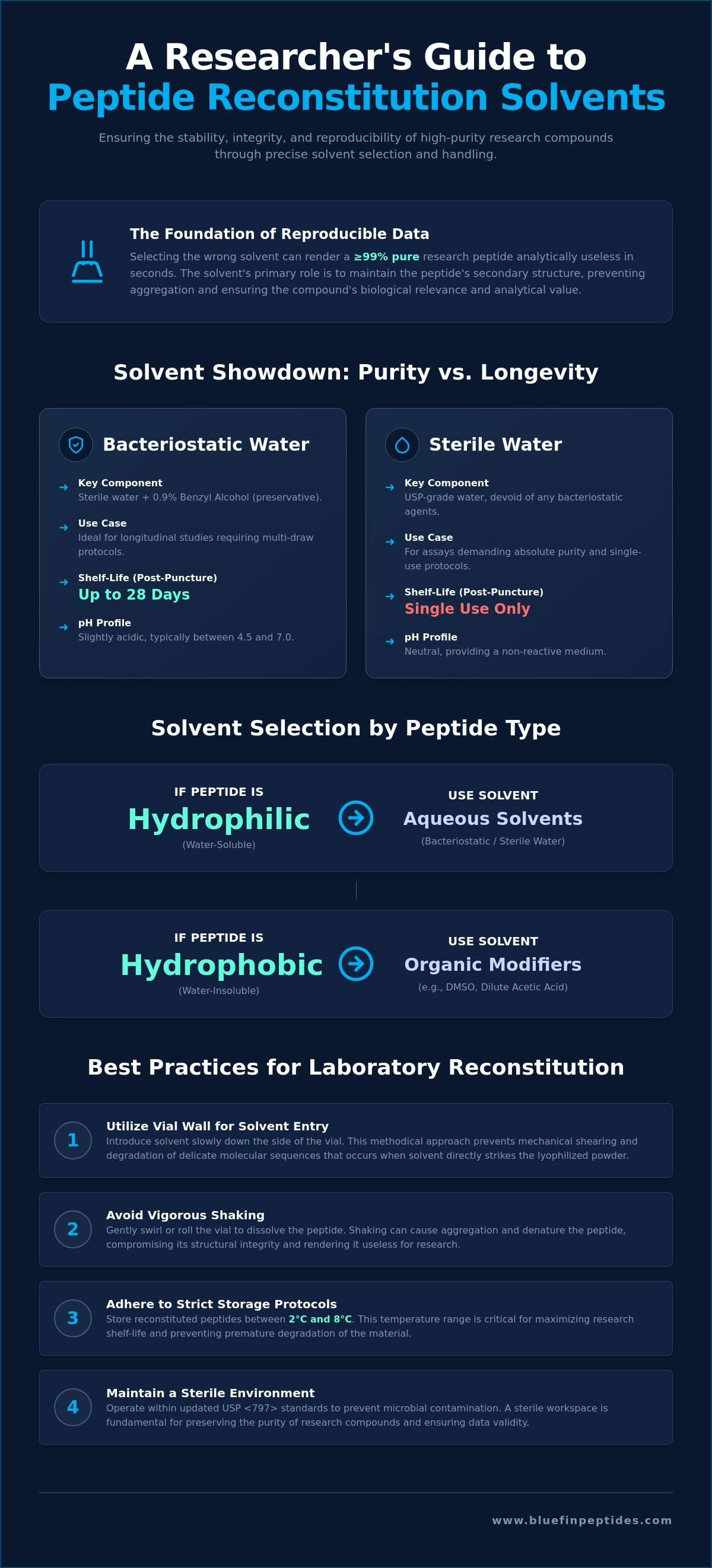
Aqueous solvents are the standard for most hydrophilic research compounds. These include sterile water and bacteriostatic water, which provide a neutral environment for the peptide. However, some sequences are inherently hydrophobic. In these instances, organic modifiers like DMSO or dilute Acetic acid are required to achieve full solubility. The choice depends entirely on the amino acid sequence of the compound. Utilizing laboratory-grade reagents is the only way to avoid experimental noise.
The interaction between the solvent and the peptide's side chains determines the success of the assay. If the solvent polarity doesn't match the peptide's requirements, the compound may precipitate out of solution. This results in inaccurate dosing and wasted material. Every step in the selection of peptide reconstitution solvents must be documented and verified against the specific needs of the research compound. High-performance research requires high-performance inputs; there is no room for the impurities found in consumer-grade water.
Bacteriostatic Water for Injection vs Reconstitution Alternatives
Researchers navigate a binary choice between prolonged stability and absolute purity when selecting peptide reconstitution solvents. Bacteriostatic water is the laboratory standard for longitudinal studies; it consists of sterile water for injection fortified with 0.9% benzyl alcohol. This preservative is the defining characteristic that separates it from sterile water for injection. Sterile water is a USP-grade medium devoid of bacteriostatic agents. It's pure but vulnerable. The selection of the medium is the first decision in protecting a high-purity investment. In complex research environments, the choice of solvent acts as the primary safeguard against experimental drift. It's the silent partner in every successful assay.
The functional life of these peptide reconstitution solvents varies dramatically. A preserved vial allows for multi-draw protocols over a 28-day window. In contrast, sterile water is strictly single-use. Once the septum is punctured, the lack of an antimicrobial agent invites rapid contamination. Benzyl alcohol also exerts a subtle influence on the solution's chemical profile. It slightly shifts the pH toward the acidic range, typically moving the value to between 4.5 and 7.0. While negligible for many assays, this shift can be critical when working with pH-sensitive sequences. Choosing between these mediums requires a deep understanding of Solvent Selection for Specific Research Peptides to ensure the chemical environment matches the peptide's stability profile. The 28-day expiration for bacteriostatic water is a firm laboratory boundary. Beyond this point, the efficacy of the benzyl alcohol declines, and the risk of microbial ingress increases.
The Preservative Mechanism of Benzyl Alcohol
Benzyl alcohol functions by inhibiting the growth of both gram-positive and gram-negative bacteria. This bacteriostatic action is essential for multi-draw vials. It ensures that the integrity of the peptide remains uncompromised by microbial proliferation during extended studies. However, researchers must account for potential interference. In certain sensitive models, the presence of benzyl alcohol can skew analytical data or induce cellular toxicity. Verification of the solvent's compatibility with the specific research model is paramount. Precise documentation of the solvent batch is as important as the peptide itself. If an assay requires absolute chemical neutrality, the preservative may introduce unwanted noise into the data stream, potentially eroding the precision of the results.
Sterile Water for Injection: Use Cases and Limitations
Sterile water serves a specific niche. It's the optimal choice for immediate consumption or for research models where benzyl alcohol is a known contaminant. The primary limitation is the accelerated degradation rate. Without a preservative, the solution lacks a defense against environmental microbes. Reconstituted vials using sterile water must be utilized immediately or discarded. There is no middle ground. For those requiring the highest degree of purity for their HPLC-verified research compounds, understanding these trade-offs is non-negotiable. The lack of antimicrobial protection means the countdown to molecular degradation begins the moment the solvent touches the lyophilized cake. This necessitates a "single-strike" protocol where the entire volume is used in one laboratory event to avoid any risk of contamination.
Solvent Selection for Specific Research Peptides
Generic laboratory protocols often fail when applied to complex amino acid sequences. Selecting peptide reconstitution solvents requires an analytical match between solvent polarity and the peptide's primary structure. While many hydrophilic compounds solvate readily in aqueous media, hydrophobic sequences demand a more nuanced chemical approach. Peptides don't always behave predictably in a standard buffer. Failure to align these properties leads to incomplete dissolution or visible precipitation, compromising the concentration accuracy of the entire study. Precision is the only acceptable standard.
Specific protocols are required for the Retatrutide research peptide and other multi-receptor agonists. These compounds possess intricate folding patterns that are sensitive to ionic strength. When handling complex blends like BPC-157 and TB-500 simultaneously, researchers must ensure the solvent maintains a stable environment for both molecules. If a peptide remains insoluble in standard bacteriostatic water, the introduction of Acetic Acid (0.1% to 1%) is often necessary. It's particularly effective for basic peptides or those with high hydrophobic indices. This addition lowers the pH just enough to encourage protonation, facilitating a smooth transition from lyophilized cake to clear solution without compromising the molecular backbone.
Optimizing GLP-1 and GIP Analogue Stability
Tirzepatide and Retatrutide research requires a disciplined focus on fluid dynamics. Maintaining a maritime precision during the mixing process prevents the denaturation of these sensitive GLP-1 and GIP analogues. Researchers must monitor for 'salting out' effects, where high salt concentrations in the buffer cause the peptide to precipitate. It's a common failure point in high-concentration research vials. To avoid this, the solvent should be added slowly, allowing the molecules to hydrate without the shock of rapid concentration shifts. A clear, colorless solution is the visual benchmark for successful solvation and structural integrity.
Addressing Hydrophobicity in Research Blends
Blends containing GHK-Cu or KPV present unique challenges due to varying solubility profiles. Achieving a homogenous solution without precipitation often requires a stepwise addition method. This involves starting with a minimal volume of an organic modifier or dilute acid before completing the volume with an aqueous solvent. This technique prevents the 'clumping' often seen with hydrophobic sequences. While sonication can assist in dissolution, it carries the risk of thermal degradation. Gentle agitation, rotating the vial rather than shaking, remains the gold standard for preventing mechanical shearing. Every motion must be deliberate. Every variable must be controlled.

Stability and Storage: Post-Reconstitution Analysis
Reconstitution initiates a definitive countdown to molecular degradation. The transition from a lyophilized solid to an aqueous solution increases molecular mobility, facilitating hydrolysis and oxidation. Stability is no longer anchored. Peptide reconstitution solvents serve as the primary medium for these chemical interactions, and their selection dictates the rate of decline. Light exposure serves as a catalyst for failure. UV radiation disrupts delicate peptide bonds, leading to truncated sequences and biologically inactive fragments. Researchers must utilize amber vials or opaque secondary containment to mitigate photonic degradation and preserve the analytical value of the compound.
Visual inspection is the first line of laboratory defense. Cloudiness, flocculation, or distinct color shifts indicate catastrophic instability and immediate loss of integrity. However, visual clarity doesn't equate to chemical purity. Subtle degradation often leaves the solution transparent while the active concentration plummets below the required threshold for experimental reproducibility. Analytical verification via HPLC remains the only methodology to confirm that a ≥99% purity level has been maintained throughout the study duration. Precision isn't assumed; it's verified.
Refrigeration vs. Freezing Reconstituted Vials
Standard refrigeration between 2°C and 8°C is mandatory for active laboratory sequences. Freezing reconstituted vials is generally discouraged due to the destructive nature of 'freeze-thaw' cycles. Ice crystal formation and localized pH spikes during the phase transition can denature sequences like Tirzepatide or Retatrutide. Aliquoting is the gold standard for long-term preservation. By dividing the solution into single-use volumes before initial cooling, researchers eliminate the need for repeated thermal cycling. Bacteriostatic solutions typically remain viable for 28 days under these conditions, whereas sterile water solutions require immediate consumption or disposal within 24 hours to avoid microbial ingress.
Monitoring Chemical Purity Over Time
Precision requires rigorous documentation. Researchers must record the specific lot numbers of both the peptide and the peptide reconstitution solvents utilized. This 'show, don't tell' approach ensures that any observed experimental drift can be traced back to specific reagent batches. After 30 days of storage, HPLC analysis often reveals a shift in the purity profile, even in refrigerated samples. Peptide half-life in an aqueous solution at 4°C is defined as the duration required for the peptide concentration to diminish to 50% of its initial value through spontaneous chemical degradation. To ensure the highest degree of experimental accuracy, researchers should secure HPLC-verified research peptides that provide a reliable baseline for longitudinal stability analysis.
Best Practices for Laboratory Reconstitution Protocols
Precision in the final stage of preparation determines the validity of the resulting data. Reconstitution is a delicate chemical transition, not a simple mixing task. The vacuum within a research vial is a double-edged sword; it preserves the lyophilized cake but can cause mechanical shearing if the internal pressure isn't managed. Introducing peptide reconstitution solvents requires a disciplined hand. The objective is a homogenous solution that maintains the primary and secondary structures discussed in earlier sections. Any deviation from a controlled fluid dynamic risks denaturing the sequence before the study begins.
The protocol for high-performance research follows a methodical sequence. Introducing the solvent via the vial wall is non-negotiable. Direct contact between the solvent stream and the lyophilized powder can cause localized heat and mechanical stress, leading to molecular degradation. Instead, allow the liquid to trickle down the glass, slowly saturating the cake from the base upward. Once the solvent is fully introduced, the vial must sit undisturbed. This resting period allows for natural 'clearance' verification. A clear, particulate-free solution indicates successful solvation. Procuring high-purity compounds from Bluefin Peptides ensures the underlying material meets ≥99% HPLC-verified standards, removing the variable of impurity from the reconstitution equation.
Aseptic Technique and Contamination Prevention
Sterility is the baseline for experimental integrity. Before any puncture, researchers must treat the vial top with 70% isopropyl alcohol. This isn't a cursory wipe; it's a critical sterilization step to prevent microbial ingress. Pressure equalization is equally vital. Draw a volume of air into the syringe equal to the solvent volume before piercing the septum. This prevents the vacuum from 'sucking' the solvent in too aggressively, which preserves the delicate amino acid chains. For studies utilizing single-use sterile water, immediate disposal of the glass ampoules is mandatory to maintain a clean laboratory environment and prevent cross-contamination between batches.
Ensuring Experimental Reproducibility
Standardization is the only path to verifiable results. Researchers must utilize the same peptide reconstitution solvents across all trials in a single study to ensure consistent concentration and pH levels. Documentation must be exhaustive. Every batch requires a record of the reconstitution time, the specific solvent type, and the lot numbers for both the peptide and the medium. This level of detail allows for the 'show, don't tell' verification that defines professional biochemistry. Bluefin's logistical speed ensures that peptides arrive with their HPLC-verified purity intact, ready for immediate and precise reconstitution. This rapid fulfillment cycle, combined with rigorous laboratory protocols, creates a high-performance environment where data is both accurate and reproducible.
Advancing Laboratory Precision Through Standardized Reconstitution
Reconstitution is a high-stakes transition where the chemical nature of your solvent dictates the reliability of your data. Utilizing the correct peptide reconstitution solvents ensures the secondary structure of your research compound remains uncompromised by hydrolysis or mechanical shearing. Whether your study demands the antimicrobial protection of bacteriostatic water or the absolute neutrality of sterile water for injection, your choice acts as the anchor for experimental reproducibility. Precision. Stability. Verification. These aren't suggestions; they're the requirements for high-performance laboratory environments.
To maintain the integrity of your research, you must start with a foundation of verifiable quality. Bluefin Peptides provides the tools for this verification. Secure HPLC-Verified Research Peptides for Your Next Study and benefit from ≥99% purity levels documented through batch-specific COAs. Our rapid domestic US shipping ensures your high-purity compounds arrive with their analytical potential fully intact. Your methodology deserves compounds that reflect the same rigor you apply to your protocols.
Frequently Asked Questions
Is bacteriostatic water the same as reconstitution solution?
Bacteriostatic water is a specific type of reconstitution solution, not a synonym for the entire category. While "reconstitution solution" refers to any liquid medium used to rehydrate lyophilized compounds, bacteriostatic water is defined by the inclusion of 0.9% benzyl alcohol. This preservative allows for multi-draw protocols. Other solutions, such as sterile water for injection, lack this antimicrobial agent. Precision in terminology is the first step in maintaining laboratory standards.
Does reconstitution solution need to be refrigerated before and after use?
Refrigeration is mandatory for the preservation of peptide integrity once the seal is compromised. Post-reconstitution, vials must be stored between 2°C and 8°C to slow the rate of hydrolysis. While the solvent itself is stable at room temperature before the vial is punctured, maintaining a consistent cold chain for the research material is the laboratory standard. Fluctuating temperatures accelerate molecular degradation. It's a disciplined requirement for data stability.
Can I use sterile saline for peptide reconstitution?
Sterile saline is generally avoided unless the specific amino acid sequence requires a higher ionic strength for solubility. The sodium chloride in saline can lead to "salting out," where the peptide precipitates out of the solution and loses its analytical value. For most peptide reconstitution solvents, sterile or bacteriostatic water remains the preferred medium to ensure chemical neutrality and structural stability. Saline introduces unnecessary ionic variables into the assay.
What happens if my peptide solution remains cloudy after reconstitution?
Persistent cloudiness indicates incomplete dissolution or catastrophic precipitation. This visual cue suggests the peptide has not achieved a homogenous solute state. Do not utilize cloudy solutions for research; they yield erratic data. Researchers should attempt gentle vial rotation or, if the sequence is hydrophobic, a slight pH adjustment using dilute acetic acid. If the solution does not clear, the batch integrity is compromised. Verification is non-negotiable.
How long does a peptide remain stable in bacteriostatic water?
Stability typically extends to 28 days when the solution is refrigerated at 4°C. The benzyl alcohol inhibits microbial growth, but it doesn't stop the underlying chemical degradation of the peptide bonds. After this window, the risk of truncated sequences increases significantly. Documentation of the reconstitution date is a critical laboratory requirement to prevent the use of degraded material in longitudinal studies. It's a countdown to molecular failure.
Can I freeze a peptide after it has been reconstituted with bacteriostatic water?
Freezing reconstituted peptides is strictly discouraged. The formation of ice crystals and localized shifts in pH during the freezing process can denature delicate sequences. Repeated freeze-thaw cycles cause mechanical shearing of the molecular backbone. If long-term storage is required, researchers must utilize aliquoting protocols before initial refrigeration to avoid thermal cycling of the entire volume. Precision requires a stable thermal environment.
Why is my peptide foamy after I added the solvent?
Foaming results from excessive mechanical agitation or the direct impact of the solvent on the lyophilized cake. This "frothing" indicates the entrapment of air and suggests potential denaturation of the peptide's secondary structure. To prevent this, introduce the solvent slowly along the vial wall. Maintaining maritime precision in fluid dynamics prevents the structural turbulence that leads to foam formation. A clear, still solution is the only acceptable result.
Can I mix multiple peptides in the same solvent vial?
Mixing multiple peptides in a single vial is not a standard laboratory practice. Cross-molecular interactions can lead to unpredictable chemical reactions or the formation of insoluble complexes. This practice compromises the analytical purity of each compound and makes concentration verification impossible. Each research peptide requires its own dedicated environment within the peptide reconstitution solvents to ensure data accuracy and experimental reproducibility. Verification demands isolation.
For laboratory research use only. Not for human or veterinary use. This content is educational and does not constitute medical, dosing, or usage guidance.
Browse the BLUEFIN catalog