Avoiding Contamination in Peptide Experiments: A Laboratory Checklist
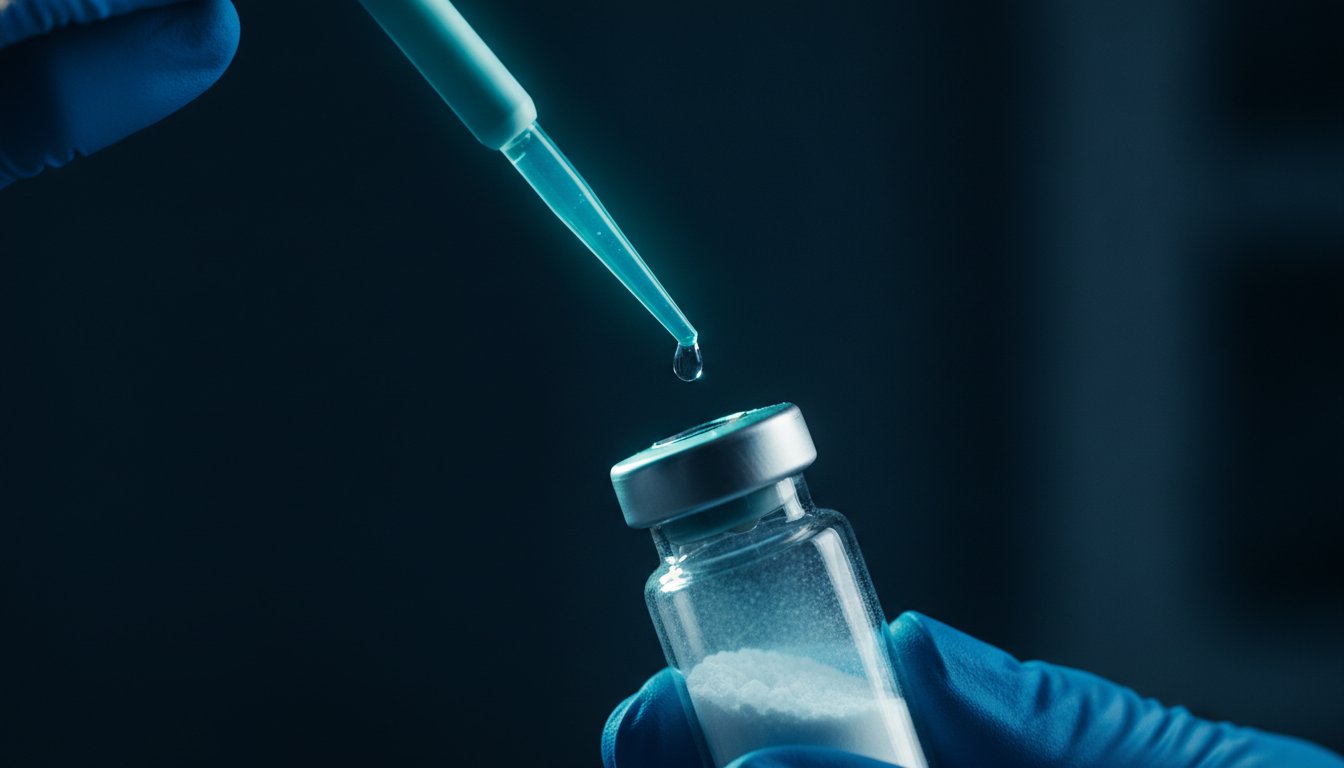
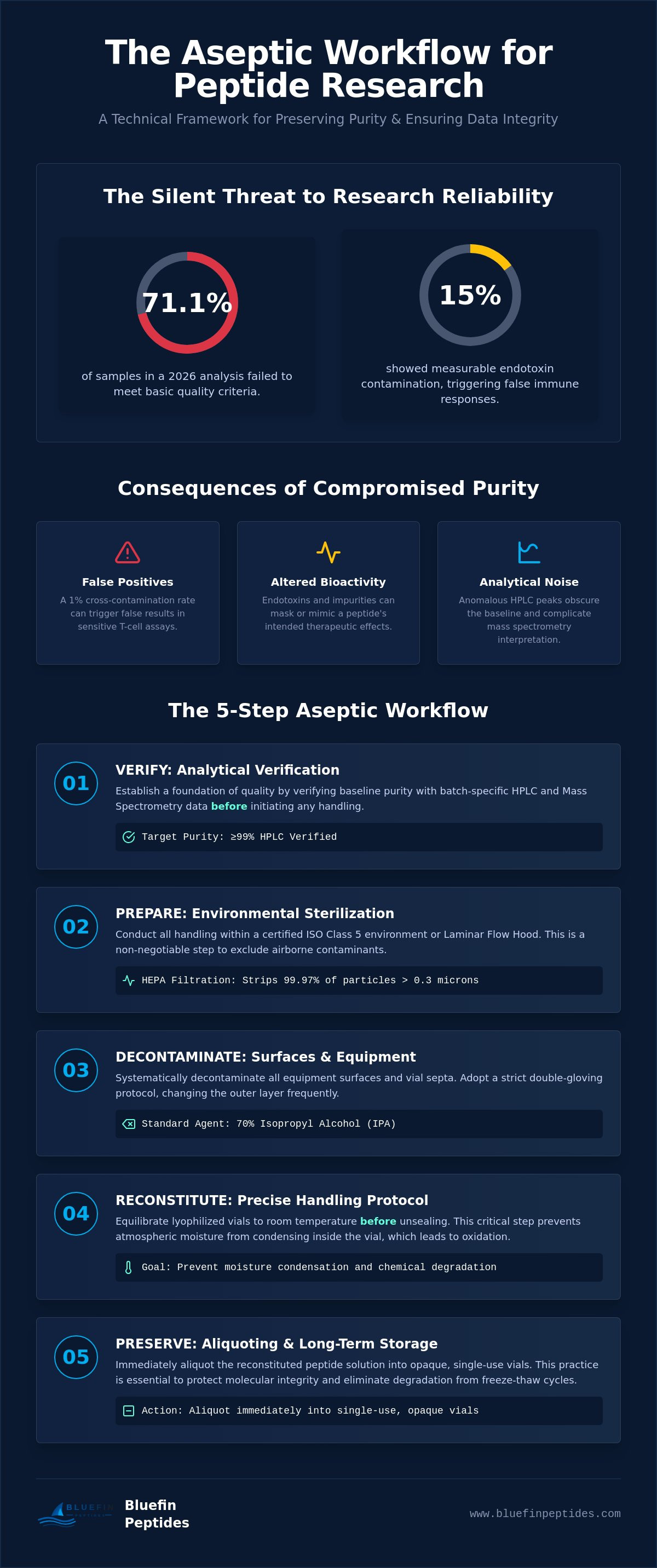
Precision. Verification. Reliability. A 2026 analysis of 6,441 peptide samples revealed that up to 71.1% failed to meet basic quality criteria, with 15% showing measurable endotoxin contamination. These impurities act as silent currents, drifting through your assays and pulling your data off course. You recognize that even a 1% cross-contamination rate can trigger false positives in sensitive T-cell assays. Maintaining absolute sterility is the only way to safeguard your investment in high-purity compounds.
This article establishes a rigorous technical framework for avoiding contamination in peptide experiments, ensuring your HPLC-verified purity levels remain intact from the moment of unboxing. We provide a repeatable aseptic workflow designed to preserve the analytical integrity of your research material. Our checklist covers environmental stabilization, precise reconstitution protocols, and the long-term preservation of lyophilized compounds. By adhering to these disciplined laboratory standards, you'll ensure the stability of your reconstituted vials and the accuracy of every subsequent data point. We focus on the "how" of your processes to secure the "what" of your results.
Key Takeaways
- Implement a disciplined aseptic workflow within certified ISO Class 5 environments to exclude exogenous contaminants from the research field.
- Master the critical protocols for avoiding contamination in peptide experiments, including rigorous surface decontamination with 70% Isopropyl Alcohol.
- Prevent moisture condensation and chemical oxidation by equilibrating lyophilized vials to room temperature before beginning the reconstitution process.
- Protect molecular integrity and eliminate freeze-thaw degradation through immediate aliquoting into opaque, single-use vials for stable storage.
- Establish a foundation of quality by verifying baseline purity through batch-specific HPLC and mass spectrometry data before initiating experimental handling.
The Criticality of Aseptic Technique in Peptide Research
Asepsis is a fundamental requirement for reproducible science. In the context of peptide synthesis and analysis, we define aseptic techniques as the disciplined exclusion of exogenous contaminants from the research environment. This protocol represents a rigorous commitment to maintaining the chemical and biological integrity of a compound from the moment of synthesis through to the final assay. When avoiding contamination in peptide experiments, the researcher must account for the high surface-to-volume ratio of lyophilized powders. These compounds are exceptionally prone to adsorbing environmental impurities. Precision is the objective. Verification is the tool.
Trace impurities, specifically bioburden and endotoxins, do more than just dilute a sample; they actively alter peptide bioactivity. Lipopolysaccharides (endotoxins) can trigger unintended immune responses in cellular models, effectively masking or mimicking the intended therapeutic effect of the peptide. A 2026 study identified that 15% of unregulated peptide samples contained measurable endotoxin levels. This highlights the necessity of starting with ≥99% HPLC-verified material and maintaining a strict chain of custody. If the chain is broken during reconstitution, even the highest quality starting material becomes compromised. Downstream stability is directly tethered to initial handling protocols.
Identifying Common Laboratory Contaminants
Contaminants are categorized by their origin and physical state. Microbial agents, including bacteria, fungi, and mycoplasma, represent the most significant biological threat to long-term stability. Chemical cross-contamination often occurs through the use of non-dedicated glassware or residual solvents from prior experiments. Finally, particulate matter, such as airborne fibers or dust, can serve as nucleation sites for peptide aggregation. This directly impacts solubility and concentration accuracy. Each contaminant serves as a variable that threatens the reliability of the research outcome.
The Impact of Contamination on Analytical Data
Exogenous matter introduces significant noise into analytical workflows. In high-sensitivity models involving Retatrutide research peptide, trace contaminants can produce anomalous HPLC peaks that overlap with the primary sequence or its degradation products. This interference complicates mass spectrometry interpretation and obscures the baseline. Avoiding contamination in peptide experiments is the only method to ensure that the data reflects the peptide's true pharmacological profile rather than laboratory artifacts. Analytical drift is the progressive deviation of experimental results from theoretical values caused by the cumulative presence of low-level environmental impurities.
Pre-Experimental Environment and Equipment Sterilisation
Sterility begins before a single vial is unsealed. To maintain the baseline purity of research compounds, all handling must occur within a certified Laminar Flow Hood or an ISO Class 5 environment. These controlled spaces utilize High-Efficiency Particulate Air (HEPA) filtration to strip 99.97% of particles larger than 0.3 microns from the air. Effective protocols for avoiding contamination in peptide experiments require more than a clean bench; they demand a systematic eradication of potential vectors. High-purity compounds are highly sensitive. Even minor environmental exposure can compromise your data.
70% Isopropyl Alcohol (IPA) is the laboratory standard for surface decontamination. This specific concentration provides the optimal balance of osmotic pressure and contact time to penetrate microbial cell walls, effectively neutralizing bioburden on equipment surfaces and vial septa. Integrating best practices for Reducing LPS Risk is critical when working with high-sensitivity sequences. Every piece of equipment, from the vortex mixer to the waste container, must be wiped down before entering the sterile field. This discipline ensures that the analytical integrity of the starting material is preserved.
Personal protective equipment (PPE) serves as the final barrier between the researcher and the sample. Adopt a strict double-gloving protocol. The outer layer of gloves should be changed frequently, especially after touching any surface outside the primary sterile zone. This prevents the transfer of skin cells, oils, and proteases that could degrade the peptide. All consumables, including pipette tips, microcentrifuge vials, and syringes, must be certified DNase/RNase-free and sterile. Securing HPLC-verified research peptides is the first step, but environmental control is what preserves that value.
While laboratory protocols focus on excluding these organic materials from the sterile field to protect sample integrity, professional skincare brands like Perfec-Tone apply similar principles of purity to their exfoliating cleansers, which are designed to effectively remove skin cells and oils for a clearer complexion.
Optimising the Laminar Flow Workspace
Proper material placement is essential to maintain undisturbed laminar airflow. Avoid cluttering the workspace, as large objects create air turbulence and "dead zones" where particulates can settle. Position the most critical components, such as open vials and sterile tips, in the cleanest air stream closest to the HEPA filter. Run a UV sterilisation cycle for at least 15 minutes prior to work to neutralize any residual surface DNA or microbes. Minimize arm movements to prevent drawing outside air into the hood.
Sterile Handling of Consumables
Strict adherence to the "single-use" rule is non-negotiable. Never reuse a pipette tip, even when transferring the same solvent into multiple vials of the same peptide batch. When opening sterile packaging, use a "peel-back" technique that prevents the item from contacting the non-sterile exterior of the wrap. Avoid "tip-touching" during multi-vial transfers; if a tip contacts the rim or septum of a vial, discard it immediately. These micro-level habits are the foundation of avoiding contamination in peptide experiments and ensuring result reproducibility.
Best Practices for Reconstitution and Solvent Handling
Reconstitution represents the most critical transition in the lifecycle of a research compound. It's the moment when a stable, lyophilized powder becomes a vulnerable solution. To ensure success in avoiding contamination in peptide experiments, researchers must first allow vials to reach thermal equilibrium. Opening a cold vial introduces atmospheric moisture, causing immediate condensation on the peptide cake. This moisture initiates hydrolytic degradation, compromising the ≥99% HPLC-verified purity before the experiment even begins. Only after the vial reaches room temperature should the flip-top cap be removed and the septum sanitized with 70% Isopropyl Alcohol.
Adherence to established standards, such as USP General Chapter <797>, provides a baseline for maintaining sterility during these compounding steps. Solvent introduction must be controlled. Rapid injection directly onto the lyophilized mass can cause mechanical shearing or excessive foaming. Both phenomena risk denaturing the delicate peptide structure. Instead, tilt the vial and allow the solvent to flow slowly down the interior glass wall. Once the solvent is added, use a gentle swirling motion. Avoid vigorous agitation or vortexing, as these high-energy movements can disrupt the secondary and tertiary structures of complex sequences. Precise execution ensures a clear heading for downstream analysis.
Selecting High-Grade Solvents
The choice of diluent is dictated by the intended application. Sterile Water for Injection (SWFI) is standard for short-term use, while Bacteriostatic Water, containing 0.9% Benzyl Alcohol, inhibits microbial growth in multi-use vials. For analytical assays, only HPLC-grade solvents should be utilized to prevent the introduction of trace organic impurities that interfere with detection. To eliminate the risk of solvent-source contamination, we recommend aliquoting large solvent volumes into single-use sterile vials before the reconstitution phase begins.
Managing Internal Vial Pressure
Most lyophilized research peptides are sealed under a partial vacuum. This internal negative pressure can pull solvent in too rapidly if not managed. Use a syringe to introduce an equivalent volume of air into the vial before withdrawing or adding fluid to equalize the pressure. Improper pressure management during the withdrawal or injection of fluids often triggers the spray-back phenomenon, causing aerosolized peptide loss that skews concentration accuracy and compromises the sterile field. Avoiding contamination in peptide experiments requires this level of micro-level pressure control to maintain the intended dosage and purity.

Aliquoting and Long-Term Storage Protocols
Immediate action is required following reconstitution. The most effective strategy for avoiding contamination in peptide experiments involves the rapid division of the solution into single-use aliquots. This practice eliminates the necessity for multiple freeze-thaw cycles, which are known to induce peptide aggregation and primary sequence degradation. Every time a vial is opened, it's exposed to environmental variables. By aliquoting into volumes required for a single assay, you minimize exposure and maintain the chemical fidelity of the compound. Efficiency in this step preserves the results of the next.
Vial selection is not a secondary concern. Use amber or opaque polypropylene vials to shield light-sensitive sequences from photo-degradation. Many peptides, particularly those containing aromatic amino acids, are susceptible to UV-induced oxidation. Once aliquoted, seal each vial with Parafilm. This creates a secondary moisture barrier that prevents the ingress of humidity during storage. Comprehensive labeling is the final step in this protocol. Each aliquot must clearly display the concentration, date of reconstitution, and the specific batch number to ensure absolute traceability back to the original Certificate of Analysis.
Temperature Control and Monitoring
Thermal stability is a function of duration. For short-term storage, -20°C is generally sufficient. However, for long-term preservation exceeding 30 days, -80°C is the required standard to halt all enzymatic and chemical activity. Avoid frost-free freezers. These units utilize internal heating cycles to prevent ice buildup, causing significant temperature fluctuations that threaten research peptide quality standards. Manual defrost freezers provide the stable thermal environment necessary for maintaining long-term molecular integrity. Consistency is non-negotiable.
Preventing Cross-Contamination in Blends
Handling multi-peptide blends, such as the BPC-157 / TB-500 Research Blend, introduces heightened risks of cross-contamination. Trace amounts of one compound can inadvertently be transferred to another if tools aren't strictly managed. We recommend using dedicated pipettes for specific compound classes or sequences to prevent unintended mixing. Implement a "one-vial-at-a-time" rule in high-throughput workflows. Never have multiple open vials on the bench simultaneously. This disciplined approach eliminates the possibility of cap-swapping or accidental reagent crossover. To secure the most reliable starting material for your blends, source HPLC-verified research peptides from a laboratory that prioritizes analytical verification.
The Role of Analytical Verification in Contamination Control
Verification. Documentation. Transparency. These are the pillars of a controlled research environment. Handling protocols aren't effective if the starting material is analytically compromised. If the peptide arrives with pre-existing synthesis byproducts or residual solvents, aseptic technique at the bench can't restore its integrity. Avoiding contamination in peptide experiments begins with the rigorous scrutiny of the supplier's analytical data. High-Performance Liquid Chromatography (HPLC) provides the quantitative baseline for purity; it separates the target sequence from synthesis artifacts by utilizing specific stationary and mobile phases. Mass Spectrometry (MS) provides the qualitative confirmation of the molecular weight, ensuring the sequence is correct. Bluefin Peptides applies deep-sea precision to its batch verification processes. We navigate the complexities of peptide synthesis with the same focus as a deep-sea submersible. This ensures that every vial meets a standard of ≥99% purity before it ever enters your laboratory.
Interpreting Batch-Specific COAs
A Certificate of Analysis (COA) is a technical commitment to quality. When reviewing these documents, prioritize batch-specific data over generic "typical" analysis reports. Examine the chromatogram for "noise" or secondary peaks. These signals often indicate the presence of truncated sequences, incomplete deprotection, or oxidation products. Verification of the moisture content and residual TFA (Trifluoroacetic acid) levels is essential. These chemical signatures determine how the peptide will behave upon reconstitution. Baseline clarity is the prerequisite for experimental success. Without it, your handling protocols are built on an unstable foundation. A clean chromatogram is the map that guides your research away from false positives.
Fulfillment Speed and Transit Integrity
Environmental degradation is a function of time and exposure. Domestic USA shipping significantly reduces the transit window. It's designed to minimize the risks associated with heat and light during international transport. Secure, light-shielded packaging further protects the peptide from photo-degradation. These logistical safeguards ensure that the compound arrives in its optimal physical state. The chain of custody remains unbroken from our facility to your hood. Our speed is balanced by our methodical approach to batch-level details. Secure HPLC-verified research peptides from Bluefin Peptides for your next study to ensure your starting material is as disciplined as your technique.
Securing the Integrity of Your Research Data
Precision is the final safeguard against analytical drift. Maintaining a rigorous chain of custody from the initial environment to the final storage vial ensures that your data reflects the peptide's true pharmacological profile. By implementing the aseptic workflows and pressure-management techniques discussed, you establish a repeatable framework for avoiding contamination in peptide experiments. This discipline protects the molecular structure of your compounds and the reproducibility of your assays. Every protocol followed is a commitment to the accuracy of your results.
Successful research begins with verified material. Bluefin Peptides provides the clean starting point your laboratory requires. We deliver ≥99% HPLC-verified purity with batch-specific Certificates of Analysis included for every order. Our fast, USA-based shipping minimizes transit exposure, preserving the inherent quality of our research blends and single-sequence peptides. Procure HPLC-Verified Research Peptides for Professional Laboratory Use to secure the analytical precision your study demands. Your results depend on the integrity of your process. Establish your baseline with confidence.
Frequently Asked Questions
Is bacteriostatic water the same as sterile water for peptide reconstitution?
Bacteriostatic water is not identical to sterile water. The primary distinction lies in the 0.9% benzyl alcohol preservative found in bacteriostatic variants, which serves to inhibit microbial proliferation in multi-dose applications. Sterile water lacks this agent. Researchers should select sterile water for high-sensitivity analytical assays where benzyl alcohol might produce interference peaks during HPLC verification.
How long can a reconstituted peptide vial remain sterile at room temperature?
Sterility is compromised rapidly at room temperature. Reconstituted peptides are highly susceptible to microbial proliferation and accelerated chemical degradation. At 20-25°C, a vial shouldn't remain on the bench for more than a few hours. Immediate aliquoting and storage at -20°C or -80°C is required to halt bioburden accumulation and preserve the peptide's bioactive integrity.
Can I reuse pipette tips if I am only working with the same peptide batch?
Pipette tips must never be reused. Even within a single batch, a tip that has contacted a vial septum or liquid surface is no longer sterile. Reusing tips introduces environmental particulates and cross-contaminants into your stock solution. This practice is a primary vector for experimental error. Always utilize a fresh, certified sterile tip for every aspiration and dispense cycle.
Does reconstitution solution need to be refrigerated before use?
Reconstitution solvents don't require refrigeration prior to use, but they must be sterile. We recommend equilibrating solvents to room temperature to match the peptide vial during the reconstitution process. This prevents thermal shock and ensures consistent solubility. However, once the peptide is dissolved, the resulting solution requires immediate refrigeration or freezing to maintain its long-term molecular stability.
What are the visible signs of peptide contamination in a vial?
Visible indicators include cloudiness, precipitation, or distinct color shifts. A clear solution that becomes turbid suggests microbial growth or advanced peptide aggregation. Any visible particulate matter in a previously translucent vial signifies a total loss of analytical integrity. If these signs appear, the sample is compromised. It should be discarded immediately to prevent the generation of skewed experimental data.
How does moisture ingress affect lyophilised research peptides?
Moisture ingress initiates immediate hydrolytic degradation of the primary sequence. Lyophilized peptides are inherently hygroscopic; they rapidly absorb atmospheric water if the vial seal is compromised. This results in the physical collapse of the peptide cake and triggers chemical cleavage of the amide bonds. Effective strategies for avoiding contamination in peptide experiments must prioritize moisture exclusion to preserve the compound's verified purity.
Should I use a centrifuge after reconstituting a peptide vial?
A brief "pulse" spin in a centrifuge is a recommended protocol. This process gathers all liquid at the bottom of the vial and removes droplets from the cap or interior walls. It ensures maximum recovery of the research material and prevents aerosolization when the vial is opened. Use a low-speed setting to avoid inducing mechanical stress or denaturation of the peptide molecules.
What is the best way to clean a spilled research peptide in a sterile environment?
Spills must be neutralized and decontaminated immediately. Use a 10% bleach solution followed by a 70% Isopropyl Alcohol wipe to ensure both chemical degradation of the peptide and microbial sterilization of the surface. Utilize lint-free wipes to prevent particulate contamination in the sterile field. Always verify that your cleaning agents are compatible with the specific laboratory surface materials to prevent equipment damage.
For laboratory research use only. Not for human or veterinary use. This content is educational and does not constitute medical, dosing, or usage guidance.
Browse the BLUEFIN catalog