Troubleshooting Peptide Solubility Issues: A Systematic Laboratory Protocol
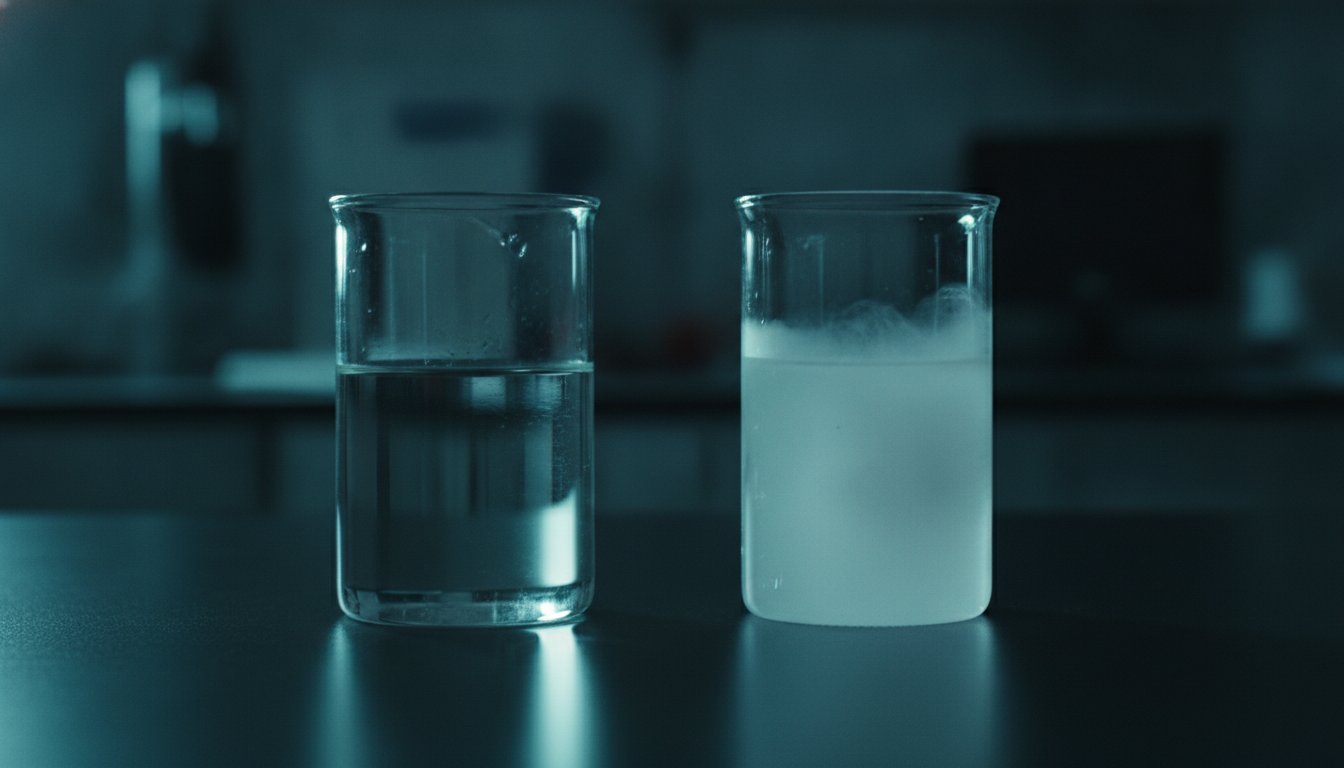
A single vial of aggregated peptide represents more than just a failed solution. It's a direct loss of research momentum and high-value analytical material. Precision. Verification. Reliability. You've likely experienced the frustration of watching a ≥99% HPLC-verified compound transform into a stubborn, cloudy suspension, making troubleshooting peptide solubility issues a critical priority for your workflow. This lack of clarity isn't just an aesthetic issue; it's a threat to experimental reproducibility and the bioactivity of your research compound. We respect the stakes of your laboratory environment and the necessity of maintaining chemical integrity.
This guide provides a systematic laboratory protocol designed to master the analytical techniques required to overcome aggregation and achieve complete solubilisation in research environments. You'll learn to navigate the physicochemical depths of isoelectric points and net charges with fluid precision. We'll move from non-invasive solvent selection to precise pH modulation, ensuring you develop a repeatable protocol that preserves the purity of your research assets.
Key Takeaways
- Identify how sequence-specific hydrophobic interactions drive aggregation and dictate the physical state of your compound.
- Use batch-specific Certificates of Analysis to determine isoelectric points and net charges for data-driven preparation.
- Implement a systematic protocol for troubleshooting peptide solubility issues, moving from non-invasive aqueous solvents to precise pH adjustments.
- Deploy advanced co-solvents like DMSO or Acetonitrile strategically to disrupt recalcitrant hydrophobic clusters without compromising bioactivity.
- Prioritize ≥99% purity levels to eliminate synthesis byproducts that often serve as nucleation sites for unpredictable aggregation.
Understanding the Physicochemical Barriers to Peptide Solubility
Solubility isn't a fixed trait. It's a dynamic equilibrium between the peptide's primary sequence and its surrounding environment. When troubleshooting peptide solubility issues, researchers must view the compound as a complex chemical entity governed by thermodynamic laws. Hydrophobic interactions represent the primary resistance. These forces drive non-polar side chains to cluster, seeking refuge from the aqueous phase. This clustering often triggers the formation of secondary structures, particularly beta-sheets. These structures align into dense, insoluble fibrils that resist hydration. Precision synthesis helps. Bluefin Peptides' lyophilised powders provide a stable starting point, but the physical architecture of the powder can still dictate the initial dissolution rate. If the lyophilisation process leaves the compound in a dense, glassy state, the solvent cannot easily penetrate the molecular lattice.
Amino Acid Composition: Hydrophobic vs. Hydrophilic Balance
The sequence is the roadmap. Certain residues act as anchors, while others act as barriers. Leucine, Valine, Phenylalanine, and Isoleucine are notoriously problematic. Their bulky, non-polar side chains avoid water at all costs. Laboratory standards suggest the 30% Rule: any sequence where non-polar residues exceed 30% of the total count will likely resist aqueous dissolution. You'll need to identify these peptide molecular properties early in your protocol. In contrast, charged residues like Arginine or Glutamic Acid facilitate interaction with water. They create a hydration shell around the molecule. This shell is your primary tool for maintaining a particulate-free solution. Without sufficient polar residues, the peptide remains trapped in a hydrophobic "dry" state, regardless of agitation.
Net Charge and the Isoelectric Point (pI)
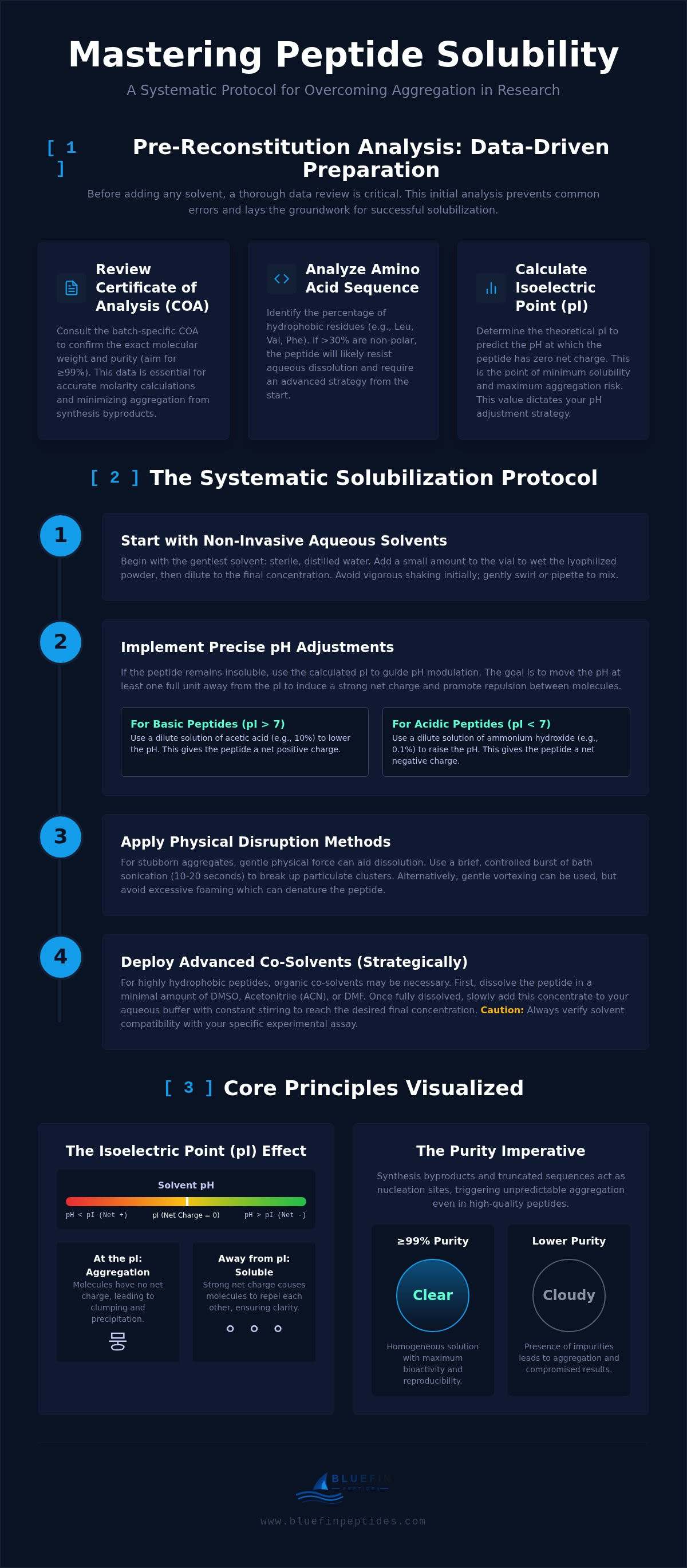
Charge dictates movement. The isoelectric point (pI) is the pH at which a peptide's net charge is zero. At this critical threshold, molecular repulsion ceases. Aggregation becomes inevitable. Troubleshooting peptide solubility issues requires a firm grasp of this calculation. Most research is conducted at physiological pH (7.4), but this may be the worst possible environment for your specific compound if its pI falls within the 6.5 to 8.5 range. To ensure stability, the solvent pH must be adjusted to at least one full unit away from the pI. This creates a strong net charge. This electrical "push" keeps molecules from colliding and sticking. It's a simple, rhythmic logic: charge creates distance, and distance ensures clarity.
Pre-Reconstitution Analysis: Data-Driven Preparation
Data is the anchor. Before a single drop of solvent touches the lyophilised powder, the researcher must consult the batch-specific Certificate of Analysis (COA). This document provides the exact molecular weight and confirmed purity levels required for precise molarity calculations. Reviewing analytical quality standards for research peptides ensures that the starting material meets the rigorous thresholds necessary for predictable behavior. High-purity compounds, such as those verified at ≥99%, minimize the presence of truncated sequences that complicate troubleshooting peptide solubility issues.
Sequence mapping is the navigational chart. Use sequence analysis tools to determine the theoretical isoelectric point (pI) before any liquid handling occurs. This mapping is a prerequisite for selecting the correct initial solvent volume. Calculating the required molarity against the lyophilised mass ensures the final solution concentration remains within the linear range of your detection equipment. Accuracy at this stage prevents the risk of over-dilution or the formation of supersaturated precipitates.
Sequence Review and Charge Calculation
Assigning charges requires a granular look at the N-terminal, C-terminal, and specific side chains. Basic residues like Lysine, Arginine, and Histidine provide positive charges, while Aspartic and Glutamic Acid provide negative charges. Verify if the peptide features C-terminal amidation or N-terminal acetylation. These modifications neutralize terminal charges. They shift the pI and potentially alter the Peptide Solubilization Guidelines you must follow. A peptide lacking these terminal charges may require more aggressive pH adjustments than its unmodified counterpart to achieve a stable, clear solution.
Solvent Compatibility Screening
The choice of solvent must respect the peptide's chemical vulnerabilities. Peptides containing Cysteine or Methionine are highly susceptible to oxidation. Using buffers with high metal ion content or improper pH can trigger irreversible degradation. While advanced buffers are tempting, sterile, deionised water remains the mandatory starting point. It provides a neutral baseline. It allows for incremental adjustments without introducing complex salt interactions. Ensure your chosen solvent is compatible with downstream analytical assays like HPLC or Mass Spec. For researchers demanding the highest level of verification, sourcing HPLC-verified research peptides provides the baseline data needed to navigate these compatibility risks with confidence.
A Systematic Troubleshooting Protocol for Recalcitrant Peptides
Precision requires a hierarchical approach. A systematic protocol functions as a navigational chart through the unpredictable currents of molecular aggregation. Start with sterile deionised water. This is the least invasive baseline. It preserves the ≥99% HPLC-verified purity of high-value research compounds. Aggressive solvents should be reserved for cases where aqueous methods fail. Troubleshooting peptide solubility issues demands a disciplined progression to avoid irreversible denaturation or chemical modification of the peptide backbone.
Step 1: Aqueous Dissolution and Physical Techniques
Begin with gentle agitation. Swirl the vial manually to encourage initial wetting of the lyophilised cake. Avoid high-shear vortexing. High-speed mechanical stress can trigger aggregation in sensitive sequences. If particulates persist, use sonication. Limit this to short, 15-second bursts in a chilled water bath. Excessive heat from prolonged sonication can degrade the compound. Degas your solvents before use. Removing dissolved oxygen minimizes oxidative damage during these physical interventions. This methodical wetting ensures the peptide is fully submerged before more aggressive chemical tides are introduced.
Step 2: Strategic pH Modification
If aqueous attempts fail, shift the pH. This leverages the net charge calculations performed during your pre-reconstitution analysis. For acidic peptides, lower the pH. Use a 10% Acetic Acid solution or 0.1% TFA. These reagents provide the necessary protons to disrupt inter-molecular attraction. For basic peptides, use 10% Ammonium Hydroxide to raise the pH safely. Titrate slowly. Add these reagents dropwise and monitor the solution for the "clear point." Overshooting the target pH can lead to salt formation or alkaline degradation. It's a process of urgent precision. Titrate. Observe. Verify.
Transition to co-solvents only after these steps are exhausted. Once clarity is achieved, perform a final filtration using a 0.22-micron low-protein binding filter. This ensures a particulate-free solution ready for analytical application. Verification is the final step in troubleshooting peptide solubility issues. It confirms that the physical state of the compound matches the rigorous data provided in the batch-specific COA. Maintaining this clarity is essential for experimental reproducibility and the preservation of bioactivity.
Advanced Solubilisation Strategies: Co-Solvents and Blends
When aqueous titration and pH modulation fail to disrupt the molecular lattice, advanced chemical interventions become necessary. Troubleshooting peptide solubility issues in highly hydrophobic sequences requires the strategic deployment of organic co-solvents. These reagents act as chemical wedges. They penetrate the dense clusters of non-polar side chains that water cannot reach. By disrupting the hydrogen bonding networks that drive aggregation, co-solvents allow the peptide to reach a stable, particulate-free state that aqueous buffers alone can't achieve.
Organic Co-Solvents: DMSO and Acetonitrile
DMSO is the laboratory standard for disrupting stubborn hydrophobic interactions. It's a polar aprotic solvent that effectively prevents the formation of secondary structures like beta-sheets. We recommend starting with a conservative ratio, typically 1% to 5% v/v, to minimize interference with downstream cellular assays. While effective, DMSO can be cytotoxic at high concentrations. Acetonitrile is a viable alternative, particularly when the solution is intended for HPLC analysis. Its high volatility is a logistical advantage. It allows for efficient removal via lyophilisation if your protocol requires a return to a purely aqueous environment. Always verify that the organic solvent concentration doesn't compromise the bioactivity of your compound before proceeding with large-scale experiments.
Unique Challenges of Multi-Peptide Blends
Complex mixtures present distinct physicochemical hurdles. In GHK-Cu BPC-157 TB-500 research blends, each constituent has a unique isoelectric point and hydrophobicity profile. This divergence creates a risk where adjusting the pH to suit one peptide might trigger the immediate co-precipitation of another. Sequential dissolution is the most reliable protocol. Dissolve the least soluble component first in its optimal solvent before introducing the more soluble peptides. This prevents the formation of inter-peptide aggregates that are significantly harder to disrupt once they've anchored together.
High-concentration stock solutions are often required for logistical efficiency, but they increase the probability of molecular collisions and subsequent precipitation. For ipamorelin CJC-1295 research blends, maintaining a stable molarity requires precise temperature control and the avoidance of salt-induced "salting out" effects. If clarity cannot be maintained at high concentrations, prioritize dilution over aggressive chemical force. For researchers navigating these complex chemical depths, sourcing analytical-grade research peptides ensures your starting material is free from synthesis byproducts that complicate blend stability.
Purity and Verification: The Impact of Synthesis Quality
Synthesis quality is the foundational variable in any laboratory protocol. Residual Trifluoroacetic acid (TFA) salts and truncated peptide sequences aren't merely inert contaminants. They act as nucleation sites. These sites trigger "seeding," a process where minor impurities catalyze mass aggregation across the bulk solution. Troubleshooting peptide solubility issues often reveals that the failure occurred during synthesis, not reconstitution. Predictability requires a purity threshold of ≥99%. At this level, the risk of unpredictable hydrophobic clustering is significantly mitigated. This rigor ensures that the compound behaves according to its theoretical model rather than being compromised by synthesis artifacts.
Impurities as Aggregation Nuclei
Truncated sequences, which are byproducts of incomplete amino acid coupling, often possess higher hydrophobicity than the target molecule. These fragments anchor together. They pull the target peptide into insoluble complexes that resist standard aqueous buffers. Reviewing tirzepatide research peptide HPLC reports allows researchers to identify these potential solubility inhibitors before laboratory work begins. Consider the contrast in behavior between 95% and 99% pure retatrutide research peptides. Lower purity batches often exhibit a "drift" in solubility, where identical solvent systems produce inconsistent results across different vials. Bluefin Peptides prioritizes HPLC verification to eliminate these variables. Precision synthesis ensures that the physicochemical behavior remains a constant tide, not a chaotic variable.
Final Verification of Solubilisation
Verification is the final barrier against experimental error. Visual inspection is the first step. Look for cloudiness or the Tyndall effect, which is the scattering of light by suspended particulates. This indicates a colloidal suspension rather than a true solution. Analytical confirmation must follow. Use UV-Vis spectroscopy to verify the actual concentration against the theoretical yield. This step ensures that the peptide hasn't precipitated during the filtration process. Document the final solvent system, including pH and co-solvent ratios. This record is vital for batch-to-batch consistency in long-term laboratory studies. Accurate documentation transforms a successful event in troubleshooting peptide solubility issues into a repeatable laboratory standard. Stability. Clarity. Verification. These are the markers of a successful solubilisation protocol.
Advancing Laboratory Precision through Systematic Solubilisation
Mastering the physical and chemical variables of your research compound is essential for experimental integrity. Successful troubleshooting peptide solubility issues depends on a data-driven hierarchy. You must analyze the primary sequence for hydrophobic residues, calculate net charges relative to the isoelectric point, and apply incremental solvent adjustments. These steps ensure the peptide maintains its intended bioactivity without the risk of irreversible aggregation. Precision. Verification. Continuity.
Synthesis quality remains the ultimate safeguard. When you eliminate truncated sequences, the behavior of your compound becomes predictable. We provide the analytical tools required for this level of certainty. Every batch is ≥99% HPLC and Mass-Spec verified to ensure your workflow remains uninterrupted. We invite you to Procure HPLC-Verified Research Peptides for Your Laboratory. Access comprehensive batch-specific COAs and rely on rapid domestic shipping for research continuity. Maintain the clarity of your results with compounds designed for laboratory stability.
Frequently Asked Questions
Why is my peptide forming a gel instead of dissolving?
Gelation occurs when peptide-peptide interactions dominate over peptide-solvent interactions, often due to high concentrations or hydrophobic sequences. The peptide molecules cross-link into a semi-solid matrix. Dilution is the primary remedy. You might also need to shift the pH significantly away from the isoelectric point to increase electrostatic repulsion. Gelation is a sign of molecular crowding that requires immediate solvent volume expansion to disrupt the matrix.
Can I use heat to speed up the peptide dissolution process?
Heat should generally be avoided because it accelerates chemical degradation and irreversible denaturation. While mild warming under 37°C may occasionally assist with recalcitrant hydrophobic clusters, it risks breaking delicate peptide bonds or triggering oxidation. Physical agitation and pH adjustments are safer alternatives. If you must use heat, ensure it is a brief, controlled incubation and verify the compound's integrity via HPLC afterward to confirm no degradation occurred.
Is it safe to use sonication on sensitive GLP-1 analogues?
Sonication is safe only when used in short, controlled bursts to avoid thermal accumulation. GLP-1 analogues and other complex sequences can be sensitive to the local heat and mechanical stress generated by ultrasonic waves. Use a chilled water bath and limit pulses to 10 to 15 seconds. This technique is effective for troubleshooting peptide solubility issues related to dense lyophilised cakes, provided you monitor the temperature throughout the process.
How does pH adjustment affect the long-term stability of the peptide?
Extreme pH levels can compromise long-term stability by promoting hydrolysis or deamidation. While shifting the pH is a standard protocol for achieving initial dissolution, the resulting environment may not be optimal for storage. Once the peptide is fully solubilised, it is often best to titrate the solution back toward a more neutral pH, provided the compound remains in solution. Always document the final pH to ensure experimental reproducibility across different batches.
Will using DMSO interfere with my research results?
DMSO can interfere with cellular assays by altering membrane permeability or inducing cytotoxicity at concentrations above 1% v/v. In biochemical assays, it may also affect enzyme activity or binding kinetics. If your protocol requires DMSO for initial solubilisation, keep the final concentration as low as possible through subsequent dilution with aqueous buffers. Verification of a DMSO-only control group is a mandatory laboratory standard to account for these potential solvent effects.
What should I do if my peptide precipitates after successful dissolution?
Precipitation often occurs due to changes in temperature, concentration, or salt interactions. If you notice particulates forming after the solution was clear, check if the storage temperature has dropped below the solubility threshold. You may need to add a small percentage of co-solvent or readjust the pH to restore clarity. This is a common challenge when troubleshooting peptide solubility issues in high-concentration stock solutions that are moved to refrigerated storage.
Does the purity of the bacteriostatic water matter for solubility?
The ionic content and purity of the water are critical. Bacteriostatic water contains benzyl alcohol, which can slightly alter the solvent's polarity compared to pure deionised water. While it inhibits microbial growth, the presence of ions or additives can inadvertently trigger salting out effects in sensitive peptides. For initial troubleshooting, always start with sterile, deionised water to establish a neutral baseline before introducing preservatives or complex buffer salts that might complicate dissolution.
Can I freeze-thaw a peptide solution that required a co-solvent?
Freeze-thaw cycles are generally discouraged, especially for solutions containing co-solvents like DMSO or acetonitrile. These solvents can undergo phase separation at low temperatures, leading to localized concentration spikes that drive irreversible aggregation. If you must store the solution, aliquot it into single-use volumes to avoid repeated cycles. Rapid freezing in liquid nitrogen and storage at -80°C is the preferred standard for maintaining the physical and chemical state of the research compound.
For laboratory research use only. Not for human or veterinary use. This content is educational and does not constitute medical, dosing, or usage guidance.
Browse the BLUEFIN catalog